They’re Facing Outward: Our Google Search for ‘Open Church Doors’

The Open Church Doors Project

Earlier this month, I initiated a new project for Lent. It started on a day when I did a simple Google image search for ‘Open Church Doors.’ Those words ended up in the search engine because I wanted to place an image at the end of a post I was writing about Nones and Dones. I was encouraging church members to go outward and meet the neighbors that surround their buildings.

When the search results emerged, I discovered many images that were beautiful, revealing doors swung open to convey a sense of welcome. But I was also intrigued to notice that the majority of the photos were taken from the perspective of facing inward! Nearly all of them were looking toward the Church itself.

I wrote about this phenomenon earlier this month, and that launched a new project. Church communities were invited to take images of their open church doors, but this time, swung open from the perspective of facing their neighborhoods. They were encouraged to add prayers for their neighbors as well.

Here are the images and prayers from the churches who participated. May they inspire you and your congregations as you think about your own neighborhood connections.

Renee Roederer

oregon

St. Edwards Episcopal Church in Silverton, Oregon opens its doors and connects with its neighborhood.
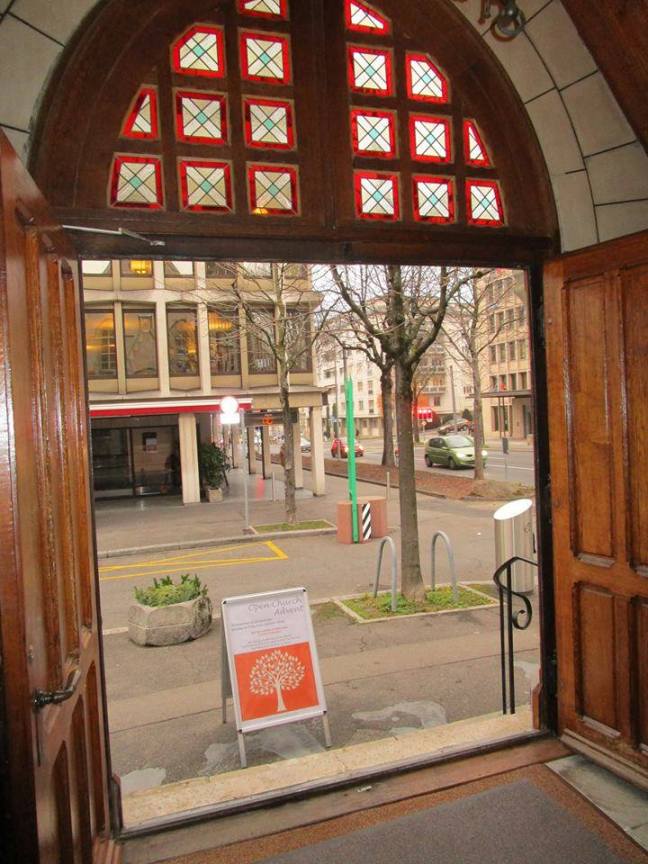
Scots Kirk Lausanne

Scots Kirk in Lausanne, Switzerland opens its doors and connects with its neighborhood.
Pres House

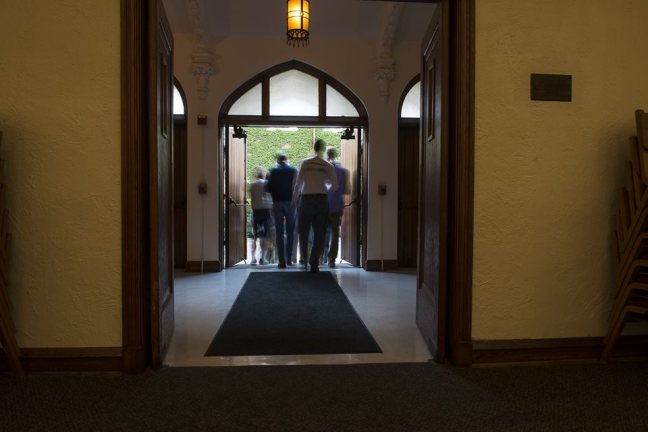
Pres House at the University of Wisconsin in Madison, Wisconsin opens its doors and connects with its neighborhood.

Tabernacle Baptist Church in Richmond, VA

Tabernacle Baptist Church in Richmond, Virginia opens its doors and connects with its neighborhood.

Edinburgh

Stockbridge Church in Edinburgh, Scotland opens its doors and connects with its neighborhood, praying, “Holy Spirit – God of the harvest- send us out into ancient streets speaking of your name and fame – in fresh ways to new faces. May they behold us – but see only you! Amen.”
First South Lyon

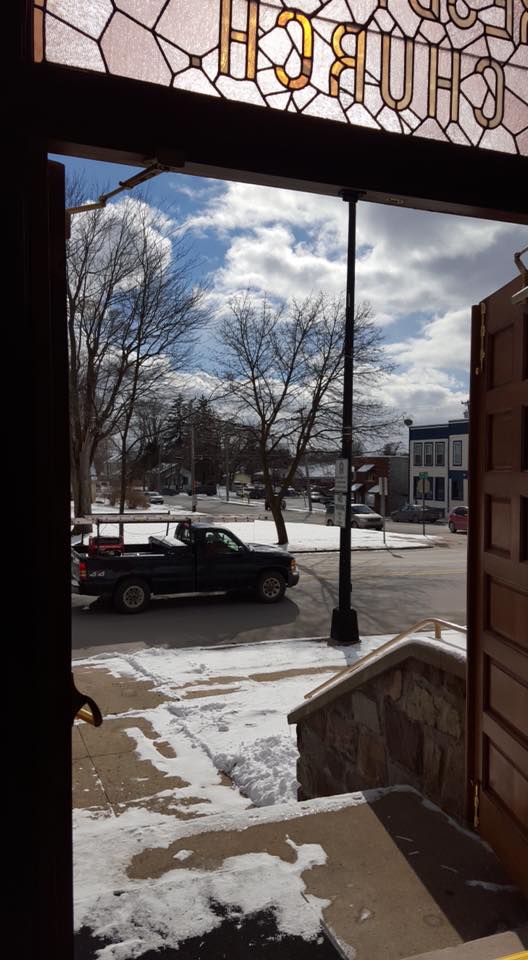
First Presbyterian Church in South Lyon, Michigan opens its doors and connects with its neighborhood, praying, “Lead us, Shepherding God, that we may follow.”

Oronco

Oronoco Presbyterian Church in Oronoco, Minnesota opens its doors and connects with its neighborhood, praying, “God, help this community continue to grow in numbers, in strength, & in compassion for each other.”

Lincoln Park

Lincoln Park Presbyterian Church in Lincoln Park, Michigan opens its doors and connects with its neighborhood, praying, “May the love of God be known in this community.”
puerto Rico

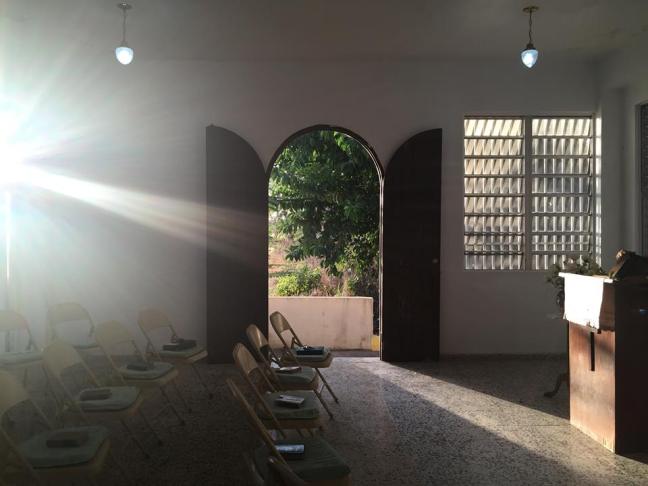
The Rincón Chapel in Rincón, Puerto Rico opens its doors and connects with its neighborhood, praying, “May God’s purpose to be fulfilled through a diverse people in an ever-changing setting.”

Huntsville

Christ Presbyterian Church in Huntsville, Alabama opens its doors and connects with its neighborhood, praying, “For this corner of the kingdom in Huntsville, AL, we pray.”

auburn

Westminster Presbyterian Church in Auburn, New York opens its doors and connects with its neighborhood, praying, “May we go out from these doors as the hands, feet, and faces of Christ in Auburn, NY.”

Holy Trinity Lutheran

Holy Trinity Lutheran Church in Portsmouth, New Hampshire opens its doors and connects with its neighborhood, praying, “We pray that this church may continue to know and care for God’s children near and far.”
Springboro

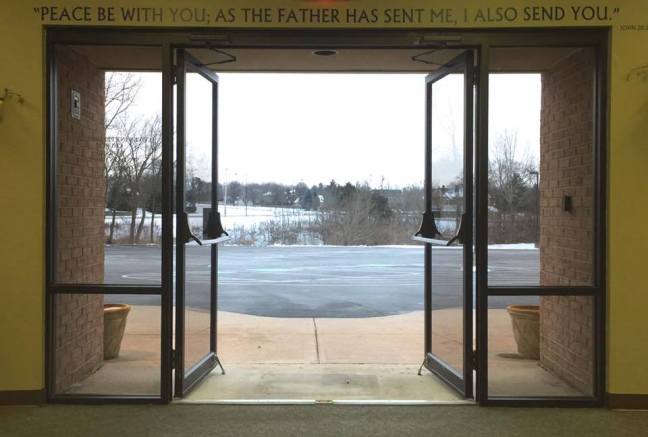
Covenant Presbyterian Church in Springboro, Ohio opens its doors and connects with its community, praying, “God, give us strength to leave our comfort zone and step out in courage to love and serve our community.”

highlands

First Presbyterian Church of Highlands, North Carolina opens its doors and connects with its neighborhood, praying, “God of waterfalls and river gorges, of small town friendships and tourist delights, breathe your Spirit into our living and loving and serving, that all who know this place will know the depth of your love.”
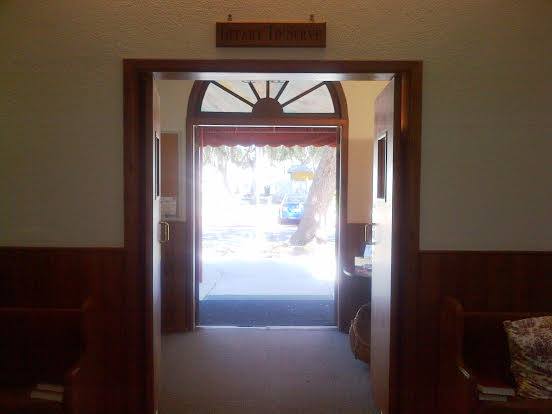
Safety Harbor

First Presbyterian Church of Safety Harbor, Florida opens its doors and connects with its neighborhood, praying, “O God our Father, as we depart to serve, may Your light shine and awaken us to serve the community of Safety Harbor.”
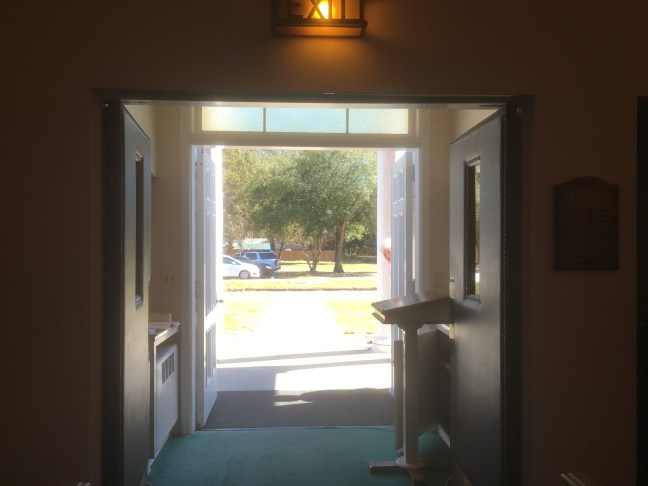
Doors

First Presbyterian Church of Apopka, Florida opens its doors and connects with its neighborhood, praying, “Gracious Lord, you have opened doors around the world, give us open hearts and arms for the children and families who see our fences and locks, and then wonder if we really can love people who look and talk and live so differently.”
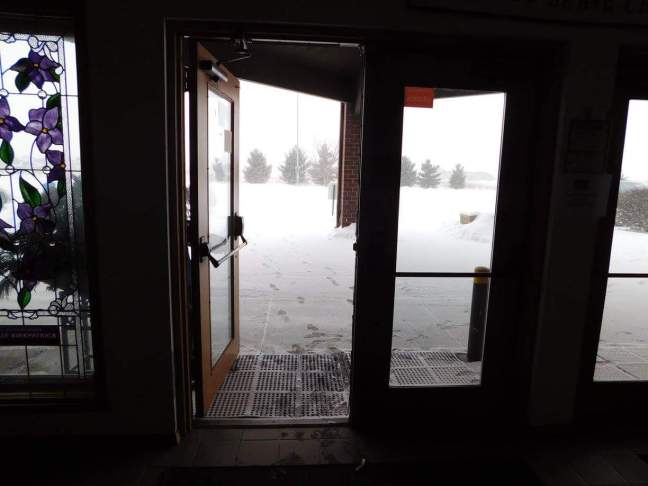
doors2

Altoona Christian Church opens its doors and connects with its neighborhood, praying, “What used to be corn fields are now buildings and houses, filled with neighbors and opportunities to share and love.  Bless all of these new neighbors that they might find home,  welcome, and safety. Amen.”

How will you love and support your neighborhood?
Let’s open these doors outward.


Walking Toward Solidarity. . .

Water

Jesus came up out of the water and
was greeted by very the voice of God.

After Jesus was baptized by his cousin John in the waters of the Jordan River, he was immediately immersed in words of favor from God. The story of Jesus’ baptism depicts the heavens opening, and the Holy Spirit descending upon him in bodily form like a dove. Then, with great love, the voice from the heavens declares,

“You are my Son, the Beloved;
with you I am well pleased.”

This voice was
a declaration, a proclamation, and an affirmation
of  Who Jesus Is.

The divine voice was a recognition of Jesus’ deepest identity and calling.
The moment must have felt tremendous.

But then, the story takes a sudden, dramatic turn.

Luke, the great storyteller of his Gospel says, “Jesus, full of the Holy Spirit, returned from the Jordan and was led by the Spirit in the wilderness, where for forty days he was tempted by the devil.”

wilderness

There is very little time to revel in the glory of that holy affirmation.
Instead, Jesus enters the wilderness and a time of testing.
Instead, Jesus encounters another voice.
And he has been led to the wilderness by the Spirit,
the very Spirit that descended upon him like a dove.

It is a reminder that the life of faith is full and freeing, but it’s not always easy. In fact, the life of faith often involves a process of claiming truths found in God’s loving voice and allowing them to forge our identity. Sometimes, this takes place even the midst of challenge, crisis, and pain.

Jesus had this kind of experience in the wilderness.

The Epistle to the Hebrews says,
“For we do not have a high priest
who is unable to sympathize with our weaknesses,
but we have one who in every respect
has been tested as we are, yet without sin.”
He knows challenge, crisis, and pain.

Jesus had this kind of experience in the wilderness.

The wilderness. . .
Jesus meets a different voice in that place.
For forty days, he was tested in the wilderness by the devil.
The devil. . .? Who is this one? And what kind of voice?

When we ponder this voice called the devil, we might imagine an embodied person or creature red with a pitchfork and cloven hooves. But this is the devil of art, movies, and cartoons.

The scriptures occasionally portray this devil as a spiritual being, but above all, ‘the devil’ seems to be a destructive voice. At times, this voice is personified, but it’s helpful to remember that ‘the devil’ is not capitalized in this story. In other words, ‘Devil ‘is not the name of a being. ‘Satan’ is not a name either. The Hebrew scriptures refer to ‘the satan’ — the Hebrew is ha-satan — and it means ‘the accuser’ or ‘the adversary.’

The accuser and adversary in the wilderness with Jesus is not the caricatured Satan of art, movies, and cartoons. But that does not diminish the destructiveness of this voice. It is a devastating voice. For Jesus, this voice — ha-satan, the accuser, the adversary — seems to call into question what it means to be God’s Son. This voice seems to call into question what kind of Son Jesus should be.

This voice questions Jesus’ deepest identity and calling.

But Jesus will endure this challenge and is withstand it.
The Spirit led him into the wilderness,
but the story also begins with the fullness of the Spirit:

Jesus, filled with the Holy Spirit, returned from the Jordan,
and was led by the Spirit into the wilderness. . .
The Spirit is with Jesus, and
The Spirit is within Jesus. [1]
For forty days and nights, he was tempted by the accuser.
For forty days and nights, he was empowered by the Holy Spirit
to claim the truths found in God’s loving voice,
and allow them to forge his identity.

This voice called the devil questions Jesus’ identity as he places security and power before him. . .

Security.
“If you are the Son of God, command this stone to become a loaf of bread.”
Jesus replies, “It is written, ‘One does not live by bread alone.'”

Power.
“To you, I will give all the kingdoms of the world
with their glory and all their authority.
If you, then, will worship me, it will all be yours.”
Jesus replies, “It is written, ‘Worship the Lord your God, and serve only him.”

Security.
“If you are the Son of God, throw yourself down from here, for it is written,
‘He will command his angels concerning you, to protect you,’ and
‘On their hands they will bear you up, so that
you will not dash your foot against a stone.'”
Jesus replies, “It is said, ‘Do not put the Lord your God to the test.'”

Do not put the Lord your God to the test. . .
If you are the Son of God. . .?
Since he is the Son of God,
Jesus relies on the Holy Spirit,
as it is both with him
and within him.
The experience in the wilderness is challenging and painful,
but Jesus claims the truths found in God’s loving voice,
and allows them to form his identity.

Jesus withstands this alternative voice, this destructive voice of the accuser. The story finishes with the devil departing: “When the devil had finished every test, he departed from him until an opportune time.” Trouble is not over for Jesus, but he has a greater understanding of Who He Is and how he is called to serve.

“For we do not have a high priest
who is unable to sympathize with our weaknesses,
but we have one who in every respect
has been tested as we are, yet without sin.”
He knows challenge, crisis, and pain.

Jesus knows challenge, crisis, and pain.
Jesus claims the truths found in God’s loving voice,
and allows them to form his identity.
“You are my Son, the Beloved;
with you I am well pleased.”

Jesus allows this experience in the wilderness to form his identity too,
for he knows even more what kind of Son he is called to be.
He is called to walk with us in kinship,
He is called to walk with us toward solidarity.

And that is exactly what he does. Jesus turns away from security, and he turns away from power. Instead, he turns toward us, and most especially, Jesus turns toward human beings who are marginalized, downtrodden, and outcast.

The story continues. Luke, the great storyteller of his Gospel, says, “Then Jesus, filled with the power of the Spirit, returned to Galilee, and a report about him spread through all the surrounding country. He began to teach in their synagogues and was praised by everyone. When he came to Nazareth, where he had been brought up, he went to the synagogue on the Sabbath day, as was his custom. He stood up to read, and the scroll of the prophet Isaiah was given to him. He unrolled the scroll and found the place where it was written:

“The Spirit of the Lord is upon me,
because he has anointed me to bring good news to the poor.
He has sent me to proclaim release to the captives
and recovery of sight to the blind,
to let the oppressed go free,
to proclaim the year of the Lord’s favor.”

And he rolled up the scroll, gave it back to the attendant, and sat down. The eyes of all in the synagogue were fixed on him. Then he began to say to them, “Today this scripture has been fulfilled in your hearing.”

Today, we see one who is filled with the Holy Spirit.
Today, we see one who knows challenge, crisis, and pain.
Today, we see one who knows what kind of Son he will be.
Today, we see one who chooses to walk with us in solidarity.

So where are we today?
Today, are we in challenge, crisis, or pain?
Today, have we forgotten God’s love for the poor, the captives, and the oppressed?
Today, from our doubts, do we add to the voice of the accuser,
“If you are the Son of God. . .”?
Today, do we need to learn once more that Jesus walks in solidarity with us?

If so, may we all hear this good news. . .

For us, Jesus rose from the water and heard,
“You are my Son, the Beloved;
With you I am well pleased.”
With us, Jesus claimed the truths of God’s loving voice,
and allowed them to forge his identity.

For us, Jesus entered the wilderness
and was tempted for forty days.
With us, Jesus turned away from security and power
and walked toward us in solidarity.

For us, Jesus traveled to the synagogues
and spoke words of power.
With us, Jesus dedicated his life
to the marginalized, downtrodden, and oppressed.

Today, through his life, we hear his voice toward us,
“You are God’s child, the Beloved;
With you, God is well pleased.”

Today, will we claim the truths found in God’s loving voice,
and allow them to forge our identity?
Today, will we follow the one who goes before us,
and live our lives in solidarity with others?

Renee Roederer

This post is adapted from my recent sermon at St. Andrew’s Presbyterian Church in Dearborn Heights, MI.

[1] I appreciated this insight that was shared by the Rev. Eric Fistler  on the Pulpit Fiction Podcast this week.


They’re Facing Inward: My Google Search for ‘Open Church Doors’

So I’m wondering if you’ll join me in a fun project of sorts. . .

I recently wrote a blog post about religious Nones and Dones, pondering if people of these persuasions might play a role toward reforming what church looks like in the future.

As I wrote that post, I searched for an image of open church doors. I wanted to place such an image at the conclusion of what I wrote, as I was encouraging churchy folks to go out, meet their neighbors, and listen to the Nones and Dones that surround them.

And that’s when I noticed something absolutely intriguing. . . A Google search for ‘Open Church Doors’ leads to a host of images of double doors swung open. They’re lovely. Undoubtedly, these images have been taken to convey a sense of welcome or simply to showcase the beautiful architecture of church buildings. But it fascinated me that. . .

Nearly every image of open church doors
is viewed from the perspective of looking inward toward the Church itself.

Open doors

Now this isn’t exclusively true. I did find a few images looking outward. These were the types of images I wanted to place at the conclusion of what I was writing. But they were in the vast minority.

Open doors
Opening Doors

As I scrolled through the images of my search, I was absolutely fascinated by this trend. I decided right then and there that we need more images facing outward rather than inward. So will you help me with a project? This may even be one small Lenten practice for you.

Churchy folks,

1) Will you take a photo of your church building doors swung open from the perspective of facing the outside? And then. . .

2) Will you tweet that image (#openchurchdoors) or send it to me (revannarbor@gmail.com) along with a one sentence prayer for your surrounding community?

In a week, I will post all the images on my blog, along with those prayers.

And then,

3) Would you consider placing that image on your church website? We could add these images to the search engines and give an important perspective.

Thanks, and feel free to share this idea and invite others into participation.

Renee Roederer


Ash Wednesday: We Belong

Ashes

Today, many in our world are keeping Ash Wednesday together. This is the day that initiates the holy season of Lent.

It is a day of confession.
It is a day of contemplation.
It is a day of recognition that our lives are mortal.

And this may seem heavy to us.  . . I have a good friend and colleague named Reid Hamilton who is an Episcopalian priest in Ann Arbor. He calls Ash Wednesday, “The service of d minor, the saddest of all keys.” It can certainly feel that way.

And yet, he and I also went to the Diag at the center of the University of Michigan this afternoon, and we stood there to provide ashes for any who would like to receive them. Though the themes of Ash Wednesday can feel heavy, they can feel surprisingly freeing and life-giving too. They remind us that we are human. And remarkably, though the themes of Ash Wednesday can feel solemn, they can feel freeing as they invite us to trust.

Here’s why. Here is the good news we honor and remember today: In life and in death, we belong. We belong to God, and we belong to one another.

No matter what,
It is absolutely true.
From our first breath to our last breath,
From this life to the mystery the exists beyond this life,
We belong.

We belong to God and we belong one another.
All the days of our life, and even beyond our life,
No matter what.

Each time Ash Wednesday rolls around, I find myself remembering Ash Wednesdays I’ve experienced in previous years. I think of the many congregations where I have been present. Some are churches where I grew up, and others are congregations where I’ve served as a pastor. Over the course of my life, I have come forward many times to receive ashes upon my forehead. At other times, I have had that sacred privilege of placing ashes on the foreheads of people I love.

It can be challenging to hear the liturgical words we speak to one another on this day.

“From dust you were created, and to dust you will return,”

It is just as challenging to speak those words of mortality toward others.

“From dust you were created, and to dust you will return.”

Most years, I’ve said those words — I think we need to be reminded of our mortality — but then, I’ve also added the good news that exists around, before, and behind this truth. I’ve added these words:

“You are God’s child, God’s own, this day and forever.”

So today, let me say those words to each of you.

“From dust you were created, and to dust you will return.
You are God’s child, God’s own, this day and forever.”

Let these words sink into your very being.

“From dust you were created, and to dust you will return.
You are God’s child, God’s own, this day and forever.”

Today I remember the many times I’ve heard and spoken words like these over the years. And as I ponder those moments, one particular Ash Wednesday comes to mind in a specific way.

In 2007, I was in the middle of my time in seminary. There was much from that period of time that was beautiful. I was reading everything I could get my hands on and growing in my unfolding sense of call. But it was also a very challenging time in my life.

On Ash Wednesday in 2007, someone I loved very deeply received a terminal cancer diagnosis. He was the pastor of the church where I had grown up, and many times, he had lovingly placed ashes on my forehead. But much beyond that, David and his wife Amy were very much like parents to me. They taught me, nurtured me, and provided safe spaces for me. Like true parents, they even occasionally annoyed me, and I occasionally annoyed them. But most of all, we loved each other.

We all knew that David had gone in for testing, and during the Ash Wednesday service I attended in Austin, I found myself thinking about him and Amy. I prayed for them and all those who loved them. When the service was over, I stepped into the courtyard of that church, and I received his news over the phone.

David said that the cancer would be ‘terminal’ — that word felt so heavy — but doctors thought treatment would work for about a year and a half.

That news was devastating, and it initiated a long period of anticipatory grief in my life. But as I consider the memory of that night, alongside the painful news, I remember how David chose to break that news to me. I remember how much he emphasized my sense of belonging. I will never forget it.

He was the one who had received painful news from his physician that very day, and yet, he was sharing it from such a posture of care for me. He said to me,

“You know, there are children who just come into your lives, sometimes unexpectedly. You are the child we never bore, and yet you are ours.”

It wasn’t the first time David had said something like that to me, but it stands out in my mind as a particularly strong memory that our lives belonged to one another.

Today, on this Ash Wednesday, we remember that we belong to God and to one another — no matter what may come.

There is nothing that can separate us from that love of God.
Even our losses.
Even our health crises.
Even our mortality.

I wonder. . . do you ever fear that something is separating you from God or from others? Whatever it is, you ever fear that it will trump your belonging?

We all fear things like that from time to time, but today, we rest in the truth that nothing — absolutely nothing — can separate us from the love of God. Nothing! And as we are rooted in that love toward God, we are absolutely connected to each other. Always.

Even when we argue, or even when we experience estrangement in relationships, they are never the last word. Even when we lose loved ones to death, that is not the last word. If any brokenness exists to death, it is never the last word, because in life and in death, we belong to God.

God holds our life,
and God is restoring all things,
both now and in the life to come.

So hear these beautiful words from the Apostle Paul as they are recorded in Romans:

“Who will separate us from the love of Christ? Will hardship, or distress, or persecution, or famine, or nakedness, or peril, or sword?

No, in all these things we are more than conquerors through him who loved us. For I am convinced that neither death, nor life, nor angels, nor rulers, nor things present, nor things to come, nor powers, nor height, nor depth, nor anything else in all creation, will be able to separate us from the love of God in Christ Jesus our Lord.”

Hear these holy words again as they mark your life:

“From dust you were created, and to dust you will return.
You are God’s child, God’s own, this day and forever.”

Renee Roederer

This post is adapted from my recent sermon at St. Andrew’s Presbyterian Church in Dearborn Heights, MI.


Following Jesus Down the Mountain

Mt-Tabor[1]

Luke 9:28-43

 Now about eight days after these sayings Jesus took with him Peter and John and James, and went up on the mountain to pray. And while he was praying, the appearance of his face changed, and his clothes became dazzling white. Suddenly they saw two men, Moses and Elijah, talking to him. They appeared in glory and were speaking of his departure, which he was about to accomplish at Jerusalem. Now Peter and his companions were weighed down with sleep; but since they had stayed awake, they saw his glory and the two men who stood with him. Just as they were leaving him, Peter said to Jesus, ‘Master, it is good for us to be here; let us make three dwellings, one for you, one for Moses, and one for Elijah’—not knowing what he said. While he was saying this, a cloud came and overshadowed them; and they were terrified as they entered the cloud. Then from the cloud came a voice that said, ‘This is my Son, my Chosen ;listen to him!’ When the voice had spoken, Jesus was found alone. And they kept silent and in those days told no one any of the things they had seen.

I wonder what Church would be like. . . 
if the Christian story ended with the story of the Transfiguration?

The Transfiguration of Jesus a strange story in many ways, but let’s ponder that question for a moment. . . What if we only had one Gospel – say, the Gospel according to Luke – and it ended with the story of Jesus, his disciples, and Moses and Elijah on the mountaintop? What if it ended right there and nothing more?  What if this was the final story about Jesus? What do you think the life of the Church be like?

Perhaps this Sunday would be the high holy day of the Christian calendar. People would invite friends and relatives to join them in worship, and then everyone would go home for the annual Transfiguration Dinner. Grandparents across the country would make their signature cheesy potatoes as requested by their grandchildren, and we would all dress in our Transfiguration best. Our churches would likely be filled to the brim with guests, people who come to worship twice a year — you know, at Christmas and Transfiguration.

Pastors and church leaders would simultaneously be filled with energy and exhausted as they worked every day of the week to build up this story of Jesus and the disciples on the mountaintop. We would tell the story successively over several days: On one day, we would celebrate Jesus and his disciples climbing the mountain. On another day, we would commemorate that moment when they began to pray together. Throughout the course of a week, we would build up to this special Sunday — the day when we celebrate Jesus transformed before our very eyes with his face changed and his clothes dazzling. If the Gospel of Luke were our only Gospel, and if it ended here, we would certainly worship Jesus in a triumphant way.  That would make sense.

And if it ended right here,
and if this were the only Jesus we knew,
Christian life might be concerned primarily with personal triumph.  

Mountains would be depicted in our stained-glass windows and on our church bulletins. We would wear mountain shaped pennants on necklaces. The mountain would be our primary religious symbol.

And we might become concerned with building ourselves into mountains as we practiced the triumphant meaning of that symbol.  Maybe we would build our own churches that way, and like Peter on that mountaintop, we could construct them into holy, everlasting dwellings to hold and commemorate all that is triumphant.

Triumph could become our primary aim, and we could spend all our money, energy, and resources to ensure that we stay on top of the mountain.  Like the mountains on our necklaces, we could create an institutional church based on that symbol, determined always to be solid and unchanging, staying triumphant on the mountaintop no matter what. We might become concerned with our image – after all, we’re mountaintop people — and we could use all sorts of techniques and marketing to tell our culture that we, the Church, are indeed a mountain. And we could tell others that they can also have a mountaintop experience if they will just climb into our pews and join us.  Who knows?  Even their money and time and talents might ensure that we stay solid on top.  We might invite people to join the church to ensure that we stay safe, secure, unchanging, and triumphant.  We could be a mountaintop church with a mountaintop Jesus.

Maybe that’s who we would be if the Christian story ended here, if we had only one Gospel that ended with chapter 9 verse 36.

But, of course, that’s not where it ends.  Jesus is triumphant in this story.  That’s true.  Jesus is triumphant in a story that is strange to us in some ways. . .  because it’s filled with symbols and images that were important to a culture and time period so distant from our own.

Jesus meets with Moses and Elijah, two men who are prophets in the stories of the Hebrew Scriptures. They symbolized the Jewish law and the prophetic writings.  To include Jesus in their company was to convey that Jesus is connected to these figures and to the law and the prophetic writings themselves. To have Moses and Elijah conversing with him about his departure – or as the original language puts it, his upcoming exodus – communicates that Jesus was the fulfillment of the law and prophets.

His face shone and his clothes became dazzling.  
He was glorified.

And in a moment of awe and wonder, Peter just doesn’t know what to say or do. . . Awkward words come pouring from his mouth: “Master, it is good for us to be here; let us make three dwellings, one for you, one for Moses, and one for Elijah.”  He doesn’t know what he’s asking for, really.  And in response, the voice of God declares who Jesus is: “This is my Son, my Chosen; listen to him!”  The disciples are so awestruck by the entire experience that they don’t say anything to anyone about it.  How could they even put it into words?

Whatever it was, they probably wanted to stay longer.  They wanted to build the experience into a structure and dwell in it until the end of time.

But that’s not the end of Jesus’ story.  
And that’s not the end of our story either. 

Though mountains are valued, they aren’t our primary symbol; instead, the cross is the primary symbol of Christianity.  Jesus may be triumphant, but not without cost.

In great, unfathomable love, Jesus shows us continually that he is determined to be with us – determined to be with us when we’re vulnerable and in need. He joins us when life is messy and transforms us there.  Jesus doesn’t stay enshrined on a mountaintop.  He does the opposite.  Jesus comes down the mountain and leads his disciples in doing the same.

In this story, Jesus leads his disciples down the mountain, and at the foot of it, they all encounter a man and his son. They are suffering greatly, and nothing is neat and clean about this experience.  It involves sickness, pain, injury and uncertainty, and the disciples had no idea how to heal the boy or this difficult situation.  Jesus enters the situation and is troubled himself.  But it is from that place that he heals the boy and restores him to his father.

And the story continues. . .
Jesus continues to walk with the people.
Jesus continues to walk with us.

The story continues. . .
We know that Jesus will demonstrate such radical love
that the powers-that-be will feel threatened.

And Jesus will risk that love even if it leads to a cross.  
Love like that transforms the world.

Jesus will be with us, no matter the cost.  Even when life is messy. Especially when life is messy. . .

When the diagnosis comes. . .
When the loved one dies. . .
When unemployment stretches out. . .
When we can’t seem to put the bottle down. . .
When human beings are reduced to skin color. . .
When depression seems to have taken over, and
When we are unsure where our next meal will come from.

Jesus will love us at great risk.  
And this love transforms everything.

And is church not called to follow Jesus down the mountain, straight into those places where life is messy and there is suffering?  Is that not our call?  To go there and to love there?

Michael Jinkins is the President of Louisville seminary, and he wrote a book with a provocative title.  It’s called The Church Faces Death: Ecclesiology for a Post-Modern Context.  In the pages of his book, Michael Jinkins proclaims that the church is called to love so greatly that it risks its own death.  In fact, he would say that the church is only alive when it lets go of its need for safety and institutional survival, loving and serving first — not ultimately to gain or to grow — but to follow Jesus.

That is a church alive.
That kind of love changes everything.

And that’s a challenging posture to take because it feels uncertain and risky.
But life is there.
Jesus Christ is there.
God’s unending love is there.
The power of the Holy Spirit is there.

We’re about to enter the season of Lent. During this season, we journey to and through the cross with Jesus as we contemplate God’s presence and mission among us.  We’re called to get our hands dirty as are grounded and as we work alongside others.

I wonder what our work clothes ought to be. . . Will they dazzle? Maybe.  Or maybe they’ll just look like plain, solid faithfulness.

After all, we know that the story of Jesus doesn’t end on a mountaintop.
It continues on to a cross.

And it doesn’t even end there!
Even death is transformed by Christ’s love.

Resurrection always comes – sometimes in unexpected ways —
But it always comes.

May God’s great risk to us call forth our own risk,
and may God’s great resurrection call forth our own resurrection. 

Renee Roederer

This post is adapted from my recent sermon at St. Andrew’s Presbyterian Church in Dearborn Heights, MI.

[1] The image above is of Mt. Tabor, the traditional site of the Transfiguration. I found this image on the Holy Land Franciscan Pilgrimages website.

Headed Toward Reformation? Listening to Nones and Dones

Wittenberg

The Reformation That Formed Us

When Halloween night rolls around in 2016, we’ll surely experience traditions that are cherished, annual rituals. Tiny goblins, witches, and Elsas (we’ll still have a zillion look-alikes from Frozen) will ring our doorbells and shout, “Trick or Treat!” with gusto. Some of us will carve pumpkins, and some of us will go on hayrides in the midst of the chilly, autumn air.

Those traditions will be lovely and expected.

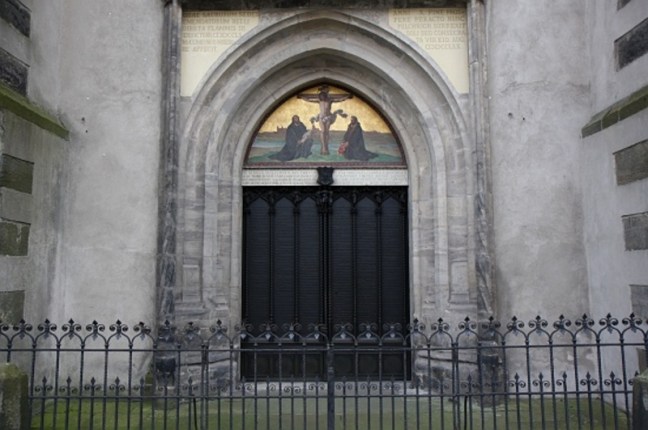
But when Halloween night rolls around in 2017, the world will experience a large scale anniversary. October 31, 2017 marks the 500th anniversary of the start of the Protestant Reformation — the fateful day when Martin Luther, a Roman Catholic monk and professor, nailed a list of demands to the double doors of the Castle Cathedral in Wittenberg. Those demands are called the 95 Theses, and they ushered in a movement for reform of the Christian Church.

There is no need to completely romanticize this moment of change. It did lead to solid reforms, and along with the development of the printing press, it placed the words of the Bible into the hands of the individuals for the first time. But in the process, this movement for reform also led to wars, persecution, and the splintering of the Church into innumerable denominations.

I have no expectation that the entire world will geek out over this 500th anniversary next year. My good friend from seminary used to dress up as the Wittenberg Cathedral doors for Halloween, and I imagine she might do it again for such an anniversary. But I doubt that many non-church geeks will take notice. Maybe there will be a Google Doodle for it.

Instead, though this reformation still informs our world, this anniversary may feel irrelevant to those who are losing their connections to institutional churches.

Nones and Dones

Religious demographics in the United States are changing. These days, some feel quite uneasy walking into a sanctuary of a faith community, and some are equally apprehensive to affiliate with any form of organized religion. The Pew Research Center conducted two Religious Landscape Studies in 2007 and 2015, and researchers discovered that the numbers of the religiously unaffiliated are growing. Pew researchers coined the term “religious Nones” to describe individuals who are unaffiliated with any particular faith community. They also discovered that 61% of Nones believe in God, and many of them are interested in spirituality.

In response to this new terminology, others recognized that an additional term was needed. Sociologists, church historians, bloggers, and pastors began to use the term “Dones” to describe Christians who have maintained their religious identity but left established, institutional churches behind. The sociological studies of the Dones are revealing that many of these individuals have been among the most committed leaders and members in local congregations. After trying to stay, they felt they had to leave when churches condemned their questions of faith, practiced judgment, or refused to share power and leadership. Many Dones value participatory forms of church in worship, mission, and vision. Instead, they encountered institutional churches obsessed with their own survival while refusing to change or adapt in participatory ways. (See Josh Packard and Ashleigh Hope’s sociological study, Church Refugees: Sociologists Reveal Why People are Done with Church but Not Their Faith to learn more about this research.)

Nones are simply not walking through the sanctuary doors, and the Dones are stepping out of sanctuary doors never to look back. These populations are certainly varied, but together, they are speaking. They aren’t nailing 95 Theses to the doors of the Church, but they are speaking with their feet.

But even more, many are speaking with a longing for a new vision. Many Nones and Dones do not want to leave faith and spirituality behind altogether. But where can they go to engage spiritual practices and build Christian community together?

Some are beginning to answer that question in varied ways as spirituality meetup groups, justice organizations, and new worshipping communities are forming in organic ways across the United States.

But perhaps there is a more exciting question to ask:
Will the Nones and Dones eventually lead a new reformation of the Christian Church?

I like to think so.

The Reformation Before Us

Phyllis Tickle was a brilliant scholar, researcher, and faith-filled friend of many. She died last year. With a delightful name and hilarious sense of humor, she invited people to ponder what the future of the Christian Church might look like. In her astute work, The Great Emergence: How Christianity is Changing and Why, Tickle articulates an intriguing premise that the Church experiences a major form of reformation approximately every 500 years.

Tickle gives a broad overview of the previous reformations throughout the history of Christianity, including the monastic movement (approx. 500 CE), the schism between the Eastern and Western Churches (approx. 1000 CE), and the Protestant Reformation (approx. 1500 CE). She argues that approximately every 500 years, a new form of Christian expression emerges outside of the current scope and institutional form of the Church. Each time, this new emergence tends to be more in step with the social, political, economic, and cultural shifts of the day.

Initially, when the new movement emerges, it experiences conflict with the traditional, religious communities that preceded it. But the new vision eventually has an effect on the older structures too; frequently, as a result of new movements, traditional Christian institutions experience a counter-reformation in response. Through both parts of the process, more people are authentically welcomed into Christian community.

Though we cannot know fully where it is all headed, Phyllis Tickle believed we are in the midst of a new reformation right now. It excites me deeply to ponder that. Though I am am also unsure of where it is all heading, I believe that the Nones and the Dones are  key players in the future of Christianity and the future of religious communities as a whole.

So will we listen to them as they cast a new vision?
Time to connect beyond the doors of our own sanctuaries.

open church doors

Renee Roederer — These days, I am organizing a new community of friendship in Southeastern Michigan called Michigan Nones and Dones. This community is a part of Meetup.com and includes those who are religiously unaffiliated (the Nones), those who have left established, institutional churches (the Dones), and those who are connected to particular traditions but seeking new, creative forms for their expression.