
This blew my mind, so I have to tell you about it.
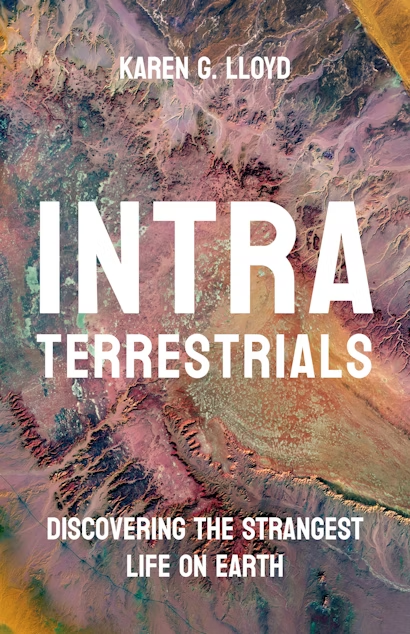
I recently listened to an episode of Unexplainable, a podcast by Vox, and it introduced me to a kind of lifeform that is absolutely bonkers. The episode is called “Intraterrestrials,” and the main character is not a person, but a single-celled organism—one that lives deep in the ocean mud.
Not just near the bottom of the ocean. In the mud. Way down. And once it’s there, it doesn’t really move. It just… sits. It doesn’t grow, it barely consumes energy, and—here’s the kicker—it might not reproduce for millions of years. And yet, it’s still alive.
Microbiologist Karen G. Lloyd calls these mud-dwelling microbes intraterrestrials, and scientists have pulled them up from layers of sediment that are a million years old—or even older. If the data holds, the microbes they’re seeing might be the exact same cells that were buried there a million years ago. Not the descendants. The same organisms. Still alive.
Honestly, it sounds like science fiction. But Lloyd says that, strange as it is, the most reasonable explanation is that these microbes went into a kind of biological stasis. They hibernate, like tiny Sleeping Beauties under layers of dust, poop, and plankton bits (glamorous, I know). They survive on an amount of energy so small it shouldn’t be enough. And they wait.
That’s the part that really caught me. They wait. Maybe, Karen G. Lloyd says, they’re waiting for a kind of microbial spring. Maybe tectonic plates shift over millions of years, and eventually, new nutrients are mixed into the sediment—just enough to wake them up and give them the energy to reproduce again.
I don’t know about you, but I kind of love this. A lifeform that says, “I’m going to tuck in here for, oh, a few ice ages or so, and when the time is right, I’ll be ready.”
And it makes me wonder: What else is out there, living so slowly or quietly we just haven’t noticed yet?
Listen to the podcast episode here.
 Smuggling Grace