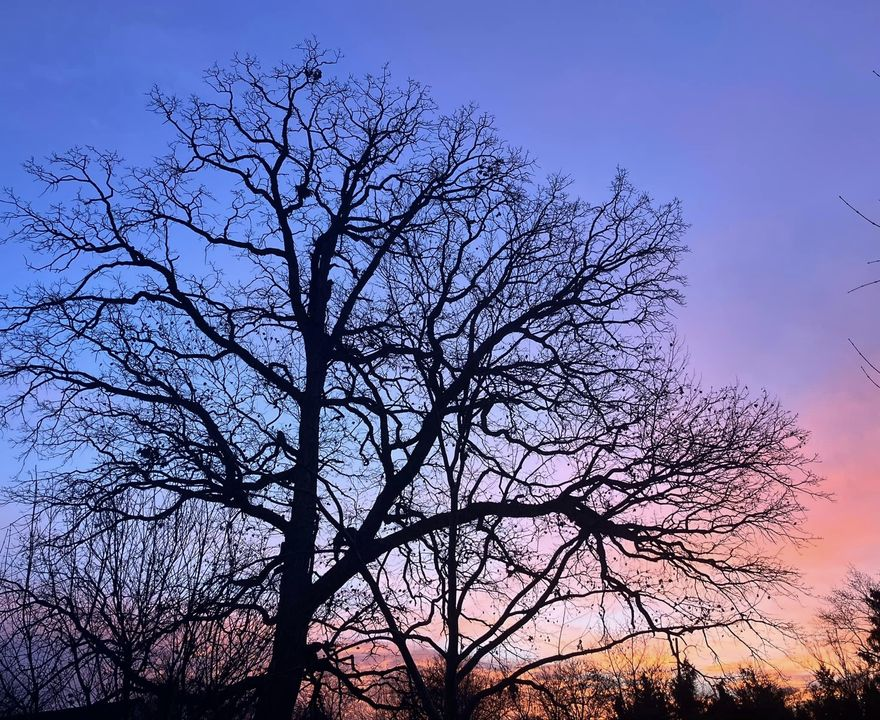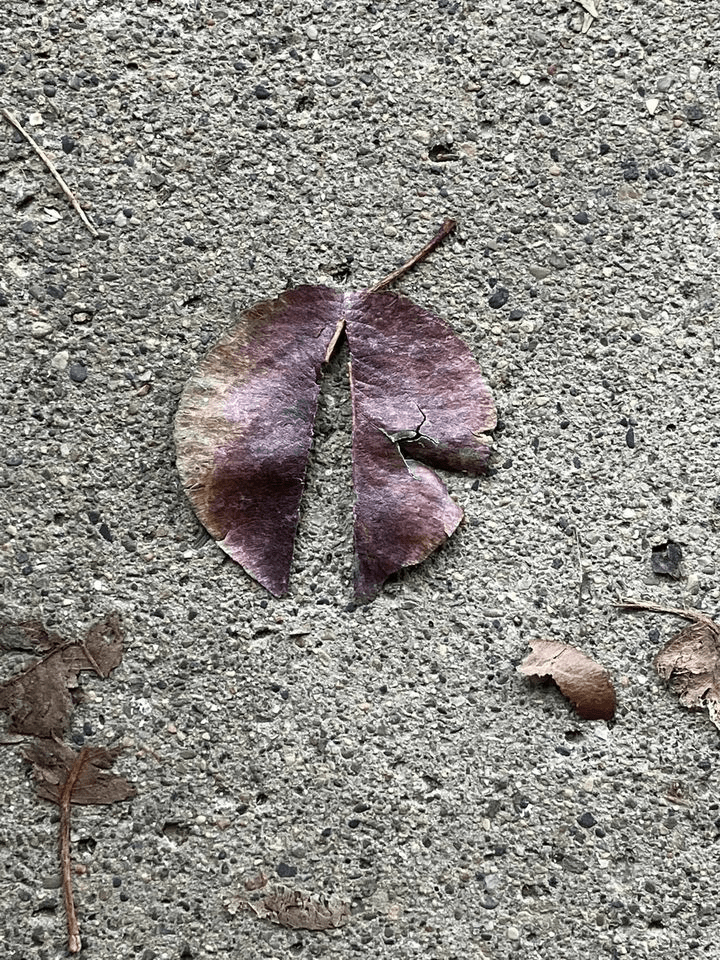
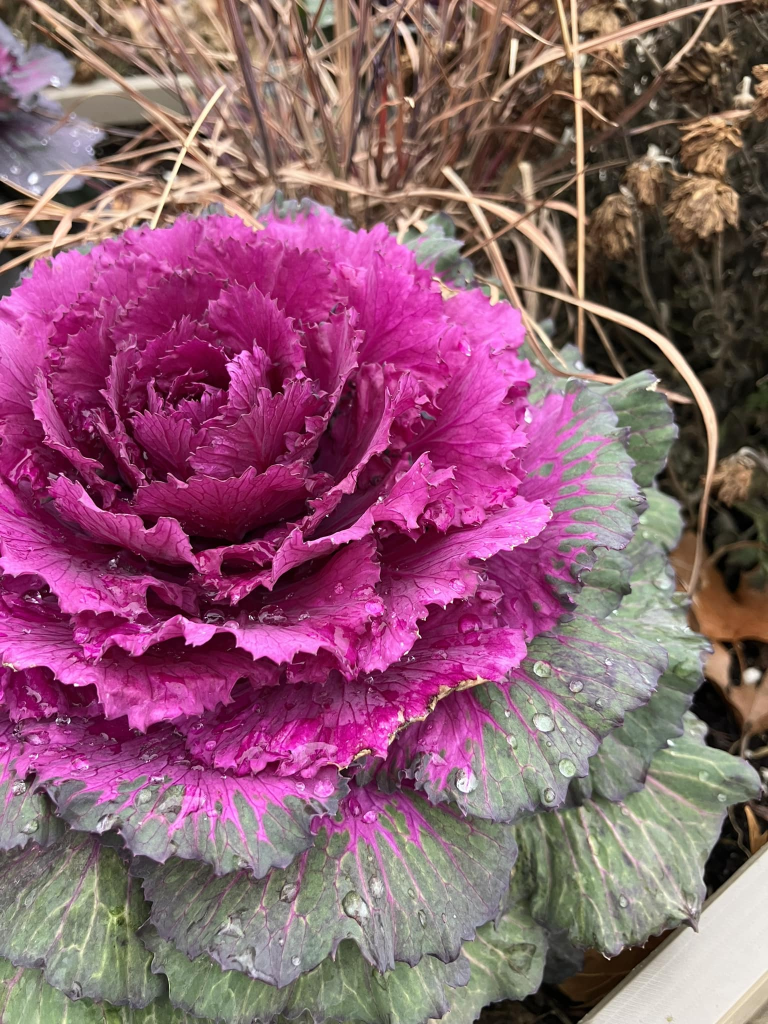

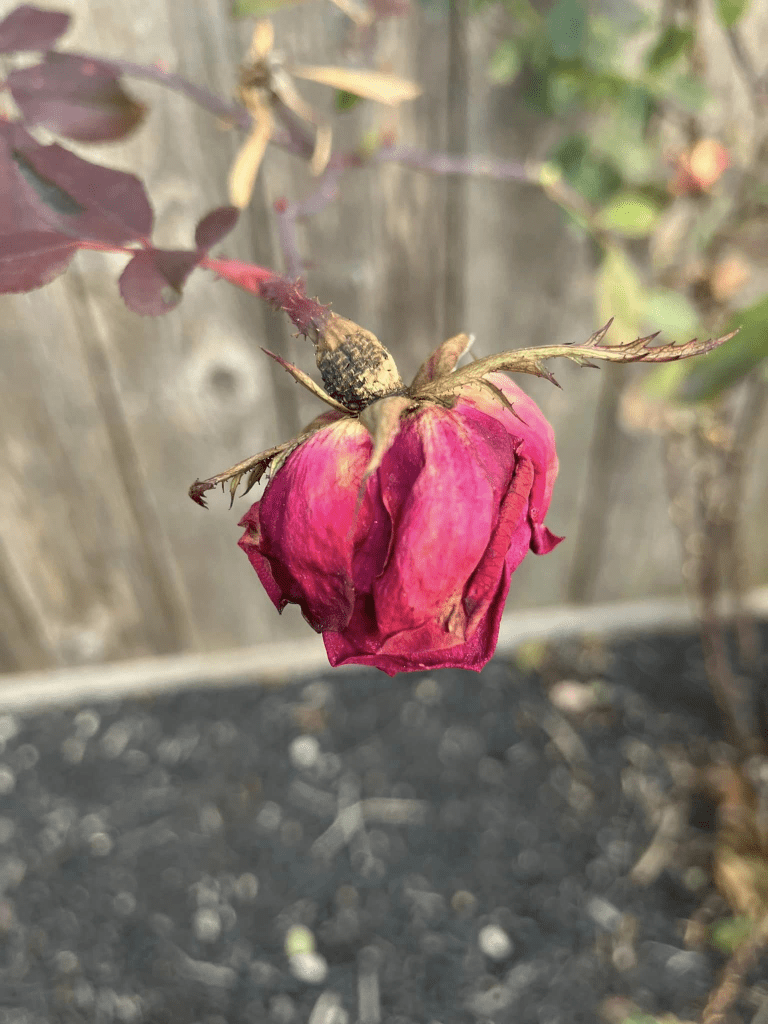




— Photos by Renee Roederer

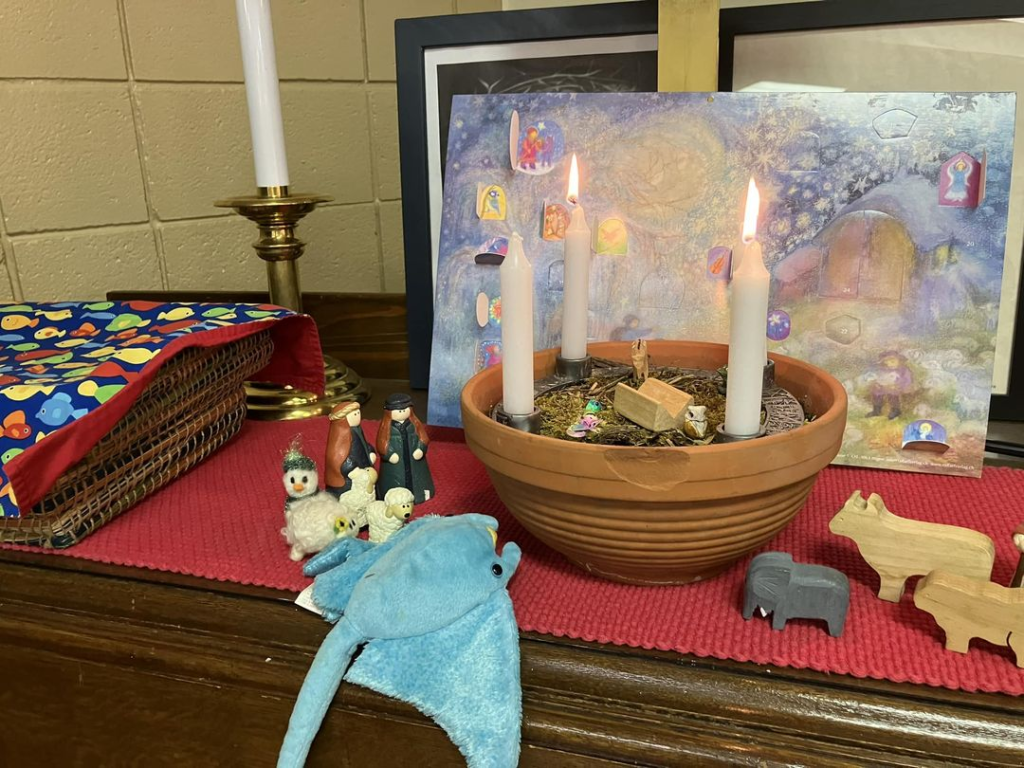
Once a month, I have the privilege of leading a spiritual reflection service with a community called Parables in Chelsea, Michigan. This service is planned with, for, and by disabled and neurodivergent community members.
While present on Sunday, I was so pleased to look over and spot this mantra ray who entered the nativity scene.
Sometimes the sweetest joys are found in the details.

This is one of my favorite questions to ask people:
What is something you learned incorrectly as a child but only realized well into your adulthood?
This is a fantastic question! It leads to stories that are very dear and often, quite hilarious. Some people talk about words they mispronounced for decades, only revealed, of course, when they blurted them aloud in a group setting. Others talk about illogical beliefs they internalized as kids which emerged unexpectedly in their minds years later (or were also voiced aloud!) These come as a total surprise because people hadn’t even thought about the topic, let alone questioned their young belief, until that very moment.
This American Life has an entire episode of stories like these. My favorite involves a moment when a college student approached other college students at a campus party and asked the question, “So… are unicorns just really rare, or did they go extinct?”
Hysterical. Totally embarrassing. But also so dear. I love it!
With all of this in mind, I will now admit that I have an embarrassment of riches of stories like these from my own life. And I will share one of them today.
My favorite personal story of this kind involves the nine year window when I didn’t believe in reindeer.
Yes, you read that correctly.
Now I hope this doesn’t come as a total surprise or crush anyone’s dreams, but when I was eight years old, I learned the sad truth that Santa wasn’t real. (Are you okay? I hope so). In the moment of this revelation, I was pretty of devastated. I was also deeply concerned that I wouldn’t get presents anymore.
So in the midst of my sadness, I resigned myself to reality. So much so, in fact, that I just kind of… over-steered. I just assumed… that… reindeer weren’t real either.
I mean, come on… They fly! Flying reindeer? No way.
At least there was some sort of evidence of Santa’s existence. Gifts showed up annually, so there was something tangible to associate with him. Plus, I saw him in all the malls!
But once I knew the sad truth, how could I possibly believe in flying, antlered caribou? Reindeer quickly went the way of the unicorn. (Ahem… not extinct. Non-existent).
That is, until… I was 17 years old. That is, until… I was flipping through the channels and saw a nature documentary on my television set.
A British accented, David Attenbourough wannabe voiced commentary as creatures walked around in the snow, plunging their faces into the frigid stuff, attempting to nibble on frozen grasses. “The reindeer are in the tundra,” the David Attenbourough wannabe said in all his formal tones.
And I started laughing. Laughing! “The reindeer! In the tundra! Yeah…”
But then, my laughing stopped abruptly, and my mouth gaped open. As I sat alone in the living room of my childhood home, in my last year before legal adulthood, a recognition completely washed over me. It dawned on me — at age 17 — that reindeer are REAL.
I had indeed over-steered. The reindeer had been in the tundra this whole time.
This whole time.
“So it’s very important to be very aware that these reactions emanate from your body, and so the big challenge of treating trauma is, how do you help people to live in bodies that feel fundamentally safe?”
— Bessel van der Kolk
In this video, Bessel van der Kolk discusses
1) Psychotherapy
2) EMDR (Eye Movement Desensitization and Reprocessing)
3) Yoga
4) Theatre & Movement
5) Neurofeedback
6) Psychedelics
“Part of what has kept me so busy all these years is, how can we find a treatment that allows the basic sense of defectiveness and self-loathing to be controlled, and now it looks like we have found something that has found a very substantial drop in PTSD… But what is important here is that one size doesn’t fit all. Different people need very different things. What worked for my last patient may very well not work for you. Everything is an experiment in life, and healing from trauma is an experiment.”
— Bessel van der Kolk
“Trauma comes back as a reaction, not as a memory.”
–Bessel van der Kolk
At this darkest time of year
When the skies are blazing
Red fire of anger and hate
The new moon of Tevet
Shines its wan light.
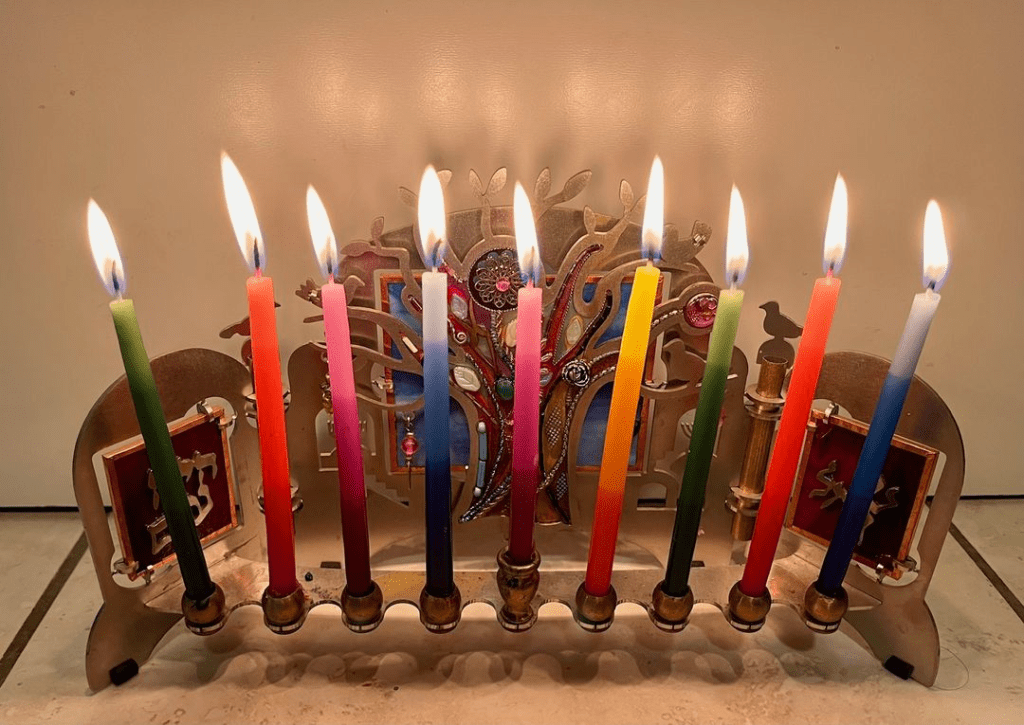
Can the bright candles of Chanukah
Light our path forward
Through the twisted tunnels
Of ancient feuds that
Tear us apart?
We hold our breath
Fearful of more destruction
As the embers of mistrust
Are fanned into uncontrolled flames
Spreading mourning and grief.
Can we rise above our scalding anger that
Consumes our energy
Triggers violence and pain,
Find the key to
Unlock the truth of our history
Stretch our imagination
Envision a new story
Encompassing us all?
We each are present
In this critical moment
For a purpose,
To make our unique contribution to
A cosmic tikkun
A transformational healing
By claiming power to
Shine our light.
In this month that has been, over history,
Time of great turmoil and trial
Let us penetrate necrotic layers
Of confusion and despair
Lift up our light
Illuminate a road to forgiveness
Discover a passageway through this morass
Creating a just and peaceful
Future for us all.
-Lucinda Kurtz
In Handel’s Messiah, the tenor soloist sings,
The voice of Him
That crieth in the wilderness:
Prepare ye the way of the Lord,
Make straight in the desert
A highway for our God.
Every valley shall be exalted,
And every mountain and hill be made low,
The crooked straight,
And the rough places plain.
These words are originally attributed to the prophet Isaiah, and are also spoken in the gospels by John the Baptist. This year, while singing in the chorus of Messiah, this text really grabbed me.
There are a variety of landscapes in our minds and hearts, carried both by us and by our world, where we long for the emergence of fairness, justice, and peace. Most often, we attribute the rapid changes of mountains, valleys, and roads to cataclysmic forms of destruction. It’s interesting to imagine these changes as forms of… cataclysmic rightness. All things suddenly shifting toward the ways they ought to be… the ways we long for them to be.
We carry landscapes of pain, loss, war, violence, and interpersonal conflicts. Are these ever made right…? It’s so easy to fold, or wilt, or stay cynical. So often, whether close to our own relationships, or on the world stage, we see forms of harm persist.
But then I also think of the Truth and Reconciliation Commission in South Africa.
But then I also think of the falling of the Berlin Wall.
But then I also think the 504 Sit-in of 1977 and the opportunities it opened.
But then I also think the Civil Rights Movement and the changes it initiated.
And I also think of…
a number of interpersonal reconciliations in my own life that are straight up miraculous and precious to me.
Maybe you have some too.
Wherever you are, and however you feel, I’m sure you long for cataclysmic rightness. I do too. An upturning toward what should be. Fairness, Justice, Peace. Purpose. Meaning. When we see it, we ought to shout it from the rooftops. When we can participate in making it so, we ought to lean our lives into it.
Hallelujah.
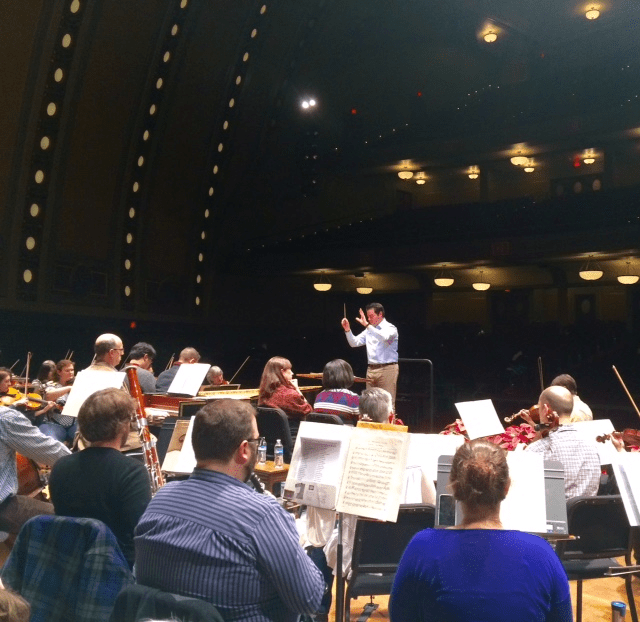
It’s a word from a chorus many know well, especially at this time of year. I’m grateful that I had the privilege to sing Hallelujah a multitude of times a few weeks ago. As I mentioned yesterday, I sing with a choir that has the longest annual tradition of singing Handel’s Messiah in the entire world. We’ve done this every year consistently since 1879.
While I haven’t sung this 144 times in a row, I’ve sung the Hallelujah Chorus innumerable times. Yet I’ve learned something new in the opportunity to sing The Messiah in its entirety. Based on where it’s placed in the greater work, the Hallelujah Chorus isn’t a chorus joy-filled triumphalism. It’s about liberation.
It’s about human liberation from oppression — deliverance from oppression caused by other humans. This becomes clear when we hear what precedes the famous chorus:
The bass soloist sings,
Why do the nation so furiously rage together?
And why do the people imagine a vain thing?
Then the chorus sings,
Let us break their bonds asunder,
and cast away their yokes from us.
Then the tenor soloist sings,
He that dwelleth in heaven shall laugh them to scorn,
The Lord shall have them in derision.
Thou shalt break them with a rod of iron,
Thou shalt dash them like a potter’s vessel.
That’s when the chorus responds with “Hallelujah!”
It might seem like an odd time to jump in and rejoice. But if we view this less as the powerful (including God) doing destruction for the sake of destruction, and instead, view this as liberation for the oppressed (God standing with them in power) the Hallelujah Chorus has a completely different purpose and tone.
Hallelujah!
For the Lord God omnipotent reigneth. . .
Not standing above and dominating as an oppressor,
but standing among the people as a powerful Liberator —
a Liberator who invites the participation of the people in their own liberation.
(“Let us break their bonds asunder”)
King of Kings and Lord of Lords. . .
Not a tyrant kind of King or Lord,
but King and Lord that is revealed as fully human —
a vulnerable child,
a poor carpenter,
a revolutionary,
a healer.
Throughout our performances, I invite myself to think about these things when I sing that Hallelujah. And I think about liberation in our world and desire that certain bonds will be broken.
The audience stands and adds their voices, too.
Resurrection,
Liberation.