Liminal Time

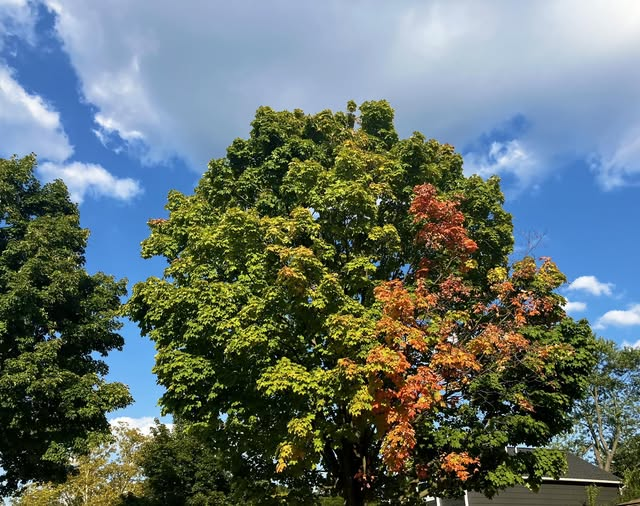
A tree in a nearby neighborhood. Some leaves are green; others are orange. Photo: Renee Roederer.

I was talking to one of my work colleagues about how wide the range of temperatures has been lately. The mornings are brisk, while the afternoons turn pleasantly warm — sometimes even hot. “If you love fall, there’s something for you, and if you love summer, there’s something for you. There’s something for everybody,” we said.

Culturally, it feels like fall. Programs have begun anew. School is back in session. College football is on Saturdays. But technically, it’s still summer until September 22. If you know me, I’m trying to savor every part of my favorite season.

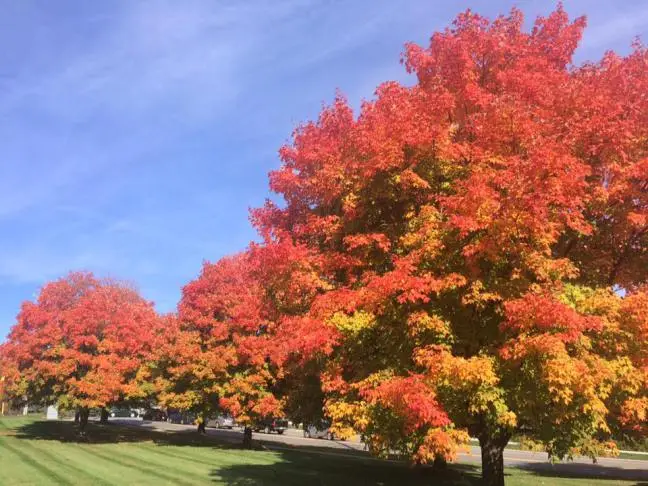
In a lot of ways, we’re in an in-between time. On a recent bike ride, I saw many trees just like that — in-between. Most trees are still photosynthesizing, but here and there, bright colors are revealed as the green begins to fade. This is a liminal time.

And maybe we feel in-between, too. Is any part of you… liminal?
Renee Roederer

What Does Depth Require of Us?

Dandelion seeds blowing in the wind. Public domain photo.

“What does depth require from us, from me?” Sitting with this question and quote today from adrienne maree brown in Emergent StrategyShaping Change, Changing Worlds.

“If love were the central practice of a new generation of organizers and spiritual leaders, it would have a massive impact on what was considered organizing. If the goal was the increase the love, rather than winning or dominating a constant opponent, I think we could actually imagine liberation from constant oppression. We would suddenly be seeing everything we do, everyone we meet, not through the tactical eyes of war, but through the eyes of love. We would see that there’s no such thing as a blank canvas, an empty land or a new idea — but everywhere there is complex, ancient, fertile ground of potential.

“We would organize with the perspective that there is wisdom and experience and amazing story in the communities we love, and instead of starting up new ideas/organizations all the time, we would want to listen, support, collaborate, merge, and grow through fusion, not competition.

“We would understand that the strength of our movement is in the strength of our relationships, which could only be measured by our depth. Scaling up would mean going deeper, being more vulnerable and more empathetic.”

“What does depth require from us, from me?”
-adrienne maree brown, Emergent Strategy, page 10

Naming the Thing

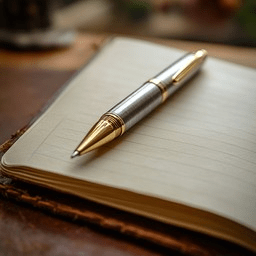
A pen resting on an open journal. Public domain.

There’s a moment before healing begins when all you can do is name the thing. Not fix it, not dress it up—just name it.

Sometimes, that’s the hardest part. Because when we name the grief, the loss, or the fear, we make it real. But we also take away its shadowy power. We begin to see it for what it is, and in that seeing, we create room for something new.

Whatever you’re facing, I hope you have the courage to name it. That’s where healing begins.

— Renee Roederer

You Are Valuable

In white, stenciled letters, there is a graffiti message on the pavement which reads, “Nice to see you.” Fallen leaves surround it. Public Domain.

You Are Valuable.

It’s that simple.
It’s that profound.

It is Truer than True.
You have worth that cannot be diminished.

No matter
any of the words that have stung in the past,

No matter
any of the dismissals people have thrown your way,

No matter
any of the failings that keep you up at night,

No matter
any of the items left unchecked on your to-do list,

No matter
any of the unkind comments said to your own reflection,

No matter
any of the the stigma people associate with the diagnosis,

No matter
any of the “gaps” on your resume,

No matter
any of the things pundits have said about you,

No matter
any of the fears you carry inside your living cells.

No matter
anything
anything
anything.

You are valuable.
Full stop.

With a love that can’t be lost.
With a life that can be lived.

Renee Roederer

Every Unique Performance of the “Mister Rogers’ Neighborhood” Theme Song

Dear Subscribers, though YouTube videos are embedding straight to my website, I’ve learned that they’re likely not coming along to you in emails. I apologize for that. So for you, here’s an excellent link. Did you know that the theme song in every episode of Mister Rogers’ Neighborhood is performed live and has unique differences? Enjoy!

Name Them

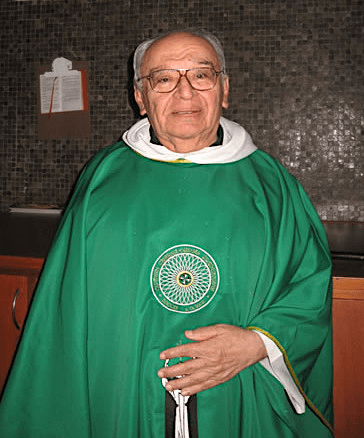
Gustavo Gutiérrez, Wikimedia Commons

I was sitting in a circle with college students, and we were discussing this saying of Jesus:

“When you give a luncheon or a dinner, do not invite your friends or your brothers and sisters or your relatives or rich neighbors, in case they may invite you in return, and you would be repaid. But when you give a banquet, invite the poor, the crippled, the lame, and the blind. And you will be blessed because they cannot repay you, for you will be repaid at the resurrection of the righteous.” (Luke 14:12-14)

There was some discomfort among students with the last portion of that teaching: If you will be repaid in a great resurrection, aren’t you still doing this to get something — at least in part? And is this just charity? Does this banquet have meetings of equals? Good questions.

But we were also moved by this thought:

When Jesus spoke these words, and when the first readers of the gospel heard them or read them, this list of invitees would have evoked names in their minds and hearts. They lived in small towns. They knew each other. They knew who was not getting invited.

Today, our society so greatly separates our socioeconomic realities, that many times “the poor” remain some kind of abstraction for us. We’re not always in relationship.

That’s when someone added,

“Gustavo Gutiérrez used to say,
‘If you say you love the poor,
name them.'”

Renee Roederer

How About If We Believe in This World?

Video Short: Naomi Klein on End-Times Fascism

“We are in a moment where our elites, whether they admit it or not, do understand that our economic model is at war with life on earth. What unites this kind of strange, Frankenstein coalition that Trump represents where he’s bringing together the richest people in the world who have ever existed with many working-class people. So what binds the vision? They all have given up on this world. They have all bought into an apocalyptical fever. I’ve been in a lot of progressive spaces in recent months where we’ve talked about building these very broad coalitions. I’ve never encountered a potential coalition more broad that the idea of, ‘How about if we believe in this world? How about if we believe in the future?” Because we’re up against people who are actively betting against the future.” — Naomi Klein

In the Year of Our Lord 2025, I Bought a Boombox

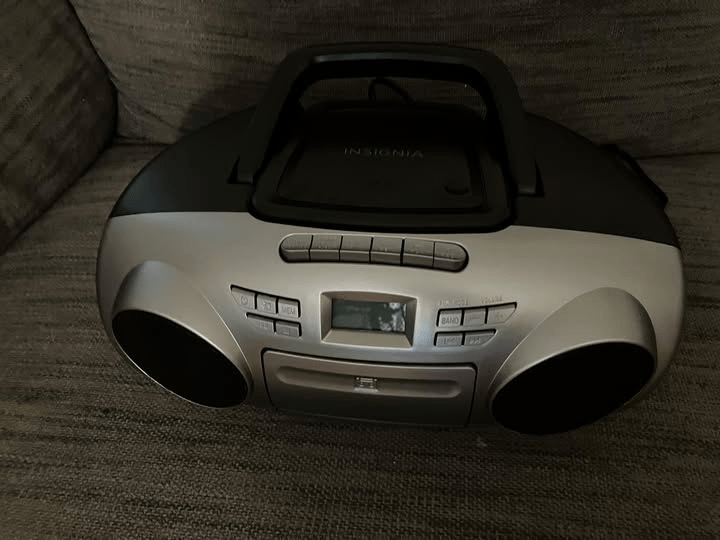
My new boombox on the couch.

Did you know that you can actually buy an FM/AM Radio-Cassette-Playing-Boombox at Best Buy? You can. Apparently, they are still being made new. In the Year of Our Lord 2025.

You may be wondering why on earth I would want to buy an FM/AM Radio-Cassette-Playing-Boombox. Turns out there’s a lovely reason.

I was rummaging through some things in my basement, when I found cassette tapes. They are sermon tapes from David, one of my most significant influences who died in 2009. It’s been many years since I’ve played any of them. In fact, I thought they were all lost when I had water damage in my basement four years ago. It turns out that the repair crew had just moved them.

I have hours of him talking — often, wise and deep, and sometimes, with hilarious stories and rants. I decided I would like to find a cassette playing boombox so I could revisit these, and I asked if anyone had one on an online Buy Nothing group. No luck there. So on a whim, I decided to search online, wondering if I might order one from a warehouse somewhere. It turns out that Best Buy still sells them, and my local store had them in stock. I went right over and bought one.

Last night, for the first time in years, I listened to David’s wisdom and hilarious stories and rants. I loved it so much. You might think that after losing a loved one, a voice might evoke tears of sadness or tears of joy. I actually did feel joy, but no tears. I realized that hearing him felt like the most normal experience in the world.

I think I’ve felt very connected to him the whole time.

Renee Roederer