Receive With Gusto

A loaf of bread, with a large piece torn off. Public domain.

I was walking toward a building near campus yesterday when a person waiting outside held the door open for me. The person was about to take in a big cart, but before moving it, it seemed easier to let me go through first. So the person held the door open for me as I approached it.

When I saw that this was about to happen, I immediately sped up my walking toward the door. I probably doubled my speed. Then the person said,

“Oh, no need to hurry!” This was spoken as a kind reminder that I wasn’t inconveniencing.

I thought about how frequently we worry about taking up space, or inconveniencing, even when we are given an authentic occasion to receive. Some of us have been socialized in this direction especially.

That’s when I thought of something that the poet Mary Oliver says in Don’t Hesitate: “Joy is not made to be a crumb.”

Likewise, I suppose,

The taking up of space — being noticed, being cared for — is not made to be hurried.

The gift of receiving is never made to be small.
Renee Roederer

What Makes You Feel Free?

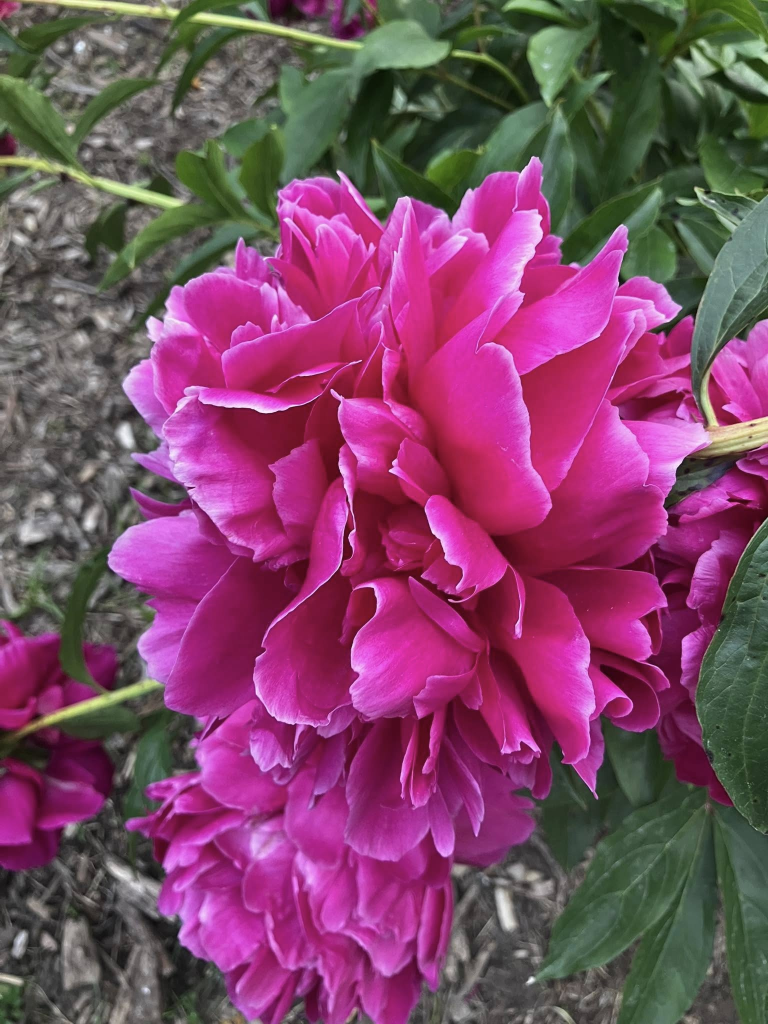
A bright pink peony at the University of Michigan Nichols Arboretum. Photo — Renee Roederer

This summer, I’ve been keeping a list on my phone.

What Does Freedom Feel Like? (Here are just a few things on my list)
–The warmth of sunshine
–The awareness that you’re making a good memory while you’re in it
–The wind on my face while biking
–The sudden scent of honeysuckles in the air
–Smooshing your face into a peony
–Inbox zero
–Not bowing to a tyrant

As you’ll see, my last entry is a bit more literal. But these are just a few of the things that help me feel free.

What about you?

And if we have moments like these, how can they bolster us and encourage us, so that we have energy to participate in building freedom for everyone? Everyone deserves moments like these.

Renee Roederer

We Need Gentleness

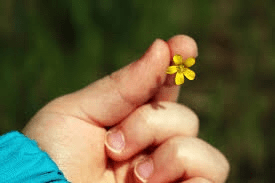
The hand of a child holding a small, yellow flower.

I was present in the midst of a group conversation where multiple people said,

“You just don’t see that anymore.”

and

“I just don’t see many present examples right now.”

and

“It’s so rare to experience that these days.”

At one point, we were talking about forgiveness. At another point, we were talking about kindness. No one in this conversation had become cynical; instead, I believe I was hearing a yearning for expressions of care, both public and personal.

Or to use another word, we need gentleness. We need to practice it. We need to receive it. We need a gentler world.

This is different, of course, than needing a comfortable world. There is no need decrease the tenacity and strength of voices crying out in anger and pain when they are experiencing violence and being marginalized. Sometimes, we make calls toward kindness and “civility” so we don’t have to be uncomfortable with the righteous anger and pain people are expressing. No, not this.

But I wonder what would happen if we responded with kindness and tenderness? I wonder what would happen if we responded not with defensiveness but gentleness?

I also wonder what would happen if we chose to practice more gentleness toward ourselves right now. This is a human need all the time.

In all these things, I’m just wondering aloud today. I would love to hear from you too.

What do you wonder?

What do you think?

What do you long for?

Renee Roederer

We

A kapok tree with visible roots. Public domain.

Each of us is unique and particular, distinct and differentiated,
yes
(and these are great gifts)

But in every moment,
each person is a We.

Every single one of us is a Collective —
we are Plural
not only in a myriad of
thoughts,
feelings,
memories, and
impulses,
each as plentiful and contradictory as the next —

but also

We represent internalized others.
We are a nexus of relationships, embodied.

Who is always rooted in Whose.

Whose —
not possession or ownership.
not fate or determinism.

Whose —
belonging,
collective calling,
sacred possibility.

Sacred actuality.
We only need to awaken to it.

Renee Roederer

Community is the Remedy — My Interview with Miles Levin

I’m grateful to share this interview with Miles Levin — filmmaker, writer, creator, speaker, and a tremendous friend. Miles is the creator of Under the Lights, both a short film available on YouTube and a full feature film set to release later this year. Together, we recorded this conversation in partnership with MiYET (Michigan Youth with Epilepsy in Transition) to talk about the film and offer encouragement to teens living with epilepsy as they imagine goals and build a sense of purpose for their future.

As we explored the themes of Under the Lights, we kept coming back to one core idea: “Treat epilepsy with community.” This phrase, first lifted up at the Epilepsy Foundation of America Leadership Conference, feels like both a conviction and an invitation. I’m grateful to Miles for crafting a story that sparks meaningful questions and reminds us of the power of connection — because none of us are meant to face life’s challenges alone. I hope you’ll watch and share!

A Moment for Levity (And Some Fun Returns)

Earlier this week, I watched a 1984 classic in a movie theatre. It was a back for a theatre viewing.

I love every Christopher Guest mockumentary. I’ve only seen This is Spinal Tap once, and the re-viewing didn’t disappoint. So funny! And this is the part that surprised me most: The same cast is coming out with a part 2 (like 40 years later!) in September — Spinal Tap II: The End Continues

Renee Roederer

Our Breath

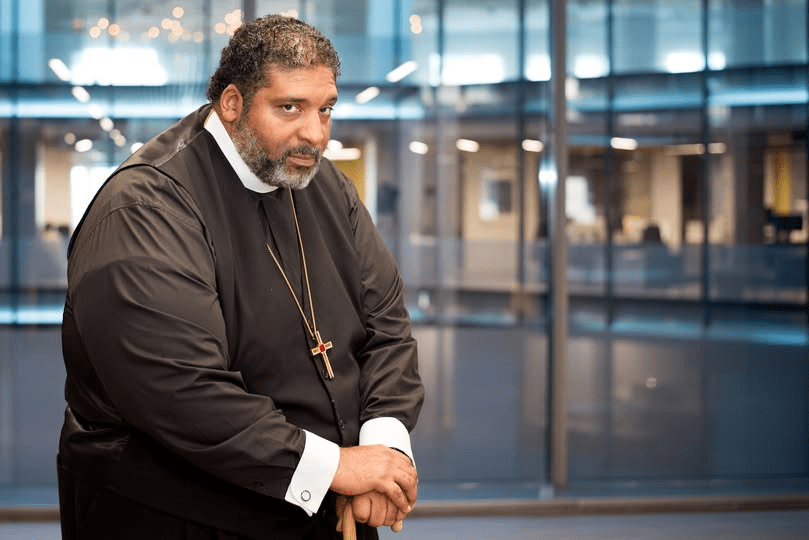
Rev. William Barber II; I found this image here.

I appreciate this extended quote from reporter Adam Harris, writing in The Guardian about a recent direct action and prayer gathering in Washington, D.C., led by participants in the Poor People’s Campaign. Reflecting on the dire consequences of what he called the “One, Big, Beautiful Bill,” Rev. William Barber II addressed the assembled crowd:

“Barber told stories of movement members who died without care – Pam in Alabama, Jade in North Carolina – who called him not for comfort, but for commitment. Don’t quit, they said. ‘They had the courage to fight even while they were dying,’ he said. ‘We ought to have the courage to fight while we’re living.’

“Then he slowed and asked a simple question to those gathered: ‘What will you do with the breath you have left?’ The question hung in the air. He didn’t wait for an answer. A few days later, he told me why it sticks with him. “’hat was George Floyd’s cry. That was my brother’s cry – he died in his 60s, waiting on healthcare. That was the cry of people during Covid: ‘I can’t breathe.’ That’s what I hear when I say that,’ he told me. ‘The breath you have left – that’s what you’ve been given. That’s what you owe.’

“Breath is a gift and a responsibility. ‘We’re not gonna sit here and let healthcare die,’ he said. ‘We’re not gonna sit here and let living wages die. We’re not gonna sit here and let democracy die. It’s time to live. It’s time to stand. It’s time to speak. To protest. To live justice.’ The line echoed down 1st Street. Whether it reached the halls of power was another question.”

You can read the entire article in The Guardian.

Renee Roederer