This is a migrant poem a farmworking poem, a poem that covers itself in long sleeves to avoid the burning sun.
That drinks enough water to avoid dehydration but not enough to get water sickness.
This poem carries a machete, a hoe, a spade, a knife, shears, and a file for filo.
This poem walks irrigated rows collecting mud on its boots that add five pounds to each foot.
This poem guards the cornfield where his sister, his mother, and his cousins, squat to pee.
This poem ducks down hitting the dirt to avoid the echoing crop duster spraying anti-poem toxins that burn our eyes and throats.
This poem is egg and chorizo burritos in aluminum foil, steamed shut by the heat waiting for you at lunch in a foam cooler in the trunk at the end of rows of soybean. This poem. This poem smells of blood—and meat.
This poem flows from carcasses into open drains of slaughter houses, on kill floors, in chilled freezers with knives cutting, cutting, cutting, cutting—always cutting.
They duct tape knives into this poem’s hands to cut even when its cut hands can cut no longer.
This poem is a gift of a strong back, of sturdy legs, of silence, of patience.
And a never-ending work ethic a never ending work ethic a never ending work of ethics.
This poem shows you the bigger picture. This poem is pragmatic, strategic, and erratic.
This poem reaches as it climbs ladders, as it stoops over, as it pulls from branches, vines, as it unearths other poems and tosses them into buckets and sacks slung across its stanzas.
This poem is paid by the word, by the piece, by the hour, by the day, by the acre.
This poem has no benefits, no days off, no health insurance, no childcare.
This poem is child labor. This poem is sexual assault. This poem is deportation. This poem is missing wages, broken vehicles, sunstroke.
This poem avoids irrigation ditches where La Llorona hopes to drown it.
This poem knows she commands water and sends waves of humidity and tempting mirages of cool rippling lakes.
This poem wears a rosary and a scapular and prays to St. Francis of Assisi to protect them from snakes and rats that live in the fields and to St. Michael the archangel to protect them from the farmer’s son
who watches his sisters who follows his sisters who pulls at his sisters.
This poem wakes up early, works all damn day, sweats all damn day. This poem always needs a shower to wash off the dirt, to wash out the dirt, to wash away the dirt.
This poem goes to bed early to do it all again tomorrow.
This Poem is a Migrant Poem. A. Farm. Working. Poem. ~ Miguel M. Morales, This Is a Migrant Poem
A long time ago, back in high school, I came up with something that was definitely on the cheesy side, but it meant a lot at the time. I was in a leadership position in our A Capella Choir, and I introduced what we called “Warm Fuzzy Friday.” I can’t help but laugh a little now, but honestly, it was fun, and it brought meaning to our group.
The idea was simple: Every Friday, anyone who wanted to participate could leave notes of appreciation for others in their choir folder slots. A little shout-out for someone who had made their week better.
Fast forward multiple decades later, and I want to bring that back, but with no singing involved. Instead, I’m inviting you to send a quick message today — a text, a social media DM, or an email — and let someone know what you’ve appreciated about them this week. What did you notice in them? What’s something they’ve done that you value? What are you thankful for in your connection with them?
Give it a try. Notice how it feels, not just to have those thoughts about someone, but to actually share them. Let’s make this our own version of a “Warm Fuzzy Friday” (or whatever we want to call it on this Thursday) and spread some gratitude today.
During most of this season, my commute has been difficult. Even when there’s no construction, it typically takes around 40 minutes. But now, with a whole section of the interstate under construction, it takes over an hour, and that’s with slow-moving traffic.
I haven’t loved this commute… until recently. I realized that if I’m going to spend an hour or more driving, I might as well take the back roads. And right now, those roads are overflowing with green — trees, grasses, and sprawling fields in every direction. There are times when we become used to it, but it’s pretty remarkable how much grows so quickly, and so abundantly. Growth everywhere.
And in lifting this up, I’m not attempting to make some grand, sanguine, pristine little point in a world where people are bombing, starving, separating, deporting, and torturing one another.
I’m just saying that there might still be life yet. And pockets of life might surprise us.
When I’m feeling a need to relieve stress or reconnect with the present moment, I often turn to a simple, grounding practice: I listen for the birds.
Whether I’m on a bike ride or taking a walk, if I invite myself to tune in, I’m always surprised by how much listening to birds can shift my energy. It helps my body feel grounded. The sounds of birds chirping have a way of bringing me back into the moment.
Birdsong isn’t just a beautiful sound or a pleasant reminder of spring. There’s something deeply calming about it on a biological level. Our ancestors learned to associate bird songs with safety; when birds were singing, it usually meant no predators were nearby. Their songs signaled that it was safe to relax.
This instinct is still with us. When we listen to birdsong, especially in the midst of a stressful day, we activate our parasympathetic nervous system. This is the part of our nervous system that helps us calm down, counteracting the “fight or flight” responses that the sympathetic nervous system triggers when we’re under stress.
In a world that often feels chaotic, taking a moment to listen to the sounds around us can serve as a powerful, centering too. It’s a biological reminder that we don’t always have to be on high alert. Sometimes, the best stress relief is as simple as paying attention to what’s around us.
Children in Israel are actively hiding from of rocket fire.
Children in Iran are fleeing Tehran where bombs are raining down.
Children in the United States are going to bed worried about their parents stationed overseas.
Each example, different and positioned particularly, but each life, mattering. Violence wreaks havoc, tearing what could be — and who we could be — apart.
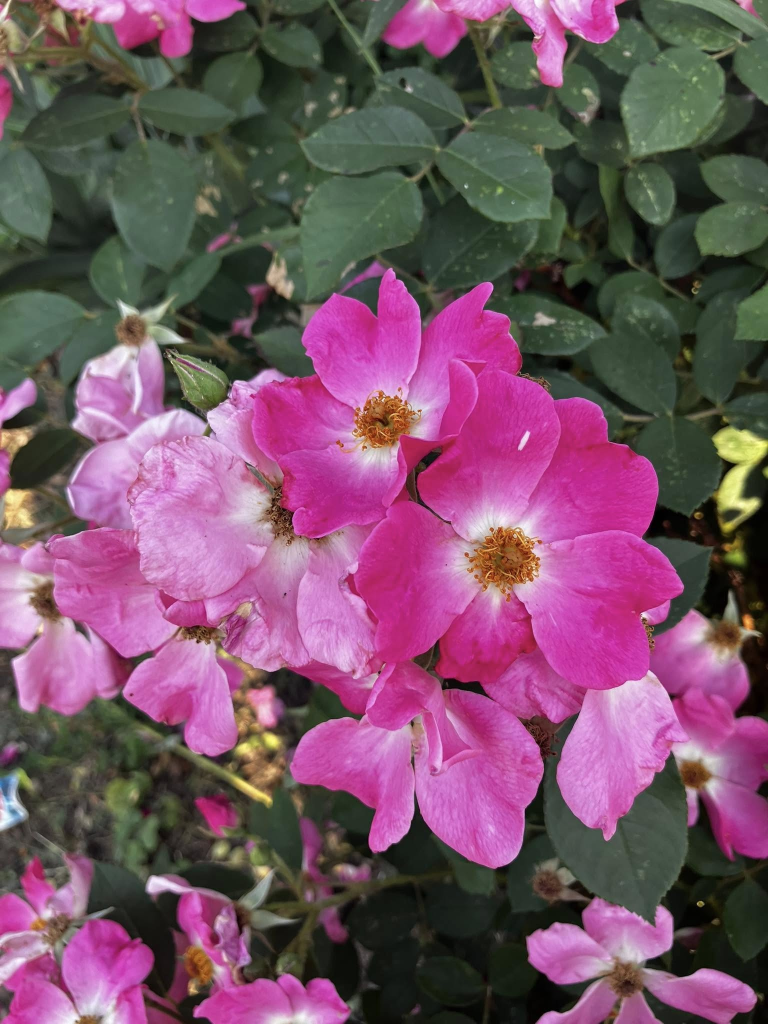
During the final weeks of April, I always make a point to bike to a house not far from mine. “This is the daffodiliest house,” I often say. It’s true. During this time of year, every part of the yard is filled with daffodils. It’s beautiful.
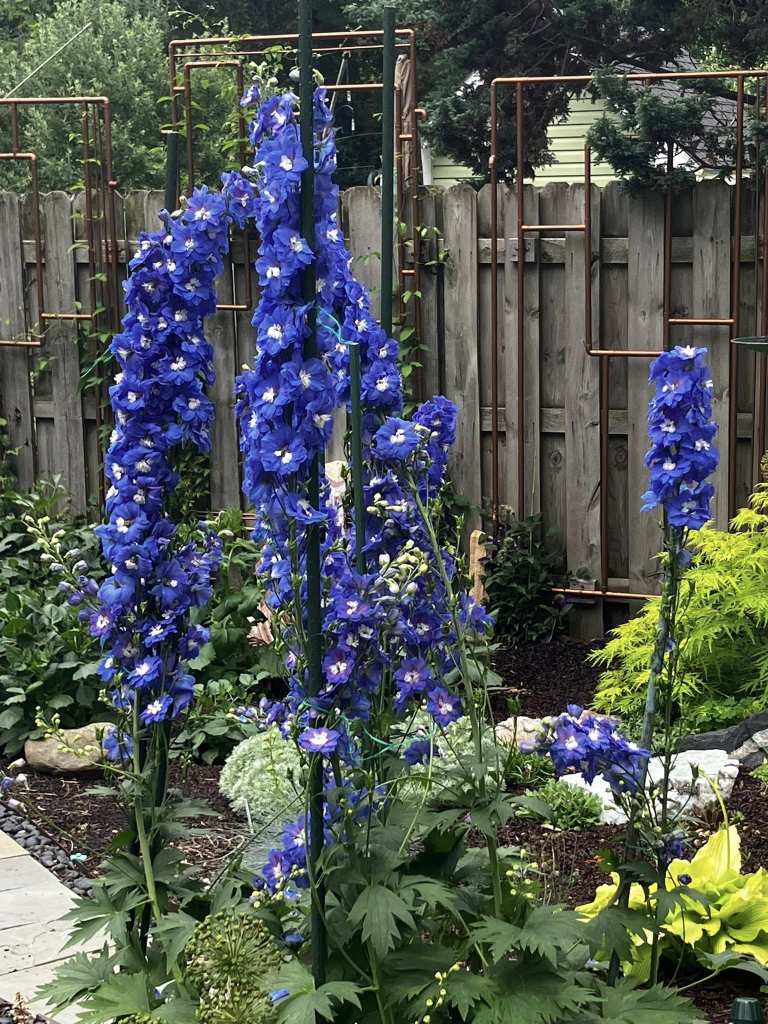
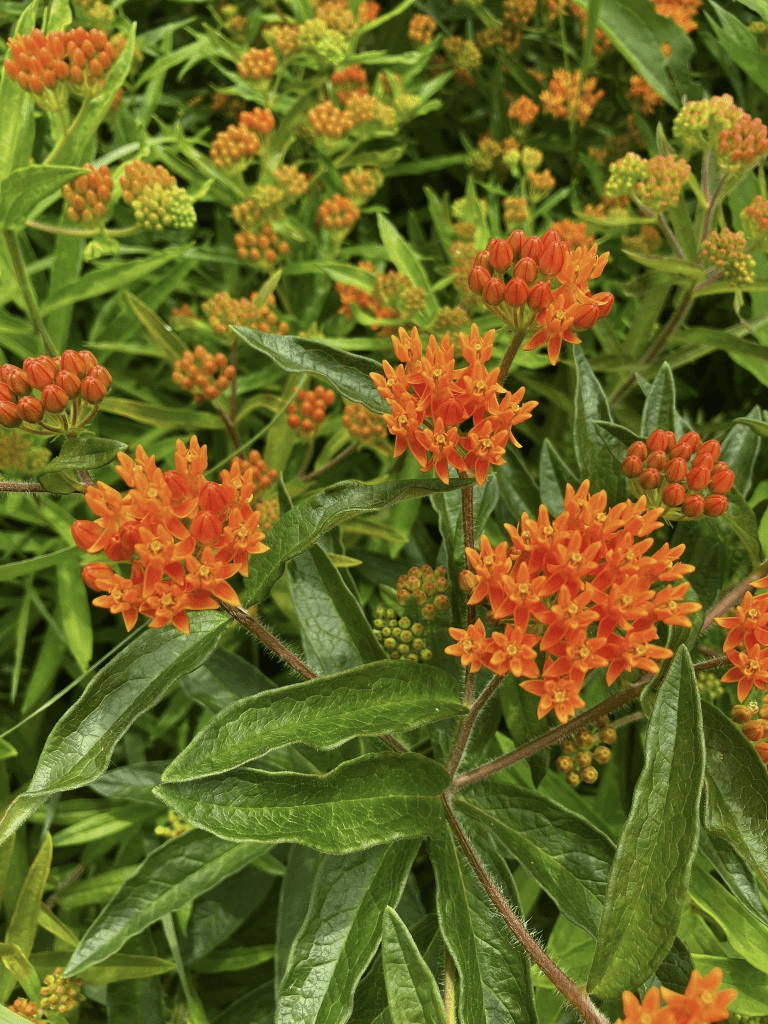
My daily bike rides frequently take me past this house. The yard is still filled with plants and flowers, but now, in June, they are a different variety. It’s not as though the homeowner uprooted the old plants to make room for new ones. Everything in this yard is perennial. There isn’t room for all of them to bloom at once, but bit by bit, they all get their time. And each will also return.
Our communities are like that, too. We can share leadership, take turns, celebrate each other, and make room for everyone to grow.
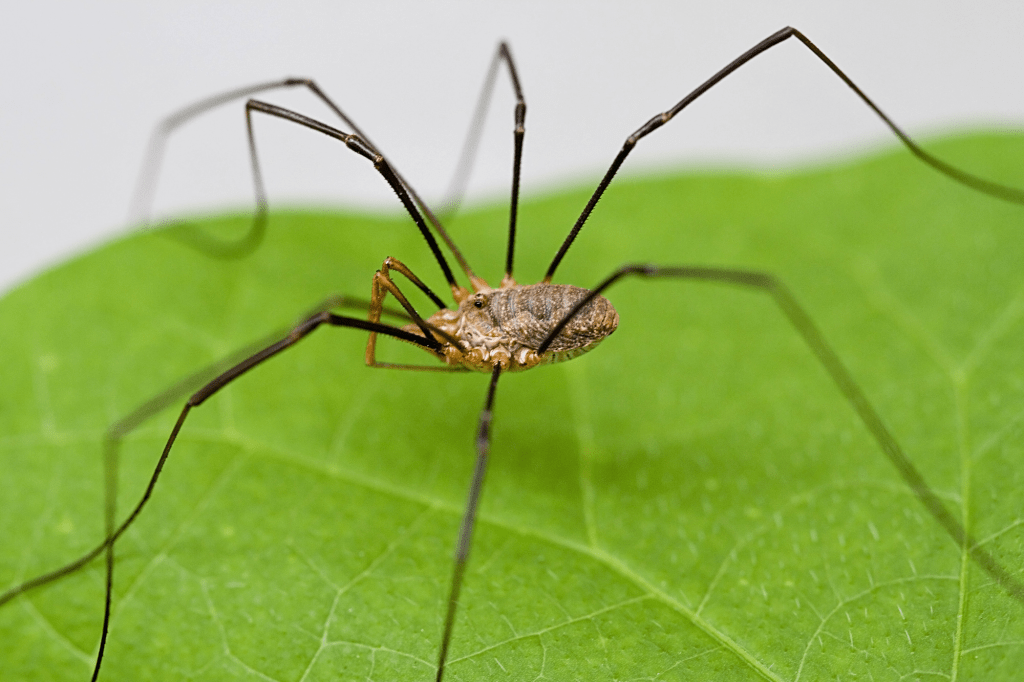
I am afraid of a harmless thing. It looks like it could creep, or bounce, or pounce, or charge awkwardly with its considerable appendages.
But it does none of these. It stays in place all day long, content to rest in a single crevice, or reside in clumps of countless others.
It wishes me no harm; likewise, I wish it no hurt. Unlike curious schoolchildren at recess, I will not examine it, or smash it, or dash it, or remove any of its legs.
But – I will stand irrationally in fear. I will freeze in the presence of a childhood phobia. No matter the logic: “It can’t bite you,” “It can’t poison you,” “It can’t jump on you,” I will cringe with revulsion and anxiety. I am afraid of a harmless thing.
It makes me wonder. . .
When the word can’t enters our thinking, or the word won’t enters our hoping, or the word don’t enters our dreaming, perhaps we fear something harmless too?
My Mom, having a blast, with some Storm Troopers at the Metro Detroit Stroll for Epilepsy™
Last Saturday, my Mom had a blast. She attended the 33rd Metro Detroit Stroll for Epilepsy™ at the Detroit Zoo, hosted by the Epilepsy Foundation of Michigan. She took great pleasure in snapping photos of teams that were present — some in purple shirts and others in full costume. And then, of course, she asked someone to snap a photo of her with the Stormtroopers that were there. They had the ability to make a blast, too, but of a different sort.
This gathering is so special. Through this event (and afterward), the Epilepsy Foundation of Michigan seeks to raise $198,000. Every dollar funds our mission and vision and ensures that no one faces epilepsy alone.
With this in mind, I’d like to share an excerpt from the book I’m currently writing. Beheld: A Spirituality of Kinship focuses on themes of connection, solidarity, and choice-of-one-another in community, and Part 1 concludes with a story from the Stroll.
And as I prepare to share that, I also want to offer an invitation: As you know, there is a great deal of economic turmoil right now, and along with it, uncertainty about how nonprofits will be impacted. We are in a strong position currently and just as committed as ever to this mission. But for all of these reasons, we could really use your help.
Beheld: A Spirituality of Kinship — The completion of Part 1
When we are embraced by choice, we are invited into a way of life. We become empowered to choose one another more freely and fully. Our intentions, actions, and commitments — our sacred acts of choosing — become spiritual practices. In these ways, we help to dismantle the barriers between us, whether cultural or self-imposed.
I am privileged to belong to a community that grounds me continually in these commitments. I lived with epilepsy in childhood, and today I serve as a staff member at the Epilepsy Foundation of Michigan. In this role, I’m honored to accompany people living with epilepsy, along with their family members and friends.
I have witnessed heartache as people navigate life changes and loss. I have watched people come alive in advocacy. I have listened as individuals voice their personal stories with vulnerability and bravery, and I have marveled at their resilience. I have celebrated with community members as they shed stigma and internalized ableism and step into strength, belonging, and empowerment. It is a gift to be invited into these relationships, and it is an honor to be shaped by them.
One in twenty-six people will be diagnosed with epilepsy at some point in their lifetime, making it more common than many realize.[1] Yet because of long histories of misunderstanding and suspicion, people with epilepsy have often been marginalized. While medicine and public awareness have advanced immensely and continue to improve, our collective history, both in this country and around the world, includes devastating chapters of institutionalization, forced sterilization, exclusion from schools and community spaces, and laws that once restricted marriage and employment. Our community has made vital strides in securing legal rights. And yet, the echoes of that history still linger, contributing to misunderstanding and discrimination today.
For all these reasons, a powerful shift occurs every time people with epilepsy move from isolation into shared kinship. Within our Epilepsy Foundation network, we joyfully proclaim a collective vision that no one faces epilepsy alone. I’ve had the great privilege of witnessing the transformation that unfolds when people feel supported and are then empowered to extend their own care to the wider community.
The Epilepsy Foundation of Michigan serves the entire geographical region of Michigan, and many of our community members cannot drive due to their epilepsy. For both reasons, we often provide programming and support groups virtually, so people can participate over distance.
But geographical distance does not deter people from developing deep bonds of kinship. Often, despite never meeting physically in person, community members connect for years over Zoom meetings and connectional phone calls. I remember two women who met in a virtual support group and then began watching movies in sync while talking over the phone. I recall a couple of community members who developed a friendship across distance and then traveled to each other to go grocery shopping together with their remaining SNAP benefits. A virtual friendship turned into a real-life visit when one woman asked her husband to drive her across several counties so she could help her friend fix an appliance. Weekly, in addition to bonding over epilepsy, one of our support groups – this one, all women – also connects through their love of the Detroit Tigers. These friendships are strong, even without shared, physical space. Then, when there are occasions to meet in person, it can feel like coming home to someone you’ve never met face to face.
Each year, we hold the Metro Detroit Stroll for Epilepsy™ at the Detroit Zoo, and approximately 2,000 people gather to honor and celebrate the epilepsy community. This event is our largest fundraiser, making it possible to offer nearly all our programming at no cost. But beyond the fundraising efforts, this event feels like a family reunion. There is a palpable sense that each person is among “my people.” Individuals from all walks of life come together, representing a wide range of stories, identities, and zip codes, but there is a shared sense of kinship and celebration. An individual or family can arrive at this event and feel in their bones, perhaps for the first time, that epilepsy does not have to be a marker of isolation, discrimination, or hopelessness. It can become the gathering center for a community of dignity, worth, and pride.
And so, I close with a memory from the Stroll that embodies this kinship.
I stood behind a table, ready to welcome participants and share the spread of flyers highlighting the Epilepsy Foundation of Michigan’s programs and services. From my vantage point, I had a lovely view.
In front of me, I saw many people visiting booths, enjoying snacks, and greeting one another. Many were wearing purple, the color of epilepsy awareness. Some were decked out in creative costumes or wore identical t-shirts designed to celebrate their Stroll teams. Children were plastered with face paint, and the DJ played music with a beat. Costumed characters were mingling with the crowd — some swishing light sabers in Star Wars costumes, and others dancing joyfully as Teenage Mutant Ninja Turtles. It was quite a scene.
But within a crowd, there are always people with names, and there are relationships that have history. Amid the bustle, I spotted two people I know very well. They weren’t side by side, but unbeknownst to them, they were in the same vicinity. They had never shared the same physical space before. Week after week, they participated in the same virtual support group, not even by video — but by phone. Most of our support groups migrated to Zoom during the Covid-19 pandemic, but that original support group used a conference call line. And they liked it that way.
So I moved from behind my table, and gesturing them together, I called out with joy,
I watched Steven practically run to Allison. He scooped her into an embrace, and they had a long hug of recognition. For about 40 seconds, they just held each other in gratitude for their friendship. Behind that hug were stories of resilience from moments when they feared they wouldn’t make it through. But they did, and in that hug, they knew it. One friend towering tall; another friend, petite, using a wheelchair. Epilepsy was no longer a dividing wall, a reality of barriers, or an occasion to shrink in fear.
Knit together in a community shaped by countless acts of choosing — saying yes, beholding, marveling — they had practiced solidarity with one another in times of joy and sorrow. They embodied what kinship looks like in action. And in their embrace, they bring us home to that very question:
[1] Centers for Disease Control and Prevention. “Epilepsy in Adults and Access to Care—United States, 2010.” Morbidity and Mortality Weekly Report 61, no. 45 (November 16, 2012): 909–913. https://www.cdc.gov/mmwr/pdf/wk/mm6145.pdf.
[2]I have changed both their names and am sharing this story with their permission.







 Smuggling Grace