Responsible _______

Small, white pieces of paper with text that reads, “Responsibility,” “Duty,” “Accountability,” “Liability,” and other words that are not fully in view. Public domain image.

Two phrases popped into my mind. I hadn’t thought about them in a long time, but years ago, I read them in a book and found this to be a helpful framing.

When we think about responsibility, it’s helpful to remember that there is a difference between being responsible for and responsible toward.

Very often, we feel responsible for that which isn’t ours and that which we didn’t cause. We take on other people’s emotional states. We believe it is our responsibility to “fix” others. We believe that if someone is in a difficult mood, it must be our fault. We take responsibility for that which isn’t ours.

We are not responsible for these, but we are responsible for our own actions and emotions. And of course, we also can respond other’s needs with care.

As we think about responding, I think a better framing involves being responsible toward. We have a responsibility to live our values and be our best selves. We send these toward interpersonal needs and collective needs. We will also fail at this. But we can come back to these values continually.

There are many things in the world that need our care and attention. In these, we need collective action too. We are responsible toward them. We didn’t always cause them (caveat, that we’re sometimes complicit collectively) but if we are to live our values and seek to be our best selves in community, we will need to act.

In some types of instances, I hope that we will feel freed from being responsible for, and in others, I hope that we will feel empowered to be responsible toward.

Renee Roederer

Mental Health Monday: Slow-Moving

The sun shines through a pine tree.

I did things this winter. Actually, I was wildly productive. I saw friends too, and I think one could even say that, relatively, I had a life. But it was winter. And I was busy. And an authoritarian became President.

Taking all of this together, jokingly—but probably not so jokingly?—I recently told a good friend that I think my most present companion this winter was my Mental Load. Every day, I found myself checking off so many mental boxes. The beginning of the year is often my busiest work season (great things underway!) I was working on home repairs, too. And I found that one of my best ways to cope with Trumpism, at least initially, was to have solid, unchanging structure.

So every day, Mental Load and I were hanging out and doing everything together. Now, I’m ready for something different.

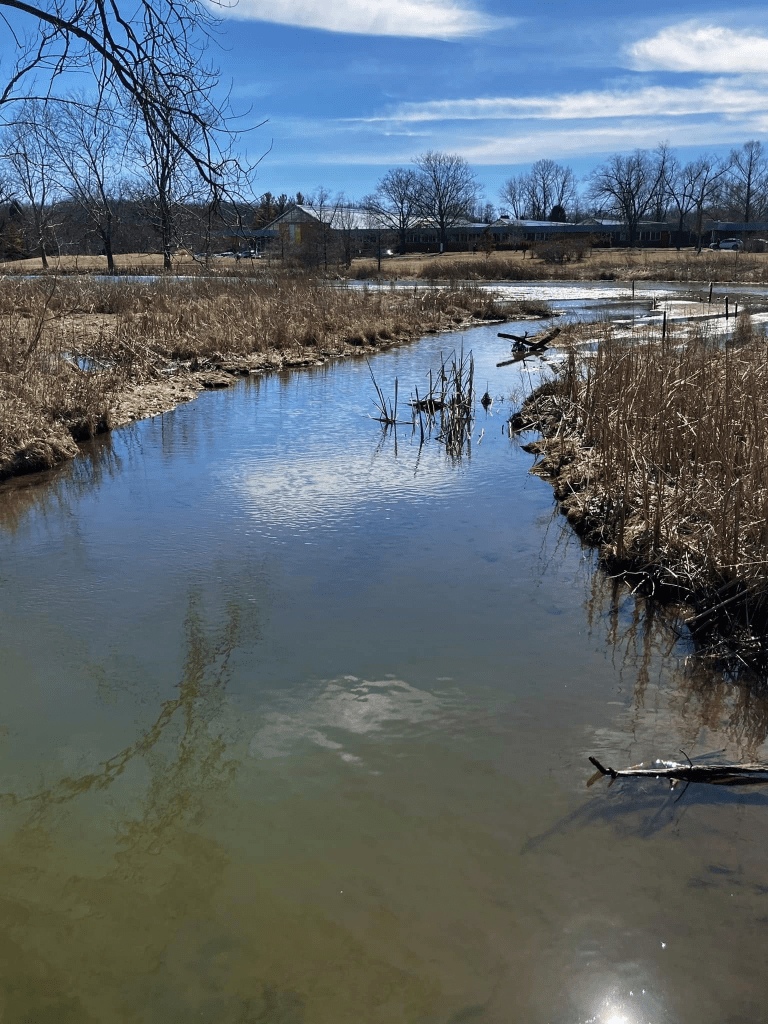
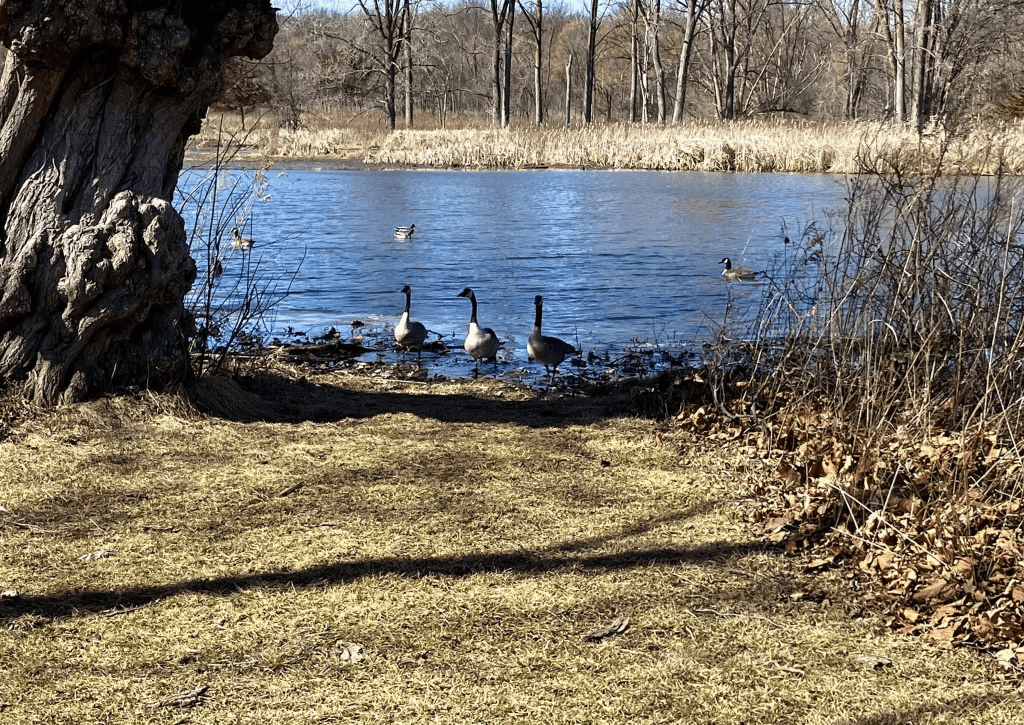
Recently, I arrived at one of our local parks to join a group of strangers for a Wonder Walk. Yes, that title sounds immensely cheesy, but in actuality, it was lovely. I turned on Strava because it’s been so long since I’ve been able to record a walk outside, but we didn’t even walk that far in terms of mileage. We walked slowly, and our outdoor docent stopped often to invite us to listen to birds, notice a beaver dam, and become aware of various “harbingers of spring.”

We were slow-moving. It was wonderful.

It was the opposite of “I must check off every mental box to keep it all moving forward.” We just allowed ourselves to be present in the moment. There was a blue sky and a lot of birdsong. I loved it.

So if you and Mental Load need to split off and each do your own thing for a few days, a weekend, or even a half hour, I recommend making sure you get your own time.

Renee Roederer

Emergence (We Can Shape Change)

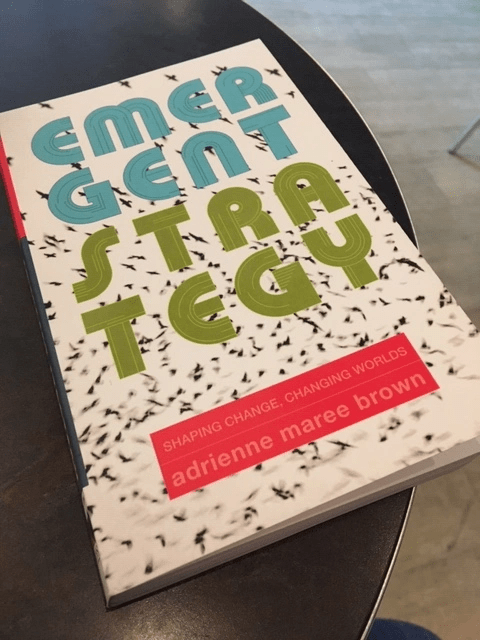
“Emergent Strategy: Shaping Change, Changing Worlds” by adrienne maree brown. 

I love adrienne maree brown’s book Emergent Strategy, and upon a cursory search on this blog, I think I’ve written five different posts about it. The book is an empowering paradigm shift in how we understand our relationships, our connection to the nature, activism, organizing, and our processes for affecting change.

Though I’ve written about this a lot over the years, this post is really a hat tip to Rev. MaryAnn McKibben Dana who has been writing about Emergent Strategy during Lent in her subscriber newsletter, The Blue Room. She shared a few quotes from adrienne maree brown this week along with her own reflections. I thought, “I’d like pass along those quotes too.” So here they are. (Thank you, MaryAnn!)

adrienne maree brown likes to say, “In the framework of emergence, the whole is the mirror of the parts… the health of the cell is the health of the species and the planet.”

She talks in this conversation with Krista Tippett about working as an activist during a presidential season:

“[“But] it’s layer on top of layer on top of layer. And if none of us are practicing democracy anywhere, it’s not going to just suddenly work at the top layer…So I started asking people, because I was touring a book we had written. And I started asking people, Do you practice democracy — anywhere in your life? [laughs] Not even politically, but just in your household? Who makes the decisions about the budget? …There was almost nobody who was practicing it on their block or in their community or in their organizations or other places. Everyone’s kind of dodging the actual work of democracy, small-d democracy.

“So we’re doing all this organizing, and it clicked for me… we are trying to just change the top layer of this very layered cake, this very layered process, this system of governance.”

And here are the principle’s of Emergent Strategy, listed by adrienne maree brown. She talks about each in more detail throughout the book:

Small is good, small is all. (The large is a reflection of the small.)

Change is constant. (Be like water.)

There is always enough time for the right work.

There is a conversation in the room that only these people at this moment can have. Find it.

Never a failure, always a lesson.

Trust the people. (If you trust the people, they become trustworthy.)

Move at the speed of trust. Focus on critical connections more than critical mass — build the resilience by building the relationships.

Less prep, more presence.

What you pay attention to grows.

What do you think?

How to Practice Solidarity

File:Transgender Pride flag.svg
Transgender pride flag. Public domain.


Frank Zamora, a man who lives in Texas, was recently fired from the Texas Real Estate Commission for refusing to remove his pronouns from his email signature.

Imagine, retribution for… pronouns. I’ve already used several in this post. They are a simple part of our everyday lives. But of course, because they are associated with markers of identity for trans people, who many in our government and in our country are willing to discriminate against and harm at any turn, pronouns have been politicized.

When Frank Zamora — a cisgender man — was required to remove them from his email signature, he stood his ground, choosing not to do it, even if it risked job loss. That risk then became reality. In the Austin American-Statesman he said he “could not, in good conscience, contribute” to “a broader effort to make LGBT+ people feel unwelcome in the state of Texas.”

In his letter to his employers, sharing that he would not comply with the new pronoun mandate, he shared, “While many may consider an email signature block to be a strange place to draw the line, I consider it the front line of protest before actual discriminatory policies are put into place and I could not in good conscience let the first domino fall without a strong, formal declination. I will not contribute to any action, however small, that could lead to the discrimination, judgment, or harm to any minority group of fellow employees whose only crime is existing as the people they are.”

It’s so important to take risks where we can.

Renee Roederer

Both, Please by Rev. Sarah Speed

Wisteria, Wikimedia Commons


Both, Please

It’s one thing to speak of love. It’s another
to hold a newborn in your arms,
to sing someone to sleep,
to lean down and listen for their breathing.

It’s one thing to speak of faith. It’s another
to press your forehead to the floor,
to cry out in prayer,
to ask the hard questions and still
thank God for the meal.

It’s one thing to speak of the Divine. It’s another
to walk under a tunnel of wisteria,
to stand barefoot at the edge of the sea,
to hear the birds sing as the sun returns
and whisper, Thank you, thank you, thank you.

It’s one thing and another, so I pray,
Give me both, please. Show me both, please.  

Poem by Rev. Sarah Speed