“The first order of business is to self-regulate.”

I commend this whole video from Rep. Alexandria Ocasio-Cortez, but I especially want to encourage folks to watch the first four minutes.

“If you’re feeling overwhelmed, you’re not alone… The first order of business is to self-regulate. What authoritarian regimes often try to do is what is known as ‘flood the zone’ — to do so much at once, or try to do so much at once so that you become overwhelmed and paralyzed. And it’s important for you to understand that the paralysis and the shock that you feel right now is the point. They are trying to induce a state of passivity among the general public. So it is of personal importance for you, and it is also of political importance to take a breath. That does not mean tune out. It does not mean to get apathetic. It does not mean that you just have to forget or whatever. It just means, take a breath.” — AOC


Additionally, February is Black History Month, and this is an excellent time to celebrate and learn from Black disability activists and advocates who have shaped our communities, nation, and world. This month, I will share here about some of them.
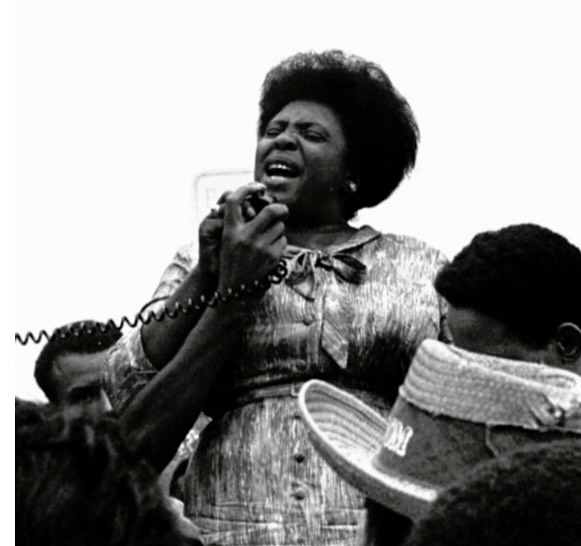
Fannie Lou Hamer

“Fannie Lou Hammer was a legendary civil rights, worker’s rights, women’s rights, and voting rights activist. Hammer was disabled, living with the long-term effects from having Polio as a child, being sterilized while getting surgery without her consent, and becoming physically disabled due to severe violence in a Mississippi jail for attempting to vote in 1963. Her efforts and activism greatly impacted the civil rights movement She gave one of the biggest speeches of all time at the Democratic National Convention of 1964 and spoke openly about her experiences and the racial issues in Mississippi.”

You can learn more here: https://disabilityrightsflorida.org/blog/entry/impactful_black_disability_advocates_and_advocates?fbclid=IwY2xjawIQr3tleHRuA2FlbQIxMAABHQODsg4f260VhmE8hT0u9-FVmot_FVQOY3faWH1x1fiNeQJG4nbNmTN-fw_aem_s2fCEKBlBXivu0hA4n5k5w
That tiny thing you’re great at. . . is a big deal.

A drop falls into the water and makes ripples. Public domain.

Here’s a piece that I first shared on December 7, 2016. I thought this might be helpful again today.

That tiny thing you’re great at. . . is a big deal. Really. When shared with others purposefully and resourcefully, it catalyzes change. So what is it?

– Do you have an ability that seems tiny only because it comes so naturally to you?

– Do you engage with it regularly to the point that it doesn’t seem like a real gift?

– Do you forget to marvel at it because it seems so routine or easy?

Well, that’s a gift you need to put into the world. Purposefully.

That’s a gift that seeks greater expression in your community, neighborhood, nation, and world.

These days, when we see the great needs and concerns around us, and when we ponder our fears about needs and concerns, we can become absolutely overwhelmed. Our meager work and purposeful sharing can seem. . . well, tiny. It may feel that way, but. . .

That tiny thing? Do not underestimate what it can do.

– When placed strategically with the gifts of others, it can become organized change. What resources can you bring uniquely — money, connections, abilities? Some of which come so naturally to you? Do all you can to make those things fit with the leadership and commitment of others. Look purposefully for where they can be placed alongside the great work that is already happening. Your tiny gift will easily multiply.

That tiny thing? Do not underestimate what it can do.

– When launched into the world with intention, that tiny thing may add a level of care that increases relational safety. Even if only for a moment, it matters. In this current climate, some are reasonably fearful and discouraged. Your tiny thing in a tiny moment may serve as a reminder of human worth and connection. It may provide a needed boost which encourages others to put their gifts into the world too.

So what is it? What is that tiny thing?

In actuality, it might not be so tiny.

Renee Roederer

Additionally, February is Black History Month, and this is an excellent time to celebrate and learn from Black disability activists and advocates who have shaped our communities, nation, and world. This month, I will share here about some of them.

Joyce Ardell Jackson

“Joyce Ardell Jackson was a disability activist that lived with arthritis throughout her life. She is one of the vital protesters who took part in the nearly month long sit-ins that demanded the enforcement of Section 504 of the Rehabilitation Act. Her efforts led her and other disability activists to meet with the Carter administration to successfully implement Section 504 – the historical civil rights legislation that prohibits federally funded agencies, programs, and activities from discriminating against people with disabilities.”

You can learn more here: https://disabilityrightsflorida.org/blog/entry/impactful_black_disability_advocates_and_advocates?fbclid=IwY2xjawIPbaJleHRuA2FlbQIxMAABHbpo4EuxNGNbiv_1kmvyf03F2wBr2ElaD6eE8kXNgxHwioykojT8zHbGZQ_aem_ZZ5nLdBoV6ipPlyjEblOyQ

What Is Your Abundance?

Fruit in a basket, Public Domain


We often associate abundance with money, and that is certainly one type, but there are so many other kinds of abundance that can provide meaningful contributions to others. Maybe your abundance lies in time, in the space you’ve carved out for yourself, or in the relationships you’ve nurtured over the years. Perhaps it’s in your resilience, your ability to laugh even in the face of difficulty, or the joy you find in cooking a meal from scratch. It could be in the connections you have, in the wisdom you carry about telling the truth, or even in your patience for the challenges of life.

These forms of abundance can be powerful resources, not just for ourselves but for others. While one person might have an abundance in a certain area, they may also find themselves lacking in another. And this is where we can step in; recognizing where we have abundance, we can find ways to give and share that with others who may need it.

So, I ask us all: Where do you have abundance? And how can you give from these places? Whether it’s offering your time, your money, your kindness, or your expertise, your abundance is a gift to the world.

Renee Roederer

Additionally, February is Black History Month, and this is an excellent time to celebrate and learn from Black disability activists and advocates who have shaped our communities, nation, and world. This month, I will share here about some of them.

Donald Galloway provided a vital presence at the 1977 504 Sit-Ins. Additionally, he “was an impactful activist working to center Black and POC people in the disability rights movement. Blinded at a young age due to a lack of medical care, he had been a disability advocate his entire life. A few of his notable positions included being the executive director for the Colorado Governor’s Council on Disability, Director of Jamaica’s Peace Corps and running the Center for Independent Living’s Washington, D.C. branch. He is also famously remembered for suing the federal government for denying him the ability to server on a jury. He won his case.”

You can learn more here: https://disabilityrightsflorida.org/blog/entry/impactful_black_disability_advocates_and_advocates

Mental Health Monday: Imperfect, Complicated, Steady You

A woman sits by a window, wrapped in a cozy blanket, holding a cup of tea.

Recently, I was in a community setting singing a familiar piece of music, when suddenly, my mind was transported to another gathering from more than half my life ago, where we used to sing the same song.

I thought about someone I loved, someone from that previous setting who is no longer with us. If he were, he would be the first to tell you that he was imperfect and complicated, as are we all. But he was also steady. You knew, without question, that he would show up. If you needed something, he was there. If you needed someone to stand beside you, to fight for you, he was already in the ring. His presence was unwavering.

And that makes me think about all of us.

What makes you the most you version of yourself? The steadiest, most steadfast version? The youest you, if you will?

We live in a time that calls for action, yes. But it also calls for presence. Have you ever considered how simply being yourself—steadily, reliably—can help others feel more secure and supported? You don’t have to do it all. You don’t have to have all the answers. But your presence, your you-ness, might be exactly what your loved ones need.

So what helps you stay grounded? What keeps you steady enough (because enough is the key word here) to show up as your whole, imperfect, complicated, steadfast self?

Because in this time, who among us isn’t imperfect and complicated? And yet, here we are. And we need each other. We need you.

Renee Roederer

Additionally, February is Black History Month, and this is an excellent time to celebrate and learn from Black disability activists and advocates who have shaped our communities, nation, and world. This month, I will share here about some of them.

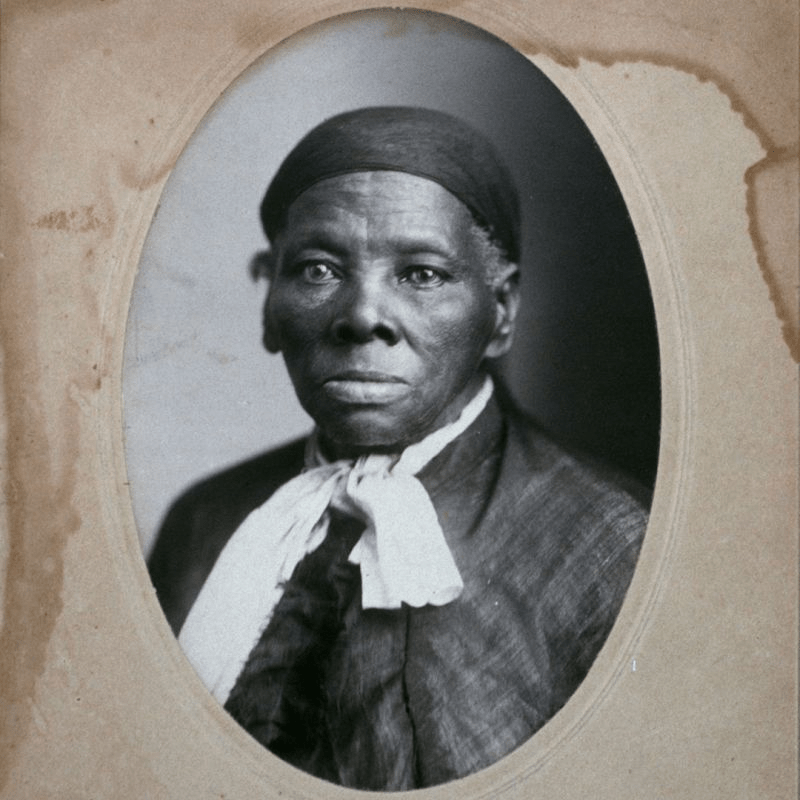
Harriet Tubman

Harriet Tubman is widely regarded as one of the greatest Black liberators in history, known for her leadership in guiding hundreds of enslaved people to freedom through the Underground Railroad. Over the course of thirteen trips, she orchestrated daring escapes and, later, led an armed expedition for the Union Army, freeing nearly 800 people in South Carolina. What many may not realize is that Tubman faced a personal challenge from a young age. After being struck in the head by a 2-pound weight as a teenager, she began experiencing what she called “sleeping spells.” These episodes are now believed by many Black historians to have been epileptic seizures resulting from a traumatic brain injury, adding an additional layer of strength and perseverance shared during her lifetime.

You can learn more here: https://lnkd.in/gd8FvfWU

Makeshift Meditative Moments

A waiting room with soft lighting.

This week, I had an eye exam that turned into an unexpected lesson in mindfulness. After the usual eye pressure checks, retinal scans, testing out lenses for a new prescription, and of course, dilation, I was taken to the waiting area to wait for the ophthalmologist.

The room was filled with other patients sitting in two rows of chairs, each lining a wall in a dimly lit area. Because of our dilated pupils, reading on our phones was nearly impossible. We all sat there in silence. I saw a number of people closing their eyes, and then, I followed suit. It reminded me of something familiar, like a Quaker meeting I had attended just days before, where we also sat in silence.

I wonder how many moments like this I tend to miss. How many might be approached or created intentionally, once we find ourselves in the right spaces for them?

The next time you find yourself in an unplanned moment of stillness, take a deep breath, close your eyes, and sit with it. You might be surprised how much we need this.

Renee Roederer

Hey there, You

People embracing.

Hey there,
You matter.
Your values matter.
Your compassion matters.
Your work matters.
You—
all of you—
every identity,
every commitment,
every wholehearted form of community belonging—
You, the whole you,
You matter.

One of my most beloved people has stage 4 cancer. And yet, with gratitude, he continues to live well with it, seven years after that diagnosis. I’ve heard him say this many times:

“I wouldn’t wish this cancer on anyone, not even my worst enemy. But I do wish every person I know had the opportunity to experience what it feels like to have your community catch you.”

Whether you’re catching your community or being caught and upheld by it (I deeply hope it’s both), may you know that these acts of belonging, commitment, and care matter.

We’ve got each other.
We’ve got you.

Renee Roederer

Call It What It Is — Abuse

North America from Space

I wrote this yesterday, just one hour before the executive order to freeze federal grants and loans was set to take effect. Thankfully, a federal judge has temporarily blocked the order, which could have had devastating consequences for many. The move was widely seen as a power grab, with some even calling it an administrative coup.

I suspect the administration may engage in some gaslighting today, that people wouldn’t fallen through the cracks, and that they wouldn’t have let that happen. Heroes of their own harm. But people did almost fall through the cracks, just hours ago. When people reveal their intentions and the actions they plan to take, it’s important to listen and believe them the first time.

When federal grants and loans freeze at 5pm today, there is not a lot of clarity about which programs will be affected, and to what degree, and for how long (though this is indefinite at the moment, unless a legal challenge stops it).

But we do know millions of people will be directly and adversely impacted. And since this freezes up to $3 trillion in our economy, this will impact all of us in one way or another.

It is calculated, and I feel it is callous. When our loved ones and neighbors can potentially lose access to food, employment, rent or utility assistance, shelter, medication, medical visits and procedures, assistance in education, or necessary programs and services provided by a variety of agencies, it is devastating. The loss of these funds falls across so-called “red states” and “blue states.” This loss doesn’t look at who you voted for (nor should it).

But these actions do seek to usurp power. And if a person holds your livelihood over you and says, “You only get this if you fall in line with giving me more power,” or “You only get this if you turn against other people,” it’s not government, it’s abuse.

My thoughts here are my own, and not representative of any community or party. But as we cascade this week into a loss of rights and potentially, ways of sustaining what we need to live, I have to speak up and say something.

Renee Roederer

What Is Your Resilience Story?

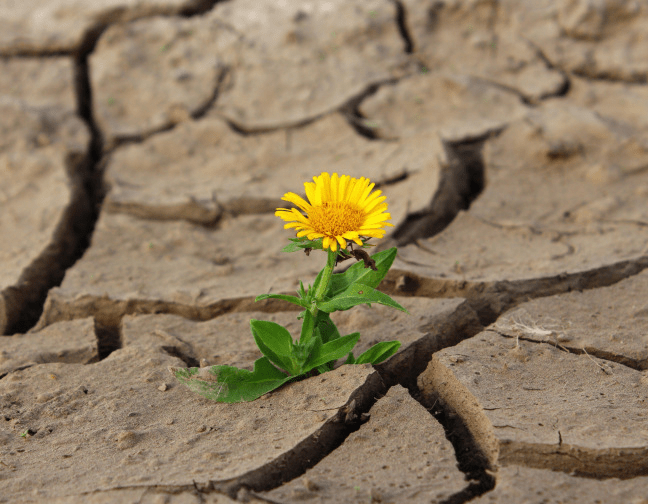
A dandelion grows in the cracks. Public domain.

This is another piece from the vault, first published on February 3, 2017. I hope this speaks to you in some way.

What is your resilience story?

Have you thought about that recently? A story from your life, the life of your family, or your community? It might be helpful to bring such a story to mind – to recall those chapters and moments when we endured stress, challenge, trauma, and loss and made it through.

When we were empowered to keep going. . .

When we gained grit and resolve. . .

When we experienced renewed life, despite the pain we have known. . .

When we gained insight we cannot lose. . .

Resilience is often totally unexpected, but it happens around us and through us. Certainly, none these forms of growth transform trauma into some kind of collective good. Far from it. But there are times when resiliency accompanies even our greatest pain and brings us through despite what we might have anticipated.

We are living in a time of collective stress and fear. As I talk with people, many are saying that they feel despair and dread. If that’s where we are, I encourage us to honor those feelings.

Alongside challenging feelings, some are facing tangible concerns and threats to their safety. We need to take these seriously and create protective strategies in our communities.

We will be even more empowered to do so if we can remember resiliency. What is your resilience story? Can you call it to mind?

In some ancient languages, the word ‘remember’ does not simply mean that we recall something from the past. It means that we make it present.

Mental health experts tell us that people tend to gain healing from stress, challenge, trauma, and loss when they can put their experiences into a personal narrative. Can we take some time today to tell our resilience stories to ourselves? Can we put their power into our bodies, minds, and spirits?

And one of the best strategies for gaining resiliency is to connect with good and trusted relationships of support and care. Have we told anyone our resilience story lately? There is great power in sharing such stories with one another.

We can consider doing that. And wherever we are and however we’re feeling, we can let these stories guide us.

Renee Roederer