Before and a Purposeful After

Image by @introvertdoodles

Image Description (ChatGPT created this!)

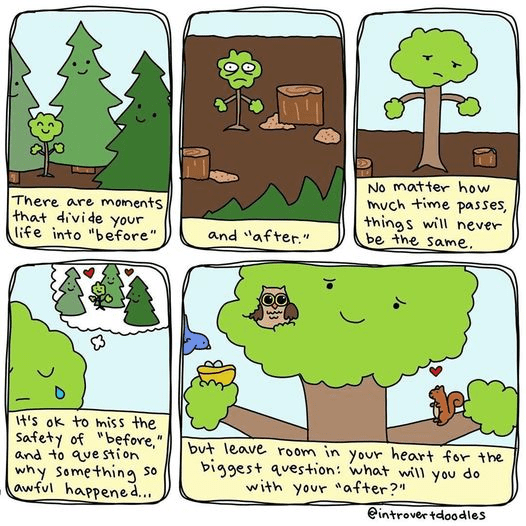
The comic is made up of five panels, featuring simple, playful drawings of trees and forest creatures, with text integrated into the panels. The art style is bright and cheerful, with cartoonish, friendly expressions on the characters.

  1. Panel 1: A group of green pine trees are standing together, smiling with closed eyes. The background is simple with some grass, and the sky is a soft light blue. The text reads, “There are moments that divide your life into ‘before.'”
  2. Panel 2: The same scene now looks drastically different. One of the pine trees is now a small, sad-looking stump with a tiny sprout growing beside it. The surrounding ground is barren with a few logs and pieces of chopped wood. The text says, “and ‘after.'”
  3. Panel 3: A new green tree, with broad leaves and a smiling face, stands tall on the right side of the panel. It appears to have grown from the sprout in the previous panel. The background is sparse with minimal grass and no other trees around. The text states, “No matter how much time passes, things will never be the same.”
  4. Panel 4: On the left side of the panel, a single tear falls from the face of a tree as it gazes at a thought bubble filled with a memory of the “before” scene from Panel 1, showing the group of pine trees. The tree looks sad and contemplative. The sky is slightly grayer. The text reads, “It’s ok to miss the safety of ‘before,’ and to question why something so awful happened…”
  5. Panel 5: In this final, brighter scene, a large, leafy tree with a content smile dominates the frame. It has grown into a fully developed tree with vibrant green foliage. An owl is perched on one of its branches, and a squirrel is smiling, holding an acorn nearby on the ground. A bird is flying in the background. The tree looks peaceful and happy. The text concludes, “but leave room in your heart for the biggest question: What will you do with your ‘after?'”

In the bottom-right corner, there is a small signature: “@introvertdoodles.”

The overall message of the comic revolves around the emotional journey of change and healing after a significant loss or life event, with the theme of growth and transformation.
Mental Health Monday: What is Most True?

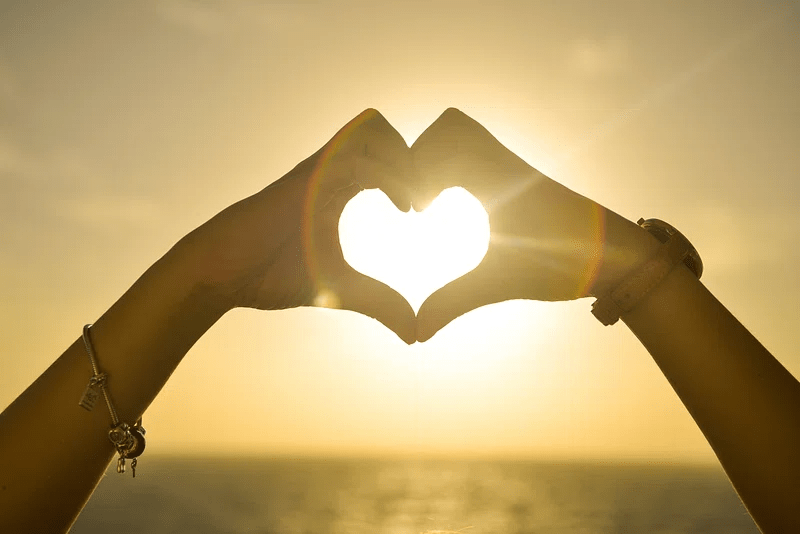
Two hands come together, cupped, to make a shape of a heart. The sun is shining through them. Public domain.

What if… the worst things you believe about yourself —

I’m not this enough,
I’m not that enough,

I’m always like this,
I’ll never be like this,

That person thinks this about me,
That person thinks that about me,

That whole community thinks this about me,
That whole community thinks that about me,

I’m too this,
I’m too that,

I’m not capable of this,
I’m not capable of that —

aren’t even true?

Wouldn’t it be liberating to believe what is much more true?
What is much more possibly true?
What is flat out true?

That
We’re loved,
We’re worth loving,
We’re capable of loving.

And

That
Many
Many
Many Things
Are Possible.

Renee Roederer

Lessons from a Care Worker: Shopping in the Container Store

Tupperware stacked. Public domain image.

In times of high stress and collective trauma (we’ve lived a lot of that in the last… at least 8 years) sometimes older narratives of stress and trauma get pulled to the surface too. We might be aware that these are getting triggered. Or we might be less aware.

It’s helpful to bring these to awareness. As therapist Margaret Foley says, “If we have unprocessed material deep inside, we have two choices. We talk it out, or we act it out. We reenact what we have not resolved.”

These unresolved reenactments can become large narratives in our present-moment lives, but they are out of place and out of time. Or they might weave within our present-moment situations. Have you ever felt that your reaction to a present challenge is a bit oversized and disproportionate to the moment? Older stories and older emotions might be getting triggered too.

Within all of this, sometimes we look for people — close loved ones (frequent) or people of less personal significance (less risky) to play roles in our reenactments. We cast them as characters in the drama, and they serve as placeholders to hold these stories. They become containers to store our old emotions. But this can really harm relationships too.

Common containers include:

The role of the rescuer. We cast people as characters to save us. We want to be seen in our vulnerability (valid) but become dependent upon others for our feelings of safety. We externalize that need because we struggle to feel safe internally.

The role of the villain. We cast people in the character of scapegoat, attempting to funnel our pain into them and send them off. This is really an attempt to rid ourselves of our own anger and pain.

The role of the stand-in. We cast people into the character of a significant person in our lives. We begin to engage this person with the emotions we actually have for our mother, or father, or sister, or brother, or estranged friend, or person we miss, or person who wounded us.

I speak about all of this as a care-worker. I see this happening so frequently in this era of time. This comes from a natural place of wanting to heal pain, and it makes sense for this to happen after years of collective trauma. Of course, this would unearth old narratives. I also speak about this as person who lives in this era of time, witnessing and feeling my way through all of these things too. The challenge is, people aren’t asking to find themselves in the cast list of our internal storylines — unless, they themselves, are reenacting their own traumas by stepping into these roles too (that happens also!)

We can add care to others, but we aren’t rescuers.

We can make mistakes, but we aren’t villains.

We can care about the emotions people have for significant individuals in their lives, but we can’t become the stand-ins for those particular people.

This might bring some initial relief, but it also doesn’t work. We have to actually process the unprocessed material and storylines.

That’s the harder, but more life-giving work. Sending care to all of that.

Renee Roederer

I Treasure Such Calls from My Mom

An iPhone. Public Domain.

My Mom called yesterday, and when I picked up the phone,

right after

“Hi, Mom,”
“Hi, Renee,”

She added,

“I want to tell you a joke.”

Already, I laughed. I wasn’t expecting that. We had just talked two days ago when she asked me excellent questions about my recent travels, and we texted yesterday about a kayaking trip I took down my local river.

“What do you call an elephant that doesn’t matter?”

“Ooh, I know this… I used to have it on a t-shirt… Irrelephant!”

“Oh, shoot,” she said, because she wanted to introduce this to me. I reassured her that this was completely delightful. She thought I was talking about the joke. But I knew I was talking about the call.

Renee Roederer

Responsibility: What We Carry and How We Care

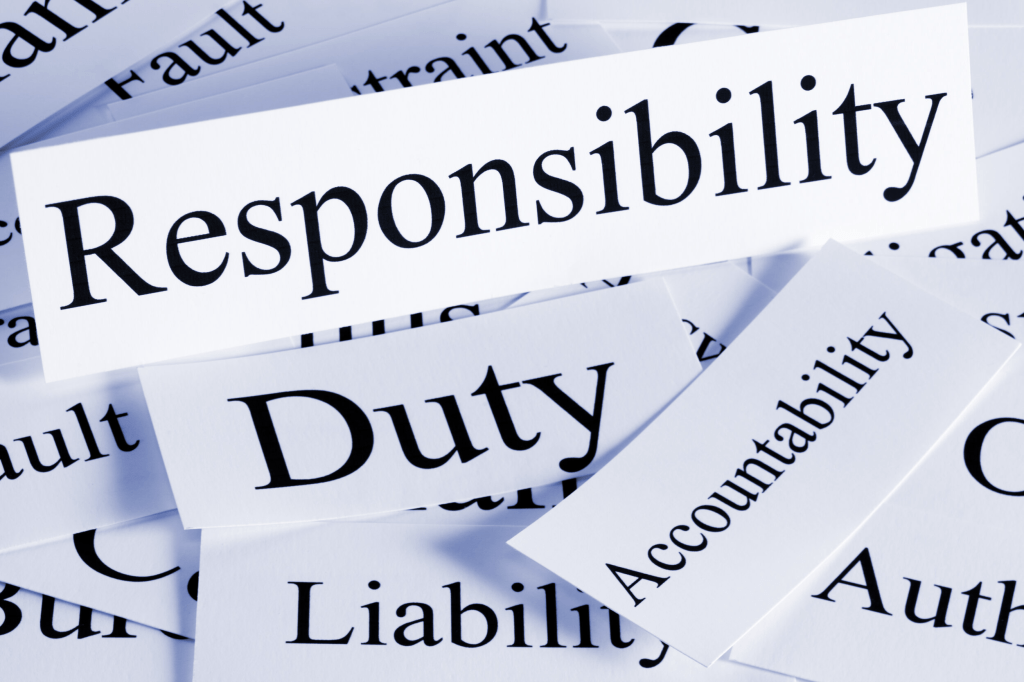
Image Description: Small, white pieces of paper with text that reads, “Responsibility,” “Duty,” “Accountability,” “Liability,” and other words that are not fully in view. Public domain image.

Recently, two concepts resurfaced in my mind, ideas I hadn’t revisited in years. They originally came from a book* I read long ago, and I’ve always found them to be a useful way to think about responsibility.

When we talk about responsibility, it’s important to distinguish between being responsible for something and being responsible toward something.

We often find ourselves feeling responsible for things that aren’t really ours to carry. We take on other people’s emotions, believing it’s our job to “fix” them. If someone is in a bad mood, we assume it’s our fault. We end up taking responsibility for things beyond our control.

But the truth is, we’re not responsible for these external factors. What we are responsible for are our own actions and emotions. And naturally, we can respond to others’ needs with compassion and care.

When it comes to responding, it’s more helpful to think in terms of being responsible toward others. We have a duty to live out our values and strive to be our best selves, directing these efforts toward the needs of others and our communities. We won’t always succeed, but we can keep returning to these values.

There are countless issues in the world that require our attention and care. For these, collective action is often necessary. We’re responsible toward these issues—not because we caused them (though sometimes we may be collectively complicit)—but because living out our values in community means we need to act.

In some situations, I hope we can release ourselves from feeling responsible for things beyond our control. In others, I hope we can feel empowered to be responsible toward the world and those around us.

Renee Roederer

*The book is Boundaries by Dr. Henry Cloud and Dr. John Townsend.

Mental Health Monday: I’m Working on Being a Tasker (And a Non-Tasker)

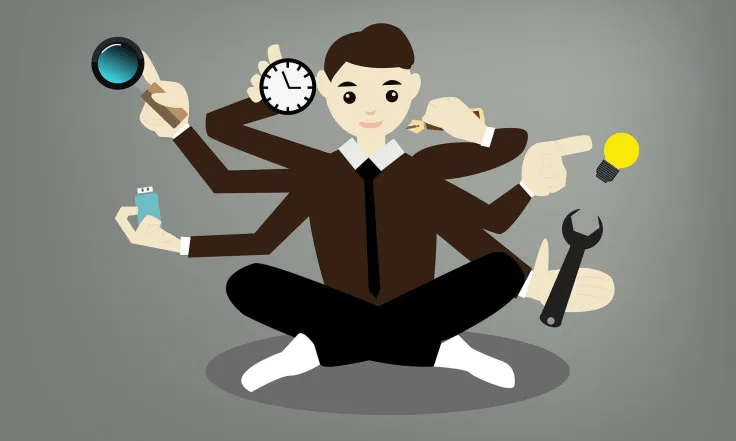
Image courtesy of Pixabay, Public Domain

Lately, I’ve been reflecting on what it means to be present.

We’ve all experienced the mental load of juggling multiple needs —trying to stay on top of everything while feeling the weight of what’s coming next. It’s exhausting. For a long time, I believed multitasking was the way to stay ahead. But I’m beginning to see that it often pulls me away from being present.

So I’m shifting my approach. I’m working on being a tasker. One task at a time.

When I focus fully on what’s in front of me, I notice the mental clutter starts to fade. There’s a clarity that comes with giving my full attention to one thing, and it allows me to be truly present. Compartmentalizing isn’t about ignoring what’s next—it’s about not carrying it all at once. I’m learning that when I approach each task in its own time, I’m more engaged and less drained.

And sometimes, it’s important to be a non-tasker too—allowing myself to simply be, without the pressure of what’s next.

Bye, multitasking. Or at least, I hope to engage less of you. More tasking. And more non-tasking.

Renee Roederer