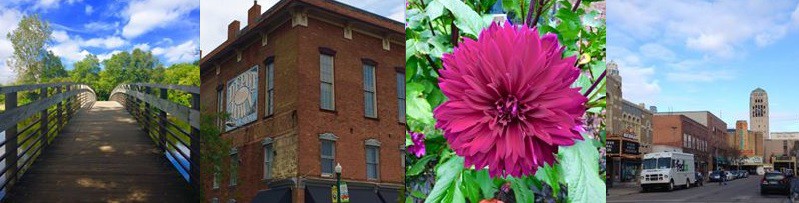
There’s a Story Here

I found these hearts hanging on a tree while I was outside on a bike ride. I stopped to snap a photo. They say,
You Are Magnificent
Be
Magnificent for PURPOSE
“There’s a story here,” I thought. Someone wrote on these hearts with situations or needs in mind. Or they were created by a person who has been shaped by these words in particular ways.
And it was a decision to hang them outside for others to see while passing by.
There’s a story here.
— Renee Roederer
Disability is Not a Word to Avoid

It’s okay to use the word disability. It’s a neutral word, not a negative word, to describe a common human experience.
And when it comes to culture and belonging in the larger disability community, I would suggest that it’s a great choice to use the word, including with pride. It doesn’t have to be avoided.
I heard NPR’s “Up First” podcast provide information about the Paralympic Games which had its Opening Ceremony yesterday, and I noticed that they never used the word disability once. They talked about certain experiences and conditions of disability (for instance, amputation and visual impairment) but I thought it was interesting that they never used the word itself. I don’t know how much of that was a deliberate choice, but the Paralympic Games seems like an apt context to use the word.
Whether this was intentional or not, I think it’s great for us to consider this again. We can say disability. It’s an okay word — and a good word for an important community.
My Flight Took an Offering (Well, Sort Of)

I was watching Abbott Elementary on the in-flight screen during my flight from Germany to the U.S. We were nearly there when my program was interrupted for a commercial-of-sorts that I wasn’t expecting. My airline has a charitable giving program (I didn’t know this) and they were discussing the work they do with UNICEF to provide food, clean water, and education to children in places where those resources are more difficult to obtain.
The commercial shared that a flight attendant would soon be coming around the perimeter of the plane to accept donations of any size in any currency. The commercial shared what $1, $5, and $10 can provide. And then a flight attendant came down multiple aisles to collect cash in a plastic bag.
I’ve never seen an airline take an offering. I suppose we might more accurately call it a collection, but it felt like the genre of an offering. I imagine that the corporate reasons for doing this are likely self-serving, though I’m sure that airline employees who participate find meaning in it. I also assume with a trusted partner like UNICEF, they do provide in significant ways that make a tangible difference. I threw in some pocket change in dollars and euros.
I’ve never seen this happen anywhere but church services. Apart from the corporate context, which is not my favorite context for charitable giving, I found this intriguing. It made me wonder, what would happen if we had more regular rhythms for taking up spontaneous collections like this? What if this didn’t just happen in church? But just more freewill offerings out in the wild?
Just curious.
— Renee Roederer
Fireworks Finale
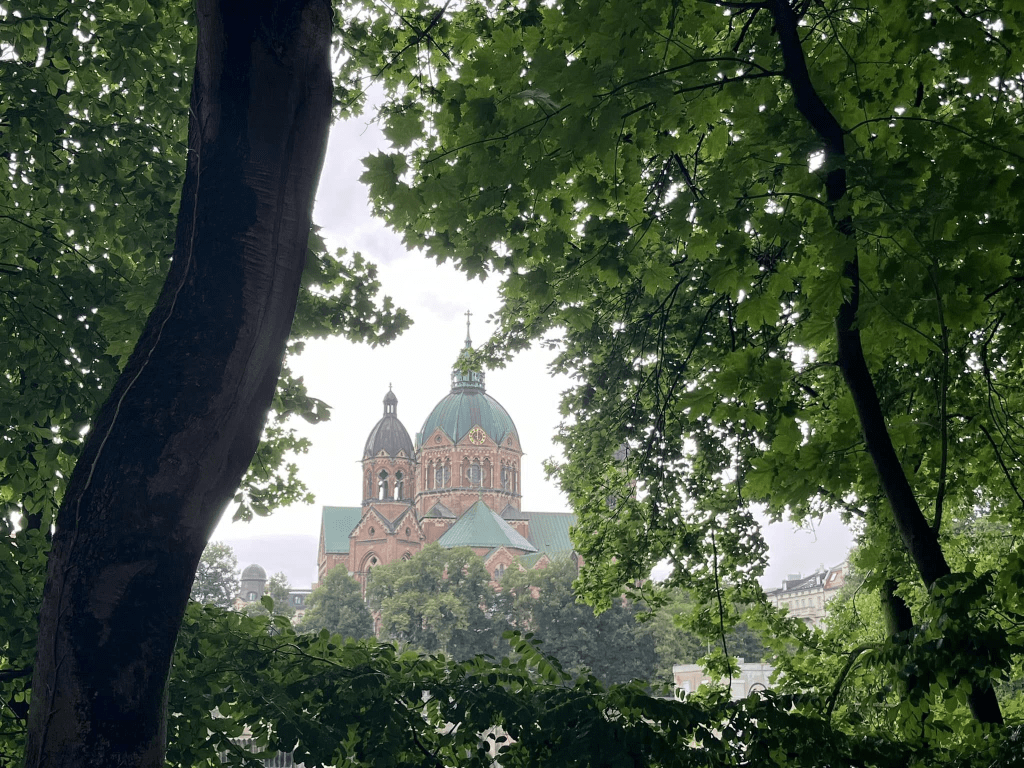
I didn’t see any fireworks yesterday, but I tried to create that final burst of energy we tend to see in a fireworks finale. On my last day in Munich and my last day of this trip, I decided I had the energy to go for it, so I walked a total of 26,372 steps around the city.
I saw the English Gardens, visited the Rathaus-Glockenspiel, went to the Deutches Museum, enjoyed a Munich beer at the Hofbrauhaus, perused a bookstore, and walked in so many directions. And it was a great conclusion.
Thank you for following along. I plan to keep reflecting and writing in my own contexts, and I look forward to that very much.
If you enjoyed reading these travel reflections, I invite you to consider two possibilities:
–First and foremost, please consider sending a donation to Young People Travel Global Edge, an organization that sends youth from Detroit abroad to nurture their talents and leadership. I have just done so as well.
— And if you would like, feel free to pass these posts or this blog onto friends who may continue to enjoy daily reflections. People can subscribe at the home page.
Thank you for following along. Now I head home. Auf wiedersehen!
—Renee Roederer
Moving with the Daily Rhythm
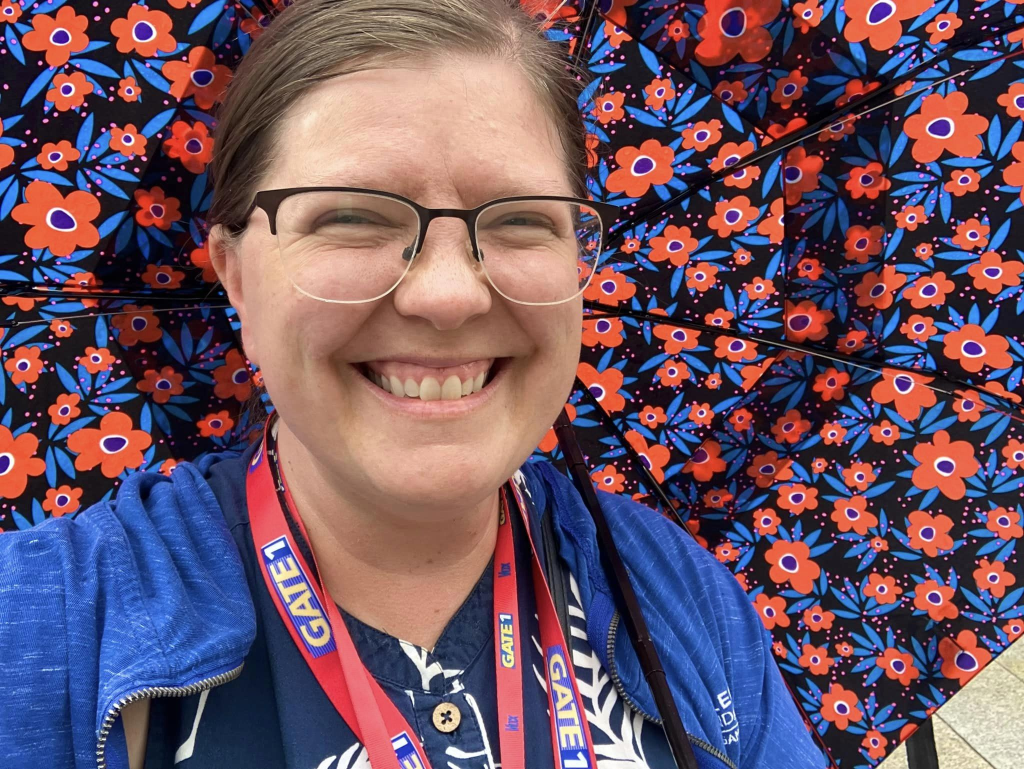
It rained all virtually all day in Munich. It was a steady, stubborn rain too. It was light enough to make you think it wouldn’t be persistent, but consistent enough to make my shoes soggy (PS. I have learned I need new shoes).
That being said, on a chilly, rainy day, I still saw some lovely things. But after the cool air and my wet feet, I decided to take a nap. And it was a long nap.
At first, I felt a strange sense of guilt, as if I had not done enough with my day. But then I remembered, I had seen two Cathedrals, a castle — at a distance, but I saw it — and enjoyed a plate of delicious German food ordered auf Deutsch.
Sometimes, we need to move with the rhythm of the day. And it turns out my body needed that nap too.
And don’t we want more of this? Opportunities to move with the current of the day, rather than against it? So often, we do move against it. We hunker down. We push through. We ignore important interruptions. We neglect our body’s cues. Simply put, we don’t rest.
I don’t think we need to chuck all our rhythms and responsibilities, but maybe we need more flexibility within those. What if we gave ourselves a few more permissions to do that? Like, really?
Turns out, after that nap, the sun did come out in the evening, and I had renewed energy. I walked around some more and had some ice cream. So good. I stopped by a Munich fountain and remembered that the last time I was at a Munich fountain was 20 years ago. I bet 20-years-ago-me might not need a long nap (though she’s allowed too) but this-me is fine taking it.


Every Adventurer Turns Toward Home
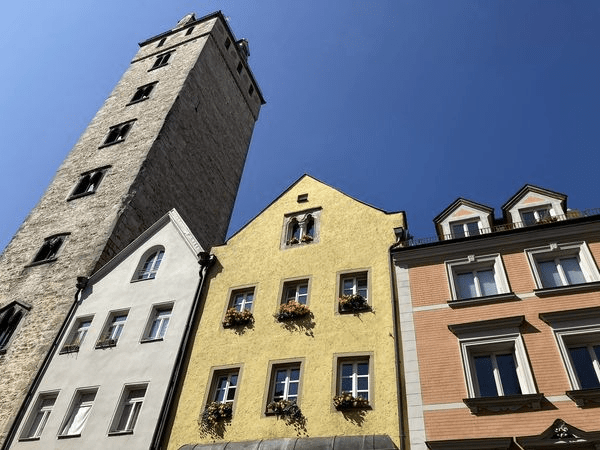
I journeyed to Regensburg, Germany, a gorgeous, charming town where you can find architecture from the Romans, the Middle Ages, the 19th Century Kingdom of Bavaria, and our modern era all on display as you turn corners or sit somewhere to sip coffee. It is all present, ready to be discovered.
In the afternoon, I crossed the Stone Bridge, a structure constructed from 1135-1146 CE, which allows people to walk across the Danube River from Old Town to an additional set of Regensburg neighborhoods. When I walked across, I entered the university area, and I saw students on bicycles, at cafes, along the riverbank, and inside the river on tubes and rafts.
Here’s what I’d love to share today:
Every adventurer eventually turns toward home.
I don’t only mean that trips come to an end, as mine is about to do in a couple days. I mean that we begin to desire home, and I think often, we begin to imagine our entry differently. I remember Cynthia Rigby, a treasured professor, saying to our class (paraphrased): “We tend to think about rest and time away as recreation — an experience where we recharge so we can re-enter the rat race of our lives with more energy. But instead, we can think about it as re-creation, so that we reenter as people who have been changed, and so that the rat-race changes too.”
We reenter differently.
I am ready for this, and I also desire it. Questions on my heart include…
What if my time at home felt more like an adventure? What if I savored individuals, communities, and encounters with so-called strangers like I do while traveling? What if I took more time for gratitude? What if I noticed nature even more intentionally? What if I ate more slowly? What if I became more aware of ways that local history impacts my local neighbors? What if I kept this level of reflection going?
What could be possible?
As I walked around and noticed what was around me, I thought,
“I also live near a river. I also live in a college town.”
I found myself turning toward home and differently.
— Renee Roederer
Noticing Talent that Goes Unnoticed
Sing it with me!
How do you solve a problem like Maria (Anna ‘Nannerl’ Mozart being left out)?
Given the context, I’m being playful with my more serious question, and we’ll come back to that.
I spent a day in Salzburg (yes, the place where The Sound of Music was filmed) and it was gorgeous. Walking around on cobblestone, in the old part of the city, you can find the birth house of Wolfgang Amadeus Mozart where he lived until age 17 with the rest of his family. Then he moved to another location in the city. This birth house is 800 years old. Of course, there have been renovations over the centuries, but when he was born there in 1756, it was already more than 500 years old.
After seeing this, I’m grateful that a tour guide also asked us, “So do you know about Maria Mozart?” Most of us did not. “Come with me,” she said.
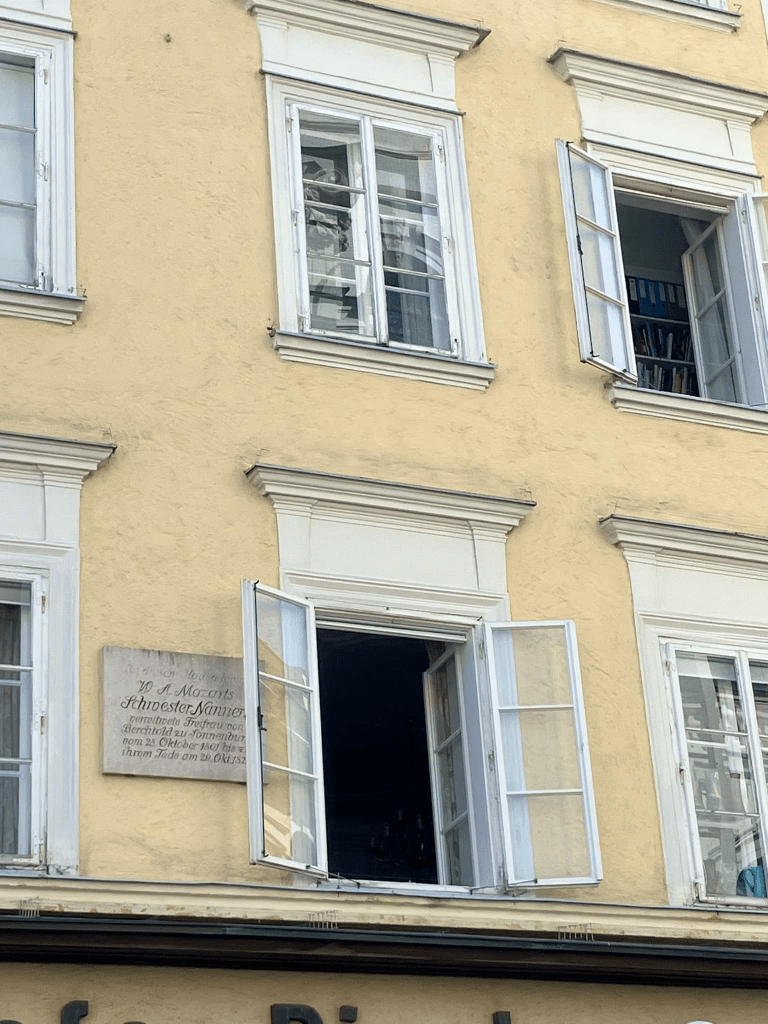
Then she showed us the home of Maria Anna Mozart, who was nicknamed “Nannerl.” She was the older sister of Wolfgang, and she, like her brother, was also a musical prodigy. She lived in this house pictured until she was in her 80s.
When Wolfgang and Maria were young, their father, Leopold, took them both on tours around Europe to showcase their tremendous talent. Maria was also a brilliant pianist, and she, too, was a composer, because as she aged, she and her brother would write letters back and forth and discuss their compositions. But sadly, none of her compositions can be found; likely, when Wolfgang died at age 35, much was taken from his home, and these may have included her compositions.
When Maria was 14 years old, her father Leopold, stopped taking her on the tours with younger Wolfgang. As she was getting older, it was seen as improper for her father to travel with her alone, so in order for her to come, they would have had to pay more money for her mother or a maid to travel with them. It was also expected that in the near future years, she would marry and have children. So with that, her recognition waned while Wolfgang’s blossomed.
And she did do exactly that; she married and had children. And she moved to St. Gilgen, a town about 30 kilometers away. But after the death of her husband, she returned to Salzburg, and from there, she became a renowned piano teacher and a soloist in the concerts of Prince Ernst von Schwarzenberg. Some of her students were women, including Anna Sick, who became the court pianist at Stuttgart.
So how do we reflect upon this change of expectations and this transition that allowed her brother to flourish in performances, opportunities, and appointments while hers became much more limited? There is no doubt that he deserved his recognition. But so did she, and here I am — a whole person with a music degree — and I knew very little about her. I knew she was an influence on him, but again, that story was presented with him at the center.
I am reminded that people in this world have great talent, intelligence, drive, and imagination. Some are held down by expectations, and some are oppressed by systems with barriers and narratives that say “this one,” or “these ones,” “do not matter very much.”
But they do, and so do these talents, forms of intelligence, passions, and great examples imagination. We should recognize this. And if we have doorways opened for us, we should also open doors for others.
— Renee Roederer
Thousands of Unknown Stories
Greetings, Friends, from Central Europe.
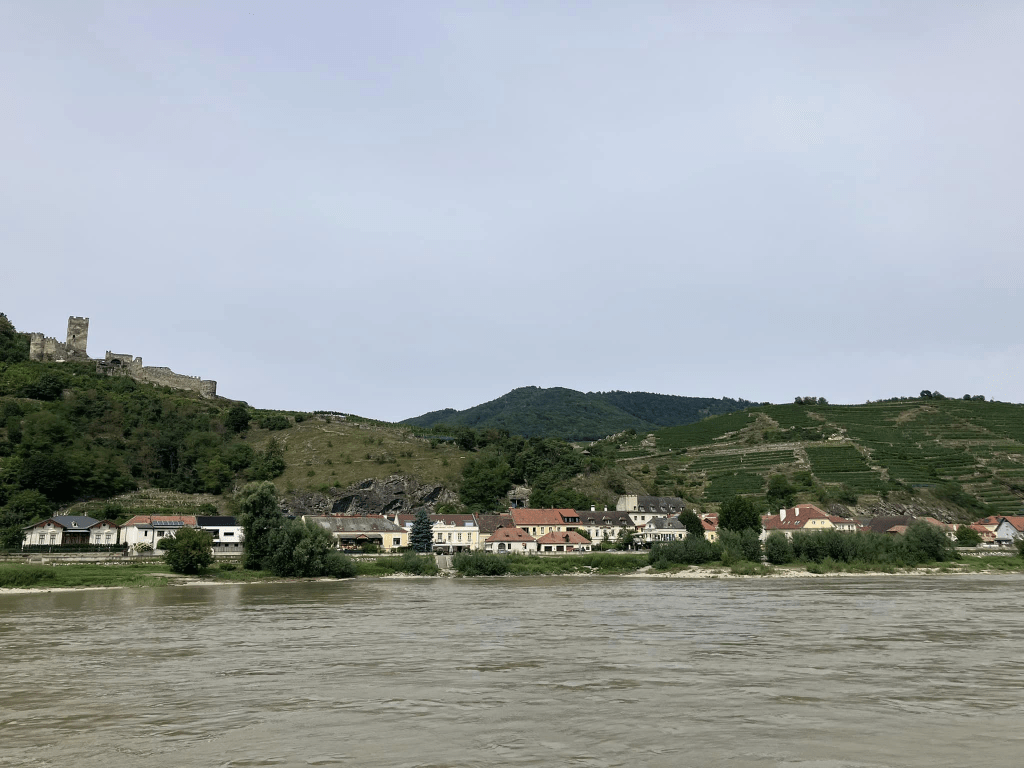
One of the best parts of my trip involves… just floating by. Yesterday, we sailed past Spitz, a small Austrian town, with a great deal to notice as we moved down the river. The houses and churches surround a large hill with vineyards. That hill is called 1000 Buckets Mountain. In ancient times, it was a good year if the mountain produced 1000 buckets of wine. That is how it got is name.
Opposite 1000 Buckets Mountain lies the ruins of a castle from 1100s, known as Hinterhaus. It’s astounding to find structures in Europe that are so old.
So with a lingering glance from a river, I got to see these, and I thought, “There are thousands of unknown stories.” I love to ponder places because they contain communities across time, not only with big, heroic moments, but thousands of unknown stories with mundane experiences.
And some of them probably involve those buckets of wine.
— Renee Roederer
My Life Rhymed in Vienna

Greetings, Friends, from Central Europe.
Yesterday, I had a very special day in Vienna. After practicing German daily for nearly two years, I was able to put it to use, and that was very satisfying. But most important to me, in the present moment, I enjoyed the city in a way that resonated with the past.
Austria is the first country I ever visited outside of the U.S. During the summer before my senior year, my high school choir visited four cities in Austria on a tour, including Vienna. At age 17, was enamored with this city.
And I had some special moments here personally as well. Our choir sang during a service at Karlskirche (St. Charles’ Church), which is one of the old churches in the Vienna. Opened in 1737, it is much younger than the St. Stephen Cathedral, constructed from 1137-1578. Both churches are gorgeous. During that service at Karlskirche, I was deeply moved, and I made a decision for my college direction. I decided I wanted to go to music school. Later, I did that exactly and attended the University of Louisville School of Music. And that decision, made under the dome of this cathedral, led me in many adventurous directions.
Yesterday, 25 years later, I returned. I was able to go into the balcony, right where we sang. The view below was lovely. I sat there and thought about the last 25 years — music made, of course, but most of all, relationships and communities — and I was grateful.
Later, in the evening, we went to a Viennese Concert, and sure enough, it was also in the same space where I attended a concert at age 17. I remember that night well because I felt very youthful and excited for the future. Last night, I felt like age-17-me and age-42-me got to attend a concert together.
When time and place meet, we are not only in relationship with those around us and those that emerge from those experiences. Life rhymes, and we can also be in relationship with parts of ourselves.
— Renee Roederer
 Smuggling Grace