That Which We Did Not Plant

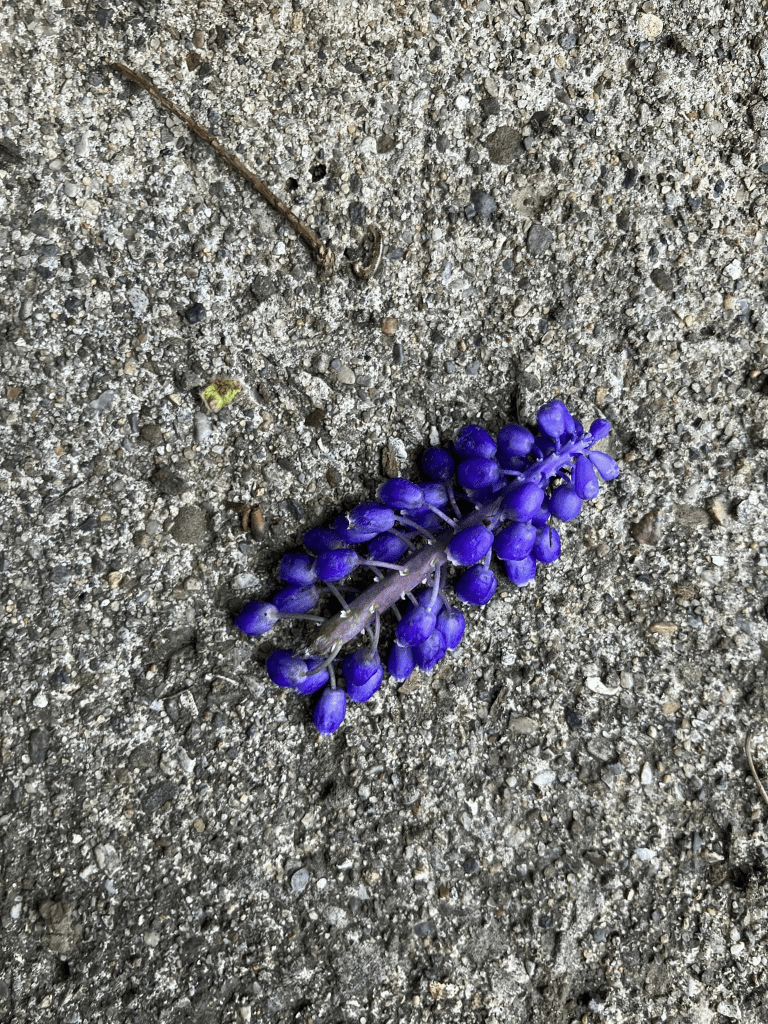
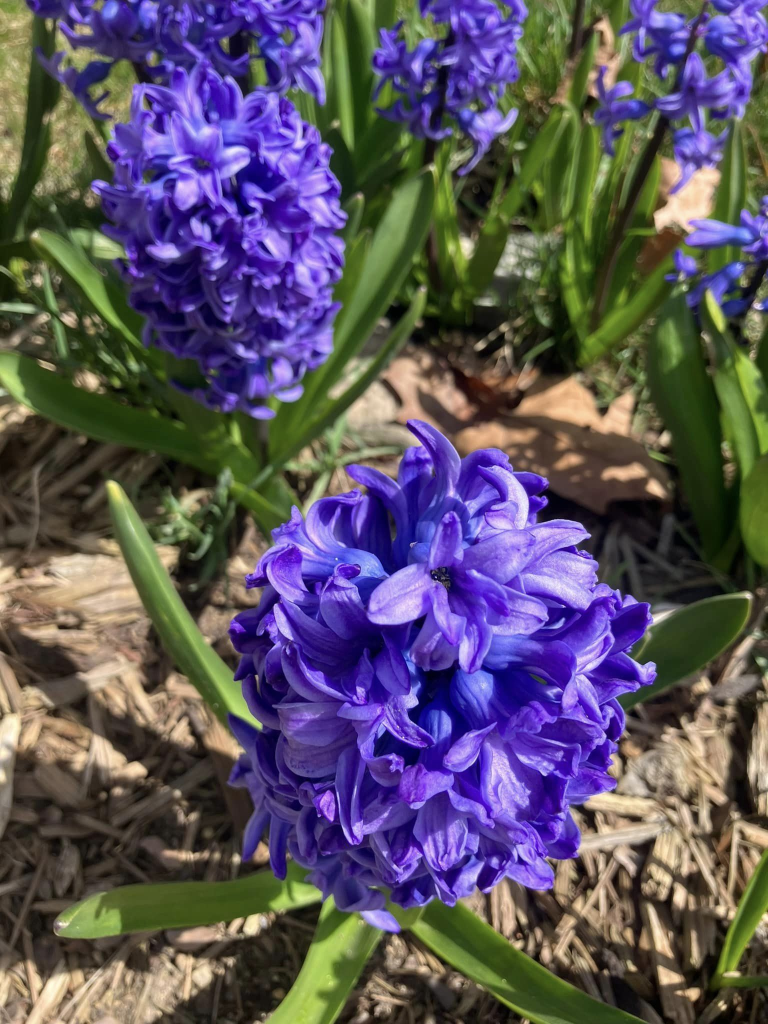
Purple Hyacinths.

There are purple hyacinths growing in my yard this spring, and they smell divine. I appreciate their color and their scent. They make me smile each time I see them.

I also never planted them. They just emerged, seeded from other hyacinths elsewhere. And I wonder, were those parent hyacinths intentionally planted, or did they just emerge too? How far back would we have to go to discover the linage of hyacinths initially planted by a person?

Every day, we receive from that which we did not plant. We receive the gifts and talents of those people around us. We inherit the contributions of organizations. We learn the deep wisdom that was forged by whole communities.

When we notice these, we can say thank you. And we can encourage their continued growing.

Renee Roederer

Constant Partial Attention — What Do You Notice?

Dr. Ellen Langer, scholar and researcher on mindfulness, uses a particular phrase to describe the ways we become disconnected from the present moment. She says that so frequently, we live in a perpetual state of constant partial attention. 

Constant partial attention. . . Isn’t that a perfect way to describe that kind of experience? So often, we move through our days simply going through the motions, rarely paying attention to what is right in front of us. Instead, our minds gravitate toward our to-do lists or the situations that make us most anxious. We get stuck mulling over the past or worrying about our imagined future. In the process, we miss the present moment.

And sadly, this means we lose some awareness of our surroundings, our inner life, our neighbors, and the deep stirrings within us.

I’m curious, in this video, what do you notice?

My Doubt by Jane Hirshfield

A cup of coffee in a blue mug. Public domain.

My Doubt, by Jane Hirshfield

I wake, doubt, beside you,
like a curtain half-open.

I dress doubting,
like a cup 
undecided if it has been dropped.

I eat doubting,
work doubting,
go out to a dubious cafe with skeptical friends.

I go to sleep doubting myself,
as a herd of goats
sleep in a suddenly gone-quiet truck.

I dream you, doubt,
nightly—
for what is the meaning of dreaming
if not that all we are while inside it
is transient, amorphous, in question?

Left hand and right hand,
doubt, you are in me,
throwing a basketball, guiding my knife and my fork.
Left knee and right knee,
we run for a bus,
for a meeting that surely will end before we arrive.

I would like
to grow content in you, doubt,
as a double-hung window
settles obedient into its hidden pulleys and ropes.

I doubt I can do so:
your own counterweight governs my nights and my days.

As the knob of hung lead holds steady
the open mouth of a window,
you hold me,
my kneeling before you resistant, stubborn,
offering these furious praises
I can’t help but doubt you will ever be able to hear.

A Litany of Names

Last weekend, I led a women’s retreat at a local congregation. The outline for the day had reflective exercises that allowed insights and directions of conversation to form in emerging ways. Borrowing some language from Fred Rogers, we did a writing exercise where we reflected on this two-part question:

“Who loved you into being, and how has that shaped your story?”

After writing the names of these loved ones and listing some of our significant moments with them, people had time to share in small groups at their tables. I sat toward the front and could take in the whole scene at once. From there, I heard this unfolding litany of names and descriptions of beloved people.

“She was always there for me.”

“He was a big influence.”

“She taught me who I wanted to be.”

“She shaped a generation.”

“I get my humor from him.”

I heard all of these sentences voiced at once, along with many significant names. A community of people was named and honored.

What a gift to see and hear that unfold.

Renee Roederer

Mental Health Monday: What is EMDR?

What is EMDR?

Adam Copland writes,

The Best Drug I’ve Ever Taken Wasn’t Even a Drug. It was EMDR Therapy.

EMDR stands for Eye Movement Desensitization and Reprocessing, and it’s a highly effective treatment for trauma. Here’s how it works:

EMDR is a helpful form of therapy for people who

1) want an experience that is somatic (reorganizing the brain and body’s reactions to trauma, stress, and anxiety) and/or

2) want to do something that can accomplish a lot in a relatively short period of time and/or

3) want to do less talking with a therapist (though this can be part of it too if desired), particularly if it’s hard to put emotions into words.

Dr. Bessel Van der Kolk, the author of The Body Keeps the Score: Mind, Brain, and Body in the Healing of Trauma shares that “I’m pretty sure that our EMDR study had by far the best outcome of any PTSD study ever done… It proves that there is something unique and amazing about EMDR.”