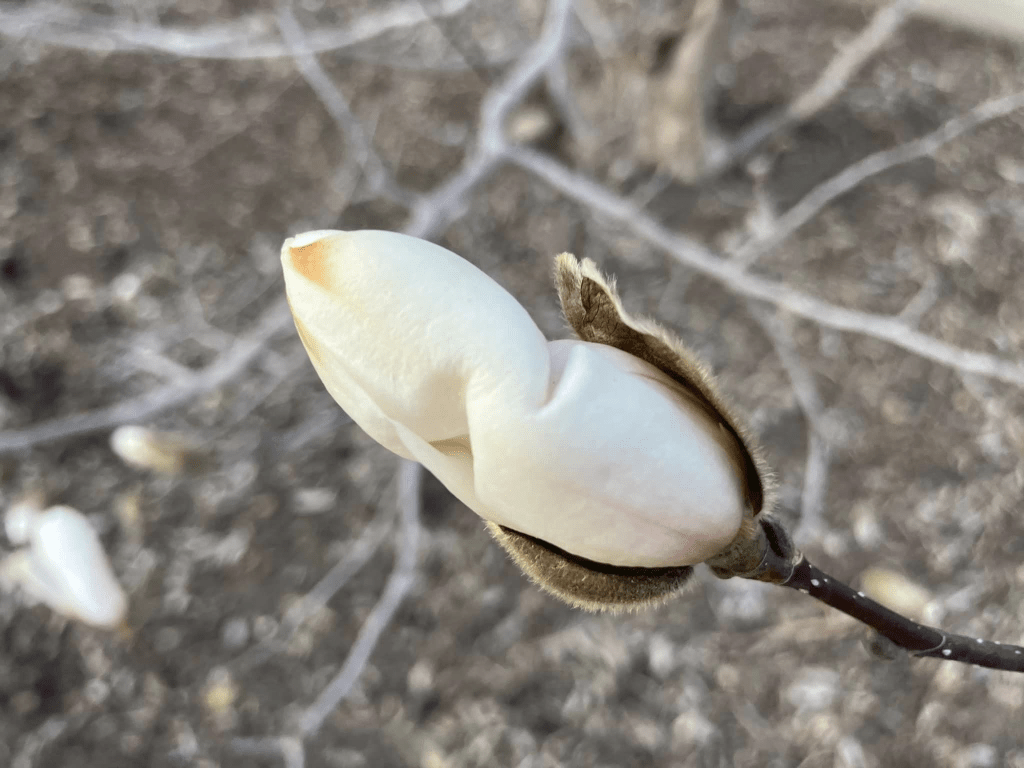
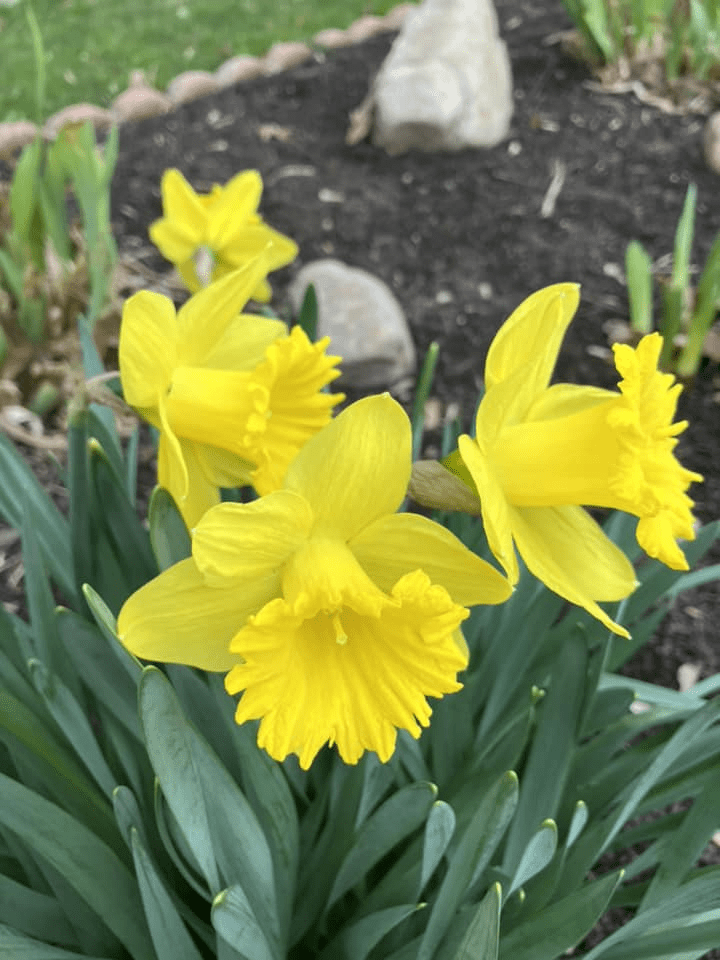
… that daffodils are the most Mahna Mahna of flowers?


… that daffodils are the most Mahna Mahna of flowers?

I recently got to watch a very cute baby animal enjoy life for a while. This little being was indeed, very baby, and indeed, very cute.
I noticed that just like a toddler, this baby would hide near Mom (sometimes, under Mom). Then he would explore for a while, only to return and check in. This happened consistently.
Explore, return, feel safe,
Explore, return, feel safe.
There’s a developmental term for when humans do this. When babies or toddlers try new things, then look at caregivers for assurance that an action is safe, this is called social referencing. And though it happens in a particular way at a developmental stage of life, I’m not sure we ever lose this entirely. We also like to try new things, return, and take refuge in one another. Throughout our lives, we love to feel ourselves seen and known in the loving care and gaze of one another.
Which people, communities, and homes provide this for you?
—Renee Roederer
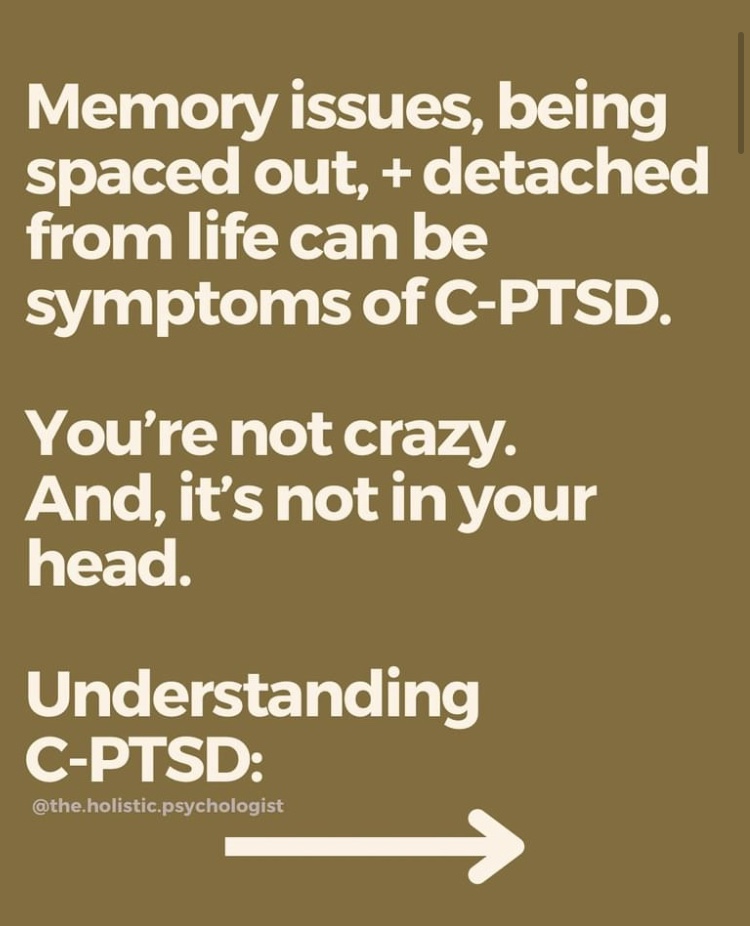
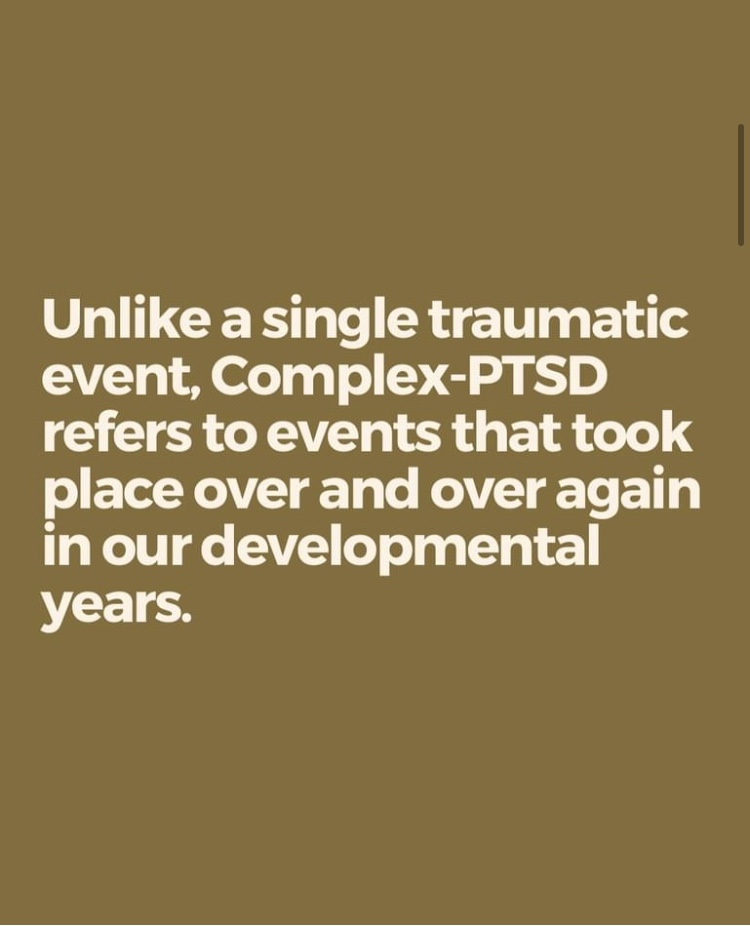
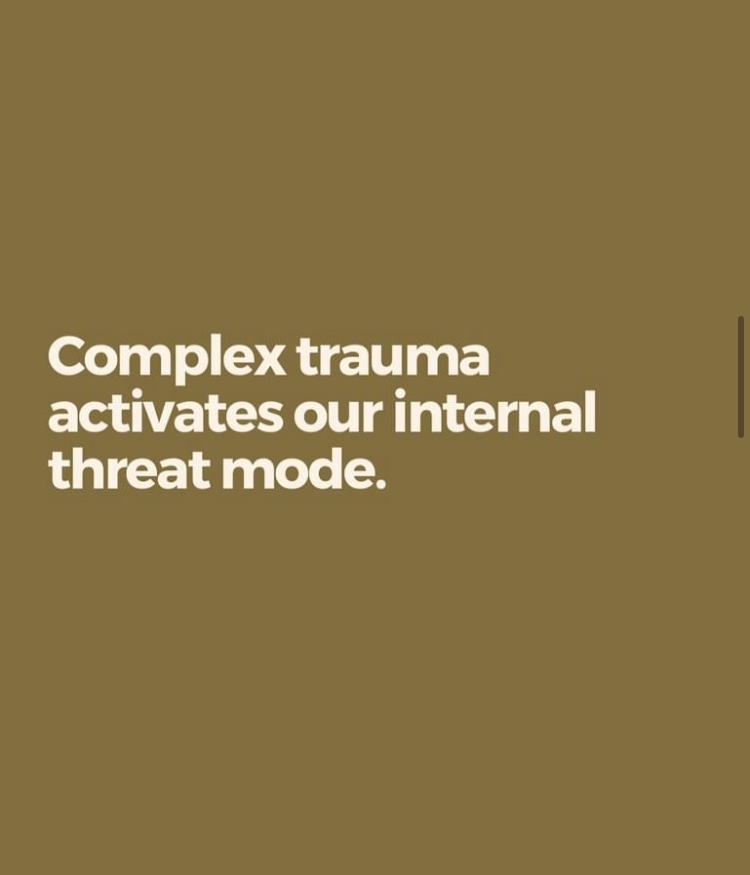
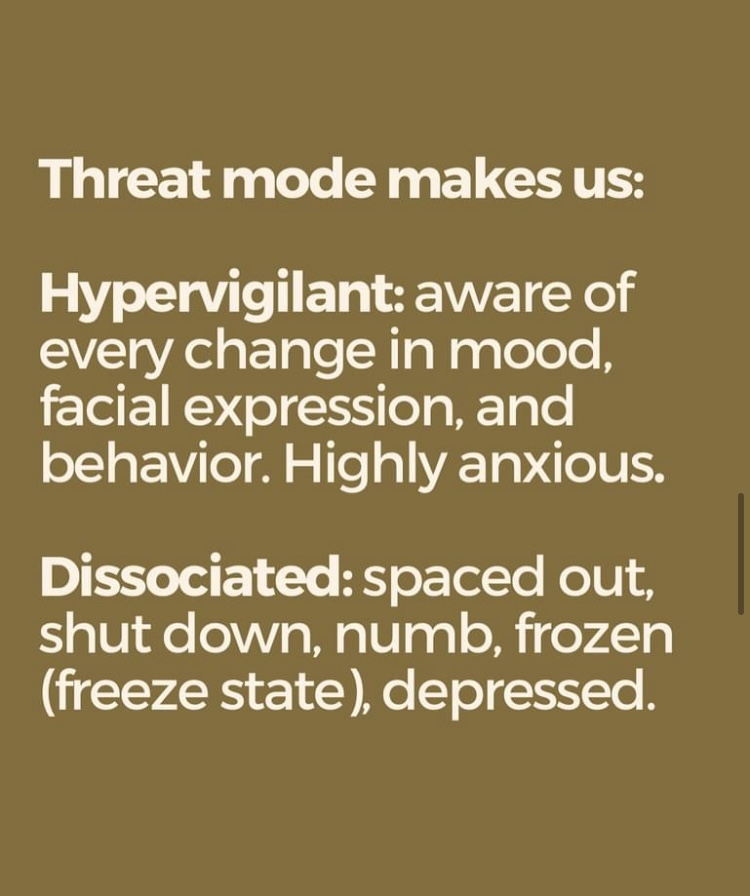
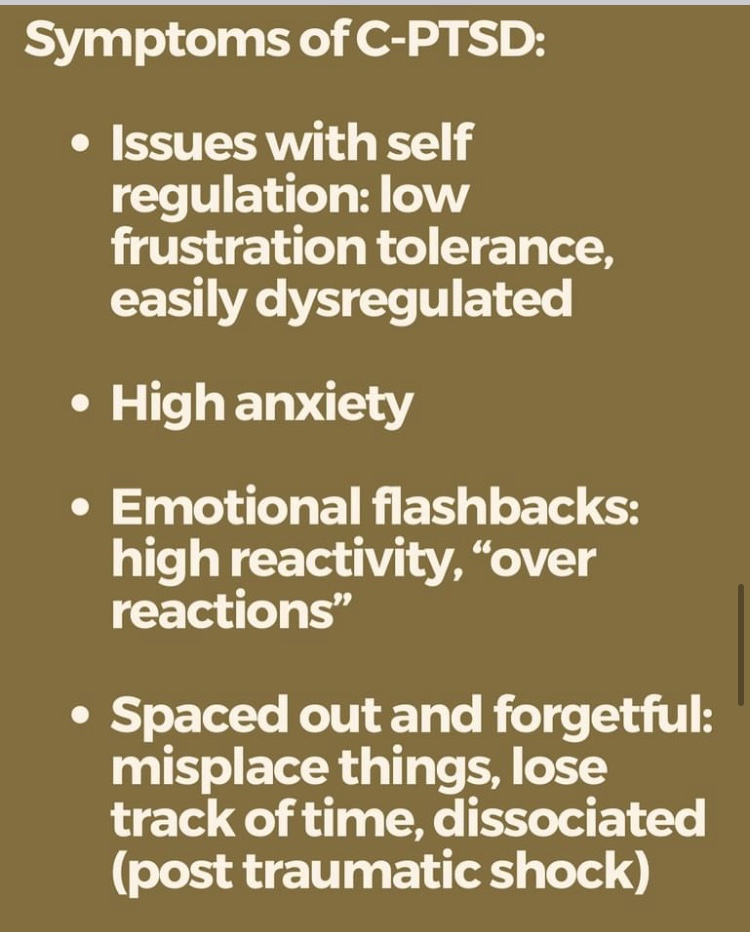
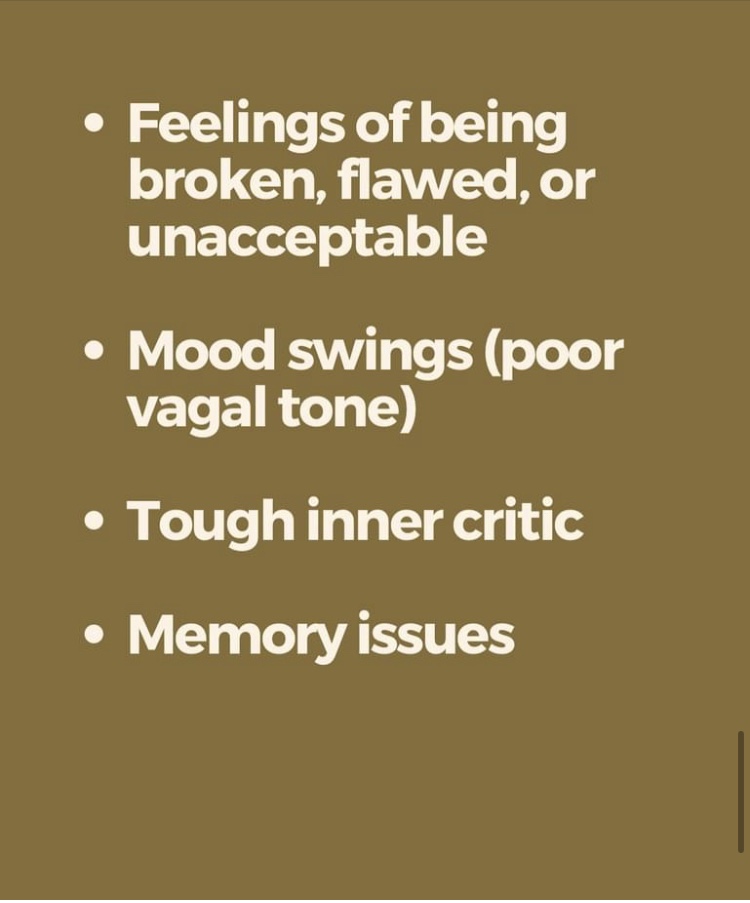
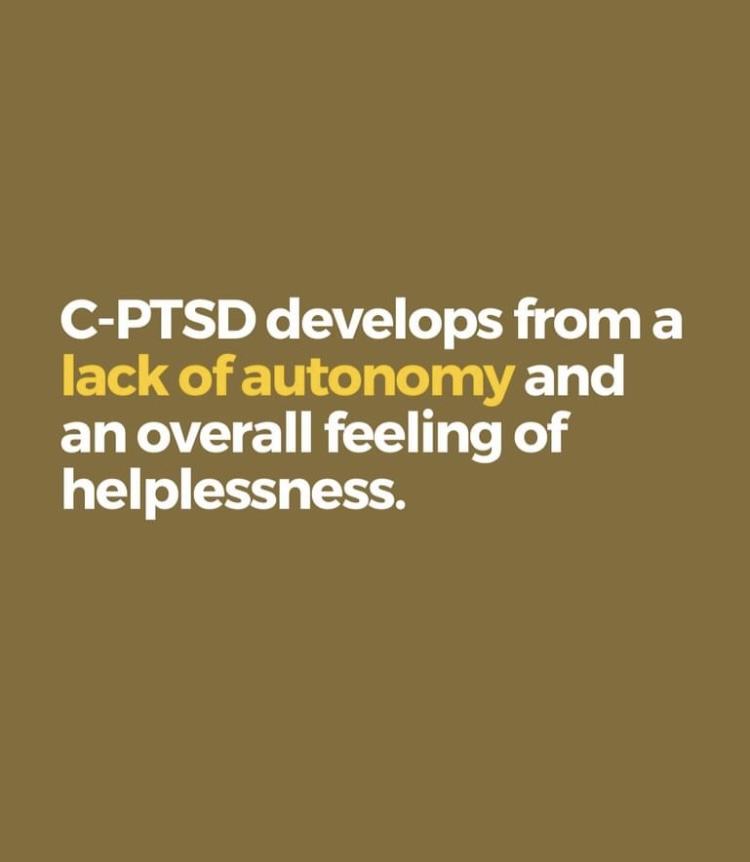
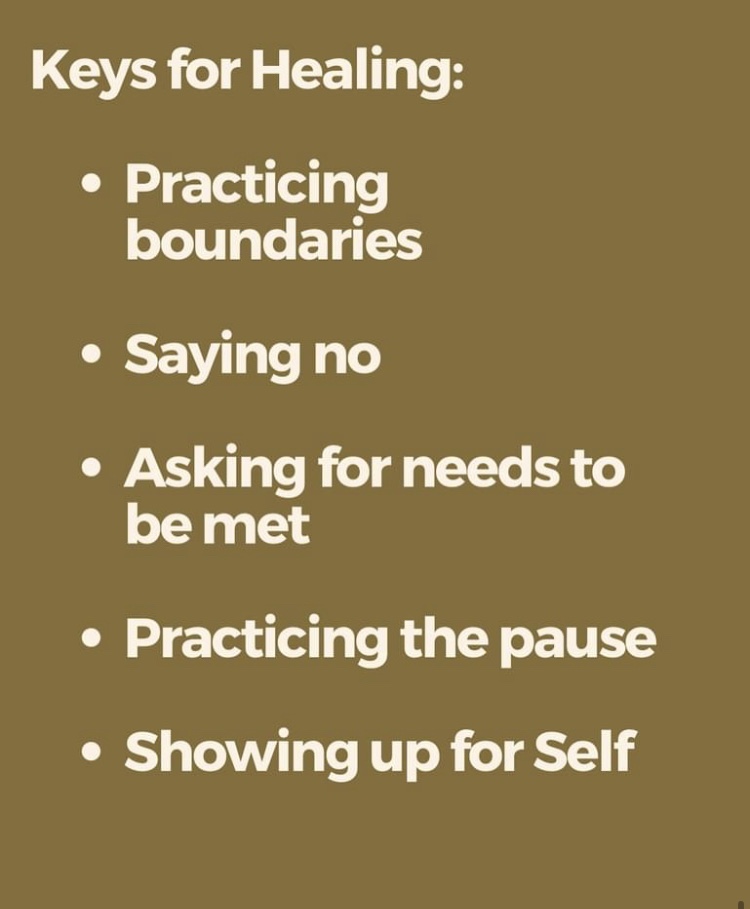
These slides come from Dr. Nicole LePera, known on social media as The Holistic Psychologist (@the.holistic.psychologist).

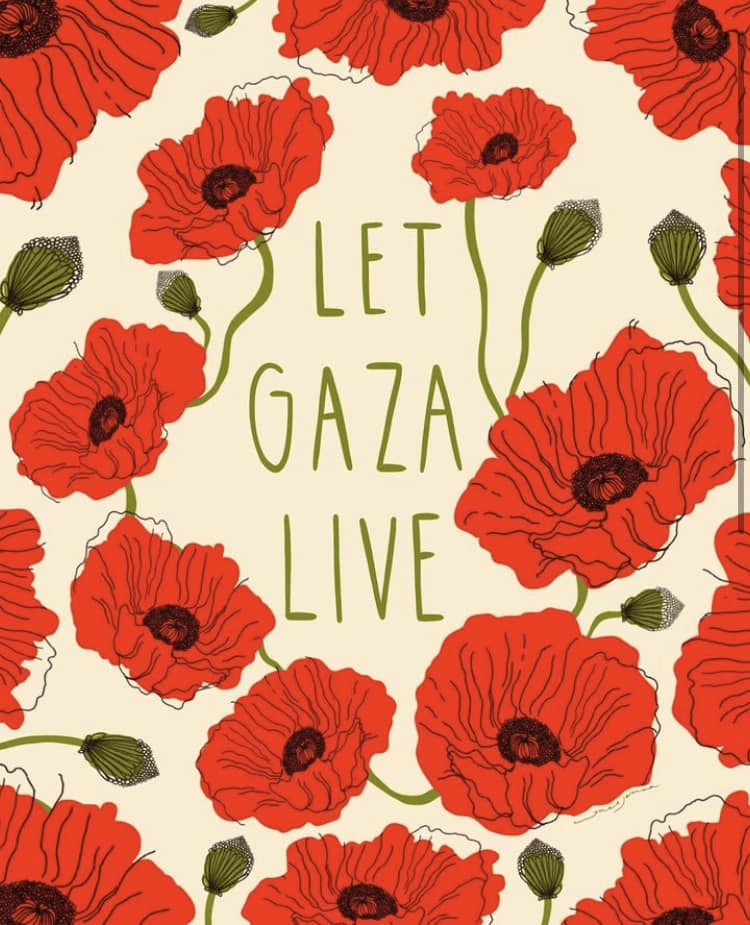
On Tuesday, a large cargo ship lost power and hit the Francis Scott Key Bridge in Baltimore, Maryland, causing it to crumble into the Patapsco River. Six construction workers died. Each of those construction workers had names and were loved, and when this happened, their loved ones had their world upended.
It is devastating.
On Tuesday, food aid from the U.S. government fell through the air via parachutes, causing it to land in the Mediterranean Sea rather than the shoreline. Twelve famished Palestinians drowned as they swam after the food. Each of those Palestinians had names and were loved, and when this happened, their loved ones had their world upended.
It is devastating.
Because of proximity, we may have heard more about the first story.
Proximity of location,
Proximity of position,
Proximity of experience, and more.
We can imagine being a person on a bridge. We might not be able to imagine being a famished person, starving, and swimming for food.
We might recall the horrific news in Baltimore as that terrible thing that happened last Tuesday, knowing it was so out of the ordinary, scary, and traumatic. It truly is, and it deserves our attention.
And
With so much death, destruction, and dehumanization in Palestine, we might see a headline about drownings in the pursuit of aid, and think consciously or unconsciously, “just another Tuesday.” None of us wants to be people who would shrug off the second story, and we shouldn’t. But we are in danger of normalizing this kind of violence. We have to challenge this in ourselves and in others.
We must make these stories a part of our proximity too. It’s not that people need to be close to us to have value, and certainly, people don’t need to be like us to have value. People have intrinsic value. But we lose contact with our shared humanity when we normalize starvation and massive amounts of casualties.
We also do have proximity. I write this as a U.S. citizen, and my government is not only dropping food over the sea; my government has sent massive amount of weapons to create the very conditions that are forcing people to swim dangerously to obtain that food. I am complicit in this. I am close to this.
Today, I lift up these two stories, not to place them in competition (both deserve our attention and care) but to say that human lives are worth mourning. And certainly, human lives are worth protecting.
—Renee Roederer
Just something fun today.
December 17, 2023
A Call to Christians, from Farm Church:
As Christians in North Carolina celebrate the Advent season, stringing lights, decorating trees, and exchanging gifts, our Christian siblings in Bethlehem have canceled their public festivities. They’ve said that they are unable and unwilling to celebrate amidst Israel’s relentless bombardment in Gaza.
Knowing this, we at Farm Church feel compelled to interrogate our role and responsibility in this moment. This statement is an outward demonstration of our internal, ongoing commitment to such interrogation.
We are heartbroken. Since October 7th (and as of this writing), nearly 19,000 Palestinians (many of them children) and 1,200 Israelis have been killed. Nearly 2,000,000 Palestinians have been displaced by carpet bombing and vital resources being cut off. We know that there is no justification for genocide —ever. In the land where Jesus was born, we are seeing horrific violence enacted against communities as bombs level whole city blocks and people are killed, injured, trapped, and traumatized. Settler colonialism, Christian Zionism, and U.S. imperial aims are driving forces in this conflict. As a church located on the occupied lands of the Occaneechi, Cheraw, Shakori, Catawba, and Lumbee peoples; as a congregation largely made up of people who are descendants of white settler colonizers; and as inheritors of a faith tradition that has often fueled both antisemitic and anti-Muslim violence, we recognize our culpability in what’s . We also recognize our obligation to do something.
Farm Church is a community informed by Jesus’s example, centered in the sacred work of growing and sharing food, and committed to honoring God’s image in all people. We meet on a farm and leverage our resources to address food insecurity in Durham. In short: we grow food and give it away.
The work we do in the garden necessitates that we pay attention to the world around us: the micro life and death inherent to a garden’s ecosystem, the threats of the climate crisis, the realities of systemic hunger and poverty, as well as the potential for abundance and the power of transformation. As a community, we are convinced that all things are interconnected in nature and in our communities; as Rev. Dr. Martin Luther King Jr. said, “Injustice anywhere is a threat to justice everywhere.”
Our church’s primary spiritual practice is tending to a little patch of dirt in the center of Durham, North Carolina. As such, we relate to land — all land — as sacred, and we honor the holiness of all beings, past and present and future, who traverse the land that we call home.
We understand, as Palestinian human rights attorney Noura Erakat said, that “land doesn’t belong to us but we belong to the land.” We dream of a future — here in Durham, in Palestine, and everywhere — where the bounty of a well-cared for earth is sufficient to the health and wellbeing of all its inhabitants — Christians, Jews, Muslims, Atheists, everyone — and that they would know a deep sense of safety, freedom, and belonging to the soil upon which they reside. We invite you into that vision.
We call upon our Christian siblings — and all people who understand land as sacred — to take action with us.

I recently heard someone say,
“You can’t be angry and receptive at the same time.”
I don’t know if this is absolutely true. Sometimes, an epiphany hits us when we’re not expecting it at all. Or sometimes, we receive aspects of what we need from our anger — self love, protection, and insight from that very anger, just to name a few examples.
But I imagine that this is often true. When our anger persists beyond what we need, or when it morphs into bitterness, we do become more closed off. We are less receptive. We are less open.
There’s an invitation within that statement:
“You can’t be angry and receptive at the same time.”
We can work on our anger. And we can be grateful that insight still manages to break through.
—Renee Roederer
Have you ever heard the term “Window of Tolerance?”
When we face high stress and trauma in our personal lives or collective trauma in our public lives, the window by which we can regulate our nervous systems grows smaller. In such moments, people react more frequently to stress with
fight or flight (< — hyperarousal) responses, or
freeze or fawn (<— hypoarousal) responses.
In this graph, we might call the normal range the window of tolerance. When a traumatic event or a stressful occurrence takes place (possibly also harkening back to a past event) our bodies can react, moving to a state of hyperarousal, hypoarousal, or back and forth. This may take place until we can regulate our nervous systems and come back to equilibrium.
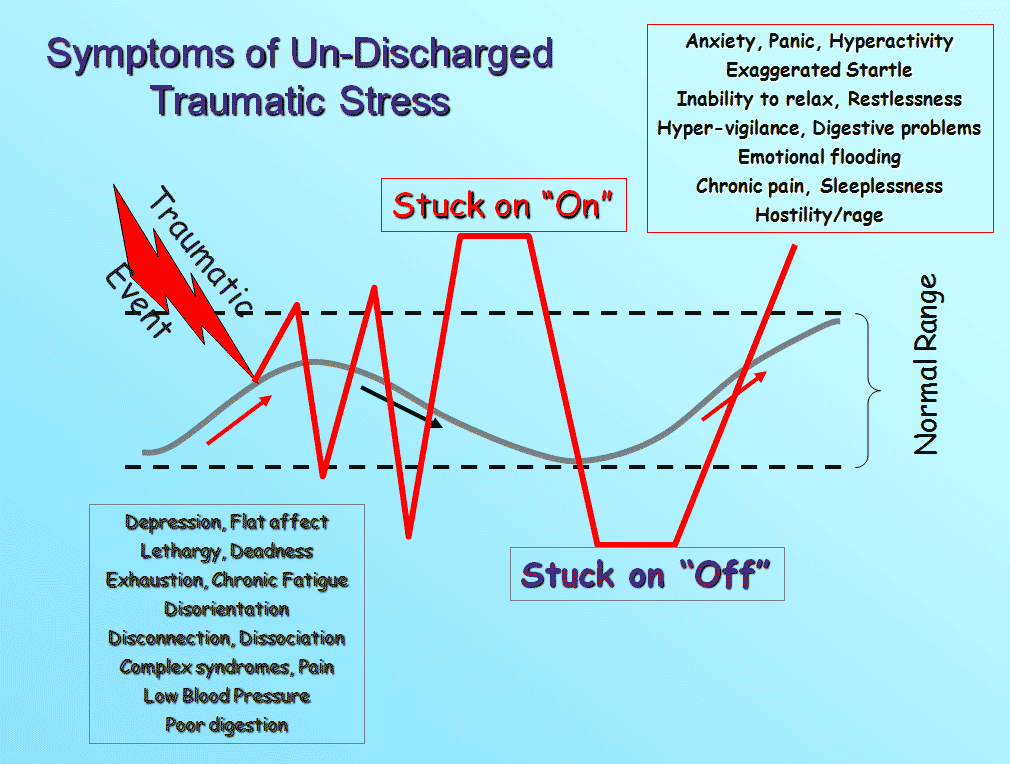
Trauma, high stress, and addiction all decrease the window of tolerance. Imagine this normal range becoming narrower so we’re bouncing to fight or flight more regularly, or plummeting down to freeze or fawn more regularly. Coping mechanisms, particularly somatic practices and connection in safe relationships, can widen this window of tolerance, helping our nervous systems and emotions to stay regulated more easily.
Here’s a great TikTok from @Sleepylands, a therapist who explains this below:
 Smuggling Grace