
I chose today’s direction because I had a chance to learn more about this star cluster at the Smithsonian Natural History Museum (one of my favorite places!) This video shares similar star stories across cultures. Beyond these two featured, additional cultures thought of the Pleiades as sisters in the sky.
Adrift

This time last year, after the loss of two dear people, just five days apart, I encountered the poem, “Adrift,” by Mark Nepo. It’s a touching expression of what it feels like to live with feelings of grief and gratitude, both together. I’d love to share it today.
Adrift by Mark Nepo
Everything is beautiful and I am so sad.
This is how the heart makes a duet of
wonder and grief. The light spraying
through the lace of the fern is as delicate
as the fibers of memory forming their web
around the knot in my throat. The breeze
makes the birds move from branch to branch
as this ache makes me look for those I’ve lost
in the next room, in the next song, in the laugh
of the next stranger. In the very center, under
it all, what we have that no one can take
away and all that we’ve lost face each other.
It is there that I’m adrift, feeling punctured
by a holiness that exists inside everything.
I am so sad and everything is beautiful.
Is there a word, phrase, or image that stands out to you?
Today’s a Good Day for That

Eh, forget New Year’s Resolutions. This is a whole different month than that first one.
But let’s think again…
Is there something you want to learn about?
Is there something you want to explore in self-growth?
Is there something you want to try?
Is there something you want to let go of?
Is there a way to be kinder to yourself?
Is there a practice you want to pick up?
Is there a large goal that you might move forward in small increments — maybe 5, 10, or 15 minutes a day?
Today is a good day to start any of these. We just have to set an intention and commit (and be kind to ourselves if we miss a day here or there, or if these come and go).
—Renee Roederer
What Carries Meaning?

For more than a year, my most consistent, deeply practiced hobby has been learning German. I’m proud to say that in a couple of months, I’m going to finish German Duolingo, which has taken me solidly into B1 proficiency. There is still so much to learn, of course. C1 and C2 are considered to be fluency, but B1 is considered “independent usage,” meaning that I’ve met the minimal requirements to be hired for a job (no plans to do that!) and my travel German is now chef’s kiss.
I was reflecting on one aspect about this this week that feels particularly interesting and satisfying. I’ve felt a shift take place in my brain. When I practice these Duolingo exercises, in my hearing and speaking of the German I know, I’m not doing any internal translating. That is, I’m not hearing German and reminding myself what it means in English in order to respond. Of course, when you’re first learning, you take time to do this, word by word and phrase by phrase. Over time, that process becomes shorter and shorter, but now, most German words I know just have meaning to them, not translation to them.
What I mean is that a given word or phrase simply means what it means. The German word or phrase doesn’t mean the English word or phrase to me. The German word or phrase carries meaning itself in my mind without that step. I can hear, for instance — pulling open Duolingo now for it to give me a random sentence —
Das Handtuch aus Baumwolle ist ganz weich,
and I am picturing a soft, cotton towel. I am not saying internally to myself, “The hand towel made of cotton is very soft,” which is how that translates word for word.
The German carries meaning itself without translation.
And this has me thinking… outside of language learning, can we develop proficiency in other aspects of life so that they naturally begin to carry meaning? For instance, sometimes you know a person well enough to read their body language without speaking a word. That carries meaning without translation. Or perhaps listening to your intuition… those moments when you simply know something, somewhat unexplainably? That’s also an example. Or what else? Having a dream and instantly knowing what it means to you? Or getting into a flow with work or a hobby, and it feels like energy is moving through you rather than words?
What else…? I like this question.
—Renee Roederer
Please Nerd Out

I was getting to know someone and was impressed with the breadth of her interests. I also noticed how much she lit up to talk about them. “You are a Renaissance person,” I said.
Then joyfully, she added, “Oh! And I go to Renaissance fairs!”
We laughed. Her delight was contagious.
I love how unique and particular we humans are. There are times when any one of us might want to hide that quirky interest, love, or hobby. But I’ve noticed that when people are willing to share these with joy, we appreciate their uniqueness and feel all the more comfortable to be who we are, too.
Don’t hide that fun hobby under a bushel basket. Please nerd out.
—Renee Roederer
Mental Health Monday: Attachment Styles (Part 2)
Last Monday, we initiated a series on attachment styles. I want to continue that today and also next week. If you missed last week’s post, I’d love for you to start there. You can learn, what are attachment styles? And how do they impact our internal feelings and relationships?
To recap a little, there are four primary attachment styles. There is the secure attachment style, and three insecure attachment styles — 1) anxious preoccupied, 2) fearful avoidant (also sometimes called disorganized or anxious-avoidant), and 3) dismissive avoidant. There is a great deal of psychological research around these, first championed by John Bowlby and Mary Ainsworth, and a lot of interest in recent years.
Attachment styles develop very early in life from ages 0-2. It may be hard to believe that experiences in our youngest years can impact our experiences in adulthood on such a deep level, but if we think about it, we do learn in this period how to trust (or not), how to self-sooth (or not), and what we can expect from others (or not), and since our bodies hold these patterns, it’s not surprising that these imprints would continue to impact us at the subconscious level until we make them conscious and work to heal them.
And we can all work to heal them. We can do work to move toward a secure attachment style.
Today, I’ll invite us to learn again from Thais Gibson, a therapist who has done tremendous work in these areas:
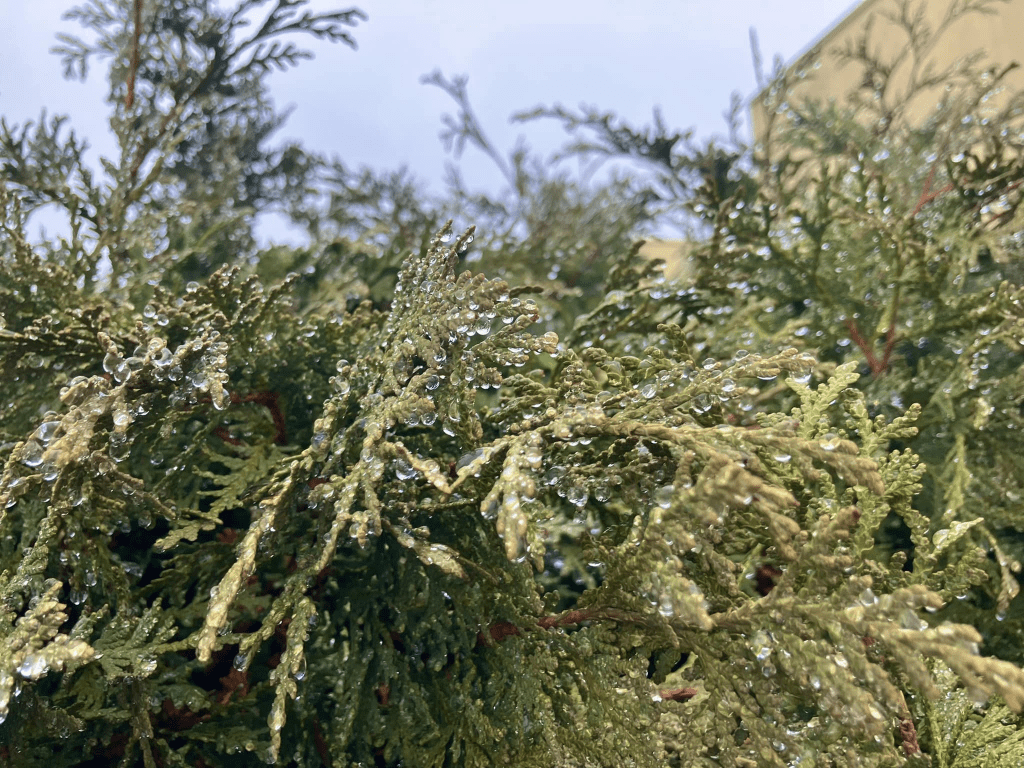
This Week in Nature





Neato Curiosities: Learn about Emergence
“Just Be You”
Both within my work, and beyond it, I spend a significant amount of time listening to people. It’s an honor and a privilege to hear how people are doing, sometimes in the deepest of places — what they need, how they feel, what they hope for, or if they’re struggling to hope, what they dream about, and what they’re committed to acting upon. I feel gratitude for this daily.
Also within my work, I spend a significant amount of time planning and implementing programs. In a season of a new year, this involves detailed work to get programs started and opportunities for grant writing.
If I may be honest with you, I completely overextended myself this week, and I truly did it to myself. I packed my schedule, and I moved back and forth between care needs and program planning needs without practicing ample self-care, something I’m typically very good at doing. I didn’t eat as well, sleep as well, or create enough space for down time. I paid for this physically and am now taking some time to change that.
But there was a moment that really stood out to me this week. In the midst of this, when talking with someone, I asked, “How can I, and how can we support you?”
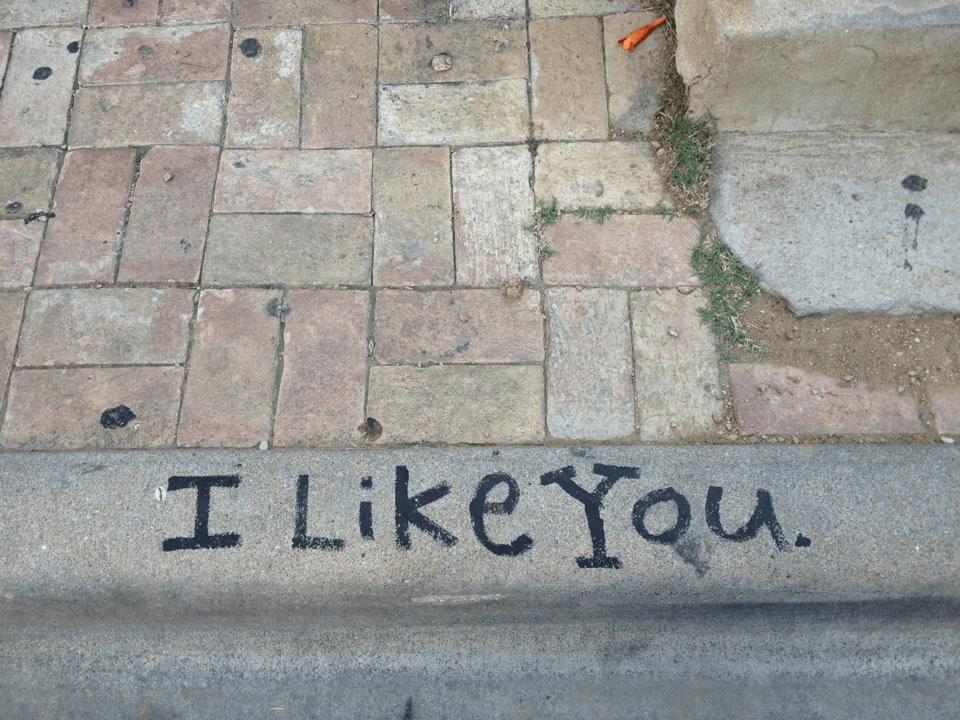
This person answered, “Just be you.”
In all of the back and forth, in all of the gear shifting, and in all of the thinking about tasks and getting them ready, there was that reminder,
“Just be you.”
That’s important. Isn’t that what we’re all looking for, in times of stress and in times of joy, alike? Presence with people we love? Care from people who are uniquely themselves? Mirroring from people who can remind us that we are uniquely ourselves?
Being ourselves among people who are being themselves… and intentionally honoring both. . . With depth and simplicity, this is what much of the work is about, and this is what much of what the work is for.
Shevat by Lucinda Kurtz

Each time there is a new moon, marking a new month of the Jewish calendar, my dear friend Lucinda Kurtz writes a poetic prayer which is a call to reflection and action. I would like to share her words about the month of Shevat.
Just when despair
almost overtakes us,
when bullets and bombs
bind our muscles
constrict our bodies and bones,
The new moon of Shevat appears
inviting us to dig deep inside
to find that nugget of faith
witness it sprouting
to reimagine the future.
In Shevat, we cross a threshold
into a mysterious realm
hidden within ourselves and
the deep interior of trees.
A stirring, even in frigid winter
Sap begins to rise
the new cycle begins.
On the full moon of Shevat,
we celebrate New Year of the Trees.
Renewal of life on fertile earth
awakens to divine flow of
vital energy from above
Streaming from the cosmic Tree of Life
down from roots in heaven
to re-create the fragrant, blooming world
minute by minute.
Can we return to the primal Garden
repair our transgression
find redemption
savor sacred fruit
nourishing and sweet?
In full view,
we bless the holy apple
to align ourselves
with the Source of all Blessings
to flourish and thrive.
Shevat is the month
to reconstellate ourselves,
Discover secrets
we never knew,
Delight
in honeyed tastes of
heavenly bliss,
where all people
are faces of the One.
— Lucinda Kurtz
Are there words, phrases, or images that resonate with you in a particular way?
 Smuggling Grace