I love to wake up early, sit in my little nook room on a couch near a fireplace-looking space heater, drink some morning coffee, and have some time to myself. I truly love it. I am an extrovert, and I do care work. I spend so much of my day in communication with people, hearing their big needs and personal celebrations, and I do this joyfully.
But I also love this early morning window of introversion. I need it. It’s necessary.
What is your sacrosanct downtime? What does it look like? What do you do? What do you not do?
In my last post, I shared that I was feeling like a grump because of the five-day air quality alert, and that I was missing outside. We’ve been sharing in the smoke from the Canadian wildfires. (Thinking of people there most of all).
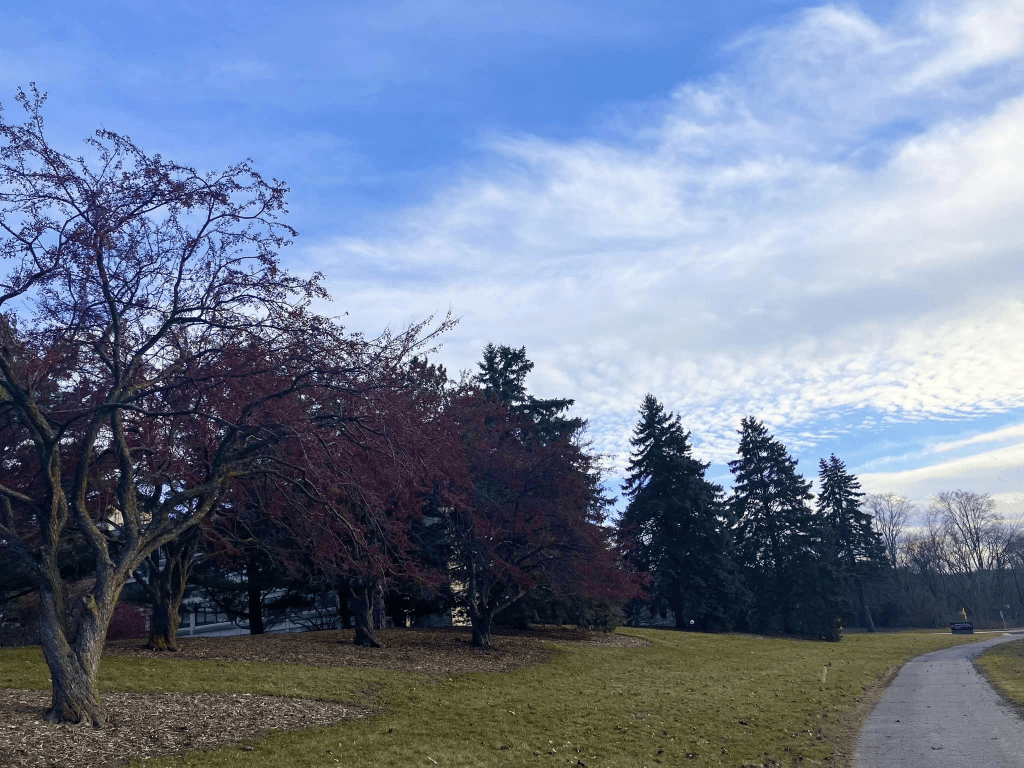
I’m grateful to say that in my neck of the woods, the alert has lifted. I’m back outside, and so happy!
See?
Like a newly hatched baby sea turtle, I bolted to the sea. (Nothing ate me on the way).
Our air quality is terrible right now due to smoke from the wildfires in Canada.
When this happened with New York City and the Eastern Seaboard earlier this summer, I found myself thinking about how foolish we are to ever consider that borders are real. What we do, experience, and neglect to do impacts every living thing. Some people and animals are much more impacted, but I’ll share that this time, I, too, am among the impacted. I’ve had a migraine for days.
But I’m really feeling this: I miss outside.
This situation has reminded me (not that I didn’t already know!) that I just plum love outside. So much. It’s part of who I am, and receive a lot of daily joy and delight from that. This has only lasted three days, but it might be five or six? And then, will this happen again later throughout the summer?
I just want to name that when you live in a cold climate, summer is perfection, and I don’t want to be cheated of it. Geez, summer is a delight! I need this time, alongside others.
So that’s me being a grump. I guess I’ll go eat worms.
I watched some bees move their hive. Their colony was getting too large, so they split their population, and a great swarm of 30,000 bees (protecting the Queen, of course) moved collectively to a new location. I watched scout bees fly, find a place, and then come back, and then communicate where to go to their fellow super-organism bees through dancing. They actually found their way there. All 30,000 of them.
It was wild and gorgeous.
That’s the video I wanted to show you today, but I don’t see that a clip is available. So I’m going to show you this trailer and invite you to watch all of Our Planet II. Then you get to see all of the magical scenes.
People gather on stage for Summer Sings. Photo credit: Shelly Hawkins.
There are historical moments that we remember vividly and palpably. Some people remember precisely what they were doing the moment they learned that JFK had died. Likewise, on the deeply significant day of 9/11, many of us remember all the insignificant details of our morning hours before we were confronted with that day’s painful set of losses. Similarly, I imagine that most of us remember the details of our last day and last hours of the ‘before times’ — that is, what we were doing right before the world closed down in March 2020 in the wake of the COVID-19 Pandemic.
I certainly do. I was gathered with my 120+ person choir in Detroit for a final rehearsal of Carl Orff’s Carmina Burana. Our performance was scheduled for the next day. That night, things were already changing rapidly. We had spent a couple weeks of hearing about this virus in the news; at that time, we were already hearing about washing our hands more regularly with a bit of language about ‘social distancing’ too. But in the last 48 hours, the details of the news were getting more serious, and at that rehearsal, we weren’t entirely sure what we would happen. That evening, we didn’t rehearse from the stage, but rather, from the seats of the concert hall. We went home on a bus, unsure about the next day.
The next day turned out to be the first day of the ‘after times.’ State and national governments declared lockdowns. We were never able to have our concert. Even then, we thought we were looking at about three weeks of time in this lockdown, certainly not what turned into 15 months. I couldn’t have anticipated how isolating this would be. Suddenly we were plunged into a situation where everyone was quarantined with the wrong amount of people. Either we were utterly alone, or with squirrelly kids holed up in their own houses, we couldn’t get a moment alone.
1,200 days later (thanks Siri for giving me that number, which is very whole and pleasing too) 291 people set something right.
Every year, our large choir hosts an event called “Summer Sings.” People gather together, rehearse a big work of music for 45 minutes to an hour, and then we have an informance — an informal performance. It isn’t perfect, but it’s spirited and honestly, still very good. Last night, we rehearsed a run through of Carl Orff’s Carmina Burana, this time from the stage. Then, with incredible soloists, we performed it. 291 people set something right.
291 people is a lot more 120 choir members. Last night, we hit our record number of singers for Summer Sings, a tradition that’s been going on for about 25 years. We went full circle, and we finally sang our piece. It was spirited, well-sung, fun, and freeing.
And of course, this invites me to think about all the things we’ve needed to set right from that time, and invitations to do that still.
To give my prime example, since those 15 months lifted and vaccinations became available, I have not stopped traveling to see friends and chosen family. This has become one of my greatest commitments. Now that my workplace has chosen a hybrid schedule, and I, like many, can work from anywhere, I have, and I will. I’ve discovered that life is too short not to be gathered with the people you love most.
After the 15 months lifted and vaccinations were available, my beloved 25-year old car died. I then bought a new car that gets 56 miles per gallon, and I haven’t stopped traveling the gorgeous state of Michigan where I live. I’ve had so many solo journeys and day trips with friends too. Life is too short not to place yourself near beauty.
And after 15 months lifted and vaccinations were available, I am still singing, and I get to do this with others. Life is too short not to prioritize one of your greatest joys.
291 people set something right, and we can all work to reclaim our priorities, including the ones we had not quite prioritized before. Life is too short not to do that.
Six lightbulbs. From left to right, five of the lightbulbs are hanging straight down. The sixth and last lightbulb is an LED light swinging out as if it’s about to hit the remaining five and catalyze movement in them. Public domain image.
My friend and colleague said this:
“Insight is tied to urgency.”
Isn’t that true?
When insight comes — when the fog lifts, when the unknown reveals itself, or when the possibility emerges — there is urgency to act, make a change, and (re)/align ourselves with particular priorities.
When we know differently, we are summoned to act differently. And often, there is urgency to this.
And likewise, isn’t the reverse true as well?
“Urgency is tied to insight.”
Sometimes, insight is hidden until urgent conditions emerge.
Urgency arrives, and we cannot stay in the same frame of mind, space of heart, or orientation of action (or inaction).
We simply cannot stay where we are. New insight comes. It changes us.
These things are connected, insight to urgency, and urgency to insight. They unfold layer upon layer with each other.
Dandelion seeds blowing in the wind. Public domain photo.
“What does depth require from us, from me?” Sitting with this question and quote today from adrienne maree brown in Emergent Strategy: Shaping Change, Changing Worlds.
“If love were the central practice of a new generation of organizers and spiritual leaders, it would have a massive impact on what was considered organizing. If the goal was the increase the love, rather than winning or dominating a constant opponent, I think we could actually imagine liberation from constant oppression. We would suddenly be seeing everything we do, everyone we meet, not through the tactical eyes of war, but through the eyes of love. We would see that there’s no such thing as a blank canvas, an empty land or a new idea — but everywhere there is complex, ancient, fertile ground of potential.
“We would organize with the perspective that there is wisdom and experience and amazing story in the communities we love, and instead of starting up new ideas/organizations all the time, we would want to listen, support, collaborate, merge, and grow through fusion, not competition.
“We would understand that the strength of our movement is in the strength of our relationships, which could only be measured by our depth. Scaling up would mean going deeper, being more vulnerable and more empathetic.”
“What does depth require from us, from me?” -adrienne maree brown, Emergent Strategy, page 10
Image Description: A series of black dominos with quite dots; the ones in the back have fallen, and the ones in the front are about to fall. Public domain image.
Everything catalyzes everything.
Everything affects everything.
This, of course, is so obvious that it’s hardly worth being the topic of a blog post. But perhaps it’s obvious to the point that we could think about it more often. Maybe with some intention, we might feel greater hope too. Because….
What we do matters.
Now surely, some actions have bigger impacts than others. And when we move in directions we’d like to change, we can always shift course. After all, everything catalyzes everything, and our course correction shifts the whole. Even the recognition that we need a course correction had a catalyst. Something woke us up to that. And now the shift will have impacts too, creating space for new possibilities.
So back to this:
What we do matters.
What we do – how we spend our time, how we speak, how we relate, how we create, how we care – it all matters.
Because it always initiates a sequence of effects, often well beyond what we might have imagined. It’s not all centered upon us. But our actions matter. We impact things, just as they impact us.