
Right Down the Street or a Few Towns Over

Google Alerts, Wikimedia Commons

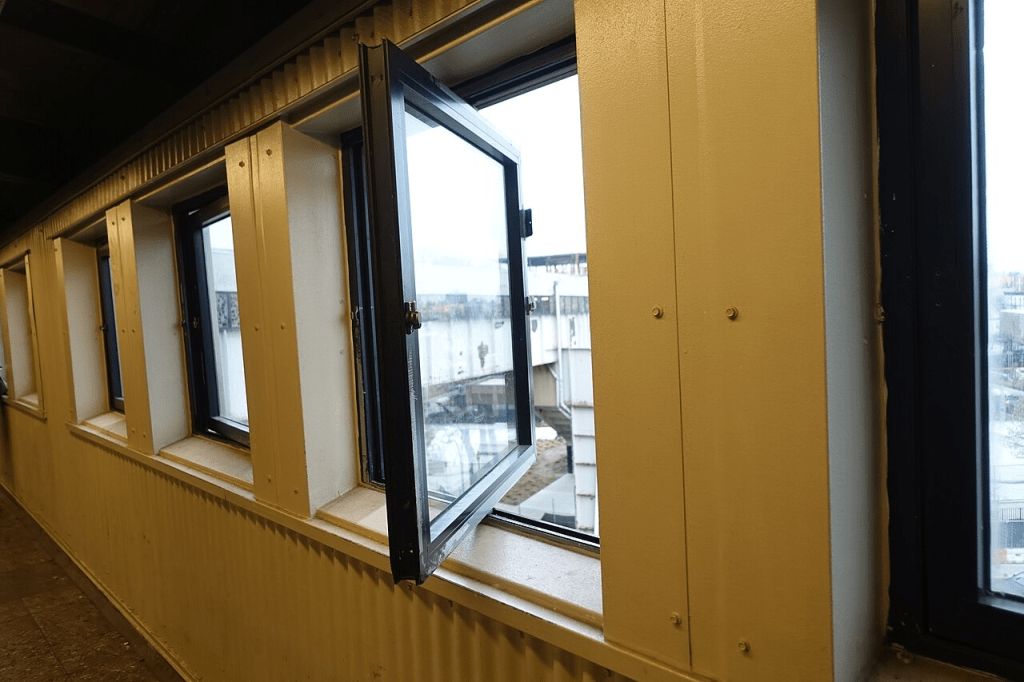
There’s a women’s prison not too far from my house. I would suspect that you might have a prison, jail, or immigration detention center not too far from you, too, but it may be somewhat out of view. Even though this prison is nearby, I went several years before I went down the street in its direction and noticed it there. And then, it was easy to forget again. That is equal parts on me and on systems that make it so. Every once and a while, I would hear something about conditions there and this would be back on my radar.

Now there is a major public health legal case. Women have suffered there for a long time. I decided recently to sign up for a Google alert about this prison. I also added the immigration detention center in my state. Now I get articles delivered to me, letting me know about difficult conditions in both places.

These are not pleasant emails to receive, but they’re important. We know that some people end up in these places for minor infractions. And even with they are far from minor — quite serious, even — no one forfeits their worth or their need for human rights. They shouldn’t lose adequate healthcare. These are often public health crises, right under our noses, purposefully placed out of view.

I encourage you to discover which jail, prison, or detention center is nearest you and set a Google alert to learn more. Know the truth; tell the truth.

Renee Roederer

The Calling that Keeps Calling

Robert Reich in The Last Class

Recently, I wrote a post about Robert Reich — economist, teacher, writer, podcast curator, and more. I admire him a lot.

Over the weekend, I saw a film I’ve been looking forward to for months. It’s The Last Class, which captures more than his final semester of teaching at UC Berkley. It reveals the way teaching keeps returning as Robert Reich’s true north. Despite all the public service, the social commentary, the books and the viral videos, he seems always drawn back to the classroom.

The Last Class follows Reich as he teaches his long-running “Wealth & Poverty” course at UC Berkeley one last time. It’s an intimate portrait, showing us not only his teaching style — his wit, clarity, insistence that students not accept the world as it is — but also the tension that comes with age, including what it means to face the end of something that has defined you. The film doesn’t shy away from big questions: inequality, what legacy looks like, what responsibility we pass on to younger generations.

I highly recommend The Last Class. If teaching or mentoring or caring for others has ever called you, this film will both challenge and move you. You can check if it’s showing in your area here: Where You Can Watch The Last Class

Here’s the trailer: Trailer for The Last Class.

The Power of a Simple Welcome

The Ann Arbor Symphony Orchestra before their concert begins

I’m a new symphony orchestra season subscription holder. Over the years, I’ve seen the Ann Arbor Symphony Orchestra in concert several times, and I’ve performed with them even more times. My local choir partners with them annually to perform major works. But I’d never been a subscriber until this year.

Truth be told, I became a subscriber this season because it gave me first dibs on Jacob Collier tickets. Jacob Collier, my favorite artist who I greatly admire, and Chris Thile, who I also enjoy, are performing with the Ann Arbor Symphony Orchestra next month. I bought two tickets in the 4th row (hooray!).

The opening concert for their season took place this weekend, and the music was tremendous. Every piece moved me, and several will stay with me for a long time. But today I want to reflect not just on the music, but on the power of a welcome.

Before the concert began, Jon Beebe, Board President of the Ann Arbor Symphony Orchestra, greeted the audience. Toward the beginning of his address, he asked us to turn to the people on our left and right and say, “I’m glad you’re here.”

It was such a small gesture, but I think it shaped the whole atmosphere of the evening. Of course, we came for the music — but this invitation made the evening feel like a collective experience. During intermission, I got to know both of my neighbors by name and learned a bit about their interests. After the concert, I noticed people connecting with those behind us too, well beyond those seated directly beside us. The night felt accessible and communal.

We face many daunting problems in our society, and it’s easy to feel powerless to impact them or shift them. But we shouldn’t underestimate the effect of small nods of belonging and bids to connect. They impact us physically and emotionally. And alongside the joy of the arts, they are a public good in themselves — a social benefit, and a public health benefit.

Whether we say it aloud or show it through hospitality and care, “I’m glad you’re here” is the beginning of something we need. Small gestures like that can shift entire rooms and ripple outward into whole communities.

Renee Roederer

Liminal Time

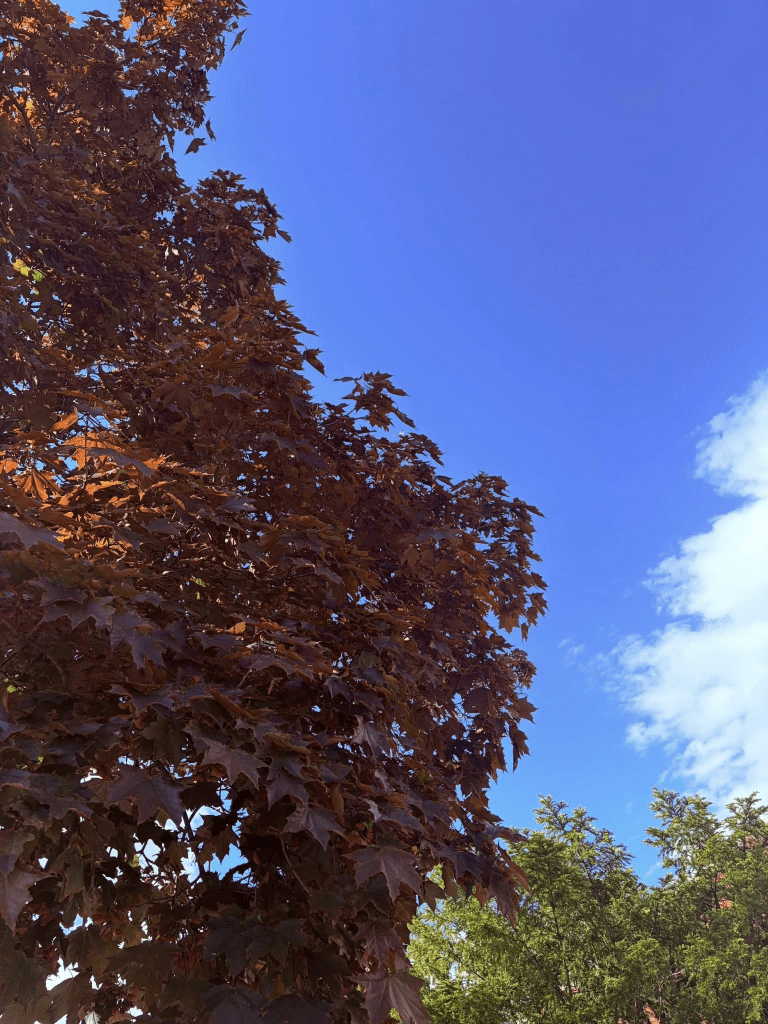
A tree in a nearby neighborhood. Some leaves are green; others are orange. Photo: Renee Roederer.

I was talking to one of my work colleagues about how wide the range of temperatures has been lately. The mornings are brisk, while the afternoons turn pleasantly warm — sometimes even hot. “If you love fall, there’s something for you, and if you love summer, there’s something for you. There’s something for everybody,” we said.

Culturally, it feels like fall. Programs have begun anew. School is back in session. College football is on Saturdays. But technically, it’s still summer until September 22. If you know me, I’m trying to savor every part of my favorite season.

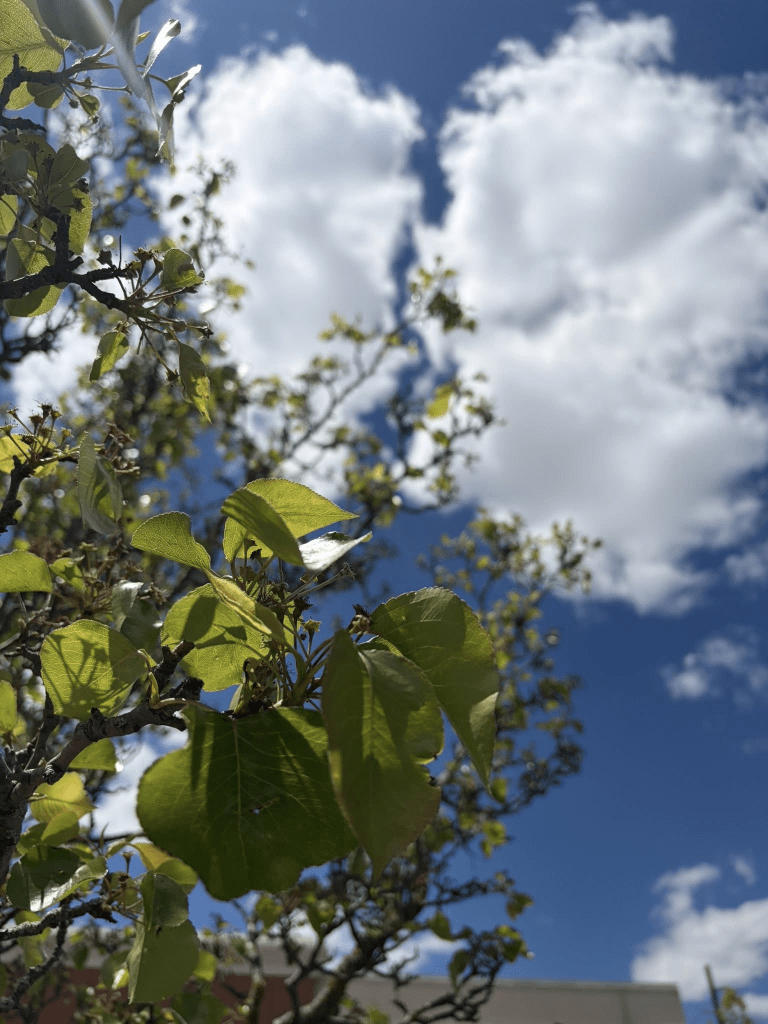
In a lot of ways, we’re in an in-between time. On a recent bike ride, I saw many trees just like that — in-between. Most trees are still photosynthesizing, but here and there, bright colors are revealed as the green begins to fade. This is a liminal time.

And maybe we feel in-between, too. Is any part of you… liminal?

Renee Roederer

What Does Depth Require of Us?

Dandelion seeds blowing in the wind. Public domain photo.

“What does depth require from us, from me?” Sitting with this question and quote today from adrienne maree brown in Emergent StrategyShaping Change, Changing Worlds.

“If love were the central practice of a new generation of organizers and spiritual leaders, it would have a massive impact on what was considered organizing. If the goal was the increase the love, rather than winning or dominating a constant opponent, I think we could actually imagine liberation from constant oppression. We would suddenly be seeing everything we do, everyone we meet, not through the tactical eyes of war, but through the eyes of love. We would see that there’s no such thing as a blank canvas, an empty land or a new idea — but everywhere there is complex, ancient, fertile ground of potential.

“We would organize with the perspective that there is wisdom and experience and amazing story in the communities we love, and instead of starting up new ideas/organizations all the time, we would want to listen, support, collaborate, merge, and grow through fusion, not competition.

“We would understand that the strength of our movement is in the strength of our relationships, which could only be measured by our depth. Scaling up would mean going deeper, being more vulnerable and more empathetic.”

“What does depth require from us, from me?”
-adrienne maree brown, Emergent Strategy, page 10

Naming the Thing

A pen resting on an open journal. Public domain.

There’s a moment before healing begins when all you can do is name the thing. Not fix it, not dress it up—just name it.

Sometimes, that’s the hardest part. Because when we name the grief, the loss, or the fear, we make it real. But we also take away its shadowy power. We begin to see it for what it is, and in that seeing, we create room for something new.

Whatever you’re facing, I hope you have the courage to name it. That’s where healing begins.

— Renee Roederer