Realignment Toward the True Self

A typewriter with an Oscar Wilde quote: “Be yourself, everyone else is already taken.” Public domain image.

I want to begin this post with four powerful quotes.

Borrowing language from Thomas Merton, Richard Rohr — a Franciscan priest and wisdom teacher — writes often about what it means to give up our ego and “false self” in order to live as our “True Self.” In the midst of that reflection, he says:

  1. “You (and every other created thing) begin with your unique divine DNA — an inner destiny, an absolute core that knows the truth about you, a true believer tucked away in the cellar of your being, an imago Dei that begs to be allowed, to be fulfilled, and to show itself.”
    Daily Meditations, July 31, 2016

Author Paulo Coelho writes:

  1. “Maybe the journey isn’t so much about becoming anything. Maybe it’s about unbecoming everything that isn’t really you, so you can be who you were meant to be in the first place.”

The story of the Chasidic master Zusya of Hanapoli is told in the Talmud:

  1. “Once, the Hasidic Rabbi Zusya came to his followers with tears in his eyes. They asked him:
    ‘Zusya, what’s the matter?’

He told them of a vision: ‘I learned of the question the angels will one day ask me about my life.’

His followers were puzzled.
‘Zusya, you are pious. You are scholarly and humble. You have helped so many of us. What question could possibly terrify you?’

Zusya replied, ‘The angels will not ask me, “Why weren’t you Joshua, leading your people into the promised land?”
They will ask me, “Zusya, why weren’t you Zusya?”’”

And author Marianne Williamson writes:

  1. “Our deepest fear is not that we are inadequate. Our deepest fear is that we are powerful beyond measure… Who am I to be brilliant, gorgeous, talented, fabulous? Actually, who are you not to be? You are a child of God… As we let our own light shine, we unconsciously give other people permission to do the same.”

How do these quotes sit with you? Do they speak to certain parts of you — particular roles or identities that live near the root of who you are? Do they stir aspects of your True Self, the parts that “beg to be allowed, to be fulfilled, and to show themselves”?

I hope so.

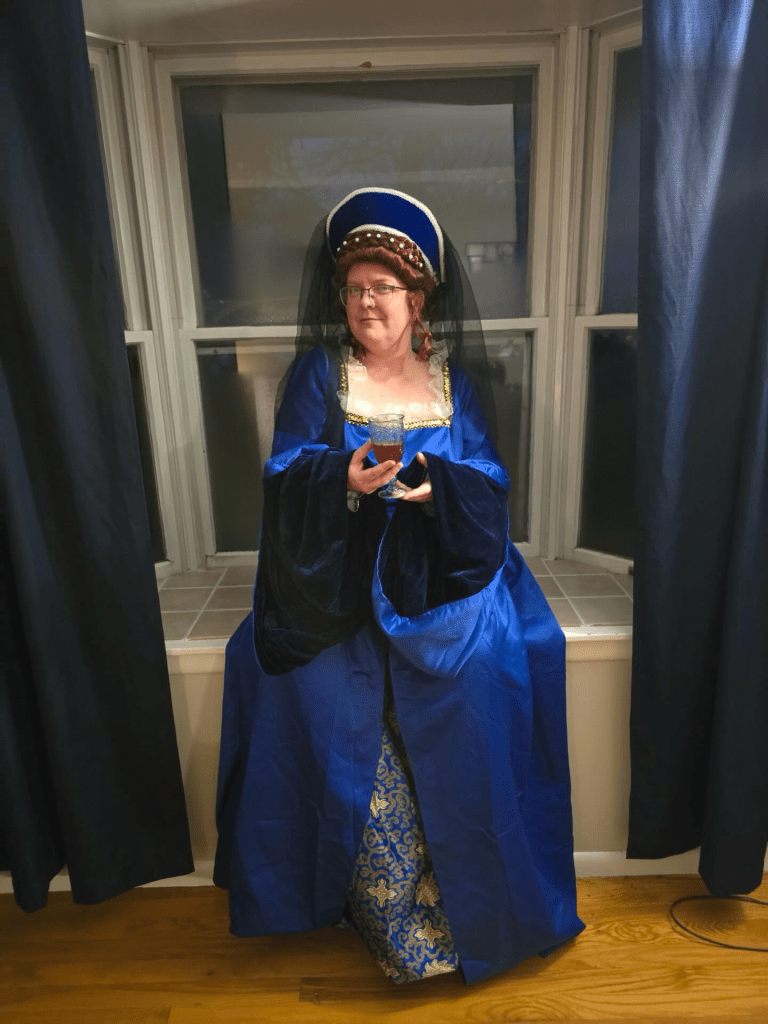
This week, I found myself reflecting on Coelho’s idea of unbecoming. There have been times when I’ve tried to fit myself into roles that didn’t quite match me. For instance, my internal framework of what “a community organizer is” has sometimes been too narrow to include my actual strengths or to allow for my own limitations and needs. And it’s pretty difficult to do something well if the framework you’re using doesn’t make space for your best gifts — or for the grace, adaptation, and accommodations that your particular life requires.

I need to expand my sense of what these can be. But as I reflected on that, I realized I also need to attend to my own particularity — my gifts, my strengths, the at-the-core-of-myself callings. My deep-down, truest parts. The kinds of things illuminated by the quotes above.

True Self stuff.
Deep Yes stuff.

So I sat down and asked myself, “What are the roles, archetypes, or identities that are central to me being… me?”

I wrote down five.

And simply naming them felt utterly invigorating. I don’t know if it was like the Captain Planet of myself coming together (1990s joke! You really should watch that goofy intro) but something powerful happened. I felt energized — and also physically settled — in a way that surprised me.

And none of these identities were new. Not one of them. I’ve known them for years. But naming them together felt like choosing them again. Reclaiming them again. These are the roles I can return to when I get off track (and I do). These are the ones I realign myself with… the ones rooted in a calling beyond myself… the ones that open space within me so I can make space for others.

So — you knew this was coming, right? — I’m going to invite you to do the same.

What are the roles, archetypes, and identities that are central to you being… you?

Write them down if it helps.

Renee Roederer

“My What’s App Was Filled with Ghosts”: Immigrants Hiding from ICE

NPR’s Up First Logo


This morning, I’d like to share the Sunday Story from NPR’s Up First podcast. It aired yesterday morning, and this episode does a tremendous job lifting up the severe conditions that undocumented immigrants are facing in the United States, while also bringing home their humanity and casting a vision for a better future for them and our country. “This can bring us closer together if we let it,” one of the helpers says.

That being said, these needs are truly dire, and as immigrants and their children hide behind locked doors, this is a public health crisis with panic attacks, chest pain, isolation, and limited ability to access basic supplies.

We need to pay attention. If we dare to learn their languages, we need to love the people behind those languages. If we dare to enjoy their cuisines, we need to love the people behind those cultures. But of course, above all, if we ourselves want to step into our best humanity — simply because that is who we should be — we should love these people because they matter intrinsically and are our neighbors.

Please join me in listening to The Families Hiding from ICE.

Renee Roederer

Handel’s Liberation “Hallelujah”

Hill Auditorium. Photo: Renee Roederer.

Hallelujah.

It’s a word from a chorus many know well, especially at this time of year. I’m grateful that I’ll have the privilege to sing Hallelujah a multitude of times over the weekend. I sing with a choir that has the longest annual tradition of singing Handel’s Messiah in the entire world. We’ve done this every year consistently since 1879.

While I haven’t sung this 146 times in a row, I’ve sung the Hallelujah Chorus innumerable times. Yet I’ve learned something new in the opportunity to sing The Messiah in its entirety. Based on where it’s placed in the greater work, the Hallelujah Chorus isn’t a chorus joy-filled triumphalism. It’s about liberation.

It’s about human liberation from oppression — deliverance from oppression caused by other humans. This becomes clear when we hear what precedes the famous chorus:

The bass soloist sings,

Why do the nation so furiously rage together?
And why do the people imagine a vain thing?

Then the chorus sings,

Let us break their bonds asunder,
and cast away their yokes from us.

Then the tenor soloist sings,

He that dwelleth in heaven shall laugh them to scorn,
The Lord shall have them in derision.
Thou shalt break them with a rod of iron,
Thou shalt dash them like a potter’s vessel.

That’s when the chorus responds with “Hallelujah!”

It might seem like an odd time to jump in and rejoice. But if we view this less as the powerful (including God) doing destruction for the sake of destruction, and instead, view this as liberation for the oppressed (God standing with them in power) the Hallelujah Chorus has a completely different purpose and tone.

Hallelujah! 

For the Lord God omnipotent reigneth. . .

Not standing above and dominating as an oppressor,
but standing among the people as a powerful Liberator —
a Liberator who invites the participation of the people in their own liberation.
(“Let us break their bonds asunder”)

King of Kings and Lord of Lords. . .

Not a tyrant kind of King or Lord,
but King and Lord that is revealed as fully human —
a vulnerable child,
a poor carpenter,
a revolutionary,
a healer.

Throughout our performances, I invite myself to think about these things when I sing that Hallelujah. And I think about liberation in our world and desire that certain bonds will be broken.

The audience stands and adds their voices, too.
Resurrection,
Liberation.

Renee Roederer

Living the Larger Narrative

Books on a Shelf. Image: Shutterstock.

What is your larger narrative?

Is there a larger narrative that you want your life to mean?

a vision more expansive
than your fears,
than your pain,
than your abandonment,
than your guilt,
than your anger,
than your regret,
than your grief,
than your addictions,
than your cynicism,
than your anxiety,
than your unease.

These feelings and experiences are valid and can be felt and processed, rather than pushed to the side.

But what larger narrative and vision energizes you and lights you up with sacred possibility?

Could we perhaps spend time intentionally cultivating that. Dreaming that. Practicing that. Acting on that.

Renee Roederer

Dogs Don’t

A photo of Bear, my very beloved doggo friend.

Dogs don’t feel guilty when they need to rest.

Dogs don’t feel afraid of being seen as needy.

Dogs don’t feel shy about bringing it in for a nuzzle.

Dogs don’t feel anxious to reveal that they love you.

Dogs don’t feel reservation about being spontaneously playful.

Dogs don’t subscribe to grind culture.
Why do we?

Renee Roederer

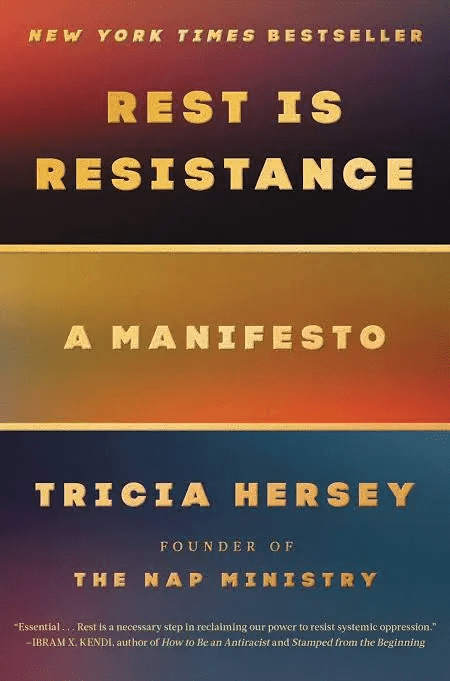
I highly recommend this podcast:
No More Grind: How to Finally Rest with Tricia Hersey

Re-Creation

A prickly pear cactus in Austin, Texas. Photo: Renee Roederer

Dr. Cynthia Rigby was one of my theology professors at Austin Presbyterian Theological Seminary, and she was one of my most significant influences from those years. On more than one occasion, I remember her saying something wise about play, rest, and renewal — something I still think about often. I’m paraphrasing here, so this isn’t an exact quote, but it’s close to her point. She said:

“So often we imagine play, rest, renewal, and Sabbath as recreation — time away from the rat race, a chance to step out of it for a while so we can rest up and then jump back in a little more rejuvenated. But… what if play, rest, renewal, and Sabbath are actually re-creation? What if we engage them in such a way that they actually change us and the rat race itself?”

That’s really wise. I want that re-creation. I imagine we all do.

There are times when we step away from our typical rhythms and something in us is re-created — with new hopes, new commitments to healthier patterns, and new priorities (or the ones we’ve always had but left untended).

Re-creation is possible for us.

Renee Roederer

December 1, 2025 — IOTO

December 1, 2025. AI Generated Image.

When the ball began to drop in New York City during the final seconds of December 31, 1986, crossing us over into a new year called 1987, I was too young to stay up and watch. But I do have a very vivid memory from the next morning.

I was coloring, and since I had just learned to read, I was enjoying learning the names of my Crayola crayons. These included more than the classic rainbow shades. I also had peach, periwinkle, and not to be undone in creativity, orange-red and red-orange.

While coloring, I asked my Mom a strange question:

“Mom, when will it be 1987 again?”

She looked confused, and I don’t blame her.

“What do you mean?”

“It’s 1987 this year. How many years will it take to be 1987 again?”

We went round and round — perhaps ironically — before she understood what I was getting at. I had assumed that our keeping of time was somehow cyclical. It might take a very long while, but someday, I figured, it would be 1987 all over again.

She finally said, “Oh, it’s only going to be 1987 once. Just one time. Next year it will be 1988, and the years will keep getting bigger. We will have 1987 all of this year, but then it will never be 1987 again.”

This made me a little sad.

I was thinking about that again this morning. I’m not saying that December 1, 2025 is going to be the most significant day of our lives, but it is only going to be December 1, 2025 once. Move over, YOLO. IOTO — It’s Only Today Once.

Sure, maybe it’s not the most meaningful day ever. I confirm this as I look out the window at the gray sky. But if we only get this day one time, we might as well not waste it on things that don’t matter or that pull us away from the things that matter most.

IOTO.

Renee Roederer