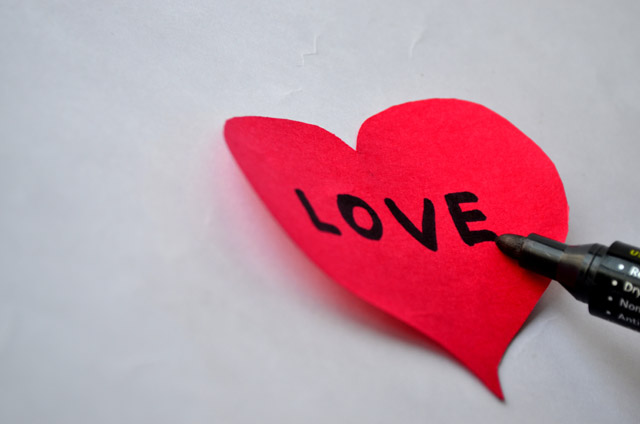
Ash Wednesday: The Love We Cannot Lose

Ash Wednesday

I suppose I’ve had an intriguing relationship with Ash Wednesday over the years. At times, the day has intersected with some challenging moments and chapters in our lives.

I’ve participated in Ash Wednesday. . .
. . . on the very day an opportunity fell through, and we learned we wouldn’t be making a move we really wanted,
. . . on a day when I was acutely aware I was about to lose a job,

and most challenging,
. . . on the exact date that one of the most beloved people of my life received a terminal cancer diagnosis.

In the Lenten tradition, Ash Wednesday serves as a recognition of impermanence and our own mortality. In various chapters of my life, the date has intersected with real occasions for grief.

And Ash Wednesday can be a powerful tradition:

On one hand, the day can provide an opportunity to feel something cathartic. In our broader culture, we often push away public expressions of grief. There aren’t enough occasions to honor our pain and the pain of others in visible ways. But on Ash Wednesday, people actually wear that pain and acknowledge it in each other’s presence.

And there there is a real expression of hope within this tradition too. Pain, grief, and mortality — real as they are — are not always the final word. In times of great anxiety, we can lean upon one another in speaking this hope:

No matter what we fear,
No matter what we lose,
No matter what we hear,
No matter what we’ve done,
No matter how we’ve failed,
No matter how we’ve been failed,
No matter what has been done to us,

We are loved with a LOVE we cannot lose.

I really do believe that.

And in a time of fear, grief, and anxiety, we can believe and display that every human being is absolutely Beloved — that each and all are worth the Love that forms their being.

Even in the face of death itself, it’s a truth that can be lived.

Renee Roederer

My Silly Dream Must Be a Prophesy

Warm Slice of Zucchini Bread

After sleeping about an hour, I woke up at midnight from a dream about communion zucchini bread. It was called… wait for it…

The Zuccharist.

Surely, this must be prophesy. Surely, this must be a beckoning call for us to practice the Zuccharist this very week by buying or making some zucchini bread.

Will you enter this prophecy with me?

Bonus Points if you send me a picture of zucchini bread you are about to enjoy.

Bonus Bonus Points if you write the liturgy for eating zucchini bread at home among family and friends.

Renee Roederer

Re-Creation

IMG_9999

Dr. Cindy Rigby was one of my theology professors at Austin Presbyterian Theological Seminary and one of my most significant influences during my years there as a student. On a number of occasions, I remember her saying something really wise about play, rest, and renewal, and I still think about it from time to time. I’m going to paraphrase her here so this isn’t an exact quote, but it’s close to her point. She said,

“So often we think about play, rest, renewal, and Sabbath as recreation, time away from the rat race… an extended period of time when we leave that rat race behind so we can rest up and then re-enter it again a bit more rejuvenated. But… what if play, rest, renewal, and Sabbath can be re-creation? So that they create us in new ways and actually change us? So that we don’t re-enter the same way? What if they change the rat race itself?”

That’s really wise. I want this re-creation. I imagine we all do.

And gratefully, I just had a full week of it. I stepped away from my typical rhythms and spent a week with loved ones in San Antonio. (Including lots of time holding a new, precious baby! How lucky am I?) And I’ve come home a bit different. Re-created in a way… with new hopes, new commitments toward better rhythms, and new priorities (actually this is a return toward…) the priorities that have been there all along but not tended to as well as they could be.

The trip re-created me a bit. Glad for it. I’m ready to re-enter my best priorities.

Renee Roederer

Who’s To Say Healing Doesn’t Heal?

circle

[Image description: There is an orange-brown background, and toward the right side of the image, there is a circle of symbols of people made from paper. They are holding hands in the circle, and a light is shining in the middle of the circle.]

Sometimes, we have a zero-sum mindset about rest, care, and personal growth.

We feel anxious or guilty about prioritizing rest, care, and personal growth because somewhere deep down inside us, we believe… if we choose to prioritize these for ourselves… deliberately receiving from others, setting up daily rhythms of personal care practices, or engaging extended periods of intentional, internal work… we believe… we are somehow taking from others.

Some of us have also been socialized to view care in these ways.

I’m not talking about falling off the grid entirely (though by all means, it’s helpful to do this temporarily here and there). I just want to make a claim that rest, care, and personal growth are not necessarily selfish, which is something we can easily fear or feel guilty about. This zero-sum mindset easily creeps in amidst parenting, pastoring, organizing, and caregiving.

We, ourselves, are intrinsically worth rest, care, and personal growth. We matter.

But also, when we keep our connections with others in mind, this is not a zero-sum situation — our rest, care, and personal growth is always embedded in relationships. It is always for the benefit of the community. We are refreshed and energized. We bring our fuller selves to our relationships, roles, and work. And when our rest, care, and personal growth stay in contact and connection with others, we pay attention to the systemic forces which make it much more challenging for some to experience those extended times of rest, care, and personal growth. Our care becomes more intentional here, and respecting people’s agency, we practice care outwardly, prioritizing others also. We take care of each other. We cultivate care spaces in mutuality together.

I wonder why we think these are divided from one another — personal healing and receiving versus community care work. As if we can only do one or the other.

After all, who’s to say they aren’t absolutely connected?

Who’s to say that healing doesn’t heal?

Renee Roederer

Your Worth Is Not Measured By Your Productivity

worth

[This image is by France Corbel and can be found in a number of places. Image description: There is a light pink background, and in the center, there is a coffee carafe filled about 2/3 with coffee. The words, “Your worth is not measured by your productivity,” are written both above and within the carafe of coffee.]

We can become so task-oriented that we neglect being relationship-oriented.

We can become so busy with work that we neglect time for care, tending, and growing.

We can become so convinced our worth is wrapped up in productivity that we (temporarily) forget our worth is intrinsic to who we are and unmeasurable.

Our worth is not measured by our productivity.

That has simply never been the case. But we’ve internalized this somewhere.

Somewheres…?

capitalism,
the Protestant work ethic,
ableism,
scarcity-thinking,
urgency-thinking,
greed,
school culture,
family culture,
workplace culture,
any kind of competition culture.

But I’m convinced of this: When we seek — however imperfectly — to ground ourselves in the truth of our own intrinsic worth, and when we seek to view our neighbors in the same ways, we make space for people to do the same. After all, aren’t so many of us longing to hear this? That our lives were never meant solely for productivity or measured by productivity? That there is much more to who we are? And that who we are matters in and of itself?

Renee Roederer


Writing Down Words of Kindness

Words

[Public Domain Image. Image Description: Five, upright Scrabble tiles spell, ‘Words.’ The tiles are maroon, and the letters are white. Some other tiles are in the foreground and background.]

I don’t really make New Year’s resolutions, but I do choose rhythms I hope to practice.

It’s almost the last week of February, and as is typical well beyond the new year, some things come and go, and some things are practiced in flux. I have been doing one thing relatively consistently, however, and it’s a practice I’m going to recommend to you also.

I’ve started writing down kind words that people say to me.

I keep them in a folder. Sometimes, these are kind words from total strangers. Often, these are loving words or kind comments of affirmation from loved ones. And you know what? There are a lot of kind words out there in the world. Even when the news cycle is tough. Even when we bear personal stress. This practice has helped me see how abundant such words are. (Not that I doubted that, but it’s just even more obvious.)

And this has made me much more intentional about speaking kind, loving, affirming words to people. I know how good it feels to receive such words. I think I’m giving them in even more abundance — or at the very least, with more intention.

I recommend this. It’s a lovely thing.

Renee Roederer


The Great Reversal

Moon

[Image description: A brown, sandy pathway is centered with green grass, trees, and a fence on either side. The pathway leads toward a large, yellow-orange full moon on the horizon. The sky behind the moon is black.]

This sermon was preached at Northside Presbyterian Church in Ann Arbor, MI and was focused upon Luke 6:17-26. An audio recording is above and a written manuscript is below.

Blessed are you who are poor, for yours is the Kingdom of God…

Mother Teresa used to say, “If we have no peace, it is because we have forgotten that we belong to one another.”

We long for peace… Peace of every kind…

And we do belong to one another… but have we forgotten?

How easy it is to forget… And yet God is always beckoning us back into this belonging, this Sacred Belonging rooted in connection with God, with our neighbors, and with the earth. God calls us to this again and again. And we find blessedness there — Blessedness in this larger form of Belonging.

As Jesus traveled around Galilee and Judea, he was surrounded by crowds. Large crowds. Sometimes, the crowds were so big and so pressing in their needs, that they began to press in upon him. There were times that he would find creative ways to step aside just a bit and work with nature so that he could address them collectively — getting into Simon Peter’s boat and pushing it out into the water, climbing up the Mount of Olives and letting it serve as a natural amphitheater, or here, coming down from a mountain where he and his disciples had been praying and standing on a level place to address the people.

In all of these moments, Jesus spoke to them all at once, and I wonder… As the members of these crowd stood or sat side by side, listening in the same direction, breathing in the same direction, and dreaming in the same direction… I wonder… did they remember once more that they belong to one another? Did they experience an invitation into that larger, Sacred Belonging? With God? With neighbors? With the earth? Did Jesus step away just a bit and turn them toward one another? Did he turn them toward a larger vision? A vision that could invigorate their own lives?

Biblical scholars call this section of the Gospel of Luke, The Sermon on the Plain. It’s very similar to the Sermon on the Mount, which is found in the Gospel of Matthew, but in Luke, it has its own unique telling. It’s possible that Jesus gave the same address, a very memorable one in his life and teaching, and Matthew and Luke recorded it differently, at the Mount of Olives and here, on a plain, and with different nuances.

But it’s also possible that these teachings of Jesus were a frequent address as he traveled. These teachings might have been one of his primary stump speeches, so to speak. He may have spoken them many times to different crowds, and as the disciples traveled along with him, they may have come to internalize these words. They may have come to a recognition that they belonged to the vision within them.

The Sermon on the Mount and the Sermon on the Plain both begin with words of blessedness. We might remember the opening words in Matthew which we called the Beatitudes —

Blessed are the poor in spirit, for theirs is the kingdom of heaven,

Blessed are those who mourn, for they will be comforted,

and many more words of blessings.

But here, in the Sermon on the Plain, Jesus is much more direct:

Blessed are you who are poor —

not blessed are the poor, but blessed are you who are poor; not blessed are the poor in spirit, but blessed are you who are poor, poor right now —

for yours is the kingdom of God —

not for theirs is the kingdom of God, but for yours is the kingdom of God — yours, yes, right now.

These blessings are direct and for the people who seek belonging into this vision. They are present for those who find themselves suddenly held within the belonging of this vision.

And here, in the Sermon on the Plain, Jesus is much more direct with something Matthew does not include. He has a list of woes:

But woe to you who are rich, for you have received your consolation.

Woe to you who are full now, for you will be hungry.

Woe to you who are laughing now, for you will mourn and weep.

Woe to you when all speak well of you, for that is what the ancestors did to the false prophets.

These might be… harder to hear. And yet, do they cast some people —perhaps some of us — out of this larger Sacred Belonging? With God? With neighbors? And with the earth? Or…. do these words also call us right back in?

What is Jesus doing here? Of course, we can’t fully know, but I wonder if we might consider a few things. Jesus grew up as a recipient of scriptures from the Hebrew Bible which today are often called apocalyptic literature. These include scriptures from the prophets that speak about final things… about a sacred, final future when God will cosmically and dramatically liberate the poor and disenfranchised, destroying their enemies and every single force that seeks to oppress them. These scriptures are written from the perspective of those who are abused and humiliated, who need to proclaim the strength of a truly Liberating God toward a liberation that is truly longed for and deserved.

It is a Great Reversal of fortunes. Is that what Jesus is lifting up here?

Maybe.

But I also notice that these woes don’t really have cosmic, dramatic judgment attached. They don’t say, “Woe to you who are rich, for the moon will turn to blood and you will have fear and trembling on the great, final Day of the Lord.” They don’t say that.

No, they say things like, “Woe to you who are rich, for you have received your consolation.”

You sought riches, and you gained them on the backs of others, and you have them. And they make you impoverished in a totally different way.

They’ve separated you — or they give the illusion of separation to you, perhaps also giving the illusion of superiority to you, and from there, perhaps turning you against your neighbors so that you oppress them, and they do not have what they need.

You sought riches, and you’ve received your consolation.

You’re not living in alignment with this better vision, this transformative vision of the Kingdom of God.

The sun, moon, and stars are not falling out of the heavens here, but we shouldn’t underestimate these words of woe.

As Mother Teresa used to say, “If we have no peace, it is because we have forgotten we belong to one another.”

The Gospel of Matthew and the Gospel of Luke have their different nuances here in these words of blessing. But there’s one thing in common, one thing we could easily miss. I missed it for many years when I read these passages: In the midst of this great crowd — in both the Sermon on the Mount and the Sermon on the Plain — Jesus doesn’t begin by addressing the crowd as a whole. Instead, he addresses his disciples directly while the rest of the crowd watches.

He seems to make a division, and he puts an emphasis of the disciples. It isn’t the kind of separation that turns the gathered body against one another, Instead, it is a separation that invites. It is a separation that calls. It is a separation that beckons to us, saying,

“Come over here. Come to this blessedness. Come this Sacred Belonging. Come to your neighbors. Be gathered into this fullness. Follow me into this way of life. This is the way… not your riches, or your full bellies, or your too often shallow laughter, or your great reputations. Leave your trust in these. Come over here where there is life… where God is transformative, where neighbors matter and belong and have what they need — including from your riches. Come over here into a vision where the earth is filled with flourishing people and all of creation is transformed. Come over here.”

This is Sacred Belonging. This is our invitation.

The Great Reversal is likely much more than a flip-flop of fortunes. It is an invitation to remember again that we belong to one another — yes, right this moment –and we’re invited into very blessing of that vision.

Renee Roederer

#AccessIsLove: God Is Disabled

sorrowful mystery

[This painting is entitled, ‘Crocifissione”(”Crucifixion”) by Gerardo Dottori and is in the Vatican Museum. Image description: Jesus is hanging on the cross with his head tilted to the left side. The cross and his body are shades of blue in front of a red background. There is a beam of light coming down in the shape of the triangle, lighting his body and two women who are kneeling at the foot of the cross. One is looking up and to the left. The other is looking down and to the right.]

Today, we close a five-part series entitled #AccessIsLove. This series is part of the larger #AccessIsLove campaign initiated by Mia Mingus, Sandy Ho, and Alice Wong, three disabled activists who invite us to frame accessibility as an act of love and a priority for moral inclusion — not an afterthought, not a burden, and not an inconvenience to be avoided. Each day this week, we’ve extended that conversation to discuss issues of accessibility in churches, and we’ve explored accessibility from a variety of angles.

A Proclamation

I want to close this series with a theological claim we can make from the Christian tradition:

God is Disabled.

Yes. This is the beautiful proclamation of Nancy L. Eiseland in her book, The Disabled God: Toward a Liberatory Theology of Disability.

God is Disabled.

One day, while searching for something in the Austin Presbyterian Theological Seminary library, I remember discovering Nancy Eiseland’s book. I was a student in my mid-20s, and I decided to check it out and give it a read. I’m so glad I did, because it moved me deeply. It has stayed with me all these years.

God is Disabled.

Nancy Eiesland, herself a disabled theologian, resists the ways that disability has been framed and defined throughout history — as inherently flawed, equated with human sin, or not fully human. She names the grave injustices that have been done to disabled people through these theological and cultural understandings

Instead, Nancy Eiseland proclaims Jesus to be God-With-Us as he endures trauma, injury, and disfigurement during the crucifixion.

Jesus — God-With-Us — becomes Disabled.

And when hope surprises on the third day, the resurrected Jesus appears still bearing the wounds of the crucifixion. These have not been removed. Jesus is revealed to be the Disabled God. Likewise, in this story, Jesus reveals his true, full personhood. Disability is included in what it means to be fully human. And people with disabilities bear the image of God.

Nancy Eiseland writes,

“In the resurrected Jesus Christ, they [the disciples] saw not the suffering servant for whom the last and most important word was tragedy and sin, but the disabled God who embodied both impaired hands and feet and pierced side and the imago Dei [or image of God]. Paradoxically, in the very act commonly understood as the transcendence of physical life, God is revealed as tangible, bearing the representation of the body reshaped by injustice and sin into the fullness of the Godhead. (pp. 99-100)”

— and —

“In presenting his impaired hands and feet to his startled friends, the resurrected Jesus is revealed as the disabled God. Jesus, the resurrected Savior, calls for his frightened companions to recognize in the marks of impairment their own connection with God, their own salvation. In so doing, this disabled God is also the revealer of a new humanity. The disabled God is not only the One from heaven but the revelation of true personhood, underscoring the reality that full personhood is fully compatible with the experience of disability. (p. 100)”

This theological framework of Easter proclaims and celebrates that

Disability is part of the identity of God, and
Disabled people have always been bearers of the image of God,
Fully human,
Fully worthy,
Fully included.

So how will we view one another, and how will we include one another? Access Is Love.

Share the Love!

I want to thank you for following along with this series this week.

As we close, here as some ways to take action and add support:

1) I recommend continuing the #AccessIsLove conversation in your church and in other communities that are important to you. Sometimes, we haven’t begun to consider certain accessibility needs. Other times, if we’re honest, we haven’t really prioritized accessibility in the first place. How can our communities commit to full inclusion and access?

2) Would you consider adding a contribution of support?

— First and foremost, I recommend supporting and amplifying the work of Mia Mingus, Sandy Ho, and Alice Wong, the three disabled activists who initiated the #AccessIsLove campaign. Check out their suggested accessibility actions, and contribute financially to their vision by purchasing some swag. I’m going to buy a shirt later today.

I also sent a donation this week to Annie Segarra who did some lovely teaching for us and others in two Youtube videos. Grateful for her contributions.

Did you learn something helpful? Will you be using this series to initiate conversation? Would you consider making a donation of any size?

Thanks for following and adding yourselves to the conversation!

Renee Roederer

This post is part of series called #AccessIsLove. You can find the other pieces here:

#AccessIsLove: Inaccessible Church Buildings
#AccessIsLove: Changing Ableist Language in Churches
#AccessIsLove: Invisible Disabilities in Church Communities
#AccessIsLove: Neuro and Sensory Diversity in Churches

#AccessIsLove: Neuro and Sensory Diversity in Churches


color brain

[I found this image in a piece by Wayne Deakin, entitled, Meet the Invisible Minority: Why My Autism and Neurodiversity Are Gifts to the Industry. I recommend reading it. Image Description: On a white background, a human brain is viewed from above. The brain is drawn with black lines, and colorful splotches of red, green, blue, yellow, and purple are present in the center of the brain, moving outward onto the white background.]

As I’ve shared throughout the week, Disability Activists Mia Mingus, Sandy Ho, and Alice Wong have recently launched a campaign on Twitter, Instagram, and Facebook called #AccessIsLove, framing accessibility as an act of love and a priority for moral inclusion — not an afterthought, not a burden, and not an inconvenience to be avoided. Throughout this week, I am writing about issues of accessibility in churches, and as I do so, I want to spotlight the perspectives of disabled people and communities impacted by inaccessibility. Today, I want to spotlight the autistic community and people with sensory-processing diversity. (I also recommend following these folks on social media).

The Gift of Being Oneself

I want to begin with this beautiful TED Talk by Rosie King, an autistic speaker who shares, “I wouldn’t trade my autism and my imagination for the world.”

Rosie King: How Autism Freed Me to Be Myself

Rosie King says, “But if you think about it, what is normal? What does it mean? Imagine if that was the best compliment you ever received: ‘Wow, you are really normal.’ But compliments are, ‘You are extraordinary,’ or ‘You step outside the box.’ It’s, ‘You’re amazing.’ So if people want to be these things, why are so many people striving to be normal? Why are people pouring their brilliant, individual light into a mold? People are so afraid of variety, that they try and force everyone, even people who don’t want to or can’t, to become normal.”

-and-

“I’m going to leave you with one question: If we can’t get inside the person’s minds, no matter if they’re autistic or not, instead of punishing anything that strays from normal, why not celebrate uniqueness and cheer every time someone unleashes their imagination?”

The Gift of Being Ourselves in Community

Congregations, like all communal spaces, have community members with phenomenal gifts of imagination, a variety of communication styles, and unique ways of processing sensory information. When we privilege only a few limited ways to experience, communicate, or process information, we become inaccessible to those who do so differently. We may become exclusionary or discriminatory as well, stigmatizing those who communicate and process in ways that are different from ‘the norm.’

When we are accessible, however, we consider the unique gifts and needs of the people in our community, both uplifting and accommodating a variety of ways to participate, contribute, lead, belong, and receive care from one another.

— I would like to spotlight this video series, entitled, Creating an Autism-friendly Church. It was created by autistic community members in Asheville and faculty and students from The University North Carolina, Asheville. It includes includes four short videos with suggestions of ways to create “inclusive, religious environments for autistic and neurodiverse church members.”

— The Rev. Leanne Masters is the pastor of Southern Heights Presbyterian Church in Lincoln Nebraska. Together, she and the members of the congregation have become advocates for autistic children and adults, seeking to create an inclusive environment in their worship space. They have created an adaptive bulletin which features pictorial icons, giving a visual order to the worship service and inviting participation. And they provide weighted lap blankets to people who may find them calming, particularly those who have sensory-processing sensitivities. You can read about this here: Adaptive Worship Bulletin ‘Shows’ As Well as Tells.

— The Rev. Katy Stenta is the pastor of New Covenant Church in Albany, NY. Together, they have started a new worshipping community called Trailpraisers designed to provide an experiential worship service that includes the participation and leadership of people who communicate and process sensory information in a variety of ways.

Happy Valentines Day: Share the Love!

Today is Valentines Day, and I’d like to express my gratitude to Sandy Ho (@notyouravgho on Instagram), Mia Mingus (@mia.mingus on Instagram), and Alice Wong (@disability_visibility on Instagram). They are the people who started the #AccessIsLove campaign. If you’ve been learning from this series I’ve been creating, please check out the #AccessIsLove website where you can learn from them directly. And please provide support by giving a buying their #AccessIsLove swag. It’s great stuff!

Access Is Love — Disability Visibility

Tomorrow, we will conclude the formal #AccessIsLove series on Smuggling Grace (some lovely disability theology tomorrow) but let’s keep this conversation going!

I’m also offering some other resources below so feel free to check them out too.

Renee Roederer

This post is part of a series entitled #AccessIsLove. Feel free to check out the other pieces also:

#AccessIsLove: Inaccessible Church Buildings
#AccessIsLove: Changing Ableist Language in Churches
#AccessIsLove: Invisible Disabilities in Church Communities
#AccessIsLove: God Is Disabled

And some additional resources for your consideration:

Thoughts on ‘Differently-Abled’  — Disability activist Jocy Mon (@Jocyofthedragons on Instagram) shares why she doesn’t like disability euphemisms like ‘differently-abled.’

Video: Things Not To Say to An Autistic Person (If you need to know this ahead of time, this video includes some cursing).

Every Brain is Beautiful: The Autism Advantage by Dr. Lynda M. Ulrich

My Complicated Thoughts on Neurodiversity by Emily S. Cutler


#AccessIsLove: Invisible Disabilities in Church Communities

Invisible disability

[I found this image on Kerry Magro’s blog on a piece entitled, What I would Like People to Know About Having Autism and an Invisible Disability. I recommend reading it. Image Description: White background, black text. There is a phrase at the top which reads, “Not all disabilities look like this,” with an arrow pointing to the traditional disability symbol of someone using a wheelchair. There is a phrase below which reads, “Some look like this,” pointing to symbols of three people. Two are adults with a child in the middle holding the hands of both adults.”]

As I’ve shared throughout the week, Disability Activists Mia Mingus, Sandy Ho, and Alice Wong have recently launched a campaign on Twitter, Instagram, and Facebook called #AccessIsLove, framing accessibility as an act of love and a priority for moral inclusion — not an afterthought, not a burden, and not an inconvenience to be avoided. Throughout this week, I am writing about issues of accessibility in churches, and as I do so, I want to spotlight the perspectives of disabled people. (I also recommend following them on social media.)

Invisible Disabilities

Not all disabilities are visible.

Let’s say that again:

Not all disabilities are visible.

Many people know this, of course, but… culturally, people sometimes have a very narrow concept of what disability is, how it functions (of course, there’s a huge spectrum of how disability functions in people’s lives!) and what gets to ‘count’ as disability. It might seem as though this is merely a question of definition, but if our understandings are too narrow, we can erase people’s experiences and identities, and we are much more likely to be extremely narrow in accommodating the needs of people in our communities. This can happen, and does often happen, within the life of congregations. If we want to create churches that are fully inclusive and accessible, we should think about invisible disabilities.

When we ponder invisible disabilities, what are some important things to consider?

— We cannot tell whether someone has a disability simply by looking at them.

— Among other things, we are talking about chronic health conditions, pain disorders, mental health conditions, auto-immune disorders, intellectual disabilities, learning disabilities, sensory processing conditions, and more (again, let’s not be limited).

— People have a right to talk about their experiences, conditions, and identities in ways that are unique to their choosing. Some may identify as having a disability; others may not. They may use different language altogether. We should follow their lead. Some may use person-first language (“I’m a person with _______; here’s an example) and some may use identity-first language (“I’m a(n) ______ person; here’s an example). Many Deaf people capitalize the ‘D’ in Deaf to assert pride in their identity and being a member of a community that is also a culture. In short, we should follow the lead of people and mirror the language they use. If we are unsure which language people use, we can ask.

— We need to take care about how we hold and share people’s health information: 1) People have a right to share that they have a health condition or invisible disability, and people have a right to keep it private. It is their choice. 2) If someone shares this with us, it does not then give us liberty to talk about it with others without their permission. And… 3) we should not speculate in conversation with others about whether someone has a disability or a health condition. 4) We definitely should not ‘diagnose’ someone in conversation with others. In more than one congregation, I have watched people presume to ‘diagnose’ a person — and wrongly —  when they made an assumed conclusion about someone’s physical or mental health and shared this ‘conclusion’ with others. People may also attempt to ‘diagnose’ a traditionally stigmatized condition upon a person in order to dismiss that person or create suspicion about that person. (I was also once on the receiving end of this experience. It was horrible.) Let’s be clear about this: It’s ableist.

In addition to these points, as we consider how to have a more inclusive and accessible church for people with invisible disabilities, let’s ponder how some larger cultural frameworks and misunderstandings might impact people in our congregations also.

“Fakers”

I’d like to spotlight another helpful video from Annie Segarra. She is an ambulatory wheelchair user — meaning that she can sometimes stand or walk for short amounts of time. She names the ways that disabled people are sometimes accused of faking their disabilities. This happens when people have a very narrow understanding of what disability is and presume to confront others. This can even lead to incidents of verbal and physical abuse.

(This week, I’ll also be compensating Annie Segarra with a donation for the use of her videos. She offers educational and emotional labor in teaching us. She also makes a living this way. Did you learn something? Want to join me in making a donation?)

And here’s another video from one of the hosts of Tru Faces on Youtube who is visually impaired and has had painful experiences of being accused of faking her disability.

How might these dynamics impact people in church communities? Some questions for us to consider:

Would someone with a disability placard be accused of faking their need if they use one of our designated parking spots and then walk unassisted into our church building? What if some people in our churches aren’t utilizing this need currently out of fear of what others might say?

If someone tells us that they need greater access, different placement, or particular technology in order to see or hear more clearly in worship, will we believe them and take that need seriously?

If our ADA non-compliant church buildings have steps with no lifts, will a person with a pain disorder feel comfortable in telling us this is inaccessible for them, or will we assume that’s only true for people who use mobility aids? (It also matters for people who use mobility aids!)

If someone tells us that they have particular dietary needs, will we prioritize those? In community meals? In communion/eucharist?

If we use particular kinds of language around food or fitness, might we inadvertently exacerbate someone’s eating disorder?

If someone tells us that our language in sermons or liturgy is triggering of past trauma, will we honor that and try to frame things differently next time?

Health Stigma

We should also keep in mind that certain health conditions additionally face a great deal of stigma in our larger culture. This may lead to some people keeping their invisible disabilities private and hidden.

Again, it is always someone’s choice to share or not, and that should be honored. But if we want to be fully inclusive and accessible in our churches, we should ask ourselves how health and disability stigma might be present in our own congregational cultures too. Might this lead to people hiding their needs for accommodation? Could those dynamics lead to people feeling isolated even in the midst of community gatherings? Might this mean that people might stay home even if they’d love to participate in worship services?

A Story That Sits With Me

If you follow this blog, you might remember that I had a very meaningful experience meeting Kurt Eichenwald last November. He has written a powerful, personal memoir called A Mind Unraveled about his experiences living with epilepsy.

I also recently heard him tell a story about a conversation he had with others at a book signing event.

He was addressing the people there and asked, “How many people here have epilepsy?”

There was a pause, and then one person raised his hand.

Kurt Eichenwald then said, “Hi, my name’s Kurt, and I have epilepsy. How many people here have epilepsy and have never told a single person in your whole life?”

Six people raised their hands.

Church Cultures: Hidden Conditions, Hidden Needs

As a person who grew up with epilepsy (which later went into remission) this story above did not surprise me at all, and yet I found it to be so telling. It makes me wonder how many people with culturally stigmatized conditions and invisible disabilities are present in our congregations but keeping their experiences and needs hidden?

(Sidenote: 1 in 26 people will have an epilepsy diagnosis at some point in their lives, and epilepsy is more common than autism, cerebral palsy, multiple sclerosis, and Parkinson’s disease combined. I can nearly promise you that people in congregations currently have or have had epilepsy. Can they tell you?)

And what about mental health stigma? It’s a huge cultural force. How many people feel as though they are hiding in the shadows? Even within our congregations?

If health stigma exists in these directions, in broader culture, and within the life of a congregation, can members feel comfortable disclosing their conditions, invisible disabilities, and particular needs to one another? Can pastors and other ministry leaders disclose their conditions, invisible disabilities, and particular needs to their congregations? Or will there be challenging consequences for doing so?

These are crucial questions for accessibility. And Access is Love.

Thanks again for reading. We’ll have two more posts in this series this week. Anything you’d like to add? Feel free to share in the comments.

Renee Roederer

— I also want to recommend this powerful piece by Rabbi Ruth Adar, entitled, Hiding My Disability Kept Me From My Fullest Life.

— I also want to recommend an episode of Alice Wong’s incredible podcast Disability Visibility. Alice Wong is a disability activist and one of the initiators of the #AccessIsLove. That episode is called, “Disabled Fakers.” In that episode, she interviews Doron Dorfman who has done research on the “fear of the disability con,” and discusses how that impacts accessibility, an understanding of ethics, and disability rights in law.

— This post is part of a series. Feel free to check out the other pieces here:

#AccessIsLove: Inaccessible Church Buildings
#AccessIsLove: Changing Ableist Language in Churches
#AccessIsLove: Neuro and Sensory Diversity in Churches
#AccessIsLove: God Is Disabled