Three years ago, the neighbors on our block held an outdoor party. We wanted to honor a neighbor who had passed away, and we figured she would love the idea of bringing us together. I’m grateful to say our block party did just that. I met some neighbors for the first time and deepened my connections with others.
That one gathering sparked something. Soon, we started a group text for our block, and from there, we began helping each other more intentionally. We met in driveways for after-work drinks. We sent each other memes. We exchanged plants and yard furniture.
Eventually, the group text turned into a neighborhood WhatsApp—and from there, it turned into something even more delightful: naming the neighborhood skunk. Yes, a skunk has been waddling through our yards… and leaving its mark. (Side note: What if skunks don’t even want to smell like that?)
I suggested we call it Putrid Petey — Petey for short. But someone came up with the perfect name: Skunky Brewster.
It’s a silly story, but I’m really sharing it to say this: When we bring people together, we never quite know what might flow from that moment. Connection leads to care. It leads to laughter. It leads to naming skunks— or whatever unique, particular thing emerges in community.
I hope the neighbor we honored that day would be pleased to know she brought us together. And I hope, in our own ways, we can each live like that too.
A person holds an empty, brown, clay bowl with two hands. Public domain.
Prime Minister Benjamin Netanyahu and additional officials at the highest level of the government of Israel are denying that people are facing starvation in Gaza. Deputy Israeli Ambassador, Amir Meron, has said, “We don’t recognize any famine or any starvation in the Gaza Strip,” and is instead claiming that pictures of adults and children starving are “false” as part of a campaign by Hamas.
The pictures speak for themselves. But also, what else would happen when the Israeli government has created and maintained a blockade of the borders, rendering food and fuel distribution minimal? What is the logical conclusion of people not being able to find or produce food to feed themselves and their families?
More than 1,000 Rabbis around the world have signed on to this letter below. How will we use our voices, and how will we engage actions that stop this blockade and lead to a lasting ceasefire?
The Jewish People face a grave moral crisis, threatening the very basis of Judaism as the ethical voice that it has been since the age of Israel’s prophets. We cannot remain silent in confronting it.
As rabbis and Jewish leaders from across the world, including the State of Israel, we are deeply committed to the wellbeing of Israel and the Jewish People.
We admire Israel’s many and remarkable achievements. We recognise, and many of us endure, the huge challenges the State of Israel relentlessly confronts, surrounded for so long by enemies and facing existential threats from many quarters. We abhor the violence of such nihilistic terrorist organizations as Hezbollah and Hamas. We call on them immediately to release all the hostages, held for so long captive in tunnels in horrendous conditions with no access to medical aid. We unequivocally support the legitimacy of Israel’s battle against these evil forces of destruction. We understand the Israeli army’s prioritization of protecting the lives of its soldiers in this ongoing battle, and we mourn the loss of every soldier’s life.
But we cannot condone the mass killings of civilians, including a great many women, children and elderly, or the use of starvation as a weapon of war. Repeated statements of intention and actions by ministers in the Israeli government, by some officers in the Israeli army, and the behaviour of criminally violent settler groups in the West Bank, often with police and military support, have been major factors in bringing us to this crisis. The killing of huge numbers of Palestinians in Gaza, including those desperately seeking food, has been widely reported across respectable media and cannot reasonably be denied. The severe limitation placed on humanitarian relief in Gaza, and the policy of withholding of food, water, and medical supplies from a needy civilian population contradict essential values of Judaism as we understand it. Ongoing unprovoked attacks, including murder and theft, against Arab populations in the West Bank, have been documented over and over again.
We cannot keep silent.
In the name of the sanctity of life, of the core Torah values that every person is created in God’s image, that we are commanded to treat every human being justly, and that, wherever possible, we are required to exercise mercy and compassion;
In the name of what the Jewish People has learnt bitterly from history as the victim, time and again, of marginalisation, persecution and attempted annihilation;
In the name of the moral reputation not just of Israel, but of Judaism itself, the Judaism to which our lives are devoted,
We call upon the Prime Minister and the Government of Israel
To respect all innocent life;
To stop at once the use and threat of starvation as a weapon of war;
To allow extensive humanitarian aid, under international supervision, while guarding against control or theft by Hamas;
To work urgently by all routes possible to bring home all the hostages and end the fighting; To use the forces of law and order to end settler violence on the West Bank and vigorously investigate and prosecute settlers who harass and assault Palestinians;
To open channels of dialogue together with international partners to lead toward a just settlement, ensuring security for Israel, dignity and hope for Palestinians, and a viable peaceful future for all the region.
‘I am a Jew because our ancestors were the first to see that the world is driven by a moral purpose, that reality is not a ceaseless war of the elements, to be worshipped as gods, nor history in a battle in which might is right and power is to be appeased. The Judaic tradition shaped the moral civilisation of the West, teaching for the first time that human life is sacred, that the individual may not be sacrificed for the mass, and that rich and poor, great and small, are all equal before God.’ Rabbi Jonathan Sacks, Radical Then, Radical Now (London 2000).
Waves move toward the shore. Photo: Renee Roederer.
I stood at the ocean’s edge with gratitude. Waves moved back and forth, washing over my toes. Each one arrived consistently, yet uniquely — shaped by its own crest and force. I tried to stay present to what was happening around me. I was delighted to see the ocean again.
As I stood there, I found myself reflecting on what it means to feel joy — or at least to curate it, to cultivate it — especially in a time when so much harm unfolds around us, whether personally or on our screens. Is the world made better by my moments of joy? Or is my joy somehow insensitive?
Maybe it depends on how it’s framed.
“Joy despite” might be a way of choosing joy in the midst of difficult circumstances — not as denial, but as resistance, a form of groundedness in beauty that helps us stay whole and keeps us moving toward a better world.
But “joy in spite” feels different. While the phrase technically means the same, this framing can suggest a turning away — a shrug of the shoulders that says, “But this is what I want,” or “This is what I deserve,” even if others are suffering. It’s a kind of joy that distances itself. It can imply separation, even superiority, as if our joy matters more than someone else’s pain.
I want to choose joy that holds connection — joy that’s aware, joy that’s rooted, joy that builds rather than bypasses. What might that look like for us? How do we cultivate it? How do we share it? How do we build upon it with actions that change harmful circumstances?
A heart-shaped stone, lying on a table. Public domain.
At some point, likely already when we were very young, we began to internalize a cultural message that told us increasingly, “If you ask for what you need (or perhaps even reveal you have needs) you are burdensome.”
Where does this come from? If we reflect for a moment, it’s probably rare for us to believe people are burdensome when they share their needs with us. Why do so many people then fear being burdensome when expressing their own needs? Why does that fear come over us?
Even people with the most privileged identities fear this. For instance, how many men fear revealing their emotional needs and expressing them with others? And people with large financial needs or large health needs constantly have to navigate this landscape of internal fears.
So… if so many of us feel this way about ourselves… but not others… and those others don’t feel this way about us… Why are we living this way? Clearly, we do not have to live with these narratives. It is morally neutral to have needs. In fact, it is beautifully human.
So if no one has told you lately,
It’s okay to have the needs you have. It’s okay to express them. It’s okay to invite people around them. It’s okay to make asks within them.
It’s okay to be a person with needs. It’s okay to need.
A coaster that reads, “Dienstags Stammtisch.” (Tuesdays Regulars’ Table)
My office mates have this joke that I’m going to meet a funny German man companion.
I’ve been learning German daily for 2.5 years. I started on January 1, 2023, and I haven’t missed a day since. Sehr engagiert. (Very committed).
I told my work friends that I would eventually go to a German-speaking meetup, so who knows? Perhaps I would truly meet this hypothetical person. But here’s the real truth: I’ve turned out to be a funny German, at least on the night I’m writing this.
And if you could hear my voice — not just read my text — you would know that I am saying this with gratitude, and not primarily as a flex, because I’ve been making meaning of these things, too.
Tonight, I did go to that German-speaking meetup, and I had a blast. I did not meet a funny German man companion my age, and I didn’t really need to look for this. Instead, I drank beer tonight with mostly old men and sat near a woman my age who I would like to hang out with as a friend.
My favorite part (I wasn’t sure how this would go) is that I understood everything. This doesn’t mean that I know every single word. Far from it. But I could follow every part of every conversation. And in my speaking, I made plenty of grammatical mistakes.
I listened a lot because I wanted to take it in, and I was the new kid on the block. But I also said a lot of funny things auf Deutsch tonight. I made people laugh multiple times, and I also said some of my typical group things and stories when they flowed naturally. I felt like the exact same extrovert in English.
I’m proud of that, but more than a flex, I found myself thinking about something Andrea Gibson, poet and activist, wrote. Tragically, Andrea Gibson died from ovarian cancer last week, so they’ve been on my mind, and I recommend reading their work. Andrea Gibson wrote this beautiful poem about how sometimes we need to be “the love of our life.” This is not an invitation for egoistic, self-absorbed love. But it does involve truly loving ourselves and truly loving our lives.
I don’t need a funny German man companion.
I can be my own funny German woman companion. I sincerely enjoy that!
And in all the ways, in community, I hope you, too, can be much of what you’re looking for.
In 2014, after the police shooting of Michael Brown in Ferguson, Missouri, protests erupted in the streets. Amid the images of tear gas, armored vehicles, and raised hands, something unexpected happened: People in Gaza, watching from across the world, began tweeting solidarity advice to Ferguson protestors.
They offered tips on how to endure tear gas, how to protect your face and eyes, how to stay resilient. They had lived through it. The hashtag #Palestine2Ferguson emerged, linking two communities who understood state violence and survival. Across borders, they reached for one another.
On Sunday, I listened to a powerful episode of NPR’s The Sunday Story called “The Talk.”NPR describes it like this:
“It’s been five years since George Floyd was murdered, yet for many Black families, the fear remains unchanged. In this episode, Ayesha Rascoe sits down with Ryan Ross and his teenage son Gavin to discuss ‘The Talk’ — the painful but necessary conversation Black parents have to prepare their children for encounters with police. From childhood memories of Tamir Rice to fatherly rules for surviving traffic stops, we take a look at how Black parents explain to their sons how to navigate interactions with law enforcement.”
There is great generational weight to that conversation. Black families must prepare their children to survive these kinds of encounters.
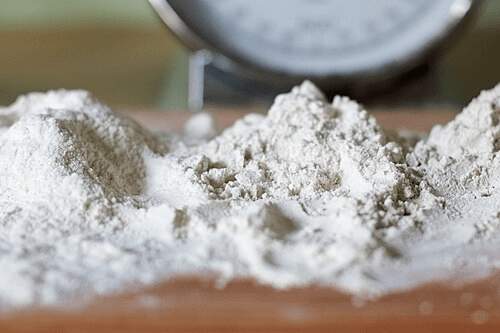
That same day, I read news from Gaza: Nearly 100 Palestinians were killed while approaching aid convoys, hoping to receive flour. Aid workers were accompanied by Israeli soldiers who opened fire. In the midst of the ongoing blockade, families are facing starvation. People are being killed trying to reach food — something that should never happen once, let alone repeatedly. And it is happening repeatedly.
And I couldn’t help but wonder: How many families in Gaza are having their own version of “The Talk”? Preparing their young ones and adult children to approach an aid line, knowing the risk that comes with simply walking toward survival.
We shouldn’t live in a world where families need these talks. No child should have to learn strategies for surviving interactions with police. No family should have to map a plan for approaching food aid without being killed.
But we do live in a world where people reach for each other, across borders, across traumas, across histories of harm — where care flows alongside grief, and survival is shaped not only by violence, but by the communities that refuse to let one another go.













 Smuggling Grace