I’m grateful to share this interview with Miles Levin — filmmaker, writer, creator, speaker, and a tremendous friend. Miles is the creator of Under the Lights, both a short film available on YouTube and a full feature film set to release later this year. Together, we recorded this conversation in partnership with MiYET (Michigan Youth with Epilepsy in Transition) to talk about the film and offer encouragement to teens living with epilepsy as they imagine goals and build a sense of purpose for their future.
As we explored the themes of Under the Lights, we kept coming back to one core idea: “Treat epilepsy with community.” This phrase, first lifted up at the Epilepsy Foundation of America Leadership Conference, feels like both a conviction and an invitation. I’m grateful to Miles for crafting a story that sparks meaningful questions and reminds us of the power of connection — because none of us are meant to face life’s challenges alone. I hope you’ll watch and share!
Earlier this week, I watched a 1984 classic in a movie theatre. It was a back for a theatre viewing.
I love every Christopher Guest mockumentary. I’ve only seen This is Spinal Tap once, and the re-viewing didn’t disappoint. So funny! And this is the part that surprised me most: The same cast is coming out with a part 2 (like 40 years later!) in September — Spinal Tap II: The End Continues
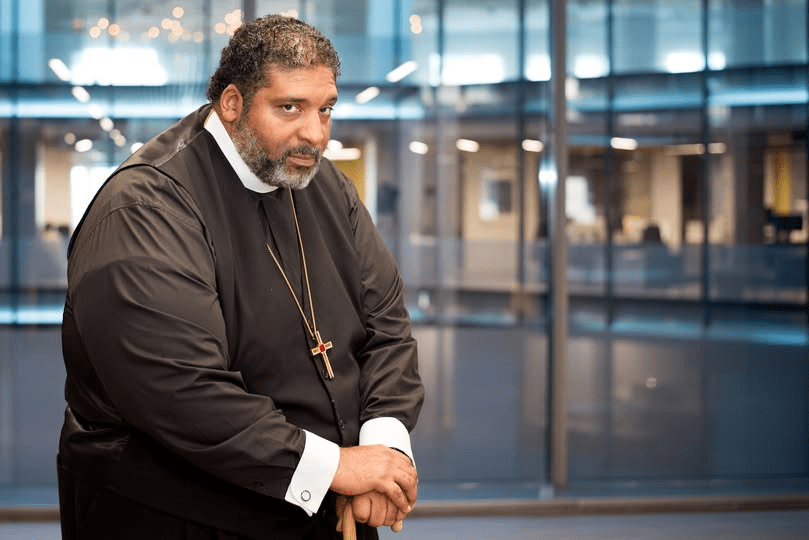
I appreciate this extended quote from reporter Adam Harris, writing in The Guardian about a recent direct action and prayer gathering in Washington, D.C., led by participants in the Poor People’s Campaign. Reflecting on the dire consequences of what he called the “One, Big, Beautiful Bill,” Rev. William Barber II addressed the assembled crowd:
“Barber told stories of movement members who died without care – Pam in Alabama, Jade in North Carolina – who called him not for comfort, but for commitment. Don’t quit, they said. ‘They had the courage to fight even while they were dying,’ he said. ‘We ought to have the courage to fight while we’re living.’
“Then he slowed and asked a simple question to those gathered: ‘What will you do with the breath you have left?’ The question hung in the air. He didn’t wait for an answer. A few days later, he told me why it sticks with him. “’hat was George Floyd’s cry. That was my brother’s cry – he died in his 60s, waiting on healthcare. That was the cry of people during Covid: ‘I can’t breathe.’ That’s what I hear when I say that,’ he told me. ‘The breath you have left – that’s what you’ve been given. That’s what you owe.’
“Breath is a gift and a responsibility. ‘We’re not gonna sit here and let healthcare die,’ he said. ‘We’re not gonna sit here and let living wages die. We’re not gonna sit here and let democracy die. It’s time to live. It’s time to stand. It’s time to speak. To protest. To live justice.’ The line echoed down 1st Street. Whether it reached the halls of power was another question.”
EMDR stands for Eye Movement Desensitization and Reprocessing, and it’s a highly effective treatment for trauma and high stress. Here’s how it works:
EMDR is a helpful form of therapy for people who
1) want an experience that is somatic (reorganizing the brain and body’s reactions to trauma, stress, and anxiety)
and/or
2) want to do something that can accomplish a lot in a relatively short period of time
and/or
3) want to do less talking with a therapist (though this can also be a part of the process if desired or the therapist thinks it’s helpful) particularly if it’s hard to put emotions into words.
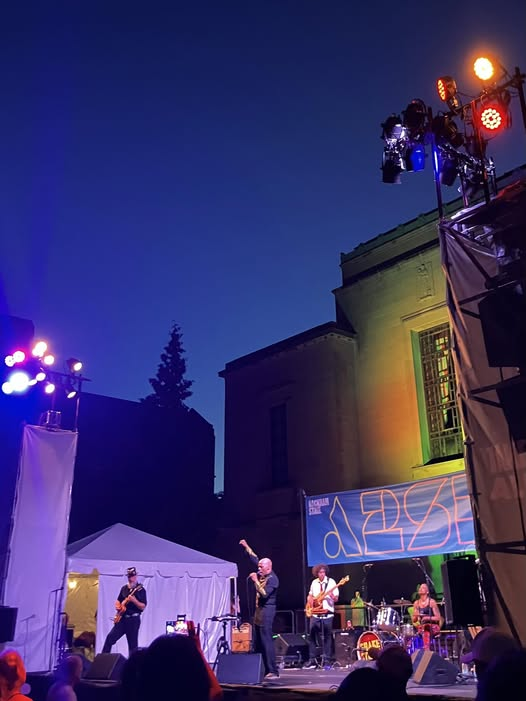
Shake Steady on the stage of the Ann Arbor Summer Festival.
Last weekend, I had the pleasure of hearing the premiere of a new song. It was so new, in fact, it didn’t yet have a name. But it did have a prominently featured lyric: The promise of freedom is so strong.
The band Shake Steady was performing at the Ann Arbor Summer Festival, and before introducing the song, lead singer Sean Ike asked the audience if we knew about Robert Smalls. I didn’t, but he gave us a summary of his story. I’ve since visited his Wikipedia page, and I’d like to share a bit of what I learned:
Robert Smalls was born in 1839 in Beaufort, South Carolina, as an enslaved person. But his life would become a remarkable story of courage, resistance, and leadership. During the Civil War, in an act both daring and courageous, he commandeered a Confederate transport ship and sailed it straight out of Charleston Harbor to Union forces, securing freedom for himself, his crew, and their families. That moment was both an escape and a declaration of dignity.
After the war, Robert Smalls became a vital leader during the Reconstruction era, serving five terms in the U.S. House of Representatives. He used his voice to advocate for public education, civil rights, and the full inclusion of Black Americans in civic life.
As Sean Ike shared from the stage, “Robert Smalls went from being enslaved to escaping and securing his freedom. Then he helped his family escape. Then he became a U.S. Representative in the House of Representatives. Not many have seen that kind of change.” Robert Smalls created change—and expanded it for others.
The new song was about his escape. And repeatedly, Sean Ike sang: The promise of freedom is so strong. The promise of freedom is so strong. The promise of freedom is so strong.
I lift this up on this Independence Day. This holiday comes annually, but still, many are actively oppressed, and the lives and liberty of many remain at risk. Even so, I’m reminded: the promise of freedom is so strong.
We can work to carve out more pathways to that freedom. As Fannie Lou Hamer said, “Nobody’s free until everybody’s free.” The promise of freedom is so strong. What will we do with that invitation?
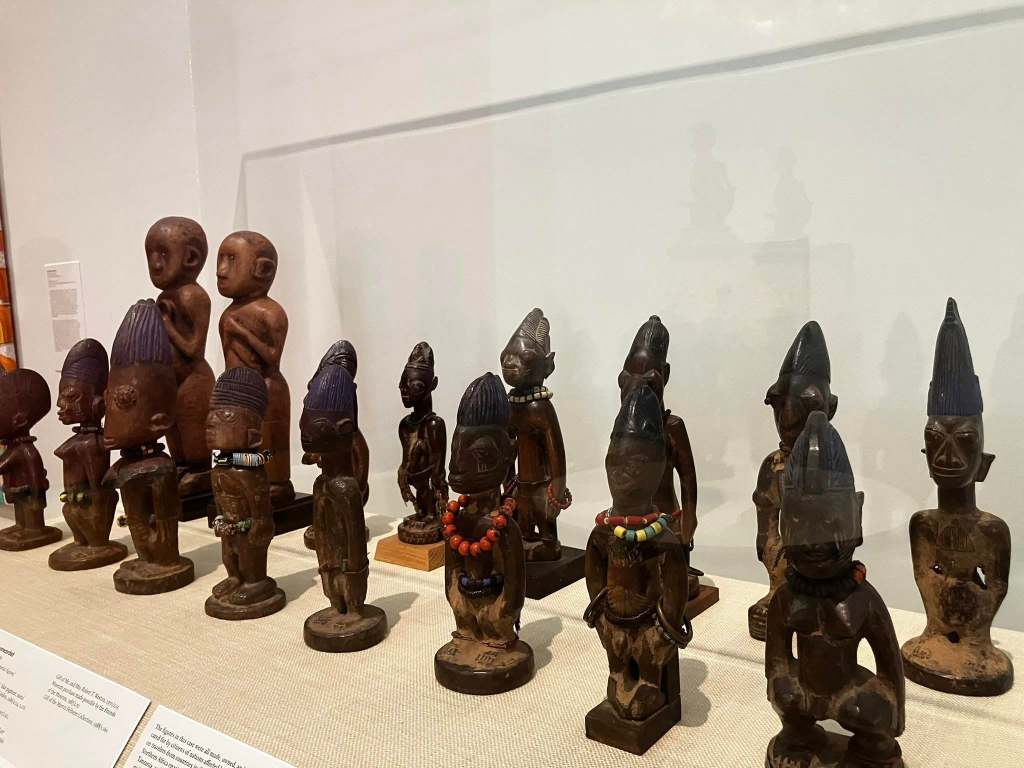
Figurines in the University of Michigan Museum of Modern Art, created by artists from the Middle East and Northern Africa.
The University of Michigan Museum of Modern Art (UMMA) has an exhibit titled We Write to You About Africa. These figurines were made, cared for, and owned by citizens of countries in the Middle East and North Africa that were affected by the 2017 U.S. travel ban issued by the first Trump administration. In 2020, Nigeria, Eritrea, Tanzania, and Sudan were added as well, making it nearly impossible for citizens of these countries to visit the United States.
With this and additional bans, it has become easier for some objects to access the United States than for the artists who created them. A marker in the UMMA exhibit states:
“We present this display case to remind our visitors of these discrepancies in mobility, and how such restrictions limit who can enjoy, and who can interpret, works of African art in museums the Global North.”
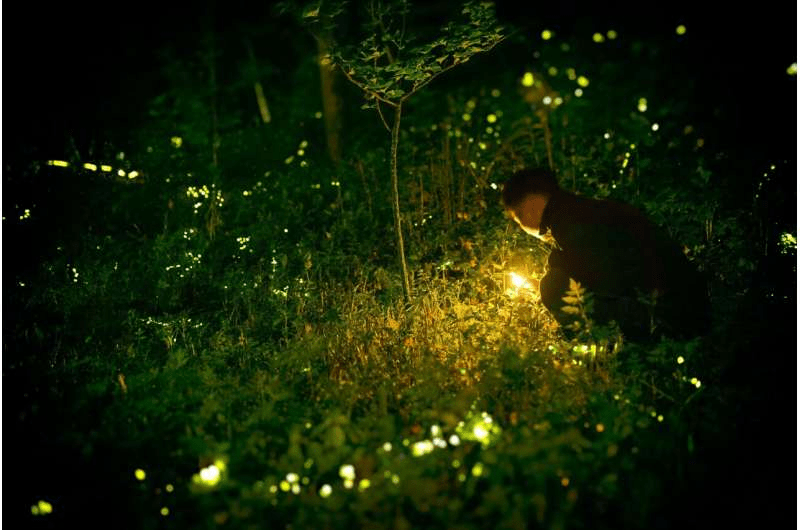
I stepped away from my car and did something I do nearly every day of the year: I was walking from my driveway toward the front door of my house. My mundane activity was interrupted when I saw green blips from various places in my yard. For me, this was the first sighting of lightning bugs this year (or fireflies, if you’re from other regions). They have emerged.
But in addition to arriving once more, there is also a concept called emergence. Though they were not right next to one another, or interacting (at least in ways we humans might call interaction) they seemed connected, because their green blips lit up in near-synchronous rhythms.
Moments before, I didn’t even know they were there. And now, they were revealing themselves — yes, in different places, but also as a complex, interconnected system. I don’t even understand this, but I can marvel at it.
There are so many ways that humans seem disparate and separate. And we definitely behave that way at times, lacking empathy or even calling empathy something dangerous (can you believe people are actually saying this?). Whether you call it selfishness, greed, total depravity, social entropy, or something else altogether, these are real forces for evil, and they show up in our communities and inside us.
But still…
And…? Still?
Might we be more connected than we think? Might we be capable of more? And right now, might there be circles of human beings working for good — some out in the open, and some under the radar — ready to emerge at the right time?
What if an emergency, or layers of emergencies, is precisely the right time for emergence?



















 Smuggling Grace