To the Cliff with Jesus! White Fragility, Poverty, and the Syrian Crisis

Luke 4:14-30

When Jesus came to Nazareth, where he had been brought up, he went to the synagogue on the sabbath day, as was his custom. He stood up to read, and the scroll of the prophet Isaiah was given to him. He unrolled the scroll and found the place where it was written:
‘The Spirit of the Lord is upon me,
   because he has anointed me
     to bring good news to the poor.
He has sent me to proclaim release to the captives
   and recovery of sight to the blind,
     to let the oppressed go free,
to proclaim the year of the Lord’s favor.’
And he rolled up the scroll, gave it back to the attendant, and sat down. The eyes of all in the synagogue were fixed on him. Then he began to say to them, ‘Today this scripture has been fulfilled in your hearing.’

love2

All spoke well of him and were amazed at the gracious words that came from his mouth. They said, ‘Is not this Joseph’s son?’ He said to them, ‘Doubtless you will quote to me this proverb, “Doctor, cure yourself!” And you will say, “Do here also in your home town the things that we have heard you did at Capernaum.” And he said, ‘Truly I tell you, no prophet is accepted in the prophet’s home town. But the truth is, there were many widows in Israel in the time of Elijah, when the heaven was shut up for three years and six months, and there was a severe famine over all the land; yet Elijah was sent to none of them except to a widow at Zarephath in Sidon.There were also many lepers in Israel in the time of the prophet Elisha, and none of them was cleansed except Naaman the Syrian.’
hands

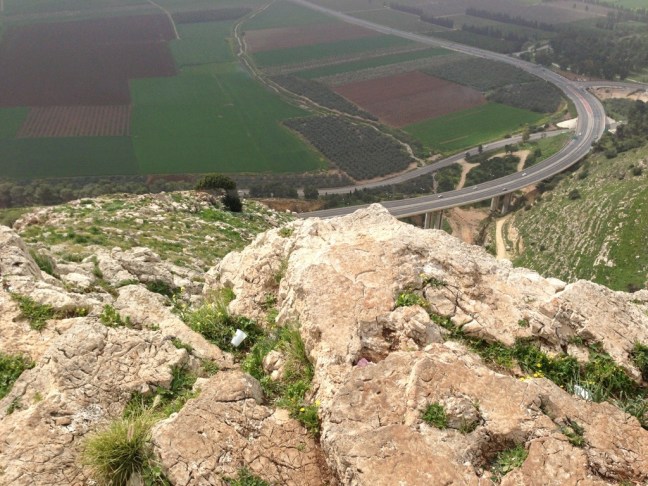
When they heard this, all in the synagogue were filled with rage. They got up, drove him out of the town, and led him to the brow of the hill on which their town was built, so that they might hurl him off the cliff. But he passed through the midst of them and went on his way.
cliff

This is quite the story with its quick, intense turn of events.

Much could be said about it, but one thing is clear:
In this story, Jesus is a P.R. Disaster. 

Doesn’t it seem that way? Jesus appears to be a public relations nightmare. Here he is in his hometown, the place where he spent his young years observing and questioning, learning and playing, working and growing into adulthood. It seems like the perfect opportunity for Jesus to get his people behind him. It seems like the perfect moment to gain a boost of support as he begins his public ministry. But what do we find? A genuine P.R. Disaster.

Can you picture the scene?

People from the small town of Nazareth are gathering together on the Sabbath, a Saturday morning. Perhaps it seems like a routine day. The Sabbath is a special, holy day, but when the people rolled out of their beds that morning, they were not necessarily expecting anything extraordinary.

Yet once they gathered in the synagogue, they certainly had something extraordinary to notice. Present among them was Jesus, – their Jesus – Joseph and Mary’s boy! They’ve recently heard all about his incredible acts in the nearby town of Capernaum, and this is just the beginning. Who knows what will come of this young man? This boy who grew up here – Yes, one of our own! – will do great things for us. Certainly, he will put Nazareth on the map, they think.

With pride in their hearts and smiles on their faces, they’re thrilled when Jesus volunteers to read the scripture and speak before the assembly. They watch him ask for the Isaiah scroll, and he finds a particular passage. They listen intently, except for those moments when they lean over subtly (or not so subtly) to whisper to one another:

“Our boy up there, the carpenter’s son – he made my kitchen table!”
“Yes,” someone else replies. “Isn’t he wonderful?”

They watch Jesus finish the passage and sit, taking the stance of a teacher. “That’s our very own Rabbi!” they think. “What will he have to say today?”

Today.

Perhaps that word is a bit ironic. With all their eyes upon him, Jesus says, “Today, this scripture has been fulfilled in your hearing.”

Okay. . .that’s different. What does that mean? Today these things are coming about? Today you are anointed to be the one who brings these things about? Good news to the poor, sight to the blind, release to the captives, freedom for the oppressed, and the year of God’s favor? Yeah, that’s different. . . What else do you have to say, Jesus?

What else do you have to say? I suppose his first line was the beginning of the end — that is, the end of their awe-struck sense of pride.

What follows next is a P.R. Disaster.

Jesus must have sensed their pride and their sense of ownership. To paraphrase, he says, “Surely you will say to me, do the things here that you did in Capernaum. Do them here in your hometown. Well, no prophet is truly welcome in his home town. I mean, think about it. . . The prophet Elijah was living in Israel with no rain at all and a famine more widespread than we can imagine, and where did God send him to receive help? There were many widows all over the land of Israel, but God sent Elijah to a widow at Zaraphath in Sidon. And think about this: When the prophet Elisha lived in the land of Israel, there were more lepers than we can count, but who was cleansed? Naaman. Naaman, the-Syrian.”

Yes, a genuine P.R. Disaster.

If that person from Nazareth had his kitchen table in the synagogue, he would have overturned it right then and there. Quite suddenly, the synagogue was filled with a sense of rage. The air was thick with indignation. And the people acted on it too. They seized Jesus by his arms, escorted him outside the town – “We’ll show you what happens outside the town!” – and they try to hurl him off a cliff. A cliff!

Yes, a genuine P.R. Disaster.

Or an act of faithfulness. . .
Or a posture of inclusion for those beyond the sanctuary.  . .

It’s hard to be certain what Jesus intended in his address at Nazareth, but we can take a challenging message away from this story. Jesus is unownable. He cannot and will not submit to being our possession. He came to serve us, but he did not come to be owned by us. He did not come to serve our agendas.

Instead, Jesus came as a human being – yes, truly, one of our own – so that we would become like him, truly human. He sends us forward to uplift the humanity of others, especially the poor, the captives, and the oppressed. We are called to acts of love and justice alongside all who are suffer. In this passage, Jesus proclaims God’s acceptance of the outsiders.

He will not be deterred from this posture.
He will not be owned by us.
He will not limited to those in power.
He will always share love with the ‘Other.’

Perhaps, if the people from Nazareth couldn’t have Jesus entirely to themselves for their own purposes, no one would. Off the cliff he goes! But thank God, Jesus is unownable. He refuses to be reduced to a possession. He refuses to be owned. He refuses to be controlled or exploited. He will be free – the True Human – who teaches us to follow him, to follow him in service with and for others.

It makes me wonder, if Jesus came in our midst and sat among us in an obvious way, what would we want to hear from him?

If Jesus were to address the racism that plagues our nation in discrimination and the murder of valuable, human lives, would the Church respond with white fragility? “Stop talking about that!” we might cry. Too often, we aren’t even willing to name the realities of racism and white supremacy.

If Jesus were to address the poverty that plagues our nation in discrimination and the loss of valuable, human lives, would the Church respond with apathy? Or anger? “You’re trying to incite a class war!” we might cry. Too often, we aren’t even willing to name the realities of poverty.

If Jesus were to address the Syrian refugee crisis in our world, would the Church respond with rage? “Don’t talk about that. It’s too political!” we might cry if it were named in worship. Too often, we don’t want to ask the most pressing questions about the crises that are harming valuable, human lives in our world.

Or what else? Would we assume that Jesus was here to serve our agendas? Would we fashion Jesus into a stereotype of a conservative Christian? Or would we assume that Jesus was a card carrying liberal? Would we allow ourselves to be challenged by him? Or would we simply box him in so that he can represent who we want him to represent?

Jesus called the people from Nazareth into radical inclusion. They weren’t ultimately gathered together to be a social club, and neither are we. We remember that people valued by God also exist beyond our own communities and comfort zones.

So will we follow Jesus in honoring them?

Renee Roederer

This post is adapted from my recent sermon at St. Andrew Presbyterian Church in Dearborn Heights, MI.


 

Love is Active

love

One of the most beautiful, well-known texts in the Bible is 1 Corinthians chapter 13. This text is a beautiful litany that describes what love looks like when it is practiced in community.

These words are familiar and powerful. . .

Love is patient; love is kind; love is not envious or boastful or arrogant or rude. It does not insist on its own way; it is not irritable or resentful; it does not rejoice in wrongdoing, but rejoices in the truth. It bears all things, believes all things, hopes all things, endures all things.  Love never ends.

The English translation of this text uses adjectives to describe what love is.

Love is patient; love is kind. . .

But interestingly, in the original Greek language of this text, none of the descriptors are adjectives. In each instance, they are verbs. This means that love is something we enact and practice.

Here is a verb-friendly translation of this beautiful text. . .

Love lives long-hearted in adversity. Love practices kindness. Love envies not. Love boasts not. Love swells-up not. Love does not act unbecomingly, does not seek the self, does not provoke to anger, does not calculate evil, does not rejoice in the injustice, but rejoices together with the truth. It covers all things, entrusts all things, hopes all things, endures all things. Love never perishes.

Let’s practice love in action.

Renee Roederer

.

Mary Cries for Flint: “They Have No Water”

On the third day there was a wedding in Cana of Galilee, and the mother of Jesus was there. Jesus and his disciples had also been invited to the wedding.
John 2:1-2

cracked pot.jpg
[1]

Chaos in Cana. . .

Toward the beginning of Jesus’ ministry, a wedding was held in Cana of Galilee. Jesus, his mother, and his disciples were all present for the celebration. If we could have taken it in, we would have seen a large, significant event taking place before our eyes. Behind-the-scenes details were unfolding in every direction. This wedding celebration was quite the undertaking.

It took place about ten miles from Jesus’ hometown of Nazareth. [2] That’s a short distance in our thinking, but guests didn’t travel quickly with modern forms of transportation. There was no back and forth in this endeavor; wedding guests would have stayed in Cana for several days. Following first-century Jewish customs, the couple had already been united. This celebration was a seven day feast held by the family of the bridegroom. [3]

This means that the guests would have stayed overnight for a week. Every meal would need to be provided. This wedding celebration involved detailed planning, and along with it, there were high expectations for hospitality in this culture.

This may help us understand that it was a near crisis when Mary
came to Jesus and said,
“They have no wine.”

The bridegroom’s family was quickly running out of wine for their celebration, and it was cause for public embarrassment and shame. Mary may have spoken her words to Jesus with panic, or perhaps she said them firmly to indicate that the situation was becoming a serious faux-pas.

water
[4]

Questions in Cana. . .

Whatever tone Mary used, there was a clear subtext in her statement. Jesus recognized right away that she wanted him to intervene in the situation. At first, he didn’t want to do that. He responded by asking, “Woman, what concern is that to you and to me? My hour has not yet come.” That’s an intriguing response.

But Mary’s response is an intriguing one too. She doesn’t argue with Jesus, and she doesn’t take the time to have a theological conversation with him. She just nudges the process forward. She looks at the servants who are nearby and says, “Do whatever he tells you.”

This is an interesting conversation between Jesus and his Mother. When we encounter Jesus’ response — “Woman, what concern is that to you and me?” — it may strike us as a rude and abrasive statement. But actually, this was a common way of saying that he simply wanted to keep distance.

He also offers his reasoning: “My hour is not come.” The author of the fourth gospel always paints Jesus as someone who knows exactly what he should be doing with the time at hand. Jesus is not typically depicted as someone who is unclear about God’s timing for his life.

Yet in a unique way, it appears that Mary’s voice nudges Jesus into recognition that
the moment is indeed at hand.

Despite Jesus’ initial hesitance, she moves it all forward anyway, and wonderfully, he shows forth his very first sign.

Relationships in Cana. . .

Mom[5]

The story of the wedding in Cana reminds us that deeply connected relationships aid us in discerning our sense of calling as we see God’s presence in our midst.

Karoline Lewis, scholar and co-host of the Sermon Brainwave Podcast, has beautiful words to share about Mary’s role in this story:

“This points out relationship. . . She sees who Jesus is. She recognizes what he’s capable of doing, and she’s the one that initiates his act of public ministry. . . It’s his Mother saying, ‘You can do this. I’ve seen you. I’ve watched you for 30 years. I know who you are.'”[6]

Mary knows her son. She knows that the hour has come.

wine
[7]

Revelation in Cana. . .

In Cana, Mary nudges forward a transformational moment, and Jesus reveals who he is. He tells the servants to fill stone jars with water, and soon after, they marvel. With grace, Jesus choreographs this feast with joy as he converts life-giving water into life-giving wine. He performs his first public act of ministry, a stunning sign which demonstrates God’s abundant grace and presence among people.

When the servants bring the wine to the chief steward, he is flabbergasted by its quality. He exclaims, “You have saved the best wine for last!” There is a great outpouring of joy. Jesus experienced and celebrated this abundance alongside the people.

Restlessness Among Us. . .

school
[8]

The wedding at Cana is a beautiful story that reveals the character of an abundant, grace-filled God. It is good news for us and among us.

Yet this revelation may also lead to a form of restlessness.
It is a holy restlessness.

Our world is in tremendous need of joy, grace, and abundance. We know don’t have to look very far to find people and entire communities that struggle to have such experiences. As I wrote above, ten miles is not a significant distance. Yet around us, within a ten mile radius, we can find people longing for joy, grace, and abundance.

In my context near Detroit, people are striving for justice and abundance. Last week, a large number of teachers coordinated efforts to call in sick, and Detroit Public Schools had to close a number of its school buildings for the day. These teachers sought to call attention to the deplorable physical conditions in their learning environments. Soon after, they began tweeting photos that are both heartbreaking and appalling. Some children in Detroit spend the entire school day in their coats because the heating is insufficient. Many floors and ceilings are damaged. Some schools have rodents and fungi living and growing within their buildings.

These children in Detroit are often missing out on an experience of abundance, and it can rob them of their sense of joy. It makes learning difficult, and tragically, these young, impressionable children may begin to internalize that they do not have much worth or value. This can have consequences for a lifetime.

Recognizing this as a crisis, we might imagine Mary coming to Jesus to say,
“They have no heat.”
The hour has indeed come.
It is time for us all to be spurred into action.

flint
[9]

And this week, the nation and the world have been watching the unfolding story in Flint. Under the watch of state emergency management two years ago, Flint stopped using the water supply from Detroit and hooked up to the Flint River. Against standard protocol, no corrosive controls were added to the water, unleashing dangerous levels of lead into homes. This has caused a number of problems for all residents, but most damaging, it has created raised levels of lead in children. It has been poison to their system and has created irreversible brain damage in some. In many cases, this lead poisoning will increase health and behavioral concerns for years to come.

Recognizing this as a crisis, we might imagine Mary coming to Jesus to say,
“They have no water.”
The hour has indeed come.
It is time for us all to be spurred into action.

So how can we stand by without acting? How can we remain silent?

I’ll close with these incredible words from the Prophet Isaiah.
May we be spurred onward to live this way:

For Zion’s sake I will not keep silent,
and for Jerusalem’s sake I will not rest,
until her vindication shines out like the dawn,
and her salvation like a burning torch. . .

You shall no more be termed Forsaken,
and your land shall no more be termed Desolate;
but you shall be called My Delight Is in Her. . .

Upon your walls, O Jerusalem,
I have posted sentinels;
all day and all night
they shall never be silent.
You who remind the Lord,
take no rest,
and give him no rest
until he establishes Jerusalem
and makes it renowned throughout the earth.
Isaiah 62:1, 4, 6-7

Renee Roederer

This post is adapted from my recent sermon at St. Andrew’s Presbyterian Church in Dearborn Heights, Michigan. I am grateful for the insights that Carol Lakey Hess shared in her Theological Perspective column in Feasting on the Word: Year C, Vol. 1 (Advent through Transfiguration). Hess points out the need for us to follow Mary’s example in prayer and advocacy. Her words and scholarship influenced my thoughts above.

References

[1] I found this image of the cracked pot here.

[2] In her Exegetical Perspective column, Linda McKinnish Bridges mentions that Cana is less than ten miles north of Nazareth. This column is part of Feasting on the Word: Year C, Vol. 1 (Advent through Transfiguration).

[3] I learned about first-century Jewish wedding customs from Steve Rudd on his website.

[5] This beautiful image of a mother and child  from Burkina Faso comes from this website.

[6] Karoline Lewis spoke these words on Sermon Brainwave’s Podcast #458 Second Sunday After Epiphany.

[7] I found this image of wine on the Saint John Bosco Parish website.

[8] This image from Detroit was found in a Detroit Free Press article.

[9] This photo comes from a protest I attended on January 18th in Ann Arbor. People marched and sought justice for Flint as they protested outside of Governor Rick Snyder’s residence.

On the Third Day

wine
[1]

On the third day there was a wedding in Cana of Galilee, and the mother of Jesus was there. Jesus and his disciples had also been invited to the wedding.
– John 2:1-2

On the Third Day,
Cana is bustling with preparations.
Family members scurry in their ready-making,
dancing the chaotic choreography
of joyful celebrations and cousins twice removed.

The house is in order;
and food for the feast boils in expectation.
But are they ready?
Can they anticipate it?
Can they truly know?
That at your Mother’s convincing,
You will come alive,
choreographing this feast, as you
convert life-giving water into life-giving wine?

Stepping into your identity,
You surprise them with grace, and
You show them your very first sign.

And then!
Cana’s celebration becomes a living crescendo,
creating a whirlwind dance of God among the people.
Bread broken,
Disciples healing,
Words spoken,
Lepers leaping.

All included,
All embraced,
All empowered.

But —
the leaders in power,
Were they ready?
Could they anticipate it?
Could they truly know?
That at the Spirit’s convincing,
the people would come alive,
choreographing the feast you initiated,
all people,
all empowered,
sharing your life-giving body and life-giving wine?

No,
They were not ready.
They could not anticipate it.
They could not tolerate it.
They could not let it live.

So at your humble convincing,
We see love displayed,
We see power outpoured
as you love fervently from a cross,
Death consuming the very body that is offered sour wine. . .

Until the Third Day comes again.

Renee Roederer

I am grateful for the reflections of the Rev. Rob McCoy and the Rev. Eric Fistler this week on the Pulpit Fiction Podcast. They influenced the ideas behind this poem. These two pastors noted that the second chapter of John starts with the phrase, “On the third day.” It serves as a hint to the resurrection story of Jesus. They also noted that the symbol of wine seems to bookend portions of the beginning and ending of John’s Gospel. The abundant wine at the wedding in Cana is Jesus’ first sign to the people, and toward the end of the gospel, Jesus receives sour wine to quench his thirst as he is dying on the cross.

[1] I found this image on the Saint John Bosco Parish website.

Newness: Redeeming the Time

Time2[1]

On Monday, I wrote a piece about time, discussing the ways we mark the transition from one year to the next. Astronomically speaking, any moment in our journey around the sun could serve as the beginning point for the year, but collectively, we have agreed that January 1st marks the start of each new year. As we cross from December 31st to January 1st and enter a different calendar year, we experience desires and longings for newness. We go through an annual ritual: We hope for richer experiences, sustained changes, and openness to different opportunities. The date is arbitrary, but the effect is real. We want newness.

For many of us, these desires are not only about the kind of future we seek. Sometimes, these desires are about the past we seek to leave behind.

We can’t leave the past completely behind, of course. Our past has formed vital parts of who we are. We will carry those experiences forward.

But sometimes, when a year has contained experiences that were accutely painful or challenging, we have a natural desire to bracket them in some way:

that hospital visit,
that job loss,
that diagnosis,
that divorce,
that argument,
that relapse,
that bankrupcy,
that death,

That thing belongs to the year we just finished.
This is a new year.

In this way, the arbitrary marker from one year to the next can give us an increased sense of distance between the painful experience and our present circumstances.

We need not live in denial, particularly if those circumstances or their consequences are ongoing. We need not leave behind the ones we love, especially those we have lost. But the desire to bracket an experience and gain some distance from a particular moment of time can empower us to view the experience as an observer. And. . .

This puts us in a position to forge meaning from the experience.
This puts us in a position to integrate it into our life story.
This puts us in a position to engage it as a conversation partner.

Likely, we would never choose such an experience for ourselves, yet it has formed part of us. In the midst of it, we may have discovered the incarnate God walking alongside us and entering the pain with us. In the midst of it, we may have discovered a community embracing us and reminding us that the experience could not and cannot completely define us.

When we bracket the time from one year to the next or from one particular chapter to another, we open ourselves to the beginning of a process. In this process, we join God as a partner. Together, we redeem the time.

I love the Ted Talk that I’ve posted below. Andrew Solomon has chosen a title that might feel stark to some. His Ted Talk is called, “How the Worst Moments in Our Lives Make Us Who We Are.”

When we’re smack dab in the midst of crisis, loss, or rapid change, such an assertion might not feel welcome, and for good reason.

If, however, we find ourselves in a position of survival, integration, and continuing recovery, we may find that statement to have some truth. This is because we’ve forged some meaning from the experience.

Most of all, I recommend this Ted Talk for its beautiful stories and power.

We’re all on the way.
And it’s always a process.
Together, we are always redeeming the time.

Renee Roederer

This is the final post in a series about newness. Here are the first three:
Newness: The Time We Keep
Newness: Belonging Marks Beginning
Newness: Rehearsing Beloved

[1] I found the beautiful and fitting image above on this website.

Newness: Rehearsing Beloved

piggy

In the Christian Century magazine, the Rev. Mark Ralls recounts a beautiful and unexpected experience he had while visiting a local nursing home. [1]

Pastor Ralls had gone to the nursing home to visit a resident who was a member of his congregation. While they were sitting together and conversing in the atrium, he heard some strange, intriguing words.

“I love you little. I love you big. I love you like a little pig.”

These words soon became a playful refrain. Pastor Ralls and his friend heard these words innumerable times throughout their conversation. They were spoken by a woman who was sitting nearby them. She was a resident too, and though she was sitting close enough to touch them, she paid no attention to their conversation. He writes, “During my visit to the nursing home that afternoon, I must have heard this sweet, odd rhyme more than a hundred times.” She continued to look out the window, and with a broad smile on her face, she let her refrain fill the room.

“I love you little. I love you big. I love you like a little pig.”

She seemed continually delighted by these words.

After inquiring of a staff member, Pastor Ralls learned that this woman had been a first grade teacher for decades. Each morning, when the children entered the classroom for their day at school, she would lean down and speak these very words into each beloved ear.

What a beautiful, playful ritual.

I love this story because it invites me to imagine what those words must have been like for the children in her classroom. . .

. . . I wonder if they would giggle before she could finish, each one anticipating the end of the phrase.

. . . I wonder if they would smile before she started, each one anticipating that they were loved and valuable.

. . . I wonder if they would ever add their voices to the chorus, each one rehearsing the truth of their worth, silly as the phrase may be.

I also love this story because it invites me to imagine how those words must have formed her as a teacher. . .

. . . I wonder if she spoke these words on days when she was feeling discouraged, and they lifted her mood just a bit.

. . . I wonder if she took pleasure in speaking these words to particular children who struggled to trust love.

. . . I wonder if the rehearsal of these words helped her love herself more fully too.

No matter how these words were spoken or received in her classroom, it is clear that they resonated deep within her psyche many years later when she was challenged by dementia. The refrain is delightful and silly. It is also profound.

It makes me wonder. . .

Who has told you that you’re beloved?
Who has told you that you’re loved through and through?
Who has told you that you’re valuable and worth it all?

Do we rehearse those words and memories? Do we recall them and let them sink into our very being?

We can always begin that rehearsal again.

And if we doubt those words within us. . . guess what?

We can rehearse them again.
And again.
And again.
And again.

And if no one has told you today,
And if you’re struggling to tell yourself,
Please hear this truth:
You are Beloved,
Loved through and through,
Valued and worth it all.

As we enter 2016 in this season of newness, let’s rehearse our belovedness.

Renee Roederer

This post was the third in a series about newness. Here are the other posts:
Newness: The Time We Keep
Newness: Belonging Marks Beginning
Newness: Redeeming the Time

piggy3

[1] You can find Mark Rall’s story in The Christian Century. Rev. Ralls is a United Methodist pastor in North Carolina. I first learned of this story through sermon preached by the Rev. Ben Johnston-Krase, a Presbyterian Church (U.S.A.) pastor who also lives in North Carolina.

Newness: Belonging Marks Beginning

conrads

Last month, I had the meaningful opportunity to travel to California and spend time with an important community in my life. Pasadena Presbyterian Church invited me to spend a week with them and preach the sermon in both of their Sunday worship services.

This was a beautiful return for me. Years ago, I was one of their pastors. I have great love for this community and gratitude for all I learned alongside them while I lived in Pasadena.

There was a moment during my visit that felt particularly meaningful. During that moment, time seemed to expand in an intriguing way.

As I had done so many times before, I was standing at the back of the sanctuary when worship was about to begin. In this congregation, the pastors and members of the choir process into the sanctuary as people sing the first hymn. While we were waiting for that moment to begin and walk in together, I had this odd but wonderful feeling suddenly wash over me.

5

In an instant, I recognized that I had gained years of experiences beyond my time in Pasadena, including a host of different memories, new people, and an entirely different town. But. . . at the very same time, I felt as though these new experiences had all happened in the span of about two weeks. This is because it felt so normal to be back in that sanctuary. I felt as if very little time had passed since I was last there. I remembered the last service I led before moving to Ann Arbor, and it seemed like only yesterday.

It was an odd but wonderful feeling, and I loved the both/and experience of it. I gave thanks for the people and memories I have experienced beyond Pasadena, and I also gave thanks to feel right at home in that spot.

Later in the day, I called that experience the “Time Warp of Belonging.”

There are times when we move beyond a particular experience, place, or community, but the rich belonging we experienced during that time can come rushing in toward the present moment.

And in those moments, we can have an experience of newness. We connect with a part of ourselves that experienced belonging in community, and we bring it forward to the chapter we are living right now.

And we can do this whether or not we make an actual return.

In chapters and years, we belong to one another. And we can experience it again.

As we enter a new year, let’s recall the people and places who shaped us, and let’s allow belonging to mark beginning.

Renee Roederer

This post was the second in a series about newness. Here are the other posts:
Newness: The Time We Keep
Newness: Rehearsing Beloved
Newness: Redeeming the Time

Newness: The Time We Keep

For years, my husband and I have had a running joke about January 4th.

Sometimes, he’ll playfully bring it up when I resolve to try something new. He encourages me to break the January 4th Barrier.

Most of the time, perfectionism can be a heavy weight that holds us back even as we try to achieve, but at least in one respect, the perfectionism of my teenage years was kind of cute. Here’s why: I have a multitude of diaries from middle and high school which recount my experiences in great detail on January 1, 2, 3, and 4. But once we pass that fourth day, my experiences of angst, adolescent love, and cafeteria food always cease.

Each year, I would resolve to keep a diary, and eventually, when I would get too busy and miss a day (sorry, January 5th) I would just give up on it altogether. I missed a day; therefore, I would miss an entire year.

Our running joke about January 4th is that if a documentarian ever wanted to use my life as a case study to explore teenage experiences from the 90s, I would provide untold amounts of detail, but only through a tiny window of time each year.

silk shirt

(P.S. Documentarian, this outrageous, overly posed silk shirt shot from middle school must make it in your film. Because look at it.)

In all seriousness, we know that this is the time of year when many of us make new resolutions. Some of them are surface level commitments, some involve changes of habits, and others include deep hopes for sustained transformations in our character and actions. My hope is that we’ll all pass the January 4th Barrier this year.

But we don’t do that by flexing our perfectionism muscle with an even greater resolution to practice our resolutions beyond January 5th. We do it by recognizing that every moment presents itself as a new opportunity.

And I realize that sounds like such a platitude.
I feel like we should superimpose it over a “just hang in there” cat.

hangintherecat

There we go.

But it’s also true. Every moment does truly present itself as a new opportunity. Every moment can be the needed springboard toward a new beginning.

earth and sun

An interesting thought popped in my mind last year on New Year’s Eve as the world was transitioning from 2014 to 2015. I decided to run this thought by my astronomer husband.

I know that. . .

A 24-hour day exists as the earth rotates once on its axis.
There is a physical, astronomical reality to mark this time.

A month corresponds roughly with the regular moon cycle.
There is a physical, astronomical reality to mark this time.

A calendar year exists as the earth revolves once around the sun.
There is a physical, astronomical reality to mark this time, BUT 

Why January?

I asked my husband, “Is there any astronomical reason that our calendar year begins in January? I don’t think there is. . . I think it’s just arbitrary, right?” We both concluded that there might be some historical reasons for placing the beginning of the year in January, but astronomically, the year could just as well begin in May or September.

So each year, we have this agreed upon time that we mark as new, and we feel the time beckon us with hopes and possibilities. The agreed upon moment rolls around, and even though it’s arbitrary, we allow this transition of time to orient us toward newness.

And so here we are in January. It’s our collective time of newness, and I hope it transforms us. But I also hope we’ll recognize that new beginnings can come in March, June, August, and even December. This can happen. . .

When something unexpected shakes us, and we discover strength we didn’t know we had,

When a new pathway opens that we never considered,

When we’re up to our eyeballs with household to-do lists and are suddenly overcome with gratitude for the people who live in the household,

When we go to a trusted friend for advice, and she reminds us we don’t have to settle for the way we’ve been living,

When we lose sleep for those who are suffering and then resolve to walk alongside them,

When a stranger meets us and hopes we’ll notice him, and we do.

All of these moments can initiate our new beginnings.
So let’s look for them, celebrate them, and break the January 4th Barrier.

Renee Roederer

This post was the first in a series about newness. Here are the other three:
Newness: Belonging Marks Beginning
Newness: Rehearsing Beloved
Newness: Redeeming the Time

Swirling Stars, Swirling Questions

magi2[1]

Matthew 2:1-12

The story begins with questions.

It is a story that seems quite familiar to us. Each year, the Magi make their way into our nativity scenes at Christmas. From boxes stretched out in all directions, they arrive from the “East.” We pose them carefully in the hopes of setting up a holy scene of serenity, or perhaps, we simply desire a decorative display for our houses. Apart from our pristine nativity scenes, however, we might forget that the story begins with swirling, controversial questions:

In the time of King Herod, after Jesus was born in Bethlehem of Judea, wise men from the East came to Jerusalem, asking, ‘Where is the child who has been born king of the Jews?’ For we observed his star at its rising, and have come to pay him homage.

These wise ones had come into the city of Jerusalem, and before they ever met with King Herod, it seems that they were asking these questions of everyone. “Where is this child? Where is this King of the Jews?” They stirred up these questions among the people of Jerusalem.

And then, King Herod heard about it.
The questions stirred up fear in the king.

The story says,

When King Herod heard this, he was frightened and all Jerusalem with him.

Soon after, Herod begins asking questions of his own. He calls together all the chief priests and scribes he can find, and he inquires of them where this Messiah is to be born. This is the pressing question before him. They tell him,

In Bethlehem of Judea; for so it has been written by the prophet: ‘And you, Bethlehem, in the land of Judah, are by no means least among the rulers of Judah; for from you shall come a ruler who is to shepherd my people Israel.’

At these words, Herod must have been terrified. In the midst of his fear, he puts a plan into place. He decides to use these Magi as pawns.

Herod secretly calls for them.
It is time to do his own questioning.

Herod asks them questions about the star that they have observed. The Magi were likely astrologers, and Herod wanted to know about the astronomical sign that initiated their journey. And after gaining enough information, Herod then sends the Magi directly into Bethlehem to find the very child who is stirring up fear in his heart. He gives a false story to cover up his motives, saying that he wants to find the child and honor him. But along with the fear, Herod has hatred and violence in his heart. How dare this child question his own rule?

And so, they go. The Magi from the East will not be deterred by these false motives, but instead, they let their questions lead them on. They follow the astronomical sign, and they follow the questions of their hearts. Then miraculously, they find the child Jesus. They enter the house and see Mary, his mother, also. This is when they fall to their knees to honor him.

And from that place of honor, they give him gifts of gold, frankincense, and myrrh. These are odd gifts to give a child. . . and yet, they set the scene for the life story that will unfold.

Gold is a gift fitting for a king.
Frankincense is a gift fitting for a priest.
Myrrh is a gift fitting for one who will die,
one whose body will be anointed.

These gifts raise hints about how the story will unfold, and perhaps we find ourselves curious with questions. Alongside these questions, the scene gives way to exclamations of joy.

This child is a King,
This child is the Prince of Peace,
This child reigns over the entire cosmos, and
This child reigns within our very being.

This is the exclamation of this story.
It invites our own exclamations of joy and conviction.

Where is this child, the one who is born a King?
Where is this child, the one who is born the Prince of Peace?
Where is this child who reigns over this cosmos,
from whom and for whom all things have come into being?

These questions lead to responsive exclamations.

Large questions like these lead to an array of exclamations. For some, questions like these can become exclamations of threat.

This was certainly true for Herod. The Magi were warned in a dream not to return to him, so they left for their own country by another road. Meanwhile Herod, in a fit of rage and violence, begins to massacre all children in Bethlehem under the age of two in an attempt to stop the reign of the child who threatens him. Joseph, Jesus’ father, also warned in a dream, then flees with Mary and Jesus to Egypt. The holy family lives there as refugees until Herod dies and is no longer a threat to their own lives.

That’s picture is quite different than our placid nativity scenes.

refugees[2]

For those in positions of power and privilege, and especially for those who rule over others in oppressive ways, the birth of Jesus is not particularly good news.[3] God’s holy presence in the world alongside us is not really good news at all, because

God will always uplift those who are downtrodden.
God will always balance uneven manifestations of power.
God will always make holy space for the oppressed, marginalized, and suffering.

For some, this will never be good news.

And yet, the questions emerge again and again.

Where is this child, the one who is born a King?
Where is this child, the one who is born the Prince of Peace?
Where is this child who reigns over this cosmos,
from whom and for whom all things have come into being?

These questions lead to responsive exclamations.

Large questions like these lead to an array of exclamations. For us, they don’t have to be exclamations of threat. For us, they can be questions of wonder and hope. These questions can guide our lives. Like that astronomical sign in the sky, these large questions can lead us to find the child who has been born. They can help us to follow him as he grows, as he serves the people of God with freedom, peace, justice, and love.

These questions can guide us to be found in him, for that is what he seeks. Jesus seeks to transform our lives so that we can live in the very same way, serving people with freedom, peace, justice and love.

If we let large questions guide us, we will soon discover that Jesus himself is the light among us. He is the one who guides the questions. He clears the pathway so that we may find him and be found in him.

He is God among us in human form.
He is infinitely with us.
He is the light leading the way.

He is with us. . .

He comes among us as one who is poor. He is born to a family in poverty, and he enters the world at a time when there is with no room at the inn. He is born into a world of violence, where his very being seems to threaten those in power. He lives as a refugee.

He walks alongside us.
He enters this world with us,
guiding us in our places of deepest heartache.

The light is among us because he is with us.

Where is this child, the one who is born a King?
Where is this child, the one who is born the Prince of Peace?
Where is this child who reigns over this cosmos,
from whom and for whom all things have come into being?

He is with us.

He is the light beside us, among us, beyond us, within us.
He is with us in our poverty,
He is with us in our heartbreak,
He is with us in our grief and losses,
He is with us in our cancer,
He is with us in our Alzheimer’s Disease,
He is with us in our experiences of bullying, racism, and discrimination,
He is with us in our immigration status,
He is with us in our violence,
He is with us in our abuse,
He is with us in all forms of suffering.

And no matter where we find ourselves and no matter how we feel, Jesus is leading the way toward hope, justice, wholeness, and peace.

So let us follow that light.
Let us find this one who seeks us.
Let us be found in him.
Amen.

Renee Roederer

This post was adapted from my recent sermon at Southminster Presbyterian Church in Taylor, MI.

[1] This depiction of the Magi was created by the artist Val Stokes. You can see this image and more work by Stokes here. 

[2] This is a Reuters image of Syrian Kurdish refugee and her child. It was taken after they crossed the Turkish-Syrian border near the southeastern town of Suruc in Sanliurfa province on September 27, 2014. You can read the story that was published with the image here.

[3] The Epiphany C (Jan. 3, 2016) episode of the Pulpit Fiction Podcast influenced my thinking and language here.

Our Christmas Walk

crane

When we stepped outside to take a walk this Christmas morning, we were greeted by a cacophony of sound above us. We opened the door, and that very instant, large numbers of sandhill cranes were flying above us.

The sound was inviting. As we ventured beyond the house, our eyes were delighted too. Along with the calls above us, the sandhill cranes made a gorgeous display in the sky. Continuous waves of V-formations passed above us throughout our walk. The birds were flying remarkably low for all to see, and soon, neighbors began to take notice as well.

We passed people along the road, and our platitudes about the uncharacteristic weather — “Can you believe how warm it is today?” — turned into exclamations about what we were seeing. “Can you believe all these cranes? And they’re so low in the sky!” This was a gift to the entire neighborhood.

crane2.jpg

Sandhill cranes are majestic, and they have captured the attention of cultures throughout history. People have assigned various forms of meaning and significance to them. Some consider sandhill cranes to be harbingers of good fortune and longevity. Some consider them to be symbols of justice, and others look to them as a flight of peacemakers.

I spent a little time learning about these associations once we returned, and of all the descriptions, this meaning stood out to me: When cranes arrive in our lives, they invite us to use our past as a source of strength for our present. 

stjohn

Last night, I had the great privilege to attend the Christmas Eve celebration at St. John United Presbyterian Church. This is the congregation where I grew up; in many ways, the people there raised me. They certainly created the space for a multitude of community connections to be formed. The relationships from this congregation continue to sustain me many decades after I first arrived.

In recent years, I have been at the front of other congregations leading the celebration. This year, I reveled in the opportunity to sit in the back row and sing the Christmas Carols between my husband and one of my longest friends. It had been about a decade since I was present in my home congregation on Christmas Eve. In that back pew, we took it all in.

And before anyone assumes a picture of total reverence, “taking it all in” included old forms of tradition. . . like passing notes down the pew as we did in our youth group days. Last night on bulletins, we scribbled words that made us chuckle about old, inside jokes.

But “taking it all in” also included the opportunity to enter the Story.

We heard the familiar scriptures about the birth of Jesus, spoken aloud with music in between the readings. These narratives describe points of time millennia ago, but in the moment, I was also reminded again that this is a story we enact. The past becomes a source of strength for our present.

Last night, we entered the sacred story along with communities and congregations across the world.

St john

And as I entered the story in one of my spaces of deepest belonging, the sacred story released hosts of other stories into my memory. In a different way, they are also stories of incarnation. These are stories of human lives in that congregation that I have known for decades,

People who nurtured those teenagers who passed notes,
People who laughed hard and shared meals together,
People who struggled with illness and loss,
People who found new life through holy words in the sanctuary,
People who dared to share their presence  with others beyond the sanctuary.

The past becomes a source of strength for our present.

This is the kind of belonging I want with me in present moment.
This is the kind of belonging I want to create alongside others in the days ahead.

I am grateful for the surprising view and birdsong that greeted us this Christmas morning.

The past becomes a source of strength for our present.
Those cranes seem like the right kind of heavenly host to usher it in.

Birds


Renee Roederer