We Are Loved Unto Death

grave

When I was training to be a pastor, I spent a summer working as a hospital chaplain in a CPE program. CPE stands for Clinical Pastoral Education. It teaches skills for ministry that are used in hospitals and hospice programs, and it provides a learning community where all participants collectively explore the ways their life journeys have shaped them with strengths and growing edges. It is a valuable experience.

During one of our early CPE group sessions, we had an opportunity to tell our life stories and the ways that faith has shaped us. In the midst of telling these stories, one of my cohort members spoke a sentence that intrigued me. I found it to be quite beautiful. As she described a conversion experience, she said, “On that day, I adopted the Christian narrative to myself.” Years later, I do not want to assume all that she meant in that sentence, but I interpreted her words mean that as she received this story, she added her decision to let this Christian narrative mark her life.

I love that sentence:
Today, I adopt the Christian narrative to myself. 

Today is the grief-filled Saturday of the Christian narrative. After hearing the horrific details of Jesus’ death on Friday and experiencing injustice and loss collectively, we now sit with that traumatic reality on this Saturday. We sit in grief with an unexpected tomb – not one unexpectedly empty, for we cannot anticipate that reality. We sit with the trauma of a tomb that unexpectedly holds the lifeless body of the person who embodied love beyond our imagining. As the disciples did so many years ago, we sit with the fear that this love might also be dead and lifeless.

Today, I adopt the Christian narrative to myself.
As I receive this loss,
As I know real pains and losses in the experiences of real human lives,
I add my decision to let this Christian narrative mark my life.

The narrative of this day tells us something powerful. Christians say that Jesus is truly the presence of God in human form. In this sacred narrative, when Jesus experiences trauma and death, God enters death with humanity. God dies.

For some, it might seem controversial to say that God died, and
For some, it might seem illogical to assume a God exists
who could even live or die like we do,
but –
however we understand it,
however it offends us, or
however it confounds us,
this narrative says that love incarnate entered death with us.

Today, I adopt the Christian narrative to myself.
Today, I choose to add my love to losses of the world.
Today, may we all add our love to the grief and unexpected tombs of others.

–Renee Roederer


We Are Loved Into Kinship

north-carolina-sign

As we remember and honor the death of Jesus this Friday of Holy Week, we ponder injustice and loss. We remember what Jesus and his followers endured millennia ago, and we reflect upon the injustices and losses in our world today.

During his life, Jesus loved and included others so fully that it threatened those who wielded power, particularly the leaders of the Roman state. Jesus loved and included others, and he defended them fiercely, especially all who were marginalized. He did this continually in the face of resistance, and ultimately, he did so in the face of an excruciatingly painful execution.

The writers of the four gospels each tell the story of Jesus’ death from particular perspectives, emphasizing different details. The larger narrative is painful as Jesus experiences betrayal, arrest, torture, public ridicule, and death. But even as these details are woven together in the four gospels, there are several moments of grace and human connection. One moment has been especially meaningful to me over the years.

It is a scene from the cross which is told in two, short verses.

When Jesus saw his mother and the disciple whom he loved standing beside her, he said to his mother, ‘Woman, here is your son.’ Then he said to the disciple, ‘Here is your mother.’ And from that hour the disciple took her into his own home. (John 19:26-27)

Jesus demonstrated love even as he suffered injury and trauma. While he is dying, he gives these two beloved people to one another. Jesus loves them into kinship. 

This passage has been especially meaningful to me over the years. I have written about it before, reflecting on the ways my life has been given over to others in the midst of the community of faith. As we embrace the personhood and belonging of one another, we are loved into kinship. These bonds can be just as vital and formative as the bonds we experienced when we were born or adopted into our family of origin.

On this Friday of Holy Week, we remember injustice and loss, and we remember that Jesus loves humanity into kinship. We are called to follow his example. We can do this powerfully when others experience injustice and loss, offering ourselves in love as we embrace the personhood and belonging of others.

We can also reflect upon kinship through the lens of the injustices and losses which have taken place this very week. Our world is deeply acquainted with trauma and injury. In the midst of great pain, we are always invited to embrace one another in kinship.

We belong to one another.
But too often, trauma and death become occasions for enmity.

There have been recent bombings in Belgium, Iraq, the Ivory Coast, and Turkey.
These losses are occasions to demonstrate kinship as we show love and support those who know grief and injustice. Many have shown love in these ways, but at the same time, Muslim communities in the U.S.are now experiencing an additional wave of scapegoating. Some are calling for methods to profile the neighborhoods where they live.

In the face of trauma and injury,
will we truly embrace one another in kinship?

And yesterday, North Carolina state legislators voted a new bill into law which will nullify local anti-discrimination laws for transgender, lesbian, gay, and bisexual citizens. This has become the catalyst for grief, outrage, and fear among these communites and for those who support them. This news is an occasion to demostrate kinship as we show love toward those who know grief and injustice. Many are making their voices heard, but at the same time, some religious communities will continue to applaud these new initiatives.

In the face of trauma and inujry, 
will we truly embrace one another in kinship?

I wonder if Jesus’ mother and his disciple were surprised and deeply moved by the words he spoke from the cross as he brought them together. I imagine that they remembered their love for him as when they showed love to one another.

We have been loved into kinship.
Now, will we show that love toward one another?

–Renee Roederer


We Are Loved to the End

bread and cup

Having loved his own who were in the world,
Jesus loved them to the end.

Jesus knows that the end of his life is coming. In a matter of hours, he will be unjustly arrested and condemned to die a painful death. As the end of his life draws closer, with each minute of heartbreak, Jesus also knows he will soon experience betrayal and abandonment by his most beloved disciples. It is a terrible burden to bear.

Having loved his own who were in the world,
Jesus loved them to the end.

In his final moments, Jesus chooses to demonstrate love and righteousness, for he embodies the very love and righteousness that the disciples cannot fulfill. The King of Kings clothes himself in rags of servanthood and lowers himself to the ground. With love and righteousness, he washes the feet of the very ones who will walk toward his betrayal and then run away in fear.

Why does he choose to serve the ones who serve him betrayal?

Because love and righteousness are the end —
the goal, the purpose, and the aim of his life. 

Jesus loved his disciples to the end – that is, to his very last breath.
Jesus loved his disciples to the end – that is, to the goal and purpose of who he was.

Jesus demonstrated love continually in the last hours of his life as he took bread, blessed it, and broke it with his disciples. He shared his last meal with them. He prayed for these disciples — each one — and he prayed for future disciples like you and me who would come to believe in him based on the words and witness of these disciples around the table with him.

Jesus loved these disciples.
Jesus loved us.
Jesus loved the world.
He loved us all in these last moments,
as he had loved us his entire life long.

Love so deep, enduring, and inclusive can come with challenges. Jesus loved so fully and radically that he threatened those in power, and the Roman state executed him. Love can be costly. . . Jesus chose to love anyway, and in doing so, he demonstrated the stronger power.

Jesus loved those he counted as friends, and he loved friends who would treat him like an enemy. Jesus Christ, God among us, loved humanity to the end – to his very last breath and the goal and purpose of his life.

We have all failed to live this kind of love fully. We struggle to love our friends and fellow disciples. We certainly fail to love our enemies and those who are scapegoated as the so-called “enemies.”

But Jesus gives us a commandment to love one another: “Love one another,” he says. “Just as I have loved you, you also should love one another. By this everyone will know that you are my disciples, if you have love for one another.”

Even if we do so imperfectly,
can we dare to love one another to the end,
to and through our very last breath?

Even if we do so imperfectly,
can we dare to love one another to the end,
to and through the very purpose and goal of Jesus’ life?

May God strengthen us as we sit at table with those we love.
May God strengthen us as we sit at table with those who disagree with us.
May God strengthen us as we ponder those who are vulnerable.
May God strengthen us as we ponder those who betray the vulnerable.

And may we know that Jesus Christ loves us to the end.

–Renee Roederer


Sinister and Supportive: The Best and Worst of Yik Yak

yik yak (1)

I live in a college town, and a couple of years ago when I was serving as a campus minister, I downloaded the app Yik Yak. Yik Yak is a social media platform used widely by undergraduates on college campuses. It groups people geographically and allows users to create posts (called Yaks) anonymously. At times, people post humorous commentaries on the shared quirks and cultural elements of university life. With gratitude and solidarity, students also let each other know where the free food can be found.

But beyond the surface level posts of everyday life and food, the anonymity of Yik Yak creates a platform to discuss serious topics. In a variety of tones (there can be a big continuum of conversation styles and levels of decorum on Yik Yak) people make powerful connections with one another. These small, anonymous posts can create energy that affects the very real environment of a campus. Tiny comments with very few characters can bond people together in solidarity, or they can create rifts that diminish a sense of safety.

In other words, when you add anonymity to the depths of real, raw life, the result is powerful. It creates energy that can be harnessed for good or for harm.

I deleted Yik Yak a while back, in large part because I saw how it could be used for harm. Most specifically, it has allowed some to spew racist comments with no real sense of accountability. This has been a major problem on college campuses across the country, and it hit the news in a particular way at the University of Missouri last year. Large scale student protests took place last fall, demanding that the university president and wider administration address the routine and hostile forms of racism on the campus. As a result of these protests, the University of Missouri president and chancellor resigned. The very next day, threats of violence against African-American students were posted to Yik Yak. Students did not know the source of these viable threats. Fearing for their safety, many of them left the campus for their homes. On all levels, this is unacceptable. Yik Yak creators and users must do all they can to guard against the app being used in such sinister ways.

At the same time, I realize that Yik Yak can harness relational connections in positive ways too. This week, I decided to add the app to my phone once again. A painful event served as the catalyst for this decision. A student in my college town died last week after completing a suicide attempt in his dorm. It was a tragic loss, and along with the student’s family, fellow students, staff, and administrators are grieving. It served as a wake up call about mental health needs on the university campus.

Yik Yak can be harnessed positively too, as there are many opportunities to add encouragement and support to other users. The environment of anonymity creates an atmosphere where people feel free to share their deepest struggles. Students at our local university frequently share painful experiences they might be hesitant to voice with their names attached. These include mental health challenges. Students and members of the wider community can add words of support as they reply to these kinds of posts. They can also encourage students to get professional help.

In the span of one week,
I have seen Yik Yak used for sinister and supportive purposes.

After the attacks in Brussels yesterday, anti-Muslim rhetoric emerged in force. I was horrified to read these posts and comments, but I also appreciated that other users refused to serve as quiet bystanders when they encountered the language of scapegoating. I saw others push back, and I did too. In fact, it caused me to reach out to Muslim students in person later in the day.

And in the very same week, a student was contemplating suicide but then decided to get professional help when encouraged by others. A number of students admitted they are struggling with addictions and received support from those who have faced the same challenges. Some expressed they are lonely and have not yet found a group of friends on campus. They received a message that they matter.

All of these posts — just a few sentences with a small character limit — can wield power for connection and disconnection. From our own positions of anonymity in a college town, how will we engage in helpful ways?

–Renee Roederer

A Living Procession

palms

Mark 11:1-11

. . . Then they brought the colt to Jesus and threw their cloaks on it; and he sat on it. Many people spread their cloaks on the road, and others spread leafy branches that they had cut in the fields. Then those who went ahead and those who followed were shouting,
‘Hosanna!
Blessed is the one who comes in the name of the Lord!
   Blessed is the coming kingdom of our ancestor David!
Hosanna in the highest heaven!’. . .

It was a tremendous procession.

Shouts of praise were erupting everywhere. Multi-colored layers of clothing were splattering the ground. There were two miles of stretched-out garments. Green, leafy branches swirling about them. This tremendous procession was wrapped up in the frenzy of this one who was coming – this Jesus, who was now entering Jerusalem.

And it seems he was entering more than a city. Jesus was stepping into an identity, a public one. And more than that, he was entering the hopes and dreams of these people. The people were invested, wrapped up in this honor parade.

It was a tremendous procession.

It was a political procession.

“Hosanna!” they cried. Hosanna – meaning ‘Save us.’ They shouted, “Blessed is the one who comes in the name of the Lord! Blessed is the coming kingdom of our ancestor David!” This was turning out to be much more than an honor parade. . . To anyone, it could have easily appeared to be insurrection. Under the occupation of the Roman Empire, this procession was making claims of a new kingdom, an alternative kingdom, a new order to things. And this new kingdom was connected to the ancient kingdom of David. That was part of the political nature of it all.

Jesus descended from the Mount of Olives, a piece of land connected with Biblical prophecy and laden with hopes of the people. It was a place where God’s redemption of Israel would be visible. He descended on a colt, an animal that represented peace. He wasn’t riding down on a large horse with sword in hand, but even this colt had political implications. Certainly, an image like this one would call to mind ancient prophesy from the book of Zechariah which paints a picture coming king of humility:

“Rejoice greatly, O daughter Zion! Shout aloud, O daughter Jerusalem! Lo, your king comes to you; triumphant and victorious is he, humble and riding on a donkey, on a colt, the foal of a donkey.”

It was a political procession.

It was a revealing procession.

Revealing. It was a revelation. It was an unveiling and an uncovering of what is ultimately true, a proclamation of the central truth of Mark’s Gospel. Jesus is publicly revealed to be he one he is – the Messiah, the Anointed One, the Coming One. And this is interesting because so often in the Gospel of Mark, people are completely botching who Jesus is. Even his disciples seem to be clueless. In Mark’s Gospel, only the outsiders seem to really grasp who Jesus is.

But now Jesus intentionally sets out to be publicly revealed. The first seven verses of our scripture passage are all about the intentional preparations of what is to occur. Something was to be revealed – something, someone – was to be made known.

It was a revealing procession.

It was an ironic procession.

The people were marching and cheering. They people were shouting praise, offering cloaks and palm branches. Jesus is ushering in the kingdom. It is the true, promised kingdom, a new reality. One can only begin to wonder what’s coming next. What new, amazing things are on the horizon?

I bet those questions must have lived and breathed inside the minds and hearts of those people. But let’s not kid ourselves here. . . We know how this procession to Jerusalem ends. Perhaps we’ve been taught the entire story, and it’s hard to hear “Hosanna!” as anything more than a cheap prelude to “Crucify him!” These are the words that some of the people with power will cry in a few days time. We can’t deny it. Though this tremendous, political, revealing procession is stunning and incredible, we must remember that it is a procession that will lead to a horrible, unjust death.

It was an ironic procession.

So what do we do with a procession like this one? Is it a farce? Is it a mockery? What do we do with it, knowing where it leads next? Perhaps we hear this story, sympathizing with those people. We know that some may are praising a type of Messiah they will never actually experience. Some believe this Messiah will step into a concrete monarchy, overthrowing the Romans who oppress the people. We know they will be disappointed.

And what about Jesus’ intentions here? His actions to organize this procession are very intentional. Are they a farce? Are they a mockery? Why did he do it, knowing where it would lead next?

The Jesus that Mark portrays isn’t ignorant about what awaits him in Jerusalem. Three times earlier in the Gospel, Jesus tries to make it plain to the disciples. In the chapter that precedes this one, he makes it pretty clear: “See, we are going up to Jerusalem,” he says, “and the Son of Man will be handed over to the chief priests and the scribes, and they will condemn him to death; they will hand him over to the Gentiles; they will mock him, and spit upon him, and flog him, and kill him; and after three days he will rise again.” The Jesus Mark presents knows exactly what he’s walking into, and he does it anyway. And he does it with intention. He deliberately enters the city as a King of Peace, who is ushering in a new reality, a reality of what is most true, a reality that fulfills God’s dreams for this world. It’s so true and so worth processing for, that he will choose to march to death if that is what it takes.

This is Palm Sunday, and this is Passion Sunday. We worship with palms and shouts of “Hosanna!” and we see the passion unfold with shouts that cry, “Crucify Him!” These come together for one Sunday every year in the Christian calendar. This day is full of irony, and perhaps it seems kind of grim. But there is good news – gospel – to be found in the difficult, tragic news that will come before us as we walk through Holy Week.

And here it is:

The things worth dying for
are the very things worth living for.

Yes, the things for which we would die are the very things for which we should live. Jesus believed in his message so strongly, loved humanity so deeply, and honored God so fervently, that the message was worth preaching, humanity was worth loving, and God was worth honoring – even if it would lead to a horribly unjust death.

Perhaps the best truth of the gospel is that we have been loved purposefully and intentionally to the end. Not even the threat of death can deter that love from reaching us. Even in death, the lowest moment of the low, love was found and reigned supreme. It has found us.

Friends, God loves you. God loves us. You are so worth it, that you are not only loved in death but in life. The things worth dying for are worth living for.

G.K. Chesterton was a 20th century British writer, who was particularly known for turning popular sayings, proverbs, and allegories on their head to find greater meaning in them. Maybe you’ve heard the phrase, “If a thing’s worth doing, it’s worth doing well.” i.e. If it’s worth doing, you should do all you can to do it well.

But instead, Chesterton said this: “If a thing’s worth doing, it’s worth doing badly.”

That sounds strange to our ears. But the point isn’t to do it badly. The point is that if something is really worth doing, it’s worth doing – no matter the result! Even if it fails or appears to fail, it’s worth doing. It’s intrinsically worth it. It must be done no matter the result.

What do you believe and who do you love so much that if you had to, you would even die? No one wants to send themselves to their own death, and I’m not saying we should go seek martyrdom in something. But what do you believe and love so strongly that you would die for it, rather than see it end, rather than see it die? Well, if you know the answer to that, here is the invitation for us today:

Live for the things you would die for.

And the second we do that, we’re going to find ourselves swept up in a procession, and it will take us places that we never dreamed. And those saving places, those saving moments, will be worth it. Other things will suddenly become less important.

For instance. . .

Most people wouldn’t die for their bank accounts.
So why do so many people live for them?

Most people wouldn’t die for their forms of entertainment.
So why do so many people live for them?

Most people wouldn’t die for awards and achievements.
So why do so many people live for them?

There’s nothing inherently wrong with money, entertainment, or achievements.
But are they worth the totality of our lives?
No, of course not.

But what is worth the totality of our lives?
Love? Justice? Service?
Compassion? Community? Inclusion?
Health? Wholeness? Wellness?
Companionship? Family? Friendship?
Truth? Knowledge? Kindness?
Freedom? Mercy? Peace?

These are worth our lives. When we live this way, we join the kind of procession Jesus was ushering in. We are living in and through the Kingdom of God. That reality is worth our lives. That reality is worth every breath we take, even to the end, whenever that end should come.

So what are we waiting for?

–Renee Roederer

This is a sermon I preached on Palm Sunday at St. Andrew’s Presbyterian Church in Dearborn Heights, MI.

Love and the Gift of Vulnerability

grouphug

We all desire love and connection, but so often, we struggle with that very desire.

We live in a culture that values rugged individualism, and we are taught (sometimes explicitly and sometimes implicitly) that our need for others is weak. We are told that we should be self-sufficient and self-made, and we feel as though we cannot afford to let others see us when we are sad, confused, afraid, or grieving. Above all, we believe we must “have it all together.”

I love a particular story from the Gospel of John which addresses vulnerability and the gift of being loved.

When Jesus attended a dinner with some of his friends, a woman named Mary anointed his feet with an expensive form of perfume. It became quite a controversy. We generally expect Jesus to be loving and generous, but in this story, he demonstrates how to receive love from a beloved friend. Most of all, the story is a reminder that God has chosen to be present with humanity through deep, abiding relationships of love.

The recording above is from my recent sermon at St. Andrew’s Presbyterian Church in Dearborn Heights, Michigan.

–Renee Roederer

[1] I am grateful to the Rev. Cindy Rigby, the W.C. Brown Professor of Theology at Austin Presbyterian Theological Seminary, whose language I borrowed when discussing God’s power and its relationship to vulnerability.


No, Mr. Trump, You Do Not “Tell It Like It Is”

Trump and crowd.jpg
[Photo taken by Christopher Aluka Berry/Reuters]

We’re all watching your campaign, Mr. Trump.

On a large scale, media sources are covering your interviews, debates, and rallies. We’ve encountered your words on television, podcasts, newspapers, and social media newsfeeds. You have certainly captured a lot of attention, and from that position, you have spoken loudly on an enormous stage.

– And –

On a large scale, crowds are applauding your interviews, debates, and rallies. We’ve encountered their applause on television, podcasts, newspapers, and social media newsfeeds. You have certainly captured their attention, and as we watch your campaign unfold, many of us have been dismayed and disheartened to discover our neighbors applauding and expanding the enormous stage from which you speak.

I am dismayed and disheartened –
not because my neighbors are conservatives, and
not because they are registered voters for the GOP.

I am dismayed and disheartened because the growing applause for your controversial, discriminatory rhetoric targets some to be attacked. This crescendo of applause sends a clear message that some particular human beings are not our neighbors to love.

While much could be said about this, there is one sentence that seems to encapsulate such growing applause. I hear it continually from your supporters:

“I like Donald Trump because he tells it like it is.”

Your disparaging words about minorities have tapped into the racism and xenophobia we harbor and enact in this country, and your words may indeed serve as a barometer to measure our history and shameful motives. In that sense, you are speaking some truth, but only in the way you hold up a mirror to reveal our own capacity for discrimination.

Yes, in that sense, you may reveal something true within your rhetoric.

But beyond that,
I want to say clearly and emphatically,
“No, Mr. Trump, you do not tell it like it is.”

Because –

If you were truly willing to tell it like it is, you would be talking about the deep, unending worth that is found in every human life.

If you were truly willing to tell it like it is, you would apply that conviction toward the lives of those who suffer and are continuously marginalized in this nation.

If you were truly willing to tell it like it is, you would accompany those lives and construct a public stage for their voices.

Instead, you solicit applause for your discriminatory rhetoric, and it expands the enormous stage from which you speak.

As your campaign has unfolded,

You have labeled Mexicans as rapists and criminals.
You have vilified  Muslims and called for a total ban on their immigration.
You have slandered African-Americans with false crime statistics.
You have equated Syrian refugees with the terrorists who displaced them.
You have disrespected women during your public debates.
You have mocked a journalist with a disability.

All of these human beings are our neighbors, and their lives have worth and value. That is the truth. So no, Mr. Trump, you do not tell it like it is.

Now, if you will allow me to speak truth from a particular angle, I would like to address you from the deepest part of my own identity. I would like to speak to you as a Christian and as a pastor.

In my life of faith,
I do talk about human worth and dignity,
I do speak against racism and xenophobia, and with love,
I do say unabashedly –
Mexican lives matter,
Muslim lives matter,
Black lives matter,
Refugee lives matter,
Women’s lives matter, and
Disabled lives matter –

But I will be honest with you and my audience: It is rare for me to speak so publicly against the language of a particular political candidate.

As a pastor, I take care never to tell people how they should cast their specific vote. I have my own convictions, but I believe that all people should vote according to their own conscience.

As a pastor, I also know and love people who have voted for you. I recognize they may do so again if you win the Republican nomination. I will disagree heartily, but I will continue to love these people personally.

But I must speak out against your language because is dangerous. It stands against my convictions of faith, but most importantly, it vilifies and harms the very lives my faith and my humanity call me to love. These lives belong to people who are our neighbors.

I am a Presbyterian minister, Mr. Trump, and while on the campaign trail, you have claimed my denominational church as your own. Months ago, it became clear that you do not have active membership in any Presbyterian Church (USA) congregation. But you were baptized into this faith at the beginning of your life.

And as a pastor from the tradition you claim, I know this –

On the day you were brought to the baptismal waters, a community gathered from a particular congregation. That family of faith surrounded those waters, and they surrounded you. They did so with a pledge and a proclamation that reveals the deepest truth of all:

In love, you were created,
In love, you were redeemed,
In love, your life has been claimed forever.
You belong to God, and
You belong to the community.

As a pastor from the tradition you claim, I know that pledge and proclamation was shared on the day of your baptism. Every time a community gathers around human lives, we are invited to enact such a pledge and proclamation with our own.

And so, Mr. Trump,
please remember,
the lives you disparage have worth and value.
That is telling it like it is.

From such universal love, we speak love in particular ways.

Mexican lives matter,
Muslim lives matter,
Black lives matter,
Refugee lives matter,
Women’s lives matter, and
Disabled lives matter.
Human lives matter.
Please tell it like it is.

–Renee Roederer

font


Mr. Rogers: Love We’ll Never Lose

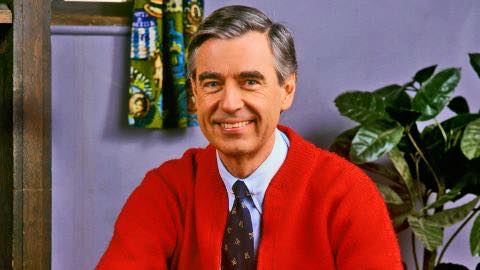
Mr. Rogers

Tonight, I had the great privilege to speak about the life and witness of Fred Rogers during the Sunday evening Jazz Mass at Canterbury House. Canterbury House hosts the Episcopalian student ministry for the University of Michigan and also opens its doors to the wider Ann Arbor community.

Each Sunday night at 5pm, they have a Jazz mass with glorious music that is spirited and playful. This worship service is followed by a free, home-cooked meal.

Thank you to Chaplain Reid Hamilton and the Canterbury House community.

There is much to learn from Mr. Rogers.
He reminds us that we are unique and endlessly loved.

–Renee Roederer

Love We Will Not Lose

Luke 15:1-3, 11-32
An offensive telling of the Prodigal Son.

prodigal

He did a very, very offensive thing.

The younger son offended all the customs and conventions of his day. He stepped outside of the norms, crossed over the lines, and acted in ways that were shocking and shameful for himself, his family, and his neighbors.

Perhaps he had considered his plans for a while and practiced how he might ask the question. “How should I word this exactly. . .?” he may have wondered.

Or maybe his plans were made on the spur of the moment. Perhaps the desire for immediate gratification overcame him, and he didn’t really consider how his words might hurt or wound those around him.

“Father, give me the share of the land that will belong to me,” he stated.

That wasn’t really a question at all. It seemed to be a demand, an expectation, and an entitlement. And did you catch that? That word ‘will?’ He’s asking to translate ‘will’ into now.

The younger son did a very, very offensive thing. . . Because under all conventional standards of the day, he would not have gained this inheritance now. The ‘will’ of it all – “Father, give me the share of the land that will belong to me” – hinged on one thing. It hinged on the death of his father. In other words, as we translate this demand into the cultural language of the day, the younger son is in effect saying, “Father, be dead to me. I can’t wait around for your death. I want my share of the inheritance now.”

That was a very, very offensive request to make.

He does receive that inheritance, but he doesn’t use it to care for himself or his father. Instead, he runs off to a distant country and squanders the entire inheritance on dissolute living.

He asked for his father to be dead to him.
Then he became dead to himself.

And yet, thank God, there is grace.
Thank God that grace can come even in the rock bottom moment.

A famine comes. The younger son may have assumed that his inheritance was abundant enough to last forever, but like all things that are perishable, his monetary inheritance hit rock bottom. And so did he.

He was so poor and so in need, he made a decision that would have seemed wildly offensive to anyone he grew up with back at home. He hired himself out to be a swineherd, to tend to pigs which were unclean under Jewish law.

And his rock bottom moment came when he was so hungry that he envied those pigs. They had sustenance even in that slop, and that’s more than he could say for himself. The scripture says that there was grace even in this filthy moment of needy destitution. The text says that “He came to himself.”

Isn’t that an interesting phrase?

His monetary inheritance had run out, but he was on the verge of discovering that an inheritance exists which is never perishable. It cannot be squandered under any circumstances. This inheritance has to do with identity through love.

There was grace in a glimmer of understanding, yet even then, he underestimated it for what it really was. He began to dream of return, but he underestimated it. “Father, I have sinned against heaven and before you; I am no longer worthy to be called your son; treat me like one of your hired hands,” he planned to say. He set off to return, to be less than the one he was called to be.

And he too did a very, very offensive thing.

He stepped outside the norms, crossed over lines, and acted in ways that were culturally shocking and shameful. The father did a very offensive thing, culturally speaking.

Though shamed by his son and treated as though he were dead, the father continually sought after his son. He did not avert his eyes, constantly looking in love, dreaming for the wellbeing of his treasured son. He broke every standard, every expectation, and looked like a fool to his neighbors.

In love, perhaps beyond what we can imagine, he did an offensive thing.

Like a fool, when he saw his son in the distance, he ran with open arms to greet the one who had disowned him and wronged him. The father kissed his son. He didn’t let his son finish this speech, this tainted version of who he was in his father’s eyes.

“Father, I have sinned against heaven and before you; I am no longer worthy to be called your son,” he began. But there would be no talk of acting as a hired hand. This was his beloved child, and he had returned. He had come to live as the one he is.

“Bring the robe – the best one! Bring the best sandals and a ring to place on his finger. My child! My child has come home! My child! We will eat and celebrate, for this child of mine was dead and is alive again! He was lost, and he was found!”

The younger son may have treated his father as though he were dead. But there is nothing he could do and no distance that he could travel that could render his father’s love dead.

This love was alive, and for that reason,
he named his son as the one he had always been,
he named him as the one he would always be –
his fully alive, beloved child.

The father welcomed him in love and threw a lavish party to celebrate that deep, rich, love. That love was wildly offensive in the world’s eyes. This child had returned toward deep, rich, unconditional love.

And he too did a very, very offensive thing.

The older brother was hurt by this lavishness. Perhaps he felt as though this feast, another outpouring of abundance, was being squandered too. His younger brother had not only shamed himself. He had shamed everyone! He had left more labor for his older brother because he was not here to do it himself.

The older brother was angry that his younger sibling had literally demanded his share of the land only to squander the proceeds it provided him. And because his father was still alive  (He didn’t want his father dead like somebody else. . .) the older brother had to take care of his father with a smaller pool of resources than they had before.

His younger brother had tarnished his family’s name, and for what? For a lavish party! Since when had his father done anything like this for him? He had stayed here. He had toiled. He had been faithful. Where was his party? Where was his feast?

He did an offensive thing.

The older brother refused to enter the party. He chose to be alone. He could be self-righteous, yes, but he was also alone. Somehow, self-righteousness can make hermits out of us. . .  He stood there, scowling and sulking. He tried to stay distant from his father.

But unconditional love can look so downright foolish.
It’s offensive really.

The father’s deep, rich, unconditional love was offensive in the way that it was willing to enter even the most offensive of places.

Once more, the father stepped outside the norms, crossed the lines, and acted in ways that were culturally shocking and shameful. He did what no host would do it his culture: He left his guests, and he went out to meet his older son.

The older son made his complaints. He expressed his frustrations. His father listened, but he also lavished this son with abundant love,

“Son, you are always with me. You cannot truly be distant from my love for you. All that is mine, is yours.”

And then the challenge: “This brother of yours was dead and has come to life. He was lost and has been found. He is mine. Will you let him be yours? Will you come in, where my love is big enough for the both of you?”

How offensive.
How challenging.
How profound.
What a story. . .

And to our stories. ..
Do you know who you are?
Do you know it?
Do you know Whose you are?
Do you know who and Whose you were created to be?

The first epistle of John says it so well: “See what love the Father has given us, that we should be called children of God; and that is what we are.”

“God is love, and those who abide in love abide in God, and God abides in them.”

“Beloved, since God loved us so much, we also ought to love one another. . . if we love one another, God lives in us, and his love is perfected in us.”

There is good news for each one of us:
You are included in God’s love. You can trust that reality and walk right into it. You can live like that’s actually real and true. Let it seep into every living cell inside yourself.

And there is good news for the entire world:
The world is included in God’s love. God’s love for you is so big that it can include the world – those you love, those known unto you, those unknown to you, those you can’t stand – without ever diminishing God’s deep, rich, unconditional for you.

God’s love for the world is so big that it can really and truly include you – yes, even you! yes, even me!– without diminishing any of that love for the world. This love is endless, and it is boundless.

So what are we waiting for?
Won’t we go into that party and celebrate?
Won’t we walk right toward it?

We may feel as though we’ve have wandered so far away from God that God has stopped waiting for our return. We may feel as though God would never run toward us with open arms. It may seem as though we’ve squandered it all, and we might as well indulge in pig slop. Well, the good news for us today is that we are not pig slop, and we were never made for that.

God is loving with open arms. There is nothing we can do to nullify that love. We can’t un-beloved child ourselves! Since that’s true, here’s the challenge. If we don’t know that love, or we’re not living as if that love is real, we are missing something. We can turn around. We can come to ourselves – our true selves, our true beloved selves. It is time to leave that distant country, whatever it may be. . . addiction, rage, pettiness, pride, self-loathing, isolation, greed, hoarding, competition, or gossip.

Whatever it is, we can come home.

There is a Love so deep that it’s offensively running toward us.
It’s on the offense!
We can turn  in the direction toward the One who runs toward us.

Or maybe we feel as though we’re standing outside these days. Perhaps we’re resentful. Perhaps there are people we’d rather God not love. Perhaps we define them as outsiders, and yet, we are the one refusing to enter God’s deep love. Or perhaps we feel ostracized yourself.

Remember that God’s love for them cannot nullify God’s love for you.
And God’s love for you cannot nullify God’s love for them.

If all that is God’s is lovingly ours, our neighbors and our enemies are ours to love.
We can embrace them.
We can run toward them as God runs toward them.
And we can allow ourselves to be loved by them.

Enter that lavish party.

All the love in the world is right here for us.

Won’t you come inside?

–Renee Roederer

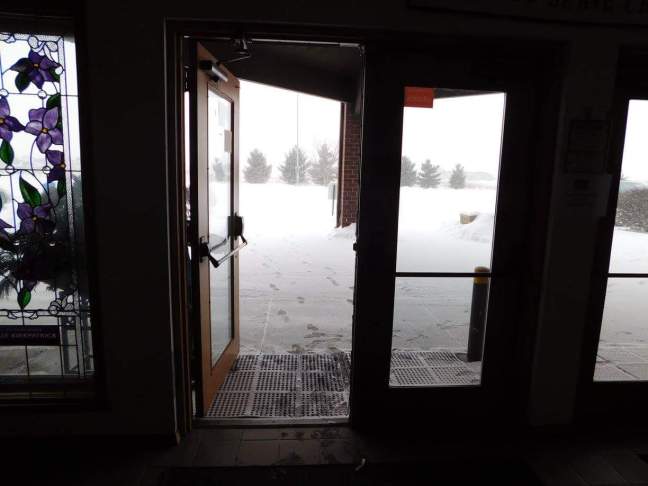
They’re Facing Outward: Our Google Search for ‘Open Church Doors’

The Open Church Doors Project

Earlier this month, I initiated a new project for Lent. It started on a day when I did a simple Google image search for ‘Open Church Doors.’ Those words ended up in the search engine because I wanted to place an image at the end of a post I was writing about Nones and Dones. I was encouraging church members to go outward and meet the neighbors that surround their buildings.

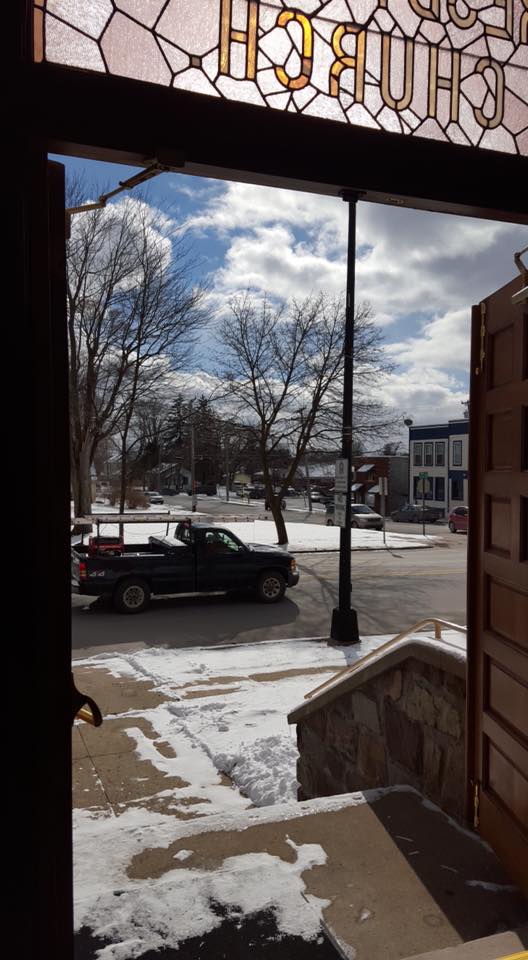
When the search results emerged, I discovered many images that were beautiful, revealing doors swung open to convey a sense of welcome. But I was also intrigued to notice that the majority of the photos were taken from the perspective of facing inward! Nearly all of them were looking toward the Church itself.

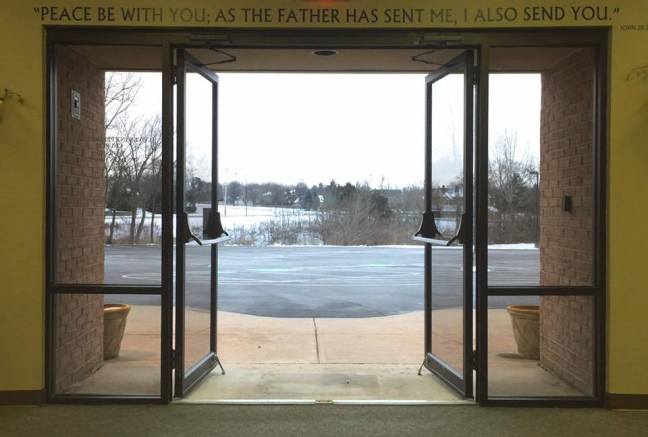
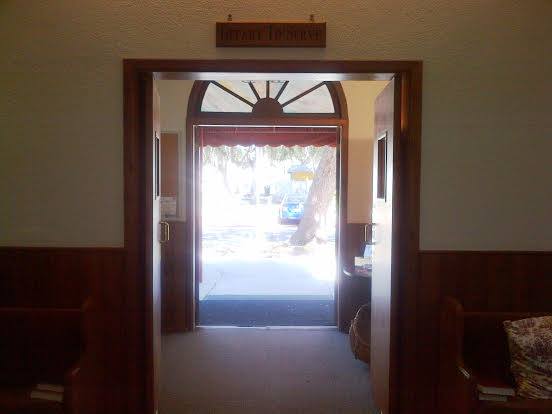
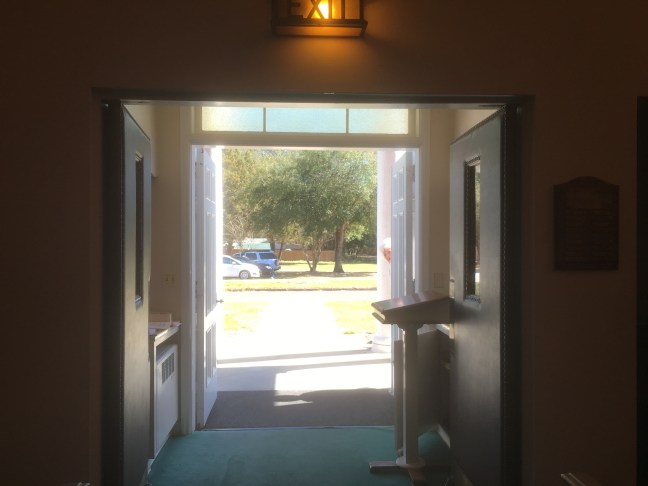
I wrote about this phenomenon earlier this month, and that launched a new project. Church communities were invited to take images of their open church doors, but this time, swung open from the perspective of facing their neighborhoods. They were encouraged to add prayers for their neighbors as well.

Here are the images and prayers from the churches who participated. May they inspire you and your congregations as you think about your own neighborhood connections.

–Renee Roederer

oregon

St. Edwards Episcopal Church in Silverton, Oregon opens its doors and connects with its neighborhood.

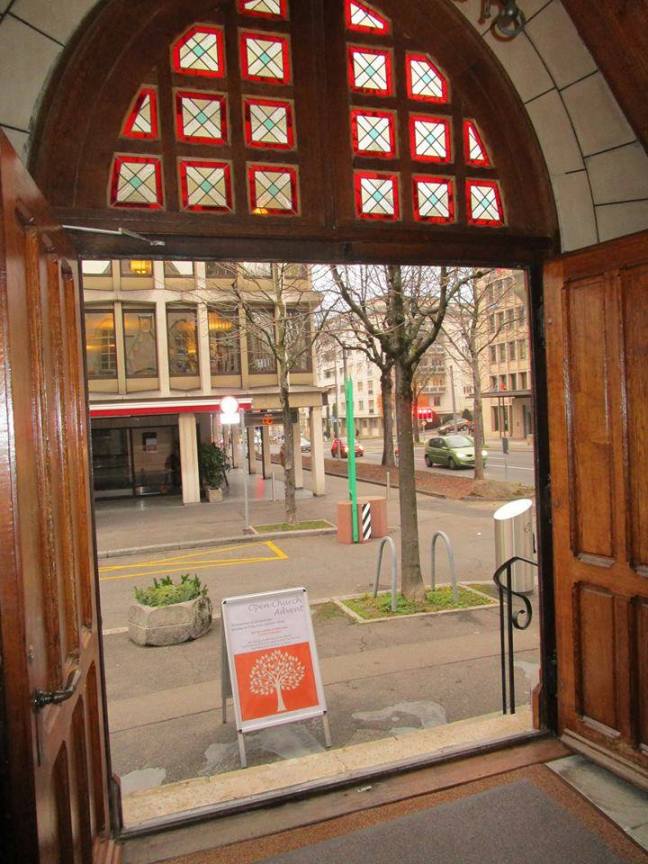
Scots Kirk Lausanne

Scots Kirk in Lausanne, Switzerland opens its doors and connects with its neighborhood.

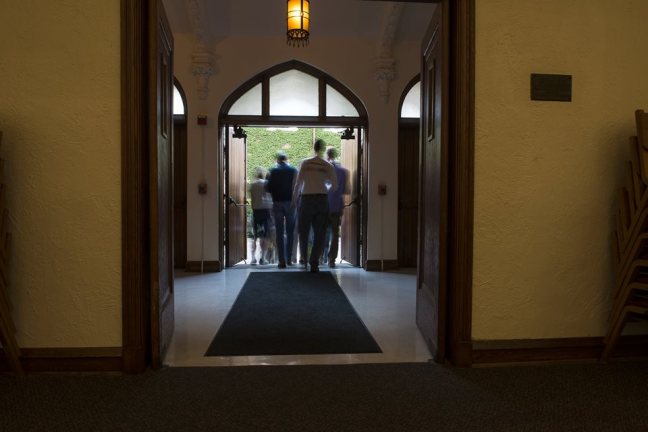
Pres House

Pres House at the University of Wisconsin in Madison, Wisconsin opens its doors and connects with its neighborhood.

Tabernacle Baptist Church in Richmond, VA

Tabernacle Baptist Church in Richmond, Virginia opens its doors and connects with its neighborhood.

Edinburgh

Stockbridge Church in Edinburgh, Scotland opens its doors and connects with its neighborhood, praying, “Holy Spirit – God of the harvest- send us out into ancient streets speaking of your name and fame – in fresh ways to new faces. May they behold us – but see only you! Amen.”

First South Lyon

First Presbyterian Church in South Lyon, Michigan opens its doors and connects with its neighborhood, praying, “Lead us, Shepherding God, that we may follow.”

Oronco

Oronoco Presbyterian Church in Oronoco, Minnesota opens its doors and connects with its neighborhood, praying, “God, help this community continue to grow in numbers, in strength, & in compassion for each other.”

Lincoln Park

Lincoln Park Presbyterian Church in Lincoln Park, Michigan opens its doors and connects with its neighborhood, praying, “May the love of God be known in this community.”

puerto Rico

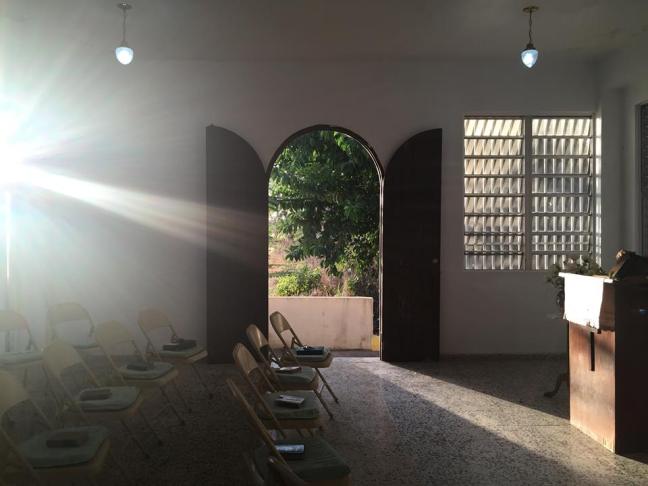
The Rincón Chapel in Rincón, Puerto Rico opens its doors and connects with its neighborhood, praying, “May God’s purpose to be fulfilled through a diverse people in an ever-changing setting.”

Huntsville

Christ Presbyterian Church in Huntsville, Alabama opens its doors and connects with its neighborhood, praying, “For this corner of the kingdom in Huntsville, AL, we pray.”

auburn

Westminster Presbyterian Church in Auburn, New York opens its doors and connects with its neighborhood, praying, “May we go out from these doors as the hands, feet, and faces of Christ in Auburn, NY.”

Holy Trinity Lutheran

Holy Trinity Lutheran Church in Portsmouth, New Hampshire opens its doors and connects with its neighborhood, praying, “We pray that this church may continue to know and care for God’s children near and far.”

Springboro

Covenant Presbyterian Church in Springboro, Ohio opens its doors and connects with its community, praying, “God, give us strength to leave our comfort zone and step out in courage to love and serve our community.”

highlands

First Presbyterian Church of Highlands, North Carolina opens its doors and connects with its neighborhood, praying, “God of waterfalls and river gorges, of small town friendships and tourist delights, breathe your Spirit into our living and loving and serving, that all who know this place will know the depth of your love.”

Safety Harbor

First Presbyterian Church of Safety Harbor, Florida opens its doors and connects with its neighborhood, praying, “O God our Father, as we depart to serve, may Your light shine and awaken us to serve the community of Safety Harbor.”

Doors

First Presbyterian Church of Apopka, Florida opens its doors and connects with its neighborhood, praying, “Gracious Lord, you have opened doors around the world, give us open hearts and arms for the children and families who see our fences and locks, and then wonder if we really can love people who look and talk and live so differently.”

doors2

Altoona Christian Church opens its doors and connects with its neighborhood, praying, “What used to be corn fields are now buildings and houses, filled with neighbors and opportunities to share and love.  Bless all of these new neighbors that they might find home,  welcome, and safety. Amen.”

How will you love and support your neighborhood?
Let’s open these doors outward.