I Am Done With Doomscrolling

A person sitting in a dimly lit room at night, illuminated by the glow of their smartphone. ChatGPT image.

I am done with Doomscrolling. I gave it up.

Who knows? Maybe I’ll have a weak moment and go back, but I’ve taken a substantial break, and I’m going to recommend this to everyone I know. Doomscrolling drains us emotionally and physically, and on its own, it doesn’t add any important action to the world.

Here are things I’m not suggesting:

I’m not suggesting that we become uninformed. I’m definitely not talking about putting our heads in the sand metaphorically (which is also a great privilege some cannot choose). I’m not talking about leaving social media to the point that we feel wildly isolated from the updates of our friends.

But I am talking about noticing those moments when we’re drawn to scroll repeatedly through bad news, feeling shock and horror, and immersing ourselves in hard things.

Instead of Doomscrolling, here are things I am planning to do:

— I want my news to be peopled. I want to engage news intentionally as a regular part of my day. These days, read a few newsletters, and I listen to a particular podcast. Then I am asking questions like, how can I act on what I just heard? Is there a person I need to reach out to? Should I share this somewhere? Can I give to a resource, or is there a resource I should with others? Should I follow this organization on social media? How can I connect with loved ones impacted by this?

So often, we hear, see, or scroll through these things passively and feel like we can’t take action. When we do take action, even if it’s just to ask a question about possible action, our bodies feel active instead of passive.

A friend said recently to me, “We probably wouldn’t listen to a person tell the same story 15 times at the dinner table. Why am I doing that with media?”

— I am still going to post on social media, and I’m going to check in with friends’ posts, but I am going to spend way less time there. I read recently that the average person in this country is spending two hours a day on social media platforms. These algorithms are initiating our emotions at best, and inciting us or manipulating us at worst. I don’t feel like giving these algorithms that much of my thinking and feeling space. I’d rather give that time to people I love with voices, texts, conversations, and in-person time.

So goodbye, Doomscrolling. I’d rather do these.

This is just me, and others may have different rhythms that sustain them. But whatever they are for each of us, I invite us to choose them intentionally again. What are yours?

Renee Roederer


Nobody is Home Until Everybody is Home

Welcome mat, Public Domain

“Nobody is home until everybody is home.”

This is the motto of Project HOME in Philadelphia, an organization I’d invite us to learn about today through this 13 minute podcast below:

As longtime housing activist retires, the fight to end homelessness continues

“Is there something that you would encourage ordinary people to do in their daily lives to address homelessness?” Ari Shapiro asks.

Sister Mary Scullion replies, “Sure, all of us can see, and acknowledge, and affirm another human being as simply that, a human being, at a minimum. But I think social policy is the most impactful way to end and prevent homelessness. And it’s not just about building new units. It’s about protecting existing units, and renters, and homeowners to afford and keep their homes safe and upgraded. It’s about each one of us deciding what kind of country we want to live in and holding elected officials responsible for how our resources are spent to further a country where everyone can afford a place to live.

“And that means voting, it means getting involved in the civic life of our neighborhoods and communities. And it means not putting on our blinders. We have to see our brothers and sisters. We have to see our brothers and sisters, who are not only living on our streets, but in doubled up and unsafe living conditions. We have to see the kids that are going to movies in all-night theaters so people don’t know they’re unsheltered or that they’re homeless. We have to see the elderly on our streets and those with mental illness.”

How might we take action locally?

Mental Health Monday: Make the Reach-Out

A person texting. Public domain, iStock.


Last week, a close friend texted me in the morning and said,

“Are you awake?”

“I am,” I said, and she called immediately.

I assumed she was going to chat with me about something going on in her week, but instead, she was calling to check on me. I had had a really difficult day a few days before. I was very touched by this, and it impacted my day meaningfully.

A few days later, someone popped in my mind, and I called her.

“I’m not calling about anything in particular,” I said, “I was just thinking of you and thought I would check in to see how you’re doing.”

It turned out that she had had a difficult day, and I seemed to call right on time.

We may be amazed how much a single, “I’m thinking of you” text, or a 5-10 minute phone call can impact a person in helpful ways.

This Mental Health Monday post is simple. When you think about someone and have the time — even just a little moment of time — make the reach out. It may make a big difference.

Renee Roederer

My Delegation Jam in the Car

Stevie Wonder, 1973 . Wikimedia Commons.

This week, I had a delightful moment in the car when an unexpected intersection of music and feeling came together. I was driving to work when Stevie Wonder’s For Once in My Life came on. The chorus always makes me smile:

For once in my life, I have someone who needs me.

I smile because this reminds me of a community member I deeply admire. She’s found so much joy and purpose in advocacy work that she decided this song was her song. For her, it captures the beauty of feeling needed and making a difference in community.

As I drove, I felt gratitude for her. Then, a thought struck me, and I couldn’t help myself. This year, in our work at the Epilepsy Foundation of Michigan, we’ve been training interns and high-level volunteers to take on leadership roles. As our community continues to grow, we’re inviting others to participate in that work.

So I changed Stevie’s lyrics for me. With gusto, I sang:

For once I can say, “This ain’t mine, you can take it.”
As long as I know I have love, I can make it.
For once in my life, I have someone who doesn’t need me.

And I laughed while I sang it.

Have you ever thought about the gift of not being needed? Being needed is wonderful, but there’s also a deep satisfaction in seeing others step up, carry the weight, and help the work flourish. It’s freeing, empowering, and a reminder that the best work happens when it is shared.

For me, it was a reason to sing boldly.

Renee Roederer

We Need a Lot of Loves Right Now

Two hands come together to make a shape of a heart. Sunlight is shining through. Public domain.

Our brains and bodies weren’t built to hold the weight of the world’s suffering all at once. Yet that’s often what we face. Scrolling through newsfeeds or watching headlines, we are inundated by disasters, crises, and pain from every corner of the globe. This can feel overwhelming. We are living with global awareness in bodies that were formed by hundreds of thousands of years of human history, where people lived with local awareness, caring for the people and places closest to us. We aren’t physically designed for this.

Maybe in times like this, we need to widen our view, not just to the world’s pains, but to its loves. We need our loves—people we hold dear and people who hold us. We need the many relationships that sustain us, near and far.

This week, Southern California is devastated by wildfires, and this has had a massive impact on people I know personally. I want to spend less time on the news and more time in communication with them, holding them close in thought and action. Maybe our greatest gift is to tend to our connections and to let them tend to us.

Renee Roederer

“Everything Means”

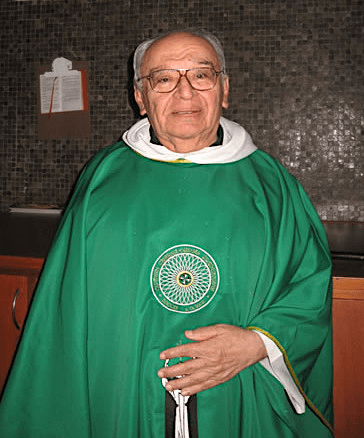
Father Greg Boyle

During my very first semester of seminary, I had a class with an adjunct professor who taught us about the history and theology of Christian worship. I am sad to say that I don’t remember his name. He was only with us for one semester, filling in for a professor who was on Sabbatical. I appreciated him.

But twenty years later (Um… Wow) from time to time, I still think about something he said to us:

“In worship, everything means.”

When we enter a time and place that is deemed sacred, and when we engage rituals that connect people to a sense of what they believe is most Ultimate and important, every single thing we do carries meaning.

I remember him adding, “So if someone is reading a scripture, and you’re up there looking at your worship notes, not paying attention, that carries a great deal of meaning, too.”

Now, two decades later, I also like to blur the lines between what is considered sacred and what is considered mundane or ordinary. If we are more aware of that which is Ultimate to us in every day life — yes, this may be for us, God; but it may also be Loves, or Values, or- or — perhaps everything might mean more to us.

“Everything means.” Everything carries meaning. And we are more aware to receive it and appreciate it.

Along those lines, here’s a story I love from Father Greg Boyle. He’s the founder of Homeboy Industries, an organization that provides healing, connection, and jobs to people who have left gangs or have been recently incarcerated. I’m lifting this from the transcript of a conversation he had with Krista Tippett on her podcast, On Being.

“I think we’re afraid of the incarnation. And part of it, the fear that drives us is that we have to have our sacred in a certain way. It has to be gold-plated, and cost of millions and cast of thousands or something, I don’t know. And so we’ve wrestled the cup out of Jesus’s hand, and we’ve replaced it with a chalice, because who doesn’t know that a chalice is more sacred than a cup, never mind that Jesus didn’t use a chalice?

“And a story I tell in the book about a homie who was — on Christmas Day, I said, ‘What’d you do on Christmas?’ And he was an orphan, and abandoned and abused by his parents, and worked for me in our graffiti crew. And I said, ‘What’d you do for Christmas?’ ‘Oh, just right here.’ I said, ‘Alone?’ And he said, ‘No, I invited six other guys from the graffiti crew who didn’t had no place to go,’ he said. ‘And they were all…’ He named them, and they were enemies with each other. I said, ‘What’d you do?’ He goes, ‘You’re not gonna believe it. I cooked a turkey.’

“I said, ‘Well, how’d you prepare the turkey?’ He says, ‘Well, you know, ghetto-style.’ And I said, ‘No, I don’t think I’m familiar with that recipe.’ And he said, ‘Well, you rub it with a gang of butter, and you squeeze two limones on it, and you put salt and pepper, put it in the oven. Tasted proper,’ he said. I said, ‘Wow. Well, what else did you have besides turkey?’ ‘Well, that’s it, just turkey.”

“’Yeah, the seven of us, we just sat in the kitchen, staring at the oven, waiting for the turkey to be done. Did I mention it tasted proper?’ I said, ‘Yeah, you did.’

“So what could be more sacred than seven orphans, enemies, rivals, sitting in a kitchen, waiting for a turkey to be done? Jesus doesn’t lose any sleep that we will forget that the Eucharist is sacred. He is anxious that we might forget that it’s ordinary, that it’s a meal shared among friends, and that’s the incarnation, I think.”

Everything means.

Renee Roederer

January 6: Remembering the Difficult Truths

Wikimedia Image

Over the weekend, I listened to two important podcasts, and I would like to share them today if others may also find them helpful.

Sometimes, it’s difficult to revisit the details of the insurrection that took place on January 6, 2021. If those emotions are difficult or if they trigger fears, feel free to skip these and take good care. But I share them because in some circles, there has been so much gaslighting and re-writing of history of what took place on this anniversary four years ago. I believe it’s important to honor and remember those details accurately.

NPR’s Up First — On January 6: Does the Military Have an Extremist Problem?

“As Congress meets tomorrow to certify the results of the 2024 election, it also marks the 4-year anniversary of the attack on the Capitol. The participants of the riot on January 6, 2021 intended to disrupt the certification process of the 2020 election results. When it was all over four people were dead, 140 law enforcement officers were wounded and there was nearly $3 million in damage.

“There were people from all walks of life at the Capitol that day, but one thing that many of them had in common? Military ties. That reality is something that the military is still grappling with today. On this episode of The Sunday Story from Up First, we are joined by NPR Pentagon correspondent Tom Bowman and producer Lauren Hodges, who were both at the Capitol reporting that day.”

New Hampshire Public Radio — Emelia’s Thing: Trauma and Resilience on Jan. 6

“A young police officer unexpectedly finds herself back in New Hampshire, and she’s not the same person she was when she left. Something happened to her – to all of us. But for Officer Emelia Campbell, this thing still lives in her brain and her body.

“Lauren Chooljian of NHPR’s Document team brings you Emelia’s story of survival and resilience in the wake of Jan. 6, 2021.”