Houston Zoo Animals Discover Snow for the First Time
Needs
At some point, likely already when we were very young, we began to internalize a cultural message that told us increasingly, “If you ask for what you need (or perhaps even reveal you have needs) you are burdensome.”
Where does this come from? If we reflect for a moment, it’s probably rare for us to believe people are burdensome when they share their needs with us. Why do so many people then fear being burdensome when expressing their own needs? Why does that fear come over us?
Even people with the most privileged identities fear this. For instance, how many men fear revealing their emotional needs and expressing them with others? And people with large financial needs or large health needs constantly have to navigate this landscape of internal fears.
So… if so many of us feel this way about ourselves… but not others… and those others don’t feel this way about us… Why are we living this way? Clearly, we do not have to live with these narratives. It is morally neutral to have needs. In fact, it is beautifully human.
So if no one has told you lately,
It’s okay to have the needs you have.
It’s okay to express them.
It’s okay to invite people around them.
It’s okay to make asks within them.
It’s okay to be a person with needs.
It’s okay to need.
Ich habe mich selbst gefunden (Und es macht Spaß!)
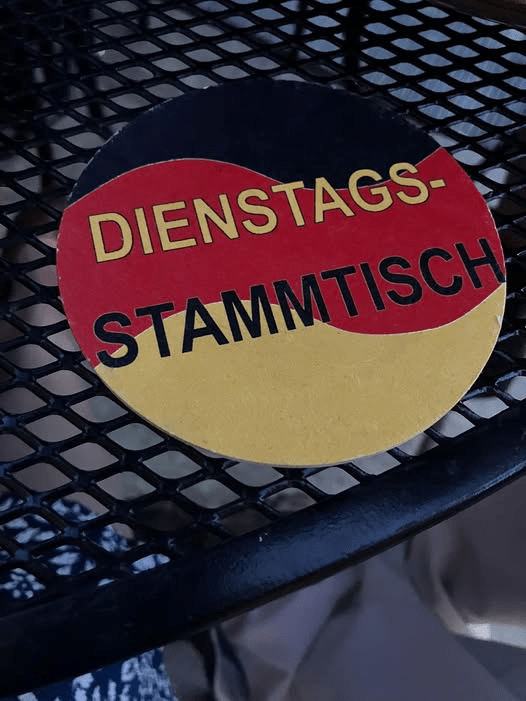
My office mates have this joke that I’m going to meet a funny German man companion.
I’ve been learning German daily for 2.5 years. I started on January 1, 2023, and I haven’t missed a day since. Sehr engagiert. (Very committed).
I told my work friends that I would eventually go to a German-speaking meetup, so who knows? Perhaps I would truly meet this hypothetical person. But here’s the real truth: I’ve turned out to be a funny German, at least on the night I’m writing this.
And if you could hear my voice — not just read my text — you would know that I am saying this with gratitude, and not primarily as a flex, because I’ve been making meaning of these things, too.
Tonight, I did go to that German-speaking meetup, and I had a blast. I did not meet a funny German man companion my age, and I didn’t really need to look for this. Instead, I drank beer tonight with mostly old men and sat near a woman my age who I would like to hang out with as a friend.
My favorite part (I wasn’t sure how this would go) is that I understood everything. This doesn’t mean that I know every single word. Far from it. But I could follow every part of every conversation. And in my speaking, I made plenty of grammatical mistakes.
I listened a lot because I wanted to take it in, and I was the new kid on the block. But I also said a lot of funny things auf Deutsch tonight. I made people laugh multiple times, and I also said some of my typical group things and stories when they flowed naturally. I felt like the exact same extrovert in English.
I’m proud of that, but more than a flex, I found myself thinking about something Andrea Gibson, poet and activist, wrote. Tragically, Andrea Gibson died from ovarian cancer last week, so they’ve been on my mind, and I recommend reading their work. Andrea Gibson wrote this beautiful poem about how sometimes we need to be “the love of our life.” This is not an invitation for egoistic, self-absorbed love. But it does involve truly loving ourselves and truly loving our lives.
I don’t need a funny German man companion.
I can be my own funny German woman companion. I sincerely enjoy that!
And in all the ways, in community, I hope you, too, can be much of what you’re looking for.
— Renee Roederer
The Talk
In 2014, after the police shooting of Michael Brown in Ferguson, Missouri, protests erupted in the streets. Amid the images of tear gas, armored vehicles, and raised hands, something unexpected happened: People in Gaza, watching from across the world, began tweeting solidarity advice to Ferguson protestors.
They offered tips on how to endure tear gas, how to protect your face and eyes, how to stay resilient. They had lived through it. The hashtag #Palestine2Ferguson emerged, linking two communities who understood state violence and survival. Across borders, they reached for one another.
On Sunday, I listened to a powerful episode of NPR’s The Sunday Story called “The Talk.” NPR describes it like this:
“It’s been five years since George Floyd was murdered, yet for many Black families, the fear remains unchanged. In this episode, Ayesha Rascoe sits down with Ryan Ross and his teenage son Gavin to discuss ‘The Talk’ — the painful but necessary conversation Black parents have to prepare their children for encounters with police. From childhood memories of Tamir Rice to fatherly rules for surviving traffic stops, we take a look at how Black parents explain to their sons how to navigate interactions with law enforcement.”
There is great generational weight to that conversation. Black families must prepare their children to survive these kinds of encounters.
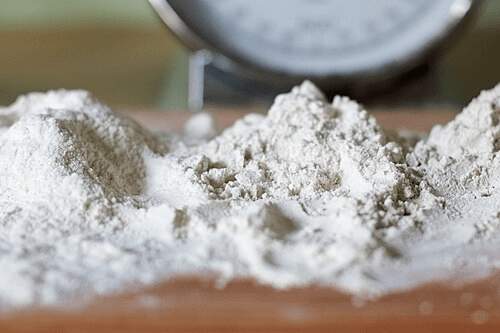
That same day, I read news from Gaza: Nearly 100 Palestinians were killed while approaching aid convoys, hoping to receive flour. Aid workers were accompanied by Israeli soldiers who opened fire. In the midst of the ongoing blockade, families are facing starvation. People are being killed trying to reach food — something that should never happen once, let alone repeatedly. And it is happening repeatedly.
And I couldn’t help but wonder: How many families in Gaza are having their own version of “The Talk”? Preparing their young ones and adult children to approach an aid line, knowing the risk that comes with simply walking toward survival.
We shouldn’t live in a world where families need these talks. No child should have to learn strategies for surviving interactions with police. No family should have to map a plan for approaching food aid without being killed.
But we do live in a world where people reach for each other, across borders, across traumas, across histories of harm — where care flows alongside grief, and survival is shaped not only by violence, but by the communities that refuse to let one another go.
What will we do?
— Renee Roederer
Returned to Ourselves

Father Greg Boyle is a person I really appreciate. He’s the founder and spiritual leader of Homeboy Industries in Los Angeles. Homeboy Industries provides jobs, training, tattoo removal, therapy, and a variety of classes for people who are leaving gangs and people who have been recently incarcerated. In the midst of these opportunities, Homeboy Industries has created a large, extended family of kinship — many meaningful relationships over time.
Father Greg was once a guest on Krista Tippett’s On Being. During that interview, he uses a beautiful phrase about the mutuality of relationship. He says that in kinship, we serve as enlightened witnesses, helping each other ‘return to ourselves.’
Toward the beginning of the podcast, he uses some language from Cesar Chavez. Once, a reporter said to Chavez, “These farm workers sure do love you. . .” And to that, he replied, “The feeling’s mutual!”
That line came up again when he discussed this beautiful experience of returning to ourselves. To bring it home, he told a story about one of the homies named Louie and a mutual blessing they shared with some humor. I want to share Greg Boyle’s words below:
“You want to be as spacious as you can be, that you can have room for stuff. And love is all there is, and love is all you are. . .
“Alice Miller, who’s the late, great child psychologist, talked about how we’re all called to be enlightened witnesses — people who, through your kindness, tenderness, and focused, attentive love, return people to themselves. And in the process, you’re returned to yourself.
“Like I have a homie named Louie who just turned 18. And he’s kind of a difficult kid. You know, he’s exasperating, and he’s whiny. And he works for me — although work may be too strong a verb. But homies lately have asked me for blessings, which is odd — it’s like in the last three years — and they always ask me on the street or in my office. And they never say, ‘Father, may I have your blessing?’ They say, ‘Eh, G, give me a bless, yeah?’ And they always say it the same way.
“So this kid Louie, I’m talking to him, and he’s complaining about something. And finally, at the end of it, he says, ‘Eh, G, give me a bless, yeah?’ I said, sure. So he comes around to my side of the desk, and he knows the drill. And he bows his head. I put his hands on my shoulder. Well, his birthday had been two days before, so it gave me an opportunity to say something to him. And I said,
‘You know, Louie, I’m proud to know you.
And my life is richer ’cause you came into it.
And when you were born, the world became a better place,
And I’m proud to call you my son.
Even though — ‘
And I don’t know why I decided to add this part —
‘– at times, you can really be a huge pain in the ass.’
“And he looks up, and he smiles, and he says, ‘The feeling’s mutual!’
And suddenly — kinship so quickly. You’re not sort of this delivery system. But maybe I returned him to himself, but there is no doubt . . . that he’s returned me to myself.”
Friends, I hope you’ve had this kind of experience lately. Or I hope you can recall this kind of experience — of returning and being returned — in a way that fills you right this instant in the present moment.
Suddenly, kinship so quickly.
This Week in Nature




Neato Curiosities: Shark Antibodies Drive Cancer Breakthroughs
I highly recommend this podcast episode. Becca Bressler, the producer behind it, said it’s likely the most interesting story she’s ever reported. Here’s a brief description:
Today we take a trip across the world, from the south coast of Australia to … Wisconsin. Here, scientists are scouring shark blood to find one of nature’s hidden keys, a molecular superhero that might unlock our ability to cure cancer: shark antibodies. They’re small. They’re flexible. And they can fit into nooks and crannies on tumors that our antibodies can’t. We journey back 500 million years to the moment sharks got these special powers, and head to the underground labs transforming these monsters into healers. Can these animals we fear so much actually save us?
Small Groups of People Can Change the World
Did you know that many of the people who fought adamantly for the passage of the Americans With Disabilities Act (ADA) met each other as teenagers at a summer camp?
The story is told in the Netflix original film Crip Camp: A Disability Revolution. A group of disabled teenagers spent a portion of their summer at a very formative place called Camp Jened. Though they experienced a great deal of exclusion, discrimination, and isolation in their hometowns and local schools, they came alive in community with one another. It changed their lives and empowered them.
It empowered them much so that years later as adults, they blocked New York City traffic in wheelchairs, advocated fiercely for disability rights in Congressional hearings, and staged days-long occupation of legislative offices for the 504 sit-ins. The 504 sit-in in San Francisco lasted 28 days and is to this day the longest sit-in in a federal building. They just took over the place and shut it down.
And this amazing community of friends and chosen family met at a summer camp where they envisioned and enacted a new form of community. When they all arrived as individuals on buses at Camp Jened, they could not have imagined this. But relationships matter, and small groups of people can change the world. I take heart in this.
Change always has to start somewhere. Change always has to start in community somewhere. Here’s the trailer for Crip Camp: A Disability Revolution.
Receive With Gusto

I was walking toward a building near campus yesterday when a person waiting outside held the door open for me. The person was about to take in a big cart, but before moving it, it seemed easier to let me go through first. So the person held the door open for me as I approached it.
When I saw that this was about to happen, I immediately sped up my walking toward the door. I probably doubled my speed. Then the person said,
“Oh, no need to hurry!” This was spoken as a kind reminder that I wasn’t inconveniencing.
I thought about how frequently we worry about taking up space, or inconveniencing, even when we are given an authentic occasion to receive. Some of us have been socialized in this direction especially.
That’s when I thought of something that the poet Mary Oliver says in Don’t Hesitate: “Joy is not made to be a crumb.”
Likewise, I suppose,
The taking up of space — being noticed, being cared for — is not made to be hurried.
The gift of receiving is never made to be small.

