In several places, my yard is filled with wildflowers and… weeds. I don’t have any mulch down so all of these grow, and sometimes they overgrow. I have some pulling to do.
In August, many of the wildflowers will bloom, and my yard will be filled with goldenrod. The bees will be happy, and I will enjoy that too.
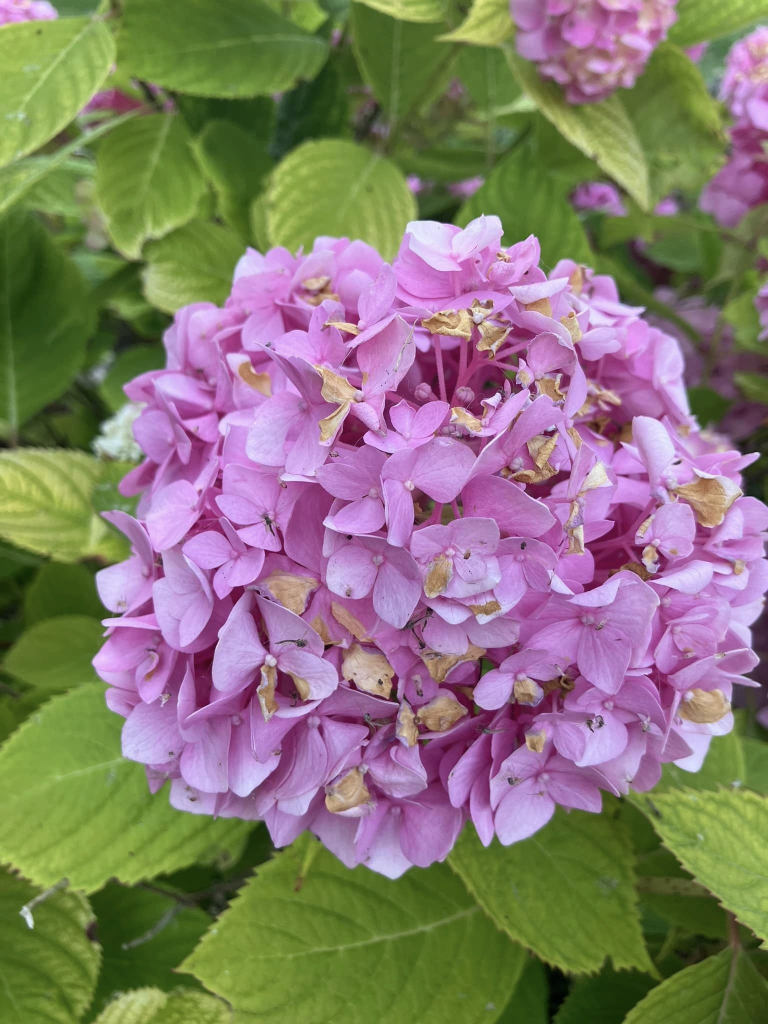
But it’s time to simplify all that overgrown green after it blooms. I think I’ll plant more flowers over time with some mulch. Hydrangeas make me happy. (The bees will enjoy these too.)
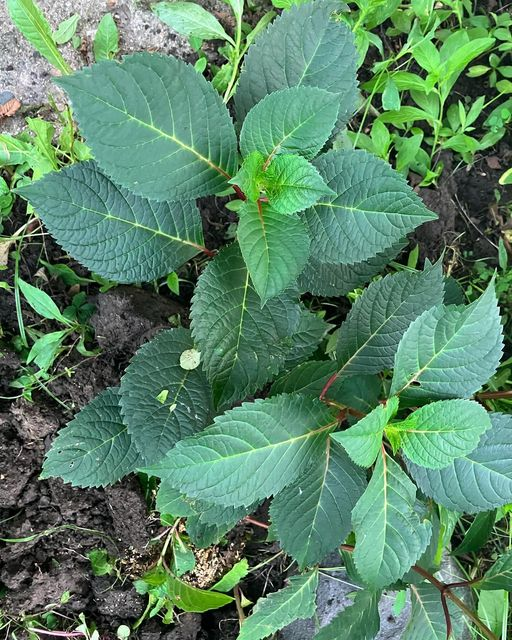
Anyway, in the midst of so many big green plants — tall, still unbloomed wildflowers and weeds — one single hydrangea plant with no flowers seemed like such a meager effort of change. But you have to start somewhere. We get start somewhere.
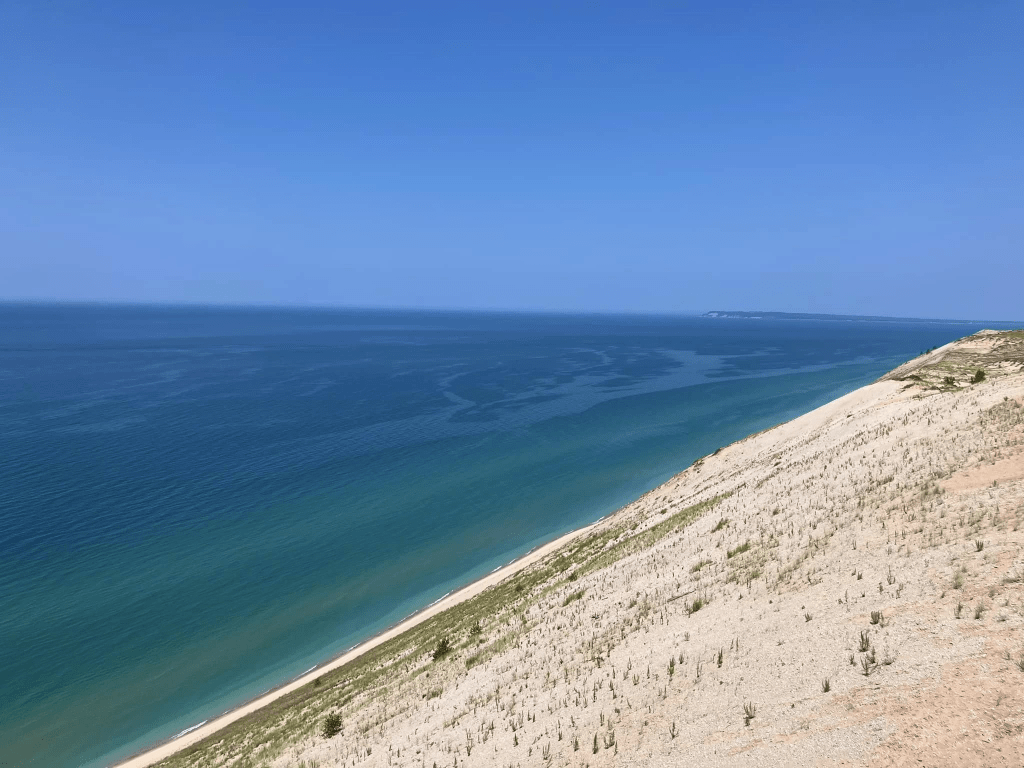
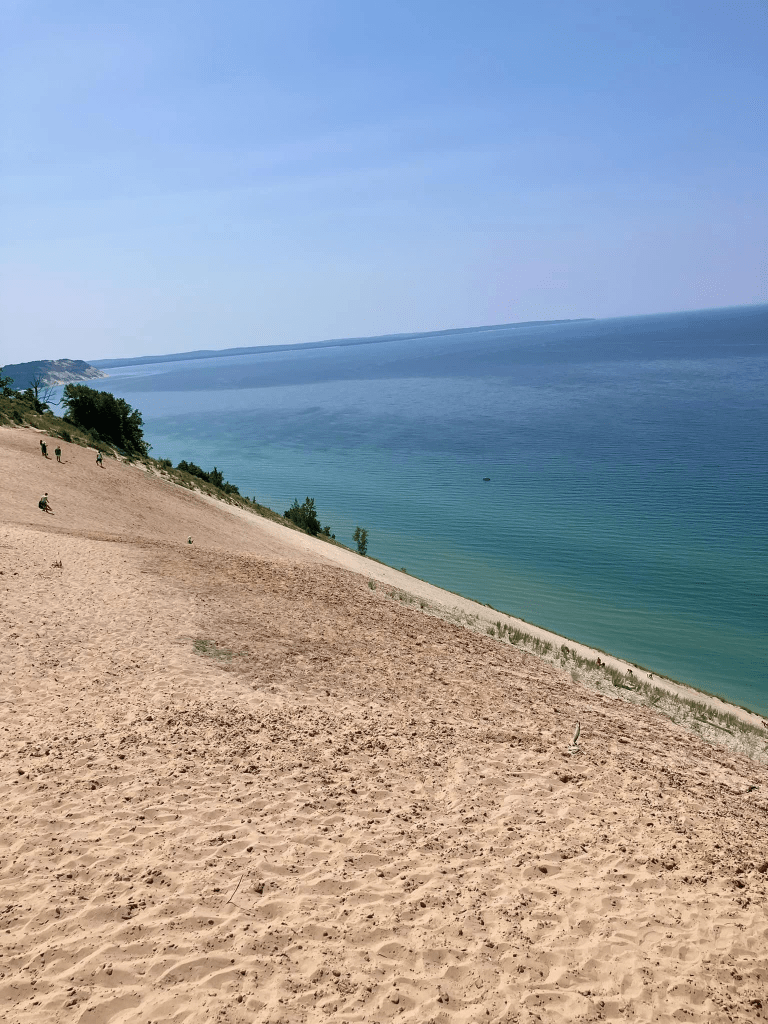
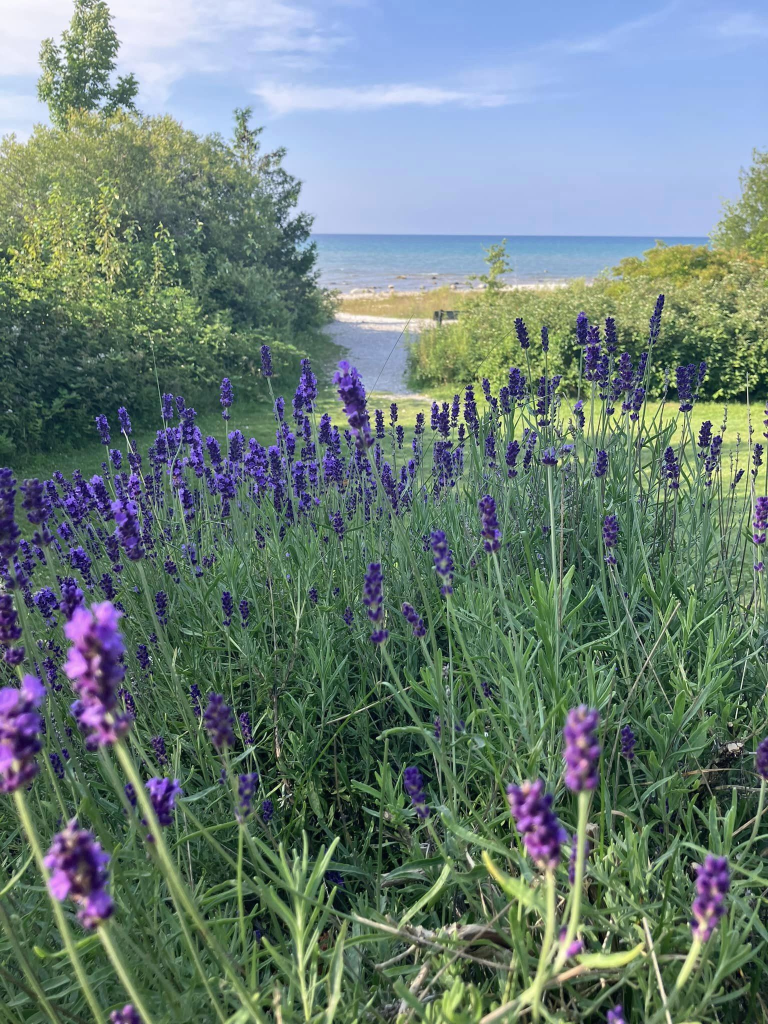
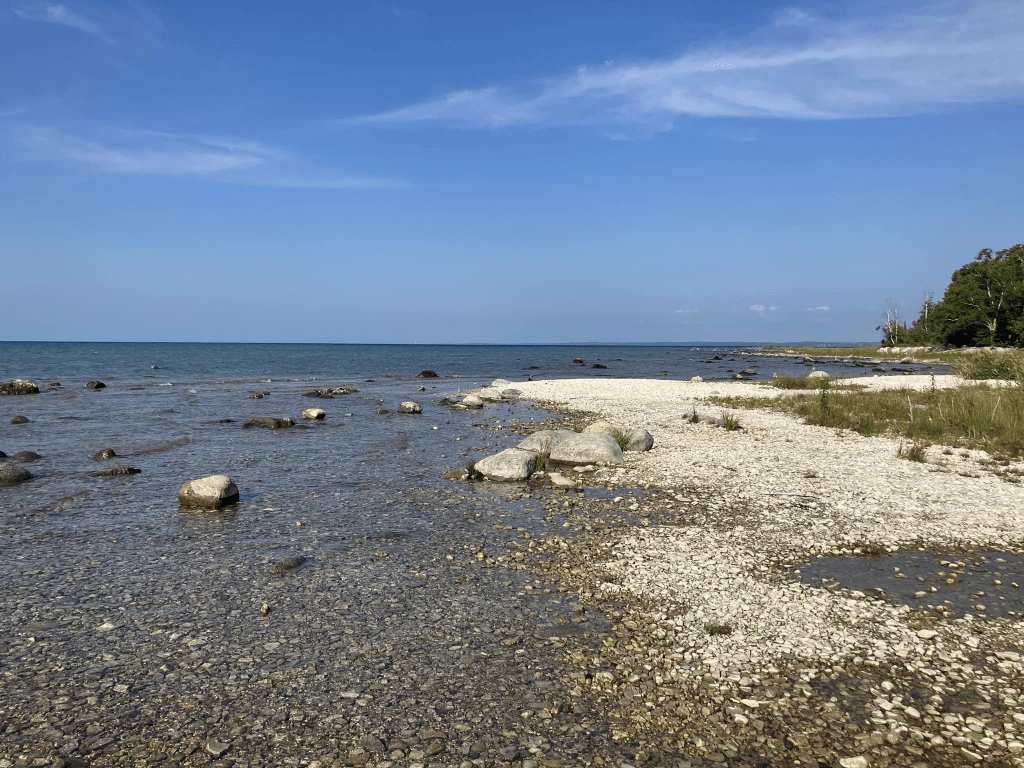
This weekend, I had one of the most adventurous days I’ve ever had in Michigan. I took some of my family members to Traverse City, and in one day, we traveled around the whole Leelanau Peninsula (it’s the tip of the pinky when Michiganders do that hand map thing).
Leelanau Peninsula Tour: Sleeping Bear National Lake Shore, Empire, Glen Arbor, Leland/Fish Town, Northport, Grand Traverse Light House, Suttons Bay, Traverse City.
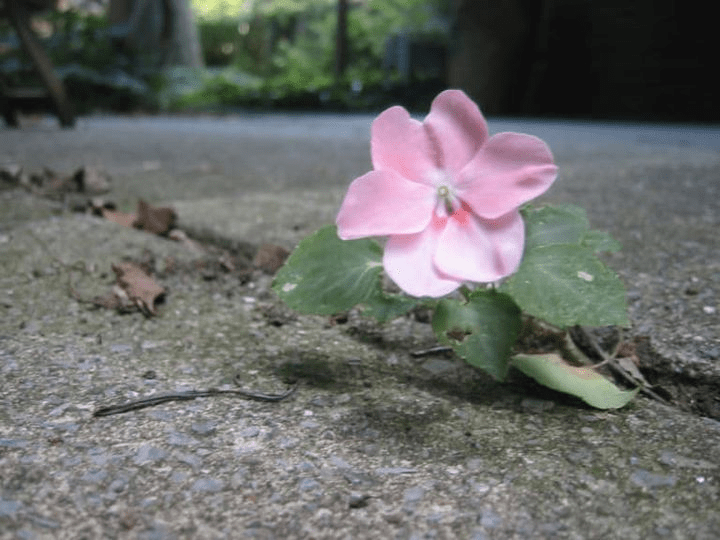
A pink flower grows in a crack in a sidewalk. Public domain.
As we take in the news, and as I view my social media feeds, many are afraid from yesterday’s political violence,
And
Many are afraid of potential political violence, with concerns that more could follow in a variety of ways and directions.
Recently, a friend asked me, “How do you calm your nervous system in the face of scary political possibilities?”
I am no expert on that, including sometimes, even for myself. But I think what helps me most is a commitment to live the same values, no matter what sort of outcomes are at play, no matter who is in power, and no matter what circumstances are unfolding. I don’t always do that perfectly, by the way. Not at all. But we bring ourselves and one another back repeatedly to these consistent values and commitments.
And by consistent, no-matter-what values, I don’t mean ‘just ideas,’ important though they may be, and I definitely don’t mean punditry. I mean commitments to one another.
This is about lifting people up. It’s about community care. It’s about creating a safe world to live in — in our political realities; in the grocery stores; in the schools; in the houses of worship; in the workplaces; and in our care, connections, and commitments for people in other world regions facing immense violence and trauma — some of them, from our own nation’s bombs. It’s about proclaiming that our lives have value, our neighbors’ lives have value, and our world has value.
Mother Theresa used to say, “If we have no peace, it is because we have forgotten we belong to one another.”
This about making sure that people have that they need — that people can eat. That people can have a community surround them during a health crisis. That people can know they can call each other and have a listening ear, a soft place to land, and an actual tangible way providing resources for one another.
Our fears are valid. Our capabilities to act in these ways, individually and collectively, are immense.
That’s what helps me calm my nervous system. That’s what moves me to keep acting, imperfectly but in actuality, in these directions.
Support and care to all who are afraid, or who have slept less tonight than they needed. We’ll need to keep lifting one another up — in all these ways listed above and more, and of course, right here.
A heart-shaped stone, lying on a table. Public domain.
At some point, likely already when we were very young, we began to internalize a cultural message that told us increasingly, “If you ask for what you need (or perhaps even reveal you have needs) you are burdensome.”
Where does this come from? If we reflect for a moment, it’s probably rare for us to believe people are burdensome when they share their needs with us. Why do so many people then fear being burdensome when expressing their own needs? Why does that fear come over us?
Even people with the most privileged identities fear this. For instance, how many men fear revealing their emotional needs and expressing them with others? And people with large financial needs or large health needs constantly have to navigate this landscape of internal fears.
So… if so many of us feel this way about ourselves… but not others… and those others don’t feel this way about us… Why are we living this way? Clearly, we do not have to live with these narratives. It is morally neutral to have needs. In fact, it is beautifully human.
So if no one has told you lately,
It’s okay to have the needs you have. It’s okay to express them. It’s okay to invite people around them. It’s okay to make asks within them.
It’s okay to be a person with needs. It’s okay to need.










 Smuggling Grace