




— Photos by Renee Roederer

Among many important functions, the Department of Education protects the civil rights of students with disabilities. This week, I’m thinking of many students, families, teachers, and administrators as particular leaders of the executive and legislative branches advocate for the closure of the Department of Education.
On top of this, 17 states have filed a lawsuit, titled Texas v. Becerra, which could undo Section 504 of the landmark Rehabilitation Act of 1973. This law ensures that students with disabilities can have accommodations in the classroom.
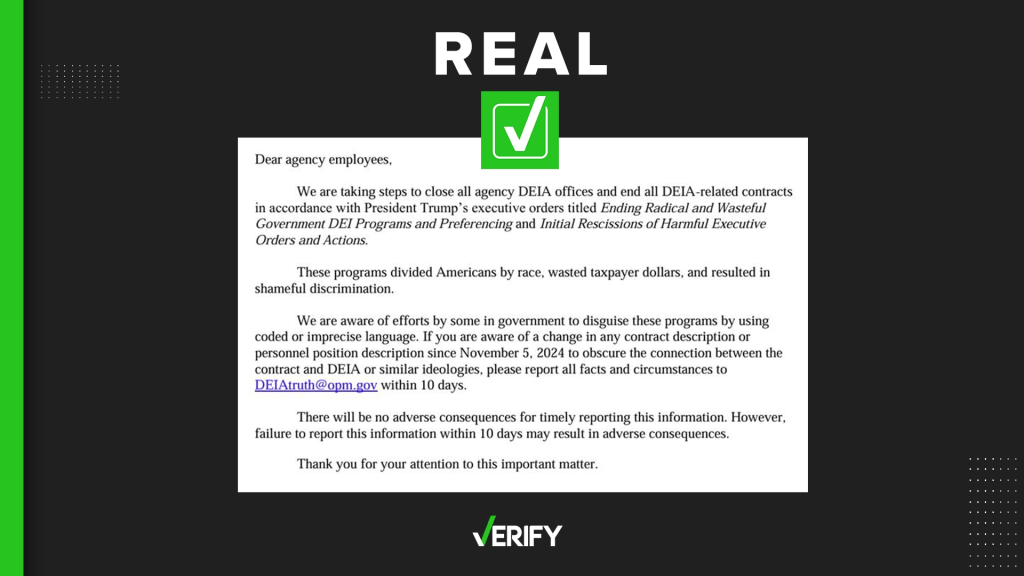
Below, we have a photo of the memo that was sent to agency employees on the second full day of the Trump Presidency. You can find this text in written form here.
— Renee Roederer
Additionally, February is Black History Month, and this is an excellent time to celebrate and learn from Black disability activists and advocates who have shaped our communities, nation, and world.
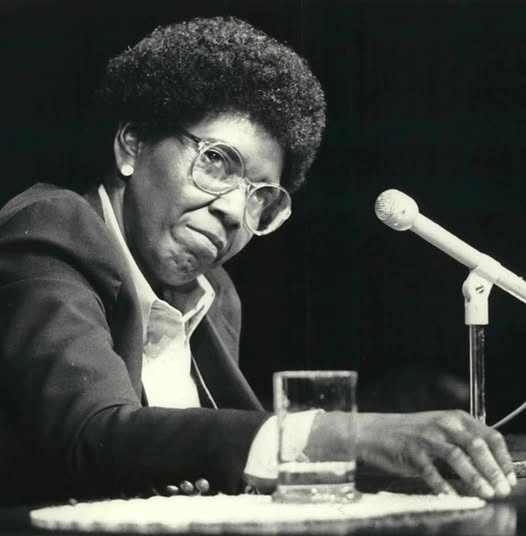
“Barbara Jordan was a famous advocate for voting rights, immigration reform, minimum wage laws, and civil rights. She was the first African American woman from a southern state in congress in 1973. She is most famously remembered for her role in the Watergate hearings and for delivering the keynote at the 1976 Democratic national convention, being the first Black woman to do so. She continued her advocacy through education as a professor at the University of Texas at Austin. Throughout the later years of her life she used a wheelchair due to of Multiple Sclerosis.”
You can learn more here:
https://disabilityrightsflorida.org/blog/entry/impactful_black_disability_advocates_and_advocates?fbclid=IwY2xjawIa-kxleHRuA2FlbQIxMAABHe4wTOP7undYe-kNFuFVCgRQszoOFeCb1_MGdmbAqZPo1ZL3cJOoMYiv7Q_aem_WgWIcE1jRNX4QgapodNp9w

If this is helpful to anyone else, I’d like to share this recommendation:
Every day,
1) I have a period in the morning when I engage news very intentionally. I listen to a daily news podcast, and then I read a daily news email.
And
2) Then I’m done for the whole day. These two sources in the morning provide excellent journalistic coverage, and they give me a broad sense of what’s going on.
Part of the day, I engage news intentionally. The other part of the day, I don’t engage it at all, also intentionally. Both are very deliberate.
I don’t run away from what’s happening. The rest of the day, as needed, I engage around these needs relationally in actual community. We can spend huge portions of our day being interrupted by news alerts or doomscrolling on social media. And then, maybe we see more headlines, and maybe we see whole feeds of fears, but now, this has zapped us of energy. Now we are even more exhausted and on edge for our own mental health, and we may struggle to provide care and take substantial action.
This is not about putting our heads in the sand. It is about being strategic. It is about preserving our energy as best we can for what is most important to us, whether that helps us function well in the day, or take action on important values.
It’s okay to engage news reports. It’s okay to step away from the news reports. This is what is saving me right now: I recommend doing both, but not letting those efforts co-mingle.
— Renee Roederer

Love relentlessly.
—Diana Butler Bass
Love relentlessly, she said,
and I want to slip these two words
into every cell in my body, not the sound
of the words, but the truth of them,
the vital, essential need for them,
until relentless love becomes
a cytoplasmic imperative,
the basic building block for every action.
Because anger makes a body clench.
Because fear invokes cowering, shrinking, shock.
I know the impulse to run, to turn fist, to hurt back.
I know, too, the warmth of cell-deep love—
how it spreads through the body like ocean wave,
how it doesn’t erase anger and fear,
rather seeds itself somehow inside it,
so even as I contract love bids me to open
wide as a leaf that unfurls in spring
until fear is not all I feel.
Love relentlessly.
Even saying the words aloud invites
both softness and ferocity into the chest,
makes the heart throb with simultaneous
urgency and willingness. A radical pulsing
of love, pounding love, thumping love,
a rebellion of generous love,
tenacious love, a love so foundational
every step of what’s next begins
and continues as an uprising,
upwelling, ongoing, infusion
of love, tide of love, honest love.
— Rosemerry Wahtola Trommer
You can learn more about Rosemerry Wahtola Trommer and read more of her poetry here.
—
Additionally, February is Black History Month, and this is an excellent time to celebrate and learn from Black disability activists and advocates who have shaped our communities, nation, and world.
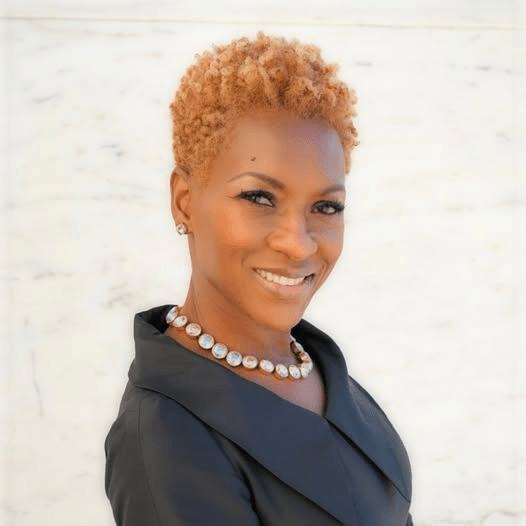
“Claudia Gordon is the first Deaf Black woman lawyer in the United States. She is a trailblazer, advocate, and leader dedicated to assisting those with disabilities and other marginalized communities. She is the former Senior Policy Advisor for the department of Homeland Security, former vice president for the National Black Deaf advocates, and former White House Public Engagement Advisor. In this last role, she was President Obama’s key advisor on issues relating to people with disabilities. She continues her advocacy in the US Department of Labor’s Office of Federal Contract Compliance Programs.”
You can learn more here:
https://disabilityrightsflorida.org/blog/entry/impactful_black_disability_advocates_and_advocates?fbclid=IwY2xjawIY5IpleHRuA2FlbQIxMAABHeE0HNT7m5-V0hMihgkjk7mJf84XKyhy0LE05JRZ4lZi-vDNvgjj6OOBjw_aem_CjIF1A50pd9Cy2glsTYlCw

I have an “everything’s okay, so now it’s funny,” kind of story to tell.
But before I tell you that, I have to tell you a prerequisite detail, which also happens to be an “everything’s okay, so now it’s funny” detail. This is a things-have-turned-out-alright, Russian doll situation, if you will.
So here’s the prerequisite detail:
Donald J. Trump gave me a hamstring injury.
Yep. All the way from Pennsylvania Avenue.
There have been many cascading concerns for people in our country, and I’ve been aware and keeping an eye on these. Though I am telling you a humorous set of details, these are no laughing matter. I just want to give us some comic relief.
The day I was most stressed personally was a couple of Tuesdays ago when we were on a countdown waiting for federal loans and grants to freeze. That day, all my leg muscles majorly tensed up. A day or so later, everything got better except a hamstring muscle. I must have strained it on that day. And it hurt!
That’s the prerequisite detail. And that pain lasted for about a week. Ouch.
I already had a doctor’s appointment lined up, so I told the PA about this. She prescribed me a topical gel for pain, and I was thankful for that. This gel is typically prescribed for people who have arthritis, but for me, it would aid my Presidential Pain Predicament.
So now we have reached the larger “everything’s okay, so now it’s funny” story.
Over the weekend, I was getting ready to meet with some friends. I went into the bathroom to brush my teeth. I grabbed the tube of toothpaste, applied said toothpaste, and started brushing my teeth with generous circles. It didn’t take long for me to notice, though I had definitely shmooshed some serious gel in my mouth. I STARTED BRUSHING MY TEETH WITH ARTHRITIC TOOTHPASTE, i.e. not at all toothpaste, but pain gel for a hamstring injury caused by the resident of Pennsylvania Avenue.
I spit it out of my mouth and rinsed thoroughly. It also tasted terrible. To my defense, that tube is very toothpaste-shaped, and the gel is even very toothpaste white. But it smelled like adhesive and didn’t taste so good.
So why was I late to meet with my friends?
I had to call poison control. And they told me I was alright.
I wasn’t very late. I just… had a wild story to tell.
And now I’ve told you, too.
— Renee Roederer
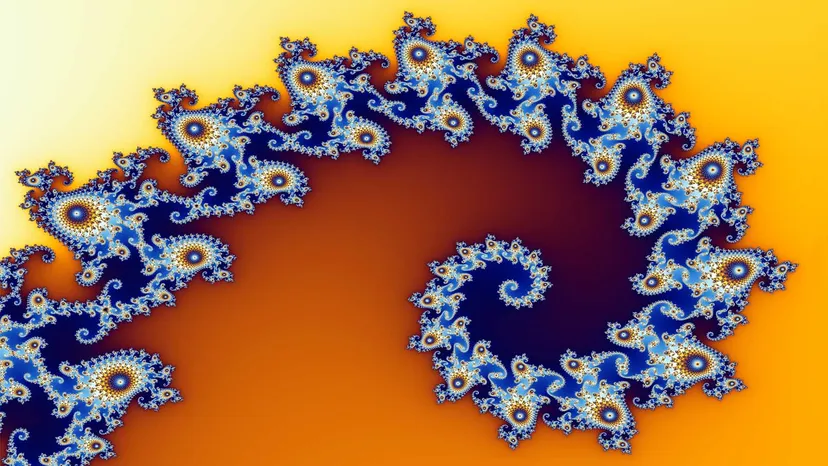
Today, we will receive a lesson from broccoli and ferns.
This lesson comes from adrienne maree brown, who draws powerful analogies between the fractals in nature—like broccoli and ferns—and our own actions. She reminds us that even our smallest actions can have a big impact, building up over time to create meaningful change on a larger scale. You can read more about this in her book Emergent Strategy: Shaping Change, Changing Worlds.
She writes:
“A fractal is a never-ending pattern. Fractals are infinitely complex patterns that are self-similar across different scales. They are created by repeating a simple process over and over in an ongoing feedback loop.
“How we are at the small scale is how we are at the large scale. The patterns of the universe repeat at scale. There is a structural echo that suggests two things: one, that there are shapes and patterns fundamental to our universe, and two, that what we practice at a small scale can reverberate to the largest scale…
“And this may be the most important element to understand — that what we practice at the small scale sets the patterns for the whole system.”
She continues:
“Grace [Lee Boggs] articulated it in what might be the most-used quote of my life: ‘Transform yourself to transform the world.’ This doesn’t mean to get lost in the self, but rather to see our own lives and work and relationships as a front line, a first place where we can practice justice, liberation, and alignment with each other and the planet.”
—adrienne maree brown, Emergent Strategy: Shaping Change, Changing Worlds, pages 51-53
There are times when we feel like our contributions to change are so small that they seem insignificant, barely making a dent in the barriers around us. This can be discouraging and disheartening. But I wonder if some of the larger injustices we face are, in part, a reflection of how these same injustices play out on a smaller, daily scale within our communities? We can participate in shifting this, even in small but vital way, by saying “No” to the everyday harms we encounter. By making small but consequential changes in our daily interactions, we can interrupt these patterns of harm on a larger scale.
If we want to build a new way forward, we need to practice it at every scale, including in our personal relationships and day-to-day actions. We won’t do this perfectly, but if we remain committed, we can return to this practice again and again, each time making a bit more space for change.
Be encouraged, friends. Your actions matter, no matter how small they feel. Who you are and what you do makes a difference in shaping the world.
— Renee Roederer
I also want to thank Rose Schrott Taylor, Digital Content Editor, at the Presbyterian Outlook magazine, who wrote last week about adrienne maree brown and fractals in a weekly email. I appreciated that piece, and it encouraged me to share about this here too.
—
Additionally, February is Black History Month, and this is an excellent time to celebrate and learn from Black disability activists and advocates who have shaped our communities, nation, and world. This month, I will share here about some of them.

“Lois Curtis is an influential Black artist and disability activist with intellectual and developmental disabilities and schizophrenia. She spent a large part of her early adult life living in an institution despite her care team stating she could live in the community. She is best known as the famous plaintiff LC in the landmark Supreme Court case ‘Olmstead vs L.C.’ which ended unjustified segregation of people with disabilities and established the right for people with disabilities to live independently in their communities as opposed to in institutions. Her lifelong advocacy has impacted the lives of many Americans and got her invited to the White House under the Obama administration.”
I mean, this baby is outrageously cute.

In my early 20s, I had the privilege of singing in an incredibly accomplished university choir. We traveled the world, participating in choral competitions in places like Germany and Japan. Those days were deeply formative, full of music and life-changing experiences.
During one of those trips, I was having dinner with a few friends from the choir, many of whom were also developing their skills in choral conducting. They were especially adept at hearing details about the ensemble as a whole. The conversation turned to the concept of “color voices,” voices that add a special timbre to the ensemble’s overall sound.
My whole life, I’ve sung as a soprano, except for the five years I sang in this choir. During those days, I sang as an alto and occasionally as a second soprano. Our section often carried the harmony rather than the melody. During this conversation, one of my friends turned to me and said, “Renee, your voice is a color voice,” to which others nodded in agreement. I had never considered my voice in this way, but it was a pleasant surprise. From that moment on, I started thinking more intentionally about the role my voice played in the choir, how this wasn’t just about carrying notes but also about adding a unique tone that enriched the overall sound.
Fast forward to today, and I find myself back in the soprano section, a place I’ve held for nearly two decades. As a soprano, I often sing the melody, but I appreciate what the other vocal parts are doing. They don’t only harmonize, but add color, lifting the melody and the sound as a whole.
This concept of “color voices” came to mind again recently. Over time, as my role in my work has shifted, I have moved away from some of the direct, hands-on care I once provided. Now, I focus more on overall vision, care networks, systems, grant-writing, and project management. While the work is still demanding, it’s different—less melody and more color.
This analogy may work in a variety of contexts. There are times when we are called to do the front-line, direct work, the “melody” that leads the charge. But there are also times when our role is to add color, by supporting, referring, encouraging, or providing financial assistance. All types of contributions are vital, and they each play a unique and important part.