“A Voice Through the Door” by Rumi, Coleman Barks, Translator
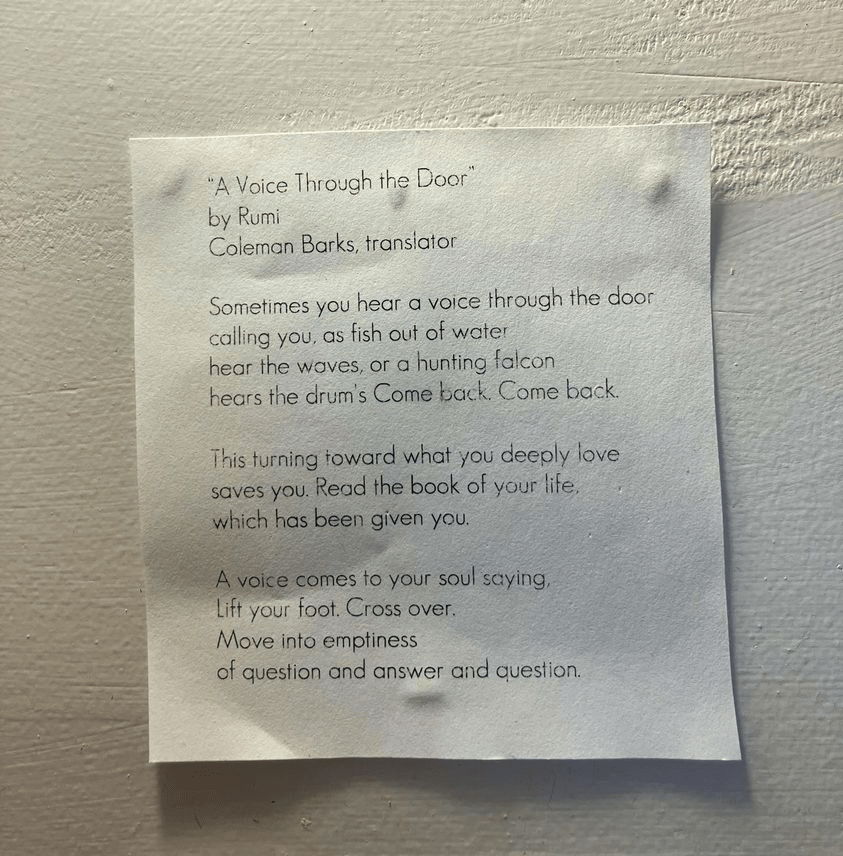
I recently found this poem hanging on a wall. I thought I’d share it today. May it speak to us in whatever way it needs to speak.
A Voice Through the Door By Rumi
Sometimes you hear a voice through the door calling you, as fish out of water hear the waves, or a hunting falcon hears the drum’s Come back. Come back. This turning toward what you deeply love saves you. Read the book of your life, which has been given you. A voice comes to your soul saying, Lift your foot. Cross over. Move into emptiness of question and answer and question.
All people in this world have needs that are particular to themselves. Every person.
And
All people and all communities have unique and particular strengths to share. Every person, every community.
I’m not sure if we can ever truly run from need, because human need is one of the most honest and real things about us all. But we definitely try. There may be a number of reasons for this. Among them, we’ve internalized lot of cultural narratives about individualism, self-sufficiency, and the belief that we must produce and earn love and belonging. (Psst, those are myths. Dangerous myths).
But those cultural narratives take form in our thoughts and feelings…
“I’m a burden.”
“I’m too much.”
“I don’t want to over-ask.”
“I don’t want to trouble.”
“They’re going to get tired of me.”
“I can’t voice this.”
Soon we’re speaking narratives about ourselves, and we run from our need and from one another. But again,
All people in this world have needs that are particular to themselves. Every person.
And
All people and all communities have unique and particular strengths to share. Every person, every community.
There is no shame in any of this. We can embrace these parts of ourselves. We can share these parts of ourselves. We can love these parts of ourselves.
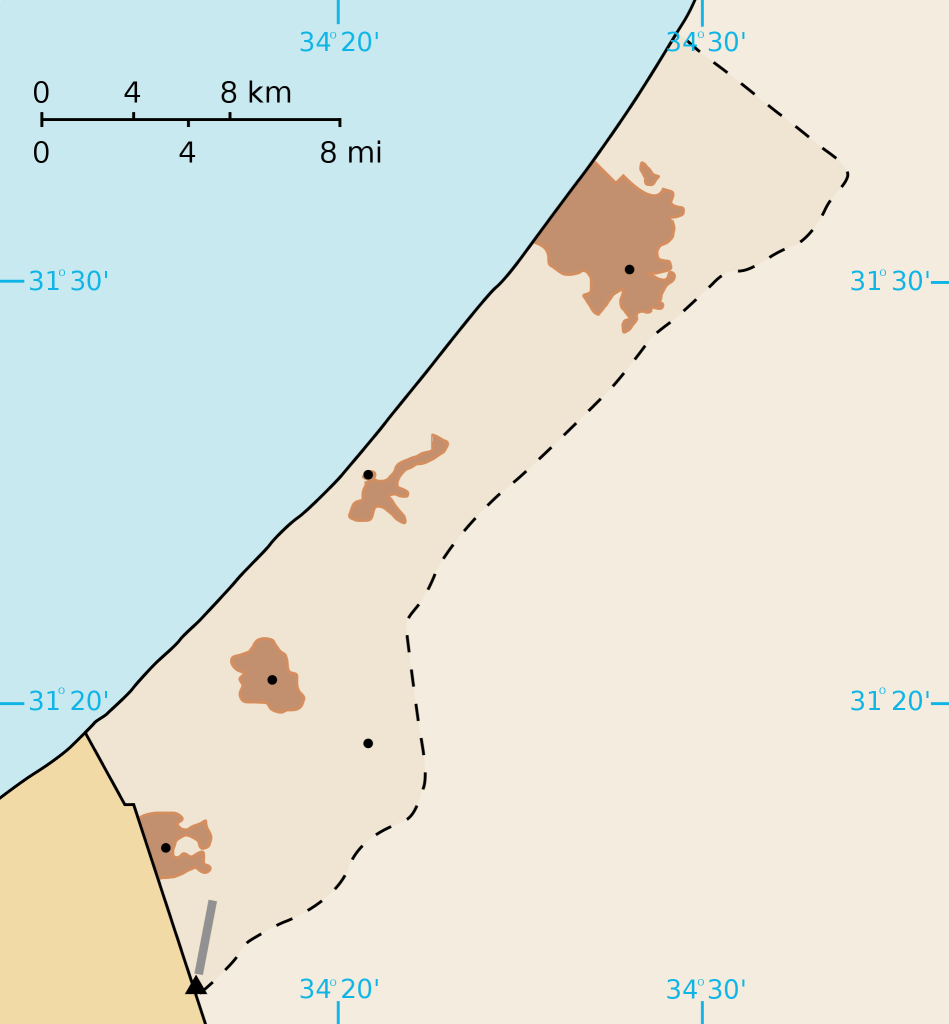
If we think about any sphere of living, from the frequent, daily access and ease most of us have to warming up food in a microwave to the very specific areas of study, work, and care that make up our human lives, all things — all spheres of life — are impacted and disrupted right now in Gaza.
I work in epilepsy care, so I find myself wondering, how are people with epilepsy coping without medications? How is stress impacting their bodies? How is disrupted sleep causing seizures to be more frequent? Dr. Omar Danoun, a colleague and friend of mine, is originally from Palestine and is an epileptologist at Henry Ford Comprehensive Epilepsy Center in Detroit. He was recently featured on a podcast and addressed questions like these: Epilepsy Sparks Innovation: the Israel-Palestine Crisis.
And if we think of any sphere of life, from the most mundane to the most specific areas of study, work, and care we know… all are impacted.
How is this reality moving us to action, care, and advocacy? How might it?
I thought I’d share a recommendation today. Hannah Gadsby is someone I greatly admire and is my favorite comedian. A couple years ago, I got to see them live in Chicago for Something Special, the comedy show that is now streaming on Netflix. It has already won some awards.
Something Special is Hannah Gadsby’s “feel good show.” “After Nanette, I feel I owe you one,” Gadsby says.
Nanette is a masterpiece that moved me so deeply, I watched it twice in the same day. It’s a show that begins with comedy but then turns to become powerful piece about trauma.
This “feel good show” is the story about their engagement and marriage to Jenno — Jenney Shamash. Like always, Hannah Gadsby is a master storyteller who can use a variety of twists and bends to circle back to previous material in unexpected ways. They do this here too; it ends with such a delightful surprise.
A language warning is warranted if curse words aren’t your cuppa (Hannah Gadsby is an Aussie). But I recommend this, especially if you, too, want to feel good:


 Smuggling Grace