Why do we cry? And what is our relationship to crying?
It turns out that crying (at least, emotional crying) is a phenomenon that’s pretty unique to humans. If you’d like to learn more about that, I recommend listening to this episode of Vox’s Unexplainable podcast:
Put the Can in Cancel

One day this week, I woke up so sick. It took me by surprise, but I’m not entirely sure why it did. I had been going far too fast in a stretch of time that was also far too overscheduled. I hit a wall. My body quite literally found a way to make me stop.
So I did something I very rarely do. I canceled everything. And I mean everything. I canceled a long series of meetings for the rest of the week and my role in an Ash Wednesday Service. The last part made total sense because I wouldn’t want to get others sick, but usually, I would find ways to push through the virtual meetings. Not this time.
This is because I remembered something that a colleague of mine had posted recently on social media. Her message was,
We don’t need to be so central, because we are, actually, not truly pivotal to all things under way. We can do things collectively. We can slow things down. A variety of people can lead. It’s okay if the ground lies fallow for a while. It’s good to choose ease. It’s wise to trust and lean on others.
In my case, so many people picked up roles in those meetings and the service I was going to lead. And some of those meetings just didn’t need to happen.
I mention all of this, not because it’s some big, important story — it’s not; we all get sick, and we all need time — but if you need to slow down, for a similar reason or any reason at all, I want to play the same role my colleague did for me earlier in the week.
It’s okay to do so. In fact, it’s probably good to do so.
— Renee Roederer
Gushing for Gershwin
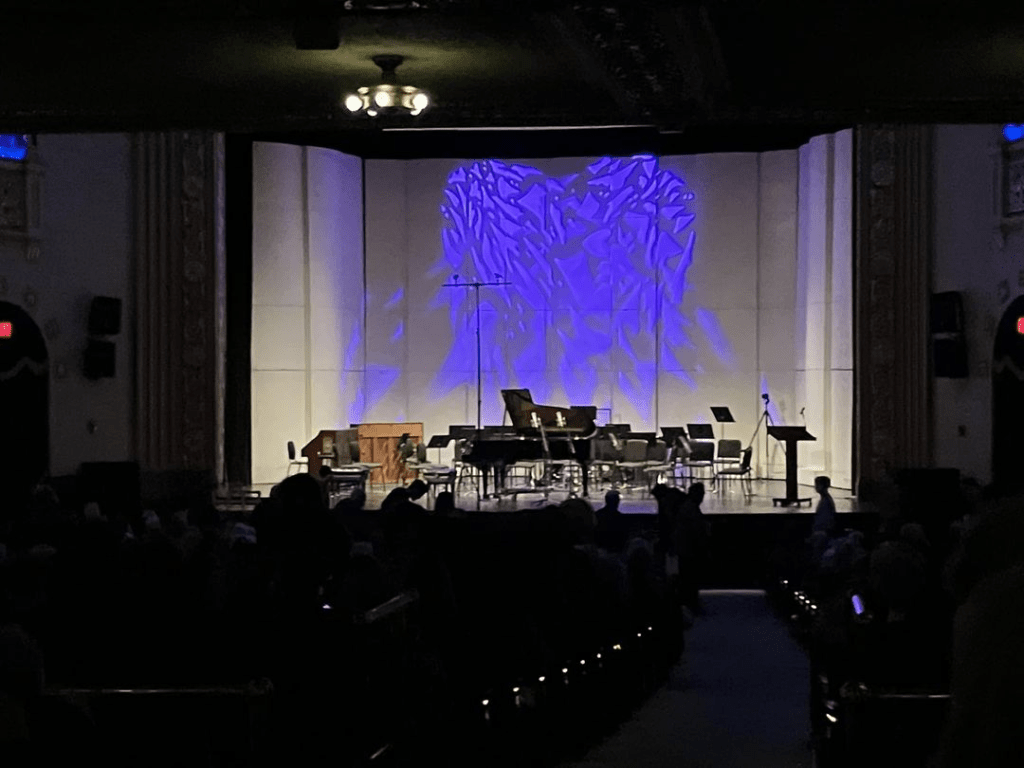
Last week, I had the privilege of attending a remarkable event—a free performance commemorating the centennial anniversary of George Gershwin’s masterpiece, “Rhapsody in Blue.” The prospect of watching this live was already exciting, but I also received a serendipitous story that I’d like to share today.
The evening’s pianist, Kevin Cole, grew up in Bay City, Michigan. And when he was 15 years old, he learned that one of the premier experts of George Gershwin’s music also was from Bay City, Michigan, though he was living now in New York City. So he found a Manhattan phone book — I can’t imagine how big that was — and looked up this man’s name. There were twenty people with that same name, so he took his finger and just randomly let it land one one of the names. He dialed the number and said,
“Hello, my name is Kevin Cole, I’m 15 years old, from Bay City, Michigan, and I just wanted to tell you that I love George Gershwin too.”
He had called the right person!
The fortuitous encounter led Kevin Cole to receive an invitation to visit this man at his home in Manhattan, and only a couple of days later, there he was on the doorstep. They spent time connecting, and then he asked young Kevin Cole, “Do you want to play for me?” He then played some Gershwin classics, and while telling us this story, he shared, “Then this man said the one sentence that changed my life: ‘Do you know that you play like George Gershwin?'”
The man then introduced him to recordings of George Gershwin playing his own music. Fast forward fifty years, Kevin Cole, now 65, has emerged as the person who is widely considered to be the preeminent interpreter of Gershwin’s repertoire.
“I’ve been looking forward to this day for a long time,” he shared, “And I’m quite emotional, so let’s hope this goes well. It’s not every day that you get to play your hero’s piano.”
The piano on the stage was George Gershwin’s 1934 piano.
And gush he did, infusing the auditorium with an incredible sound and energy I’ll think about any time I hear this piece of music. It was an honor to watch him play this piece of music expertly, but also have one of the most joyful encounters in his life with this music — on his own hero’s piano. I love watching people come alive, and this was no exception.
I’d love to share the performance:
You Know, That Time You Were Bit By an Orca and Billed Insurance

I was on the phone with someone earlier this week who told me a strange fact: There is an ICD-10 code (i.e. medical billing) for “Bitten By an Orca: Initial Encounter.” I love every detail about this, because first of all, who has had this experience, really? It’s also so ominous. This is only the initial encounter. It sounds like there are more encounters to come. Will you survive? Will you have to bill insurance again?
And this made me curious about other strange ICD-10 codes. Here are some:
V0101XA: Pedestrian on Roller-Skates Injured in Collision with Pedal Cycle in Nontraffic Accident, Initial Encounter
V9431XA: Injury to Rider of (Inflatable) Recreational Watercraft Being Pulled Behind Other Watercraft, Initial Encounter
V9733XA: Sucked into Jet Engine, Initial Encounter
X52XXXA: Prolonged Stay in Weightless Environment, Initial Encounter
You couldn’t make these up, and yet, someone did!
—Renee Roederer
Hospitalitea
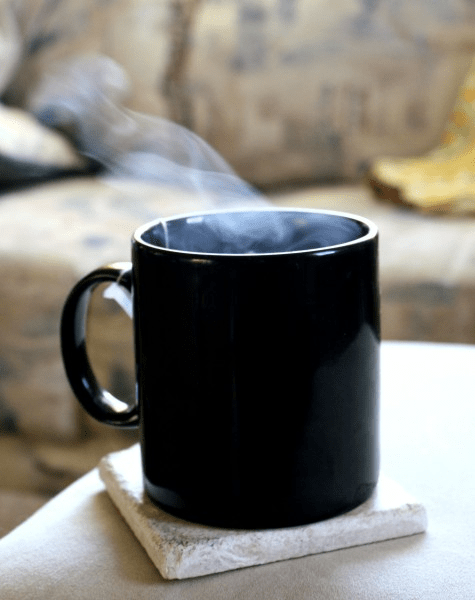
I appreciate a warm welcome — a feeling we all need to encounter from time to time. Last Sunday, I was leading a congregational service when one of the community’s leaders brought me a mug of tea. Earlier, she had mentioned that she would leave some water for me. “Or how about some tea?” she asked.
I had actually forgotten about it, but during the first hymn, here comes a nice, warm mug for me. I smiled big, and in addition to sipping it, I enjoyed holding a hot mug. When I then first addressed the congregation, I thanked them for inviting me and welcoming me, and I said, “And [Name] brought me tea! I don’t think anyone has ever given me tea during a service.”
After it was all over, people were lining up near a table to put refreshments on their plate. A person behind the table spotted me, and said, “Oh, for you, let me get some tea,” as in, instead of coffee. The honest truth is, I will almost always choose coffee over tea, but I could tell she wanted to get me what she thought I most loved, and when she handed it to me, she said, “Everyone always drinks coffee, but you and I are tea people.” She said it with pride.
Even though that may not have been totally true, I agreed, and was honored to receive more tea. Because it was so nice to be thought about, accommodated, and warmly welcomed. This is truly a feeling we need to encounter from time to time.
Mental Health Monday: Time Affluence
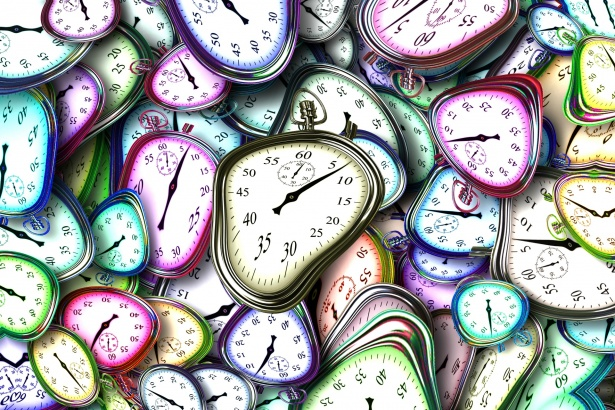
Time is a resource.
We may think of time as a resource that allows us to give our presence to others, ourselves, and a variety of experiences. This is true. We may also think of it as a space to fill up with work, chores, and projects. Have some spare time? Ah, this is an opportunity to “get things done!” Of course, it may be that very kind of opportunity; sometimes, that may be precisely what we need. Our mental health can be bolstered by a sense of mastery and clearing away what needs to be done.
But… if this is always how we’re using excess or bonus time, or if we have a reality or a perception that tells us we must fill this with work and to-do list tasks (internalized capitalism, anyone? Or… a post-traumatic flight response, anyone?) then we may grow a sense of exhaustion, frustration, and resentment. In reality or in perception, we are experiencing time famine. We don’t have enough free time.
The opposite concept is time affluence.
Sometimes, people find themselves chasing after financial wealth, and busyness can be a sign of that pursuit. At the same time, the very systems that allow people to rise to that kind of “top,” often create oppression for others. Time famine is present for those who are on a rat-race laden, climb of the ladder. Others have time famine because there is true financial poverty, and they must do an immense amount of work to pay the bills or simply survive.
Wherever we find ourselves between these poles, how do we create more time affluence for ourselves and others?
Our mental health plummets when we feel time famine, and it is greatly improved by time affluence. Psychologists are noting that some people are choosing to prioritize opportunities for more free time, rather than making more money; time is also a resource and a value. Of course, there is a great deal of privilege in having such a choice to make. Not everyone has that same set of choices. So again, if we have time affluence, or the ability to choose more of it, how can we advocate for others to have the same? And as a bigger question, how do we build communities and structure society so that there are more willful choices and opportunities to share resources — money, time, relationships, care, and more?
Here’s an article about time affluence:
Feeling Constantly Pressed for Time Is Robbing You of Happiness—But These ‘Time Affluence’ Strategies Can Help
—Renee Roederer
This Week in Nature
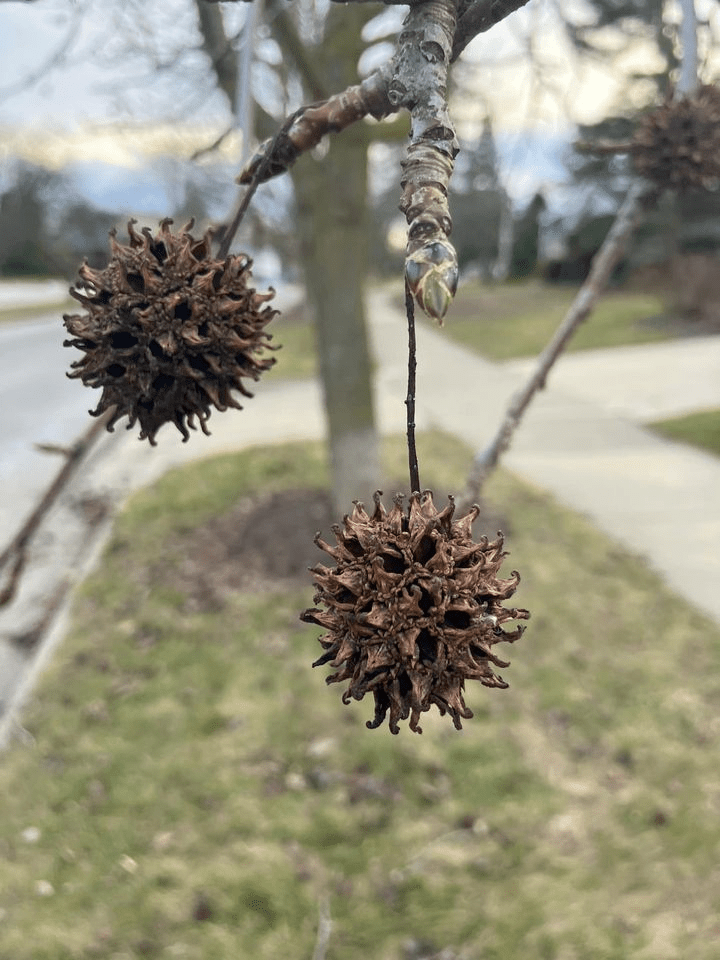

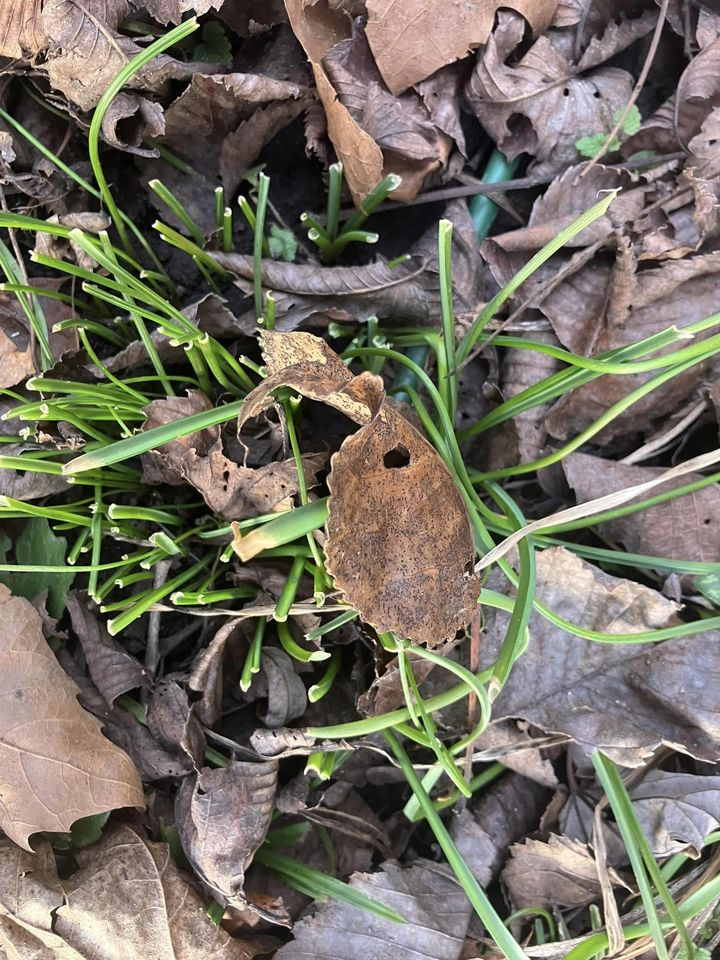

Neato Curiosities: Learn About Zoozve!
Would you like to learn about an astronomical body…
that is a non-moon but also not a not-moon?
that is in orbit with Venus and the sun at the same time? (And not just because Venus is orbiting the sun)
that is currently in consideration to be named Zoozve because an artist misread his own handwriting?
that is tied to the great, insatiable curiosity of Latif Nasser?
If so, you’ll love this episode of Radiolab:
My Name Is Going to Be in Movie Credits
Over the last year, I’ve had the pleasure of supporting and cheerleading a movie that is about to go into production. It’s called “Under the Lights.” It’s directed by Miles Levin and has a star- studded cast.
A couple of years ago, Miles Levin directed and released a 12 minute long, award-winning short film with the same name. Sam, a teenager with epilepsy, is desperate to be just like any other kid, and he decides to go to prom, knowing that the lights will likely make him have a seizure.
Director Miles Levin is also a person with epilepsy, and years after the creation of the short film, this full-feature movie is going in production, having secured a talented cast and raised a great deal of money to make it happen. Miles Levin, the Epilepsy Foundation, and many others in our larger community are thrilled to support a film that will build epilepsy awareness with empathy.
Oh, and per my title, my name really is going to be in the credits. And I’m going to get to go to the premiere. (I’m really excited about this!) I’m proud of Miles and our wider community.
I’d love to show you the 12 minute short film: Here’s Under the Lights! Stay tuned for a longer movie in theatres in 2025.
Throughline

When I was 7 years old, while my parents were at work, I spent each day of the summer with my Grandfather. And many days of that summer, he and I went to McDonald’s or Hardee’s so he could get coffee and I could get a kid’s meal. Inevitably, I would be excited, because what 7 year old doesn’t want a Happy Meal?
But once we were there, eventually things would take a turn for me. I would get so bored. After I ate that hamburger and fries, and probably got a toy, well beyond the time of excitement, my Papaw would still be drinking coffee. He was such a slow coffee drinker.
The cute thing about this — well, cute to me now, torturous when I was 7 — is that he was pretty playful about telling me he was “almost done.” That man was almost never almost done. I’d ask, “Can we go?” and he’d say, “I’m almost done. I have just a little bit more,” and the cup was 3/4 full.
If you’re a GenXer or Elder Millennial, you might remember that when we were little and at McDonald’s, you could turn in the seats and allllmost go a full circle. I’d turn that chair to the right 180 — snap — and turn that chair to the left 180 — snap — back and forth, making a toy of my seat, while this man sipped a cup of Joe, and a glacier may as well have moved outside. Of course, all these years later, I treasure the memory of my boring summer meals with Papaw.
One of my favorite aspects about my life is that I have a lot of families around the country that I like to visit. They each make up a big chosen family for me, and each of their houses feels like a home away from home.
A few years ago, one of the people said to me, “Don’t you drink like 5 cups of coffee a day?” I love the Keurig maker in their house and that glorious San Antonio brand of coffee they have. I realized this questioner was serious. “No, definitely no more than two,” I said.
Then it dawned on me that the confusion lies in how many times a day I warm up my coffee in the microwave. Oh my gosh, I am Papaw, I thought. I, too, drink it slowly. This person thought I was drinking forever, five cups a day. The glaciers are also moving through Texas.
Then last week, in a different location, I heard a little voice say, “Will you play with me?” and unthinkingly, I said, “Well, first, I want to finish my coffee. I’m almost done.” (Except I actually was almost done). And once more, I was Papaw’s double.
Life has an interesting way of making a throughline.
— Renee Roederer
 Smuggling Grace