




— Photos by Renee Roederer

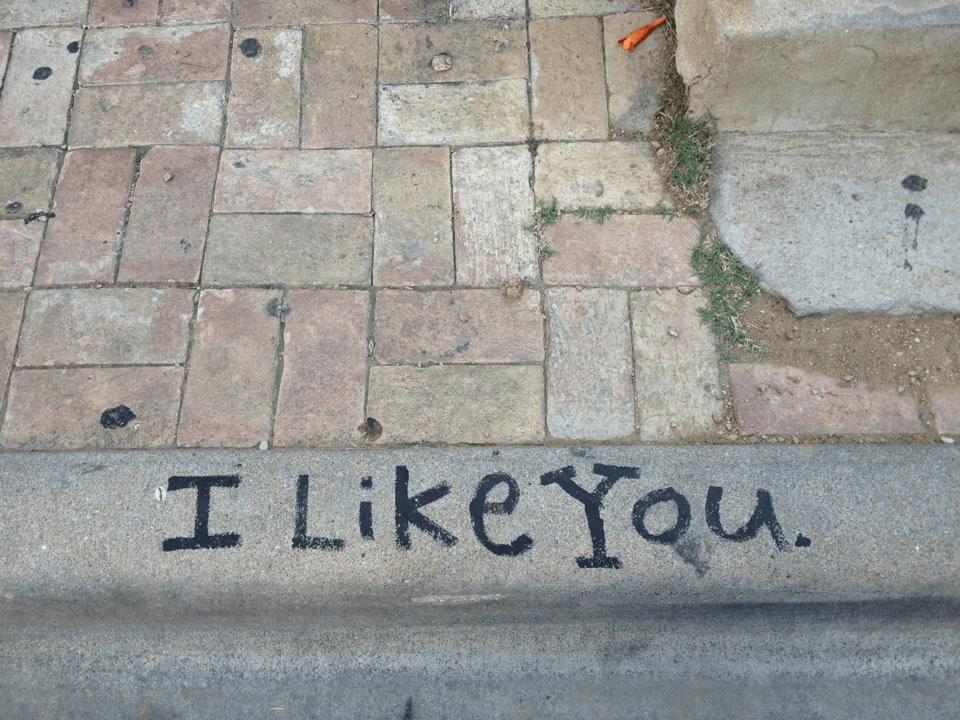
Both within my work, and beyond it, I spend a significant amount of time listening to people. It’s an honor and a privilege to hear how people are doing, sometimes in the deepest of places — what they need, how they feel, what they hope for, or if they’re struggling to hope, what they dream about, and what they’re committed to acting upon. I feel gratitude for this daily.
Also within my work, I spend a significant amount of time planning and implementing programs. In a season of a new year, this involves detailed work to get programs started and opportunities for grant writing.
If I may be honest with you, I completely overextended myself this week, and I truly did it to myself. I packed my schedule, and I moved back and forth between care needs and program planning needs without practicing ample self-care, something I’m typically very good at doing. I didn’t eat as well, sleep as well, or create enough space for down time. I paid for this physically and am now taking some time to change that.
But there was a moment that really stood out to me this week. In the midst of this, when talking with someone, I asked, “How can I, and how can we support you?”
This person answered, “Just be you.”
In all of the back and forth, in all of the gear shifting, and in all of the thinking about tasks and getting them ready, there was that reminder,
“Just be you.”
That’s important. Isn’t that what we’re all looking for, in times of stress and in times of joy, alike? Presence with people we love? Care from people who are uniquely themselves? Mirroring from people who can remind us that we are uniquely ourselves?
Being ourselves among people who are being themselves… and intentionally honoring both. . . With depth and simplicity, this is what much of the work is about, and this is what much of what the work is for.

Each time there is a new moon, marking a new month of the Jewish calendar, my dear friend Lucinda Kurtz writes a poetic prayer which is a call to reflection and action. I would like to share her words about the month of Shevat.
Just when despair
almost overtakes us,
when bullets and bombs
bind our muscles
constrict our bodies and bones,
The new moon of Shevat appears
inviting us to dig deep inside
to find that nugget of faith
witness it sprouting
to reimagine the future.
In Shevat, we cross a threshold
into a mysterious realm
hidden within ourselves and
the deep interior of trees.
A stirring, even in frigid winter
Sap begins to rise
the new cycle begins.
On the full moon of Shevat,
we celebrate New Year of the Trees.
Renewal of life on fertile earth
awakens to divine flow of
vital energy from above
Streaming from the cosmic Tree of Life
down from roots in heaven
to re-create the fragrant, blooming world
minute by minute.
Can we return to the primal Garden
repair our transgression
find redemption
savor sacred fruit
nourishing and sweet?
In full view,
we bless the holy apple
to align ourselves
with the Source of all Blessings
to flourish and thrive.
Shevat is the month
to reconstellate ourselves,
Discover secrets
we never knew,
Delight
in honeyed tastes of
heavenly bliss,
where all people
are faces of the One.
— Lucinda Kurtz
Are there words, phrases, or images that resonate with you in a particular way?

The other day, I caught sight of a cardinal perched on a snowy tree limb outside my window. The vivid red color of the cardinal stood out in contrast to the white snow on the tree and on the ground. I found myself thinking about the common belief that when you have a cardinal sighting, you are experiencing a visit from a departed loved one.
Just for the record, to be clear, this is not something I believe literally. I don’t think Aunt Jane or Cousin Amos have taken up newfound, feathered existence as cardinals.
But symbols still have meaning. When I spotted this cardinal, I did feel a sense of connection. It invited me to reflect on people who have been important to me. I brought loved ones to to my mind and memory, and physically, I did feel a sense of love in that moment.
So the association was true, in a sense. The feeling of love and continued connection were definitely real, even if this is just a here-and-now, beautiful, but-not-mystical bird. We make meaning in these ways. We do this all the time.
I’m glad we do.
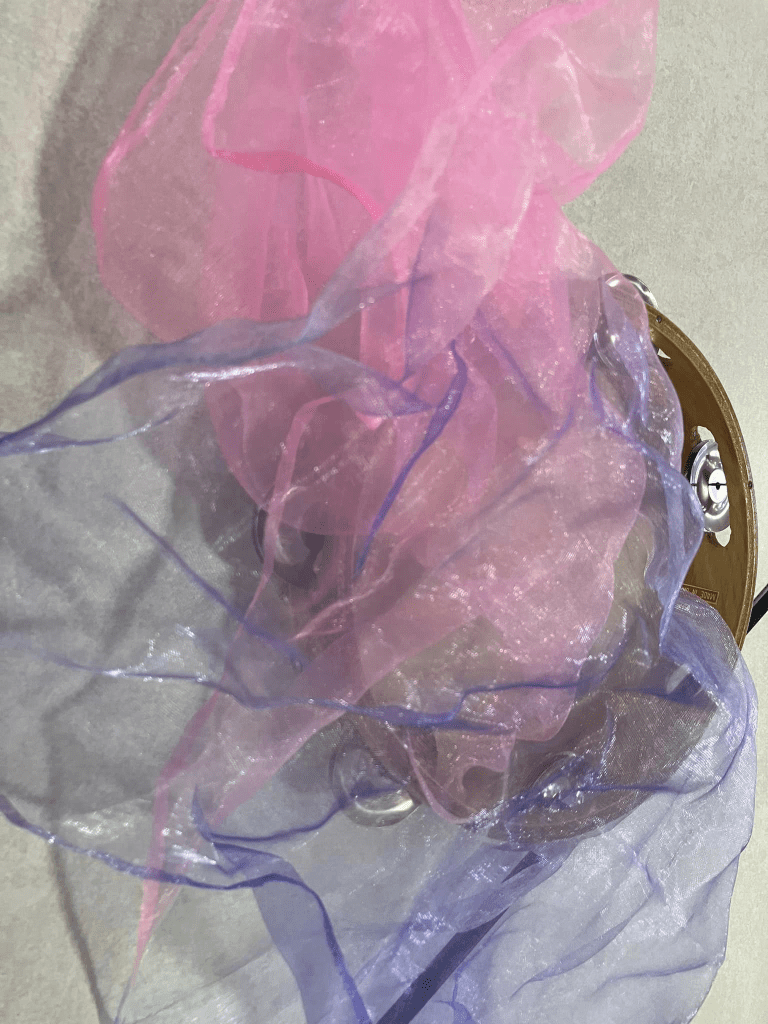
In the Parables Community, we call these “spirit scarves.”
Once a month, I have the privilege of leading a spiritual reflection service with a community called Parables. This service is planned with, for, and by disabled and neurodivergent community members.
Have you ever been in a setting where people “Pass the Peace?”
We use these scarves to do the same. We exchange them with one another and invite that act to convey a deep sense of welcome and care. And this is a way to practice accessibility too. People can stay right where they are to exchange the scarves, or they can move around the space. People can hold onto their scarves, or they can exchange them many times with a lot of people. People can say words — “Hello,” “I’m [Name],” “How are you?” or “Peace be with you” — or people can be silent. People can exchange without eye contact, or people can exchange with eye contact.
It’s all welcome. It’s all exchange. It’s all peace. It’s all care.
Over the next few Mondays, I plan to share some resources that will allow us to learn about attachment styles. There are many wonderful YouTube channels, books, blogs, and podcasts on this topic, and I find them to be helpful as we consider how our relationships function, and how they, and we, can grow.
John Bowlby, a British psychologist and psychiatrist, is the pioneer on this research. He discovered that in early life, young human beings develop ways of attaching and detaching to caregivers in infancy and in toddlerhood, and these attachment styles continue to shape their relationships in the future. These patterns show up in all kinds of relationships, but especially in romantic partnerships and family connections, where attachment needs run the deepest and evoke both present emotional needs and past fears (often, unconscious).
There are four primary attachment styles. There is the secure attachment style, and three insecure attachment styles — 1) anxious preoccupied, 2) fearful avoidant (also sometimes called disorganized or anxious-avoidant), and 3) dismissive avoidant.
— People who are anxious preoccupied value closeness and tend to fear abandonment.
— People who are dismissive avoidant value their space and independence and tend to fear engulfment in other people’s needs.
— People who are fearful avoidant have a mix of both anxious and avoidant tendencies, and they move back and forth between these needs and fears. For this reason, in relationships, they can move closer and farther away intermittently (literally and/or internally where there is a lot of back and forth second-guessing in relationships).
Two important things to remember:
— While we all have a primary attachment style, each of these styles can be a spectrum too. People can simply lean anxious preoccupied, with fears triggered in times of stress. Or people can be dismissive avoidant, impacted by certain fears but still connected to relationships that are meaningful to them, rather than being deeply detached all the time. Or people can be fearful avoidant, but more secure because they’ve become aware of their patterns and worked to meet their needs and heal core wounds.
— No matter what attachment style we developed in early life, we can all work toward healing these fears and patterns. We can work toward having a secure attachment style. Sometimes this is called earned-secure (healed and developed in adulthood).
My favorite YouTube channel on attachment styles is Thais Gibson’s The Personal Development School. It’s also one of my favorite YouTube channels overall. So many wonderful things to learn!
Here is her introductory video about the four major attachment styles:

Mysteries, Yes
By Mary Oliver
Truly, we live with mysteries too marvelous
to be understood.
How grass can be nourishing in the
mouths of the lambs.
How rivers and stones are forever
in allegiance with gravity
while we ourselves dream of rising.
How two hands touch and the bonds will
never be broken.
How people come, from delight or the
scars of damage,
to the comfort of a poem.
Let me keep my distance, always, from those
who think they have the answers.
Let me keep company always with those who say
“Look!” and laugh in astonishment,
and bow their heads.
Which phrase, line, or couplet speaks most to you?





 Smuggling Grace