“So it’s very important to be very aware that these reactions emanate from your body, and so the big challenge of treating trauma is, how do you help people to live in bodies that feel fundamentally safe?” — Bessel van der Kolk
In this video, Bessel van der Kolk discusses 1) Psychotherapy 2) EMDR (Eye Movement Desensitization and Reprocessing) 3) Yoga 4) Theatre & Movement 5) Neurofeedback 6) Psychedelics
“Part of what has kept me so busy all these years is, how can we find a treatment that allows the basic sense of defectiveness and self-loathing to be controlled, and now it looks like we have found something that has found a very substantial drop in PTSD… But what is important here is that one size doesn’t fit all. Different people need very different things. What worked for my last patient may very well not work for you. Everything is an experiment in life, and healing from trauma is an experiment.” — Bessel van der Kolk
Nicholas Phan sings “Comfort Ye” and “Every Valley” from Handel’s Messiah
In Handel’s Messiah, the tenor soloist sings,
The voice of Him That crieth in the wilderness: Prepare ye the way of the Lord, Make straight in the desert A highway for our God.
Every valley shall be exalted, And every mountain and hill be made low, The crooked straight, And the rough places plain.
These words are originally attributed to the prophet Isaiah, and are also spoken in the gospels by John the Baptist. This year, while singing in the chorus of Messiah, this text really grabbed me.
There are a variety of landscapes in our minds and hearts, carried both by us and by our world, where we long for the emergence of fairness, justice, and peace. Most often, we attribute the rapid changes of mountains, valleys, and roads to cataclysmic forms of destruction. It’s interesting to imagine these changes as forms of… cataclysmic rightness. All things suddenly shifting toward the ways they ought to be… the ways we long for them to be.
We carry landscapes of pain, loss, war, violence, and interpersonal conflicts. Are these ever made right…? It’s so easy to fold, or wilt, or stay cynical. So often, whether close to our own relationships, or on the world stage, we see forms of harm persist.
But then I also think of the Truth and Reconciliation Commission in South Africa. But then I also think of the falling of the Berlin Wall. But then I also think the 504 Sit-in of 1977 and the opportunities it opened. But then I also think the Civil Rights Movement and the changes it initiated.
And I also think of… a number of interpersonal reconciliations in my own life that are straight up miraculous and precious to me.
Maybe you have some too.
Wherever you are, and however you feel, I’m sure you long for cataclysmic rightness. I do too. An upturning toward what should be. Fairness, Justice, Peace. Purpose. Meaning. When we see it, we ought to shout it from the rooftops. When we can participate in making it so, we ought to lean our lives into it.
It’s a word from a chorus many know well, especially at this time of year. I’m grateful that I had the privilege to sing Hallelujah a multitude of times a few weeks ago. As I mentioned yesterday, I sing with a choir that has the longest annual tradition of singing Handel’s Messiah in the entire world. We’ve done this every year consistently since 1879.
While I haven’t sung this 144 times in a row, I’ve sung the Hallelujah Chorus innumerable times. Yet I’ve learned something new in the opportunity to sing The Messiah in its entirety. Based on where it’s placed in the greater work, the Hallelujah Chorus isn’t a chorus joy-filled triumphalism. It’s about liberation.
It’s about human liberation from oppression — deliverance from oppression caused by other humans. This becomes clear when we hear what precedes the famous chorus:
The bass soloist sings,
Why do the nation so furiously rage together? And why do the people imagine a vainthing?
Then the chorus sings,
Let us break their bonds asunder, and cast away their yokes from us.
Then the tenor soloist sings,
He that dwelleth in heaven shall laugh them to scorn, The Lord shall have them in derision. Thou shalt break them with a rod of iron, Thou shalt dash them like a potter’s vessel.
That’s when the chorus responds with “Hallelujah!”
It might seem like an odd time to jump in and rejoice. But if we view this less as the powerful (including God) doing destruction for the sake of destruction, and instead, view this as liberation for the oppressed (God standing with them in power) the Hallelujah Chorus has a completely different purpose and tone.
Hallelujah!
For the Lord God omnipotent reigneth. . .
Not standing above and dominating as an oppressor, but standing among the people as a powerful Liberator — a Liberator who invites the participation of the people in their own liberation. (“Let us break their bonds asunder”)
King of Kings and Lord of Lords. . .
Not a tyrant kind of King or Lord, but King and Lord that is revealed as fully human — a vulnerable child, a poor carpenter, a revolutionary, a healer.
Throughout our performances, I invite myself to think about these things when I sing that Hallelujah. And I think about liberation in our world and desire that certain bonds will be broken.
The audience stands and adds their voices, too. Resurrection, Liberation.
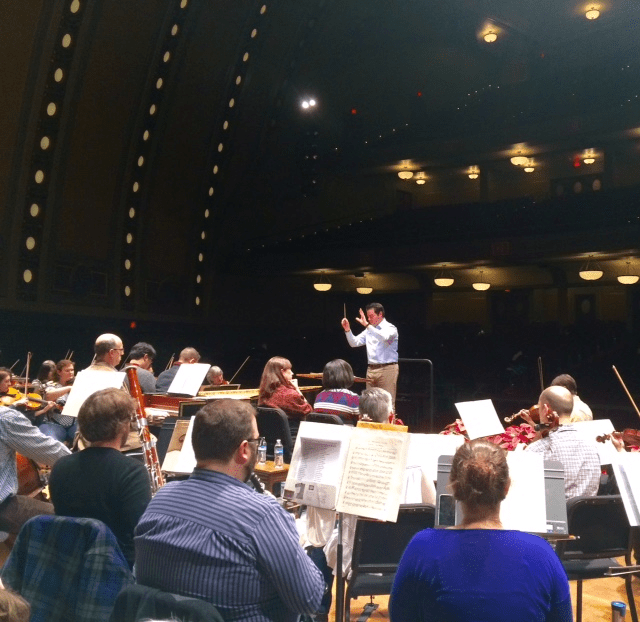
Earlier this month, I had the pleasure of singing Handel’s Messiah with approximately 120 choristers, an orchestra, and four incredible professionals who served as our soloists. I’ve done this every year since 2015, although this choir has a much longer stretch. In fact, we have the longest stretch in the whole world; our choir has sung Handel’s Messiah annually since 1879. We hold the record.
Over the next three days, I’m going to share some posts in reflection from this piece and from this experience. I want to begin here: On the evening of our first rehearsal, the choir was gathered in a room together, where we warm up and line up to walk on stage. In a few minutes, we would stand in front of 2,500 people to share these texts and deliver this story in song.
Our conductor said that earlier this year, he heard another conductor share a statement that he tells his choruses before performances. It touched him so much that he thinks of it each time too.
“You never know when you’re going to change a life. You never know when you’re going to save a life.”
And so I offer that to you today as well. In all our collective acting and living — not only in our performing, but also in our learning, loving, sharing, advocating, and simply being ourselves with one another —
“You never know when you’re going to change a life. You never know when you’re going to save a life.”
This brings a sense of awe. I also hope it brings a sense of empowerment.
On a daily basis, these people fill my heart. I feel a great deal of gratitude. And I’d love for people to learn about our mission: www.epilepsymichigan.org
Where are you finding gratitude these days? With whom? With what? Feel free to let us know in the comments. — Renee
Three boards create a boardwalk in an open field. Public domain image.
When we were closing up a Zoom, a wise, sage elder who I love and respect said,
“Can I say something as we finish?”
She then quoted Belva Davis, the first Black woman to become a news anchor on the West Coast.
“Don’t be afraid of the distance between your dreams and reality.”
I sat with that quote, and I knew that multiple people on the screen were applying her words to situations in their lives. So today, I want to pass those words onto you if they resonate with anything in particular:
“Don’t be afraid of the distance between your dreams and reality.”





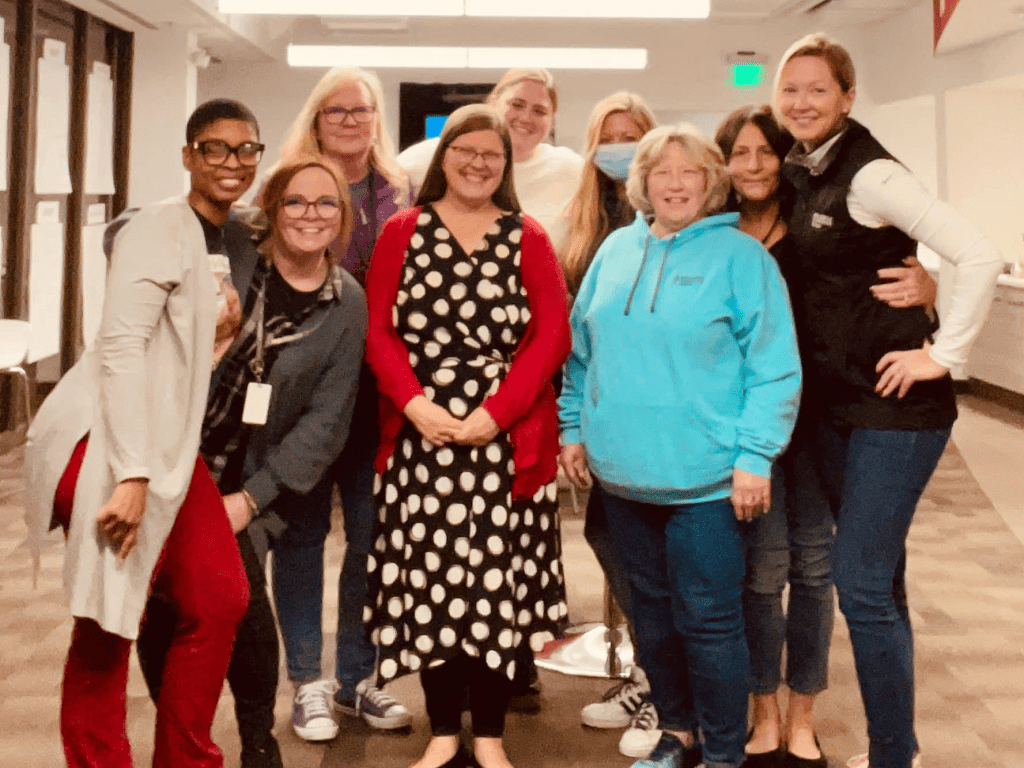
 I feel a great deal of gratitude.
 Smuggling Grace