I probably don’t tell have to tell you that the body has a stress response. (I mean, just look at the last few years we’ve lived…) Stress causes adrenaline and cortisol, the tightening of muscles, and at times, the initiation of fight, flight, freeze, or fawn responses.
But we can also have a relaxation response. In the relaxation response, our activated sympathetic nervous system is calmed by the parasympathetic nervous system. What helps this? Intentional, deep breathing, stretching, meditation, mindfulness, touch, bilateral movement (walking is one), somatic processes like the body scan, cuddling, and generally slowing down — again — intentional, deep breathing (after all, this helps us slow down).
But here’s the thing:
The stress response is innate and automatic, and the relaxation response has to be learned. The body needs practice in order for this to happen naturally on its own.
All of these are worthy practice. Very worth our time.
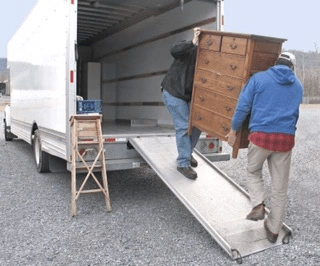
Image Description: Two people carrying a chest of drawers into a moving truck.
Over these last few years, have you had moments of becoming overwhelmed by the news cycle?
Yes, me too. Of course. Who hasn’t?
Behind the news cycle, there are real, raw, human stories of suffering. And so often, we feel helpless to prevent that suffering and powerless to change it.
It’s incredibly understandable to fall into those feelings. In such times, we need the solidarity of one another – that is,
. . . the sense that we are in each other’s view, that we encounter each other’s pain with empathy,
. . . the sense that we have each other’s commitment, that we are in each other’s corner for the long haul,
. . . the sense that we have each other’s action, that we covenant to act on behalf of one another, especially and most readily for those who are made vulnerable by barriers.
In some spiritual traditions, we hear language of bearing each other’s burdens. Lately, within that vision, I find myself encouraging people to shift each other’s burdens.
We can easily become incapacitated once we realize we cannot instantly fix the systems that are causing burdens. But our empathy, and most importantly, our committed action can change these systems and these burdens. Do not underestimate what these can do.
When we see pain for what it is, we add our validation, and it shifts burdens.
When we add our resources of money, time, or skills, it shifts burdens.
When we use our voices to name wrongs for what they are, it shifts burdens.
When we use our minds to create solutions, it shifts burdens.
When we honor the humanity of people who are being dehumanized, it shifts burdens.
When we take direct action and demand justice for the oppressed and vulnerable, it shifts burdens.
If we want to change the large-scale systems that cause harm, we have to disrupt and dismantle them. But alongside that commitment, we have to live and model our lives with a different rhythm – with different commitments and ways of relating to one another.
We practice solidarity.
And within that way of living, we share and lighten the loads that people are carrying. We assign energy and responsibility to where they really belong.
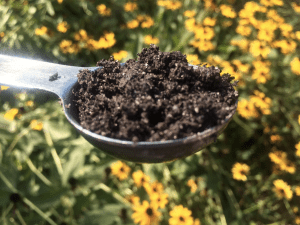
Image Description: A person is holding seeds in their hand and planting them in a row in the soil. Public domain image.
All of the things that sustain us and help us feel purposeful start initially as small actions,
— go to an event, only to meet someone who will become a life long friend, — introduce two people, only for them to initiate a major project together later, — have a conversation, only for it to shift the direction of your work, — step into that identity/role a little more, only to discover there’s a whole community waiting for you.
And so much more.
And if so much of this can happen unintentionally, what could be possible if we act on these kinds of things intentionally?
We can plant seeds today and in the near future that will surprise us with comfort, possibility, and purpose months and years down the line.
“But you know what people are asking? Am I alive? Beyond the striving, the earning, the hammering away… In the midst of a life that feels rushed, disconnected, overscheduled… am I – are we – really alive? I believe people are asking those questions, maybe now more than ever.”
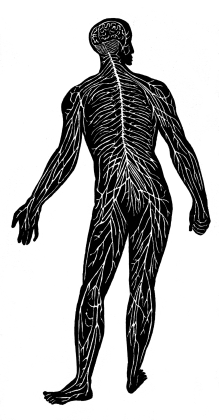
Image Description: A human body with the brain and nerves visible. Public Domain.
A Hug? A Nap? A Walk? A Run? A Dance Session? Shaking Things Off For a Moment? (Literally) Hearing the Voice of Someone You Love? Noticing Beauty in Nature? A Comforting Meal? Settling Into a Good Memory? Anticipating a Fun Trip You’ve Planned? Shutting Off The News? Playing a Game with Children? Knowing You’re Enough and Worth it?
I will not die an unlived life I will not live in fear of falling or catching fire. I choose to inhabit my days, to allow my living to open me, to make me less afraid, more accessible, to loosen my heart until it becomes a wing, a torch, a promise. I choose to risk my significance; to live so that which came to me as seed goes to the next as blossom and that which came to me as blossom, goes on as fruit.
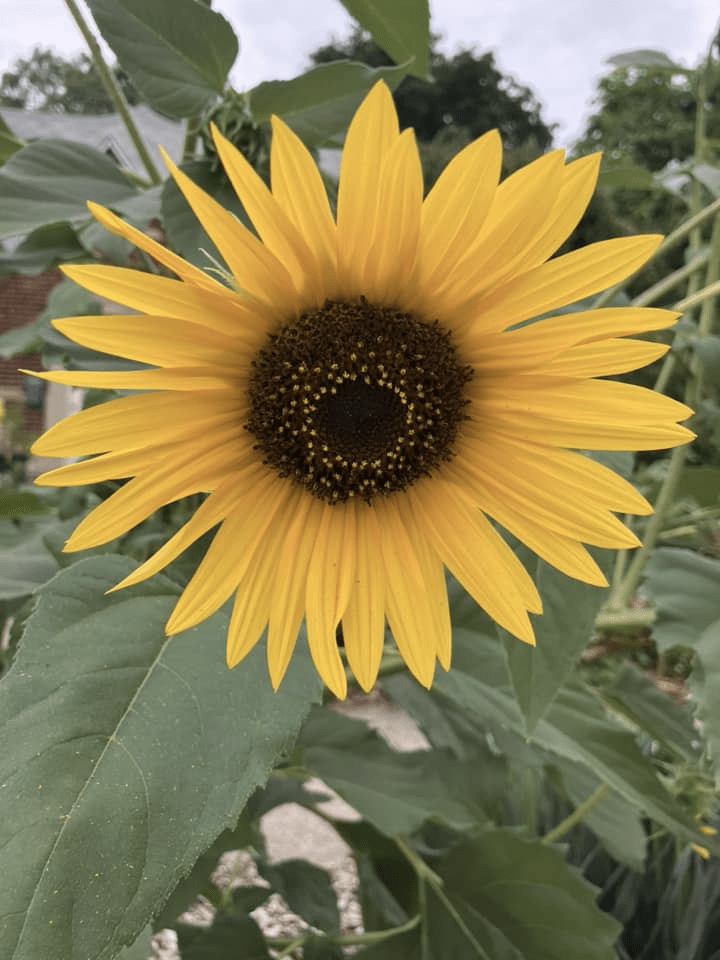
Image Description: Green leaves. Three, however, have turned red — a reminder that Fall will come relatively soon.
It is good to find things to savor.
But the truth is, we probably don’t need to find them. We likely already know the simple joys that are worthy of our attention and gratitude. We just need to be mindful of them.
Many things are worth savoring because they aren’t around consistently. One of mine — in fact, what initiated this post — is starting my morning with the windows open. I love this… It won’t be around forever. It’s cyclical.
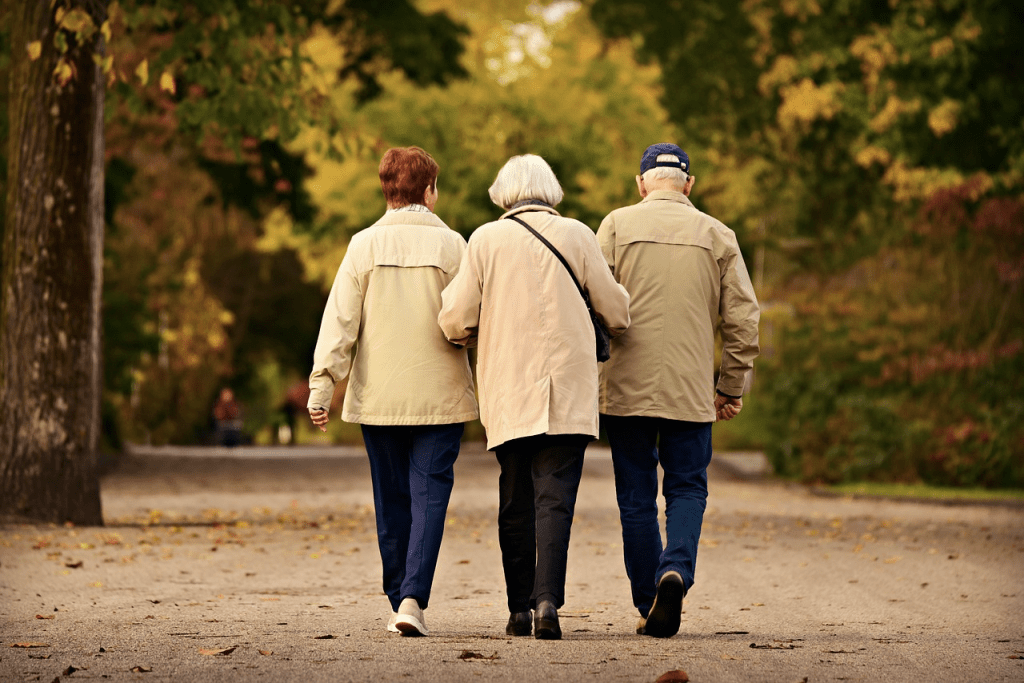
Image Description: Three people walking down a pathway together. Public domain image.
Sometimes, people name difficulties that you desperately wish you could take away, but you don’t know how. You listen, and then they say how much that means. Presence is enough.
Sometimes, people are grieving, and they are exhausted by all the cliches they’ve needed to dodge. You take a walk together or just sit in silence. Presence is enough.
Sometimes, a young person is lonely and feeling overwhelmed. You watch a tv show together or text back and forth. Presence is enough.
Sometimes, people bring a difficult, personal challenge to a Zoom screen among others who care. They discover they’re not alone — in that problem, and in being loved as they are. Presence is enough.
Sometimes, people are feeling isolated and disconnected. Their friends give them an old fashioned phone call. Presence is enough.
Sometimes, you’re feeling sad, anxious, or weighed down, and you tell trusted people what you need. Presence is enough.






 Smuggling Grace