
What Does Depth Require of Us?

Dandelion seeds blowing in the wind. Public domain photo.

“What does depth require from us, from me?” Sitting with this question and quote today from adrienne maree brown in Emergent Strategy: Shaping Change, Changing Worlds.

“If love were the central practice of a new generation of organizers and spiritual leaders, it would have a massive impact on what was considered organizing. If the goal was the increase the love, rather than winning or dominating a constant opponent, I think we could actually imagine liberation from constant oppression. We would suddenly be seeing everything we do, everyone we meet, not through the tactical eyes of war, but through the eyes of love. We would see that there’s no such thing as a blank canvas, an empty land or a new idea — but everywhere there is complex, ancient, fertile ground of potential.

“We would organize with the perspective that there is wisdom and experience and amazing story in the communities we love, and instead of starting up new ideas/organizations all the time, we would want to listen, support, collaborate, merge, and grow through fusion, not competition.

“We would understand that the strength of our movement is in the strength of our relationships, which could only be measured by our depth. Scaling up would mean going deeper, being more vulnerable and more empathetic.”

“What does depth require from us, from me?”
-adrienne maree brown, Emergent Strategy, page 10

Everything Catalyzes Everything

Image Description: A series of black dominos with quite dots; the ones in the back have fallen, and the ones in the front are about to fall. Public domain image.

Everything catalyzes everything.

Everything affects everything.

This, of course, is so obvious that it’s hardly worth being the topic of a blog post. But perhaps it’s obvious to the point that we could think about it more often. Maybe with some intention, we might feel greater hope too. Because….

What we do matters.

Now surely, some actions have bigger impacts than others. And when we move in directions we’d like to change, we can always shift course. After all, everything catalyzes everything, and our course correction shifts the whole. Even the recognition that we need a course correction had a catalyst. Something woke us up to that. And now the shift will have impacts too, creating space for new possibilities.

So back to this:

What we do matters.

What we do – how we spend our time, how we speak, how we relate, how we create, how we care – it all matters.

Because it always initiates a sequence of effects, often well beyond what we might have imagined. It’s not all centered upon us. But our actions matter. We impact things, just as they impact us.

Renee Roederer

The Universe Trying to Understand Itself

The Carina Nebula. Credits: NASA, ESA, CSA, and STScI

After receiving the first images from the James Webb Space Telescope, Vox’s Unexplainable re-aired their podcast episode, What’s the James Webb telescope searching for?.

I’d like to share that link today.

It is pretty incredible to imagine that we could answer brand new questions with this telescope in our lifetime, and we can craft questions we didn’t even know to ask. I love what astronomer Caitlin Casey says in this episode:

“If you look back to the Big Bang, the dark ages, the cosmic dawn, the creation of stars, galaxies, planets – we are a consequence of this. We can’t see ourselves as being apart from this. We are of this. Humans, trying to understand the universe, is really the universe trying to understand itself.”

Renee Roederer

Midwestern Tradition

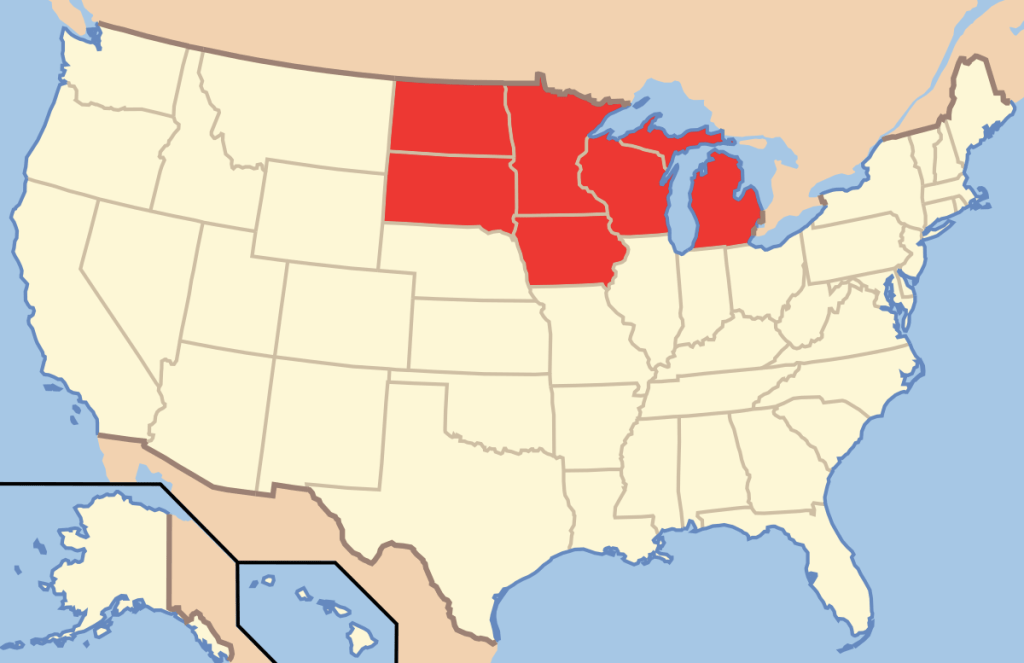
A map of the Midwest. Though I’d include a few more states. Public domain.

I walk outside a lot in the summer.Three times I’ve worn a particular dress, and every single time I’ve worn it, this has happened:

As I pass by, someone says,

“I really like your dress!”

And I reply,

“Thanks! And I got it for $17!”

Then they reply with, “Well done!” “That’s awesome!” or “Oh my gosh, love that!” One person even raised the roof.

Why do Midwesterners like to celebrate bargains they got on clothes? Why is this a thing? Why do I always say this? Am I deflecting a compliment? Do I know that they will celebrate this? Clearly, I do know it because I expect this every time.

Why is this a thing?

What a silly thing!

Oh, and it’s a super cute dress. 17 DOLLARS!

Renee Roederer

For the Mems

Last month, I had some out of town guests, and we had brunch together. At the end of the meal, we asked the server if she would take our photo. She held up my phone to do that and then said, “Oh, it’s pretty backlit.”

“That’s okay,” we said, “It doesn’t have to be Insta good.” (That is, shareable on Instagram)

“Oh, this one’s for the mems!” she answered. We smiled at that phrase, and I’ve been using it ever since. Yes, this one’s for the mems — we’re capturing a snapshot of the memories we’re making right now, and with gratitude.

Lately, I’ve been wondering, “Am I sharing an obnoxious amount of happy photos on social media?”

You know what I mean, right?

Social media gives off a certain air that every single thing is rosy and literally picture-perfect. Most people share the best moments of their lives — not the explosion of frustration upon spilling coffee on new shirts, not the moments of running late, not the frenetic work schedule, not the moments of yelling at our kids and regretting it, not the moments of loneliness or existential fear.

We don’t always share those. But we know those moments are there behind the scenes, right?

They are.

But my goodness, pre-vaccination lockdown was so extremely isolating for such an expansive amount of time. All I want to do is see loved ones, and be outside, and make memories.I long for that. And some part of me needs to capture those moments, you know?

For the mems.

Renee Roederer

The Band of Our Dreams

A rock concert. Public domain image.

I was once in a band where no one played any instruments.

And I find this to be equal parts hilarious, precious, and ridiculous. Above all, I find this to be so middle school.

Well, to be exact, so junior high.

I didn’t go to a middle school. In my home town, our elementary schools went through 6th grade. This placed 7th and 8th graders together in the junior high, which was located in the same building as the high school, but separated enough so that we youngins wouldn’t be too bullied, intimidated, or enamored by our older counterparts.

We lived there in limbo between younger childhood and older adolescence. Just dorky and free. Just awkward and full of ridiculous dreams. Like starting a band when no one played any instruments.

We did this in all seriousness by the way. That’s what makes it equal parts hilarious, precious, and ridiculous. D and H, two of my closest friends, and I joined together in the hopes of starting a band, writing our own music, and really becoming great.

Are you ready for our band name?

Because it’s also pretty ridiculous.

Our band’s name was just one, single word….

Wretch.

Yes. We were Wretch — not a cover band, mind you, but a band that wrote its own stuff. And true, none of us knew how to play any instruments… But we would! We would learn! In fact, we even chose assignments. D would play drums, H would play rhythm guitar, and I would play the bass. H and I would split the vocals.

We were so earnest about this.

Oh, also, none of us had money to buy these instruments… But we would! We would find a way!

Instead, for six months to a year — I don’t remember the timing, exactly — Wretch wrote song lyrics. That is something we actually did do. In the evenings, the three of us would write them individually in our own respective houses, then hand them to each other in class or while passing each other in the hallways.

And none of these songs had actual melodies. We would wait to write those when we could play the instruments. I mean, first things first, right?

But why not go ahead and write down lyrical masterpieces? Why not pen a prolific number of songs as potent and powerful as Renee’s own creations, such as the goofy, nonsense song entitled, “Cumulus Cloud” or the remarkably emo classic entitled, “Freak”? (I still have these along with many others. They’re in a folder in storage. I’m not telling you where.)

I suppose at some point, this absurd dream of ours just faded. Only a mere couple of years later, we could laugh hard about our go-nowhere, no-music, barely-teenage, only-song-lyrics band.

But for a while, that dream was alive.

And forever and always, that dream will whisper our name.

Wretch.

Renee Roederer

Mastery and Play

Last night, I saw Jacob Collier live in Pittsburgh, and the experience was magical and uplifting. I’m going to be reflecting on it for a long while.

Jacob Collier is a musical phenom who was discovered at age 17 after creating several arrangements of songs on YouTube, using his voice to do all the harmonies. He’s also a multi-instrumentalist, totally skilled in every direction, it seems. Piano, guitar, percussion, bass guitar, mandolin, voice, and more. With another person, he also invented this vocal harmonizer that allows him to play keys and harmonize with his voice as he sings. On top of that, he’s a multi-genre composer and arranger. About a decade later, at age 28, he’s in the midst of creating a four part album series called Djesse. Those albums include jazz, pop, rock, choral music, electronic music, orchestral arrangements — and you name it.

Jacob Collier is on the shortest list of most talented people I’ve ever encountered personally. And it was a joy to see him live, totally in his element, along with the tremendous band he’s assembled.

I’ve seen him in concert twice, and I find myself thinking of this: There are times in our life when we have developed so much mastery in an area, that it really becomes play. And it’s such a gift to invite people into those forms of mastery-play found in ourselves. Jacob Collier has so much musical mastery that it is exactly that — play. I went to a concert, and I watched someone play creatively for two hours and in a way that invited our own play too. One of the things he’s known for in his live concerts is getting the audience singing and creating with him in the moment. We did a lot of that last night, and I can’t wait for the videos of this particularly performance in Pittsburgh to start popping up on YouTube.

In the meantime, here’s one of my favorite videos of Jacob Collier in performance:

Renee Roederer

“The Body Keeps the Score” — Connecting in Community

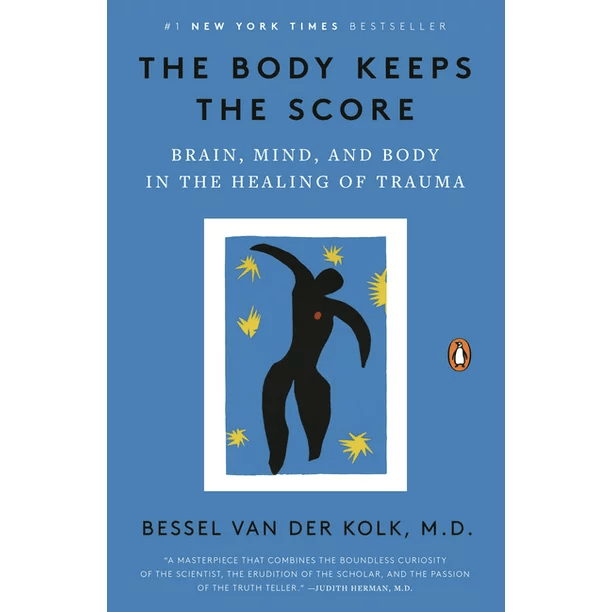
A copy of The Body Keeps the Score: Brain, Mind, and Body in the Healing of Trauma by Bessel Van Der Kolk, M.D.

Over the course of several months during the most acute period of the pandemic, I listened to Bessel Van Der Kolk’s pivotal work, The Body Keeps the Score: Brain, Mind, and Body in the Healing of Trauma on audiobook. This Fall at the Epilepsy Foundation of Michigan, I’ll be leading a book discussion on it. Truly, I’d place this one in the top five books I’ve ever read.

The Body Keeps the Score is remarkably insightful and impactful in addressing how traumatic experiences are carried in the body. In addition to explaining the physiology of post-traumatic symptoms in detail, he uplifts a number of somatic approaches to healing trauma in our bodies and relationships.

Today, I’d like to uplift a quote that really spoke to me. Bessel Van Der Kolk says,

“Study after study shows that having a good support network constitutes the single most powerful protection against becoming traumatized. Safety and terror are incompatible. When we are terrified, nothing calms us down like a reassuring voice or the firm embrace of someone we trust.”

After hearing him talk about so many other protective factors, studies, and forms of therapy, I thought it was really significant for him to say that support networks and forms of community are the single most powerful protection against becoming traumatized. 

When we reach out to someone…
When we share how we’re really doing…
When we introduce people to each other…
When we learn about community organizations…
When we suggest community resources…

We are participating in the protection of the body, mind, and spirit. We are building networks that protect ourselves and our neighbors from becoming traumatized, not only in the present, but also, possibly down the line in ways we can’t anticipate.

Renee Roederer