
Facing One Another

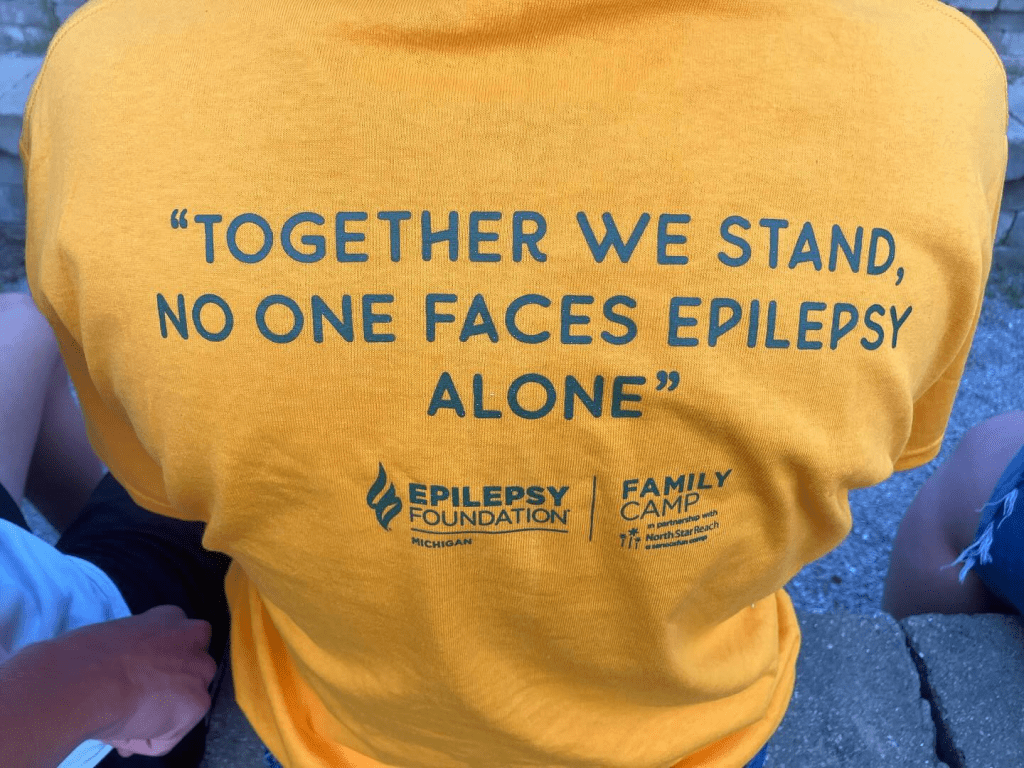
A golden, yellow T-shirt reads, “Together, we stand, no one faces epilepsy alone.”

There is no doubt that without community connections, an epilepsy diagnosis can feel remarkably isolating and lonely. At the Epilepsy Foundation of Michigan, we are always seeking opportunities to forge kinship through connection, joining our entire network in the commitment to ensure that “no one faces epilepsy alone.”

At Family Camp this weekend at North Star Reach, children and families were able to face one another with joy-filled introductions, knowing that they were in the presence of people who understand the epilepsy journey — each story unique, each relationship supported with care.

On Friday, I got to attend the opening gathering when children and families introduced themselves to one another and shared their excitement for camp and all its activities. Each family unfurled an introductory banner that they had created.

Together, we move away from isolation toward relationships of celebration and care. It’s a precious privilege to witness the transformation.
Renee Roederer

The Longest Hug

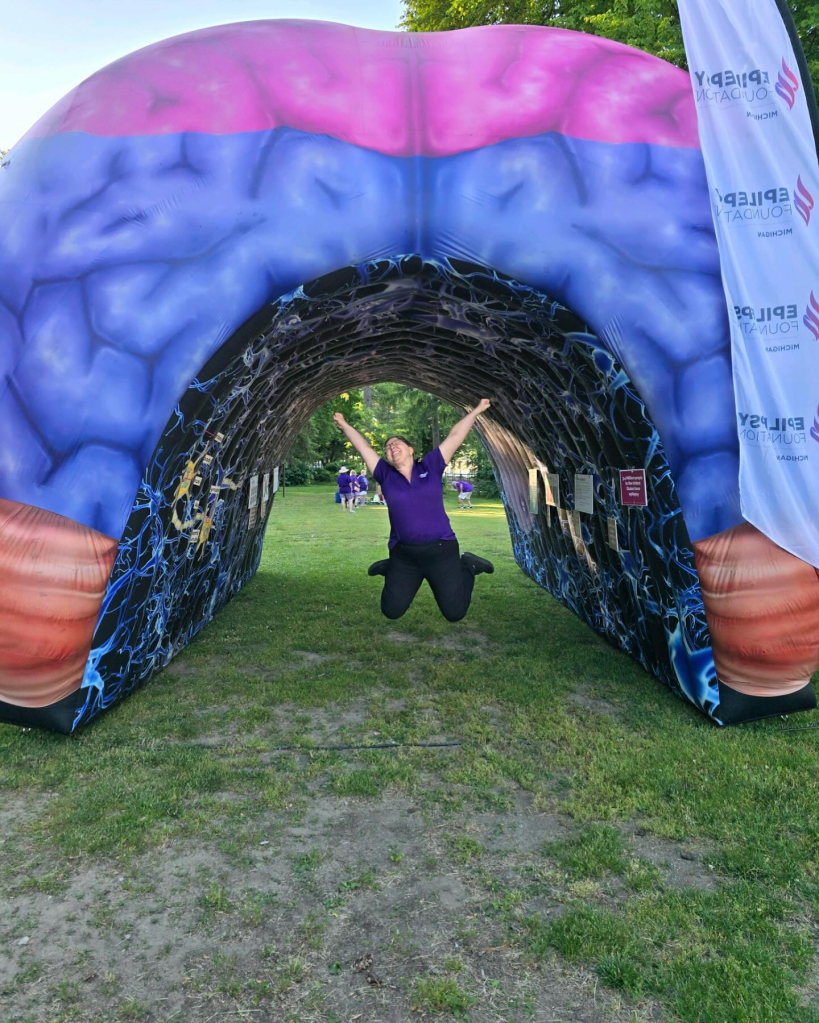
Jumping for Joy at the Metro Detroit Stroll for Epilepsy

In my work, I get to participate in building a deep sense of community across distance. People can forge very strong bonds even when they don’t see each other in person.

This takes place over the landscape of the epilepsy community we serve. At the Epilepsy Foundation of Michigan, we serve our whole state geographically, and many members of our community do not drive. For this reason, we create circles of support across distance, and you may be surprised how deep a phone call or Zoom meeting can go. In fact, I’ve watched these be transformative.

This is always on display in moments when our community members do get meet one another, and I was touched by one of these moments last weekend when we held our annual Metro Detroit Stroll for Epilepsy. This is our largest event each year, and it always feels like a family reunion.

For some, it’s a sacred introduction for the first time: Case in point, at one moment, I realized that two members of our phone-based support group were nearby each other. “T, this is C!” I said (not their name letters), and I am telling you, T ran over, scooped C, and they hugged each other in the sweetest embrace that must have lasted 40 seconds.

They have never met in person. But they know each other, and they know each other well. In fact, they love each other well, and you could see this in what must have been the longest hug that happened at the Stroll.

These bonds matter. Community matters. And we can forge these relationships far and wide.

Renee Roederer