
I was in a car near El Paso, Texas, when I saw another city nearby. At first, I wasn’t sure what it was, but then I realized it was Juárez, Mexico. The city buildings were grouped in two areas, but the landscape between them was exactly the same. It made me think about how arbitrary borders are. One area flowed naturally into the other, but the conditions on the ground in each city were vastly different.
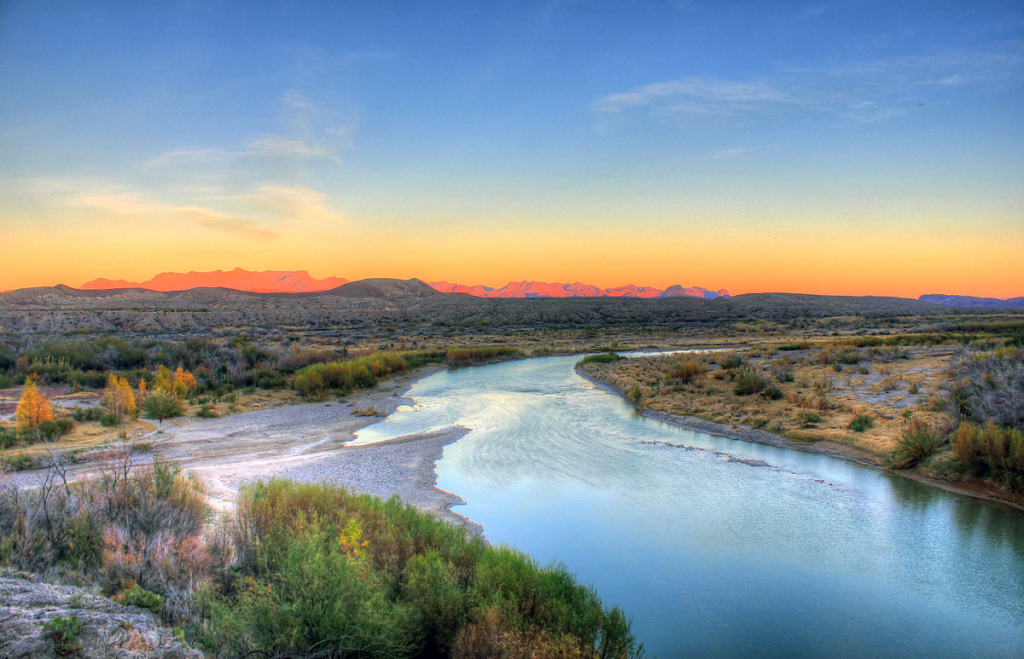
I also spent some time at Big Bend National Park, where the Rio Grande flows, marking the border between Mexico and the United States. There was no visible difference in the terrain. The view I saw was one continuous landscape; there was no divide to mark one side as fundamentally different from the other.
We often think about nationality as a fixed category, as though borders are a natural part of our lives. But in reality, they’re entirely man-made—arbitrary lines drawn by people.
Of course, these borders function in very real ways with real consequences. We’ve decided that some people belong based on where they were born, while others are excluded. Some have determined that human rights and constitutional rights apply only to those born on one side of an arbitrary line, not to those born just across the border, even if it’s relatively nearby.
A friend’s cousin is currently facing a deportation order. He was brought to the U.S. when he was just six months old, and this is the only country he has ever known. He’s a Dreamer and has worked previously as an organizer to create pathways to residency and citizenship for people brought to the U.S. as children. All his family members are citizens or legal residents. But just a week ago, he was with his girlfriend and two children when ICE surrounded him and detained him. My friend and their family are raising funds for his legal fees. Would you consider contributing?
Why is it seen as more egregious for someone to exist on one side of an arbitrary line we’ve created, yet not egregious to deprive children of their father? Why is it considered a moral violation to live in a particular geographical location, yet not to banish someone forever from the only home they’ve ever known? Where does the moral harm lie?
— Renee Roederer
 Smuggling Grace
Years ago the Supreme Court ruled that people have most constitutional rights (including due process and freedom of religion) the moment they enter the United States, even if they aren’t yet citizens, we just aren’t applying that ruling these days.
LikeLike
Which is tragic and wildly unjust.
LikeLike