
Once a month, I’m grateful to lead a Sunday morning gathering with a church community called Parables — a space shaped around the needs of disabled and neurodivergent members. Over time, this community has become one where I’ve formed meaningful friendships.
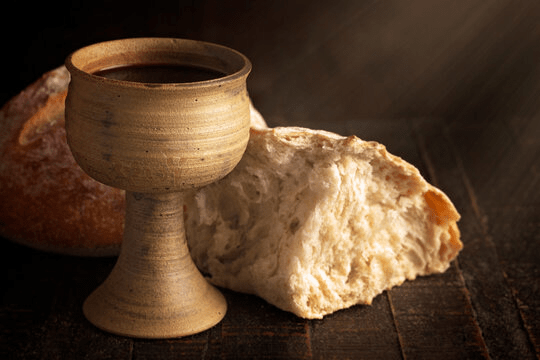
Last Sunday, after finishing the sermon, it was time to receive Communion together — a weekly practice that sits at the center of our life together. We always invite a couple of participants to come forward and hold the bread and the cup as we remember Jesus’ meal, pray, and begin to share these together.
I asked for volunteers, and two people raised their hands.
“Come on up,” I said with a smile.
“Reporting for duty,” James* said as he took his place in front of everyone. Maisie* lifted the chalice high, and James did the same with the bread.
But then I heard, “Oh no!” Maisie had spilled a small bit on the floor. “I’m so sorry!”
“It’s okay,” I said gently. “Accidents happen, and it’s all going to work out.”
Some of the juice had splashed onto the sleeve of her sweatshirt. “I’m going to have to wash it. I’m so sorry!” she said again.
James tried to comfort her. “There’s no sense crying over spilled milk,” he said.
Then someone else stepped forward and said to Maisie, “You know what I like to tell people in moments like these? I say, ‘Thank you,’ because you just gave us an opportunity to care for you. Sometimes these things just happen.”
So we tried again. I said the words I usually say, finishing with Jesus’ words: “Do this in remembrance of me.”
That’s when I looked over and saw that Maisie was about to lift the chalice again. James leaned toward her and asked, “Do you want me to help you?” Now his hand was wrapped around hers.
Then together, they held the chalice high — both of their hands joined — as if it were a champion’s trophy.
Such a lovely image.
Father Gregory Boyle, a Jesuit priest and the founder of Homeboy Industries, once said:
“I think we’re afraid of the incarnation. Part of that fear is the idea that the sacred has to appear a certain way — gold-plated, costly, elaborate. So we wrestle the cup out of Jesus’ hands and replace it with a chalice, as if that were somehow more sacred, even though Jesus didn’t use one. Jesus doesn’t worry that we’ll forget the Eucharist is sacred. He worries that we’ll forget it’s ordinary — a meal shared among friends. That’s the incarnation, I think.”
—Renee Roederer
*I’ve changed both names in this story.
**This quote comes from an interview Father Greg Boyle gave with Krista Tippett on her podcast, On Being.
 Smuggling Grace