
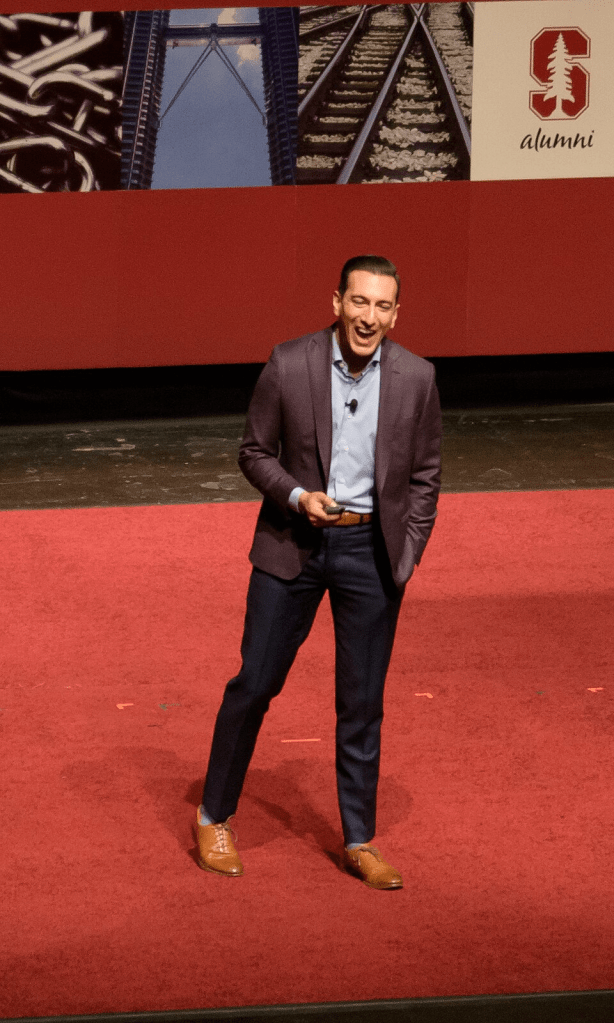
While driving in the car, I heard a psychology professor and researcher say a sentence that stopped me short. On the TED Radio Hour, Dr. Jamil Zaki said, “Cynicism is a sort of dark safety.”
He went on to explain:
“When the world is uncertain, we can feel completely exposed — deeply unsafe. So how do you recover a sense of control in a world you fundamentally can’t control? One way is to prejudge it and to prejudge everyone in it. A cynic, by deciding they can’t trust anybody and that people are generally rotten, may not live in a very bright or happy world — but they live in one they understand. They feel as though they can predict the future. They feel as though they understand the people around them, and that gives them some semblance of control over a chaotic life.”
When we believe
that most people can’t be trusted,
that many—if not most—outcomes will disappoint us, or
that not much can truly or meaningfully change,
there is a kind of “certainty” in that.
And navigating uncertainty is hard.
Another psychologist, Dr. Bruce Perry, puts it plainly: “We prefer the certainty of misery to the misery of uncertainty.” [1]
So we stay in familiar, harmful rhythms. We excuse others’ behavior, or our own. We remain where we are, even when we could risk uncertainty and build substantial, life-giving change for ourselves and our communities.
Cynicism may offer dark safety. But it’s also a trap.
[1] Bruce D. Perry and Maia Szalavitz, The Boy Who Was Raised as a Dog: And Other Stories from a Child Psychiatrist’s Notebook—What Traumatized Children Can Teach Us about Loss, Love, and Healing (New York: Basic Books, 2006).
 Smuggling Grace
Definitely feeling cynical in these uncertain times, but I try to trust in Goodness that will ultimately prevail.
LikeLike
I hear you. It’s so easy to get there, especially in these times. Maybe part of what we can do is take turns — letting ourselves grieve and struggle with all, only then to lift up each other with the good we see, and just know when we can’t believe or hope, someone else can.
LikeLike