
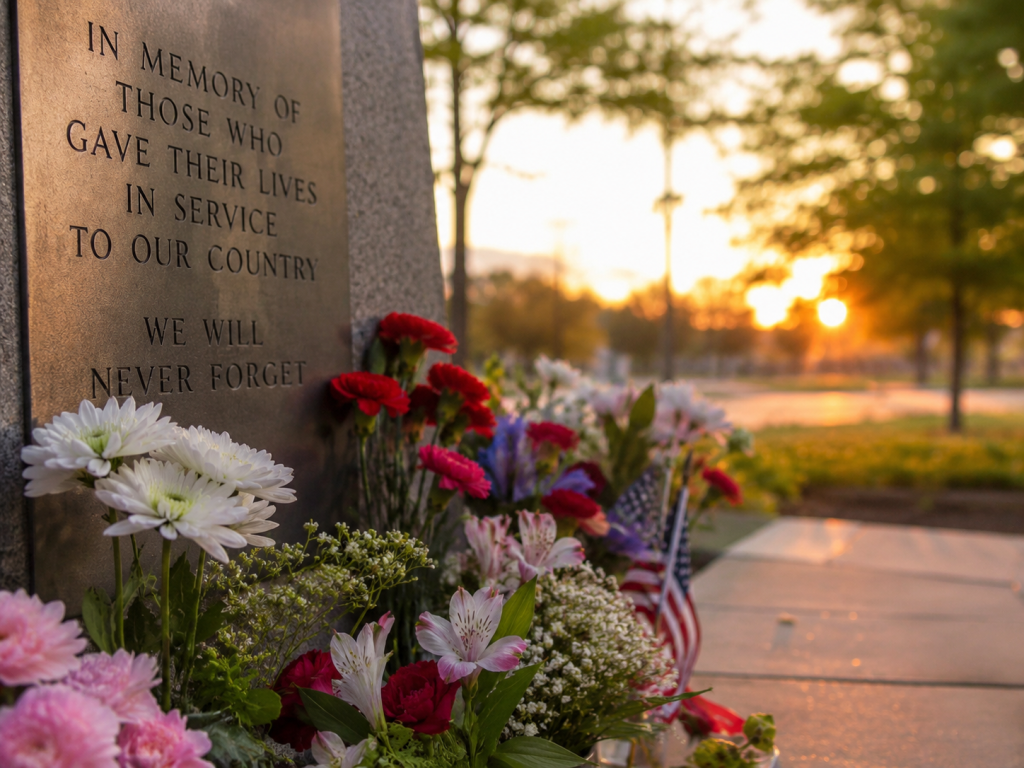
Today is Memorial Day. Earlier this week, I read a May 23rd post by historian Heather Cox Richardson about the origins of Arlington National Cemetery, and I have been reflecting on it since.
During the Civil War, the United States government transformed the former plantation of Confederate General Robert E. Lee into a burial ground for Union soldiers. Over time, thousands of people who died defending the country were buried there. One detail from that post has especially stayed with me — the proposed triumphal arch in the nation’s capital will visually frame Lee’s mansion rather than the graves of the soldiers themselves. That image strikes me deeply, and it raises questions of what we center, what we honor, and what stories we choose to frame.
Memorial Day is complicated for many people. I don’t want to glorify war, nationalism, or violence. I also think it matters to remember that there are people who have given their lives resisting slavery, fascism, and other forms of oppression. Human beings have made tremendous sacrifices in the hope that other people might live with greater freedom and dignity.
And I think remembrance can also make us more attentive to the present.
This week in my own community, a Black, Queer, houseless woman experienced horrific police brutality, was dragged across the ground by officers, and at least initially, was denied medical care. There is video of it. And as people debated, defended, argued, and explained how this happened, I found myself thinking again about what we choose to see clearly, what we normalize, and whose dignity we protect.
There are needs for justice wherever we live. Not only in history books, battlefields, memorials, or national cemeteries, but in our own towns, streets, systems, and relationships.
Maybe one way we honor the dead is by remaining awake to the living. We can refuse indifference. We can also ask ourselves what kind of world we are helping to build now, and whose humanity we are willing to defend when it becomes inconvenient, controversial, or costly.
I think remembrance is meant to do more than make us look backward. I think it can sharpen our moral vision in the present.
—Renee Roederer
1. This week, I was deeply moved by a poem written by Yodit Mesfin Johnson, which speaks to this incident of police brutality and the myriad of ways that people are disbelieved. It’s called “What God is This”.
2. Heather Cox Richardson writes,
“May 23, 2026 (Saturday)
President Donald J. Trump’s proposed triumphal arch would sit at a rotary on the Virginia side of the Arlington Memorial Bridge between Arlington National Cemetery and the Lincoln Memorial in Washington, D.C.
The proposed arch obscures the Lincoln Memorial, built to honor the president who steered the country safely through the Civil War, but perfectly frames Arlington House, the mansion built by enslaved Americans and once owned by Confederate General Robert E. Lee. The arch does not frame the nation’s honored dead, but frames instead the home of the man who led the armies of the Confederacy that killed them.”

