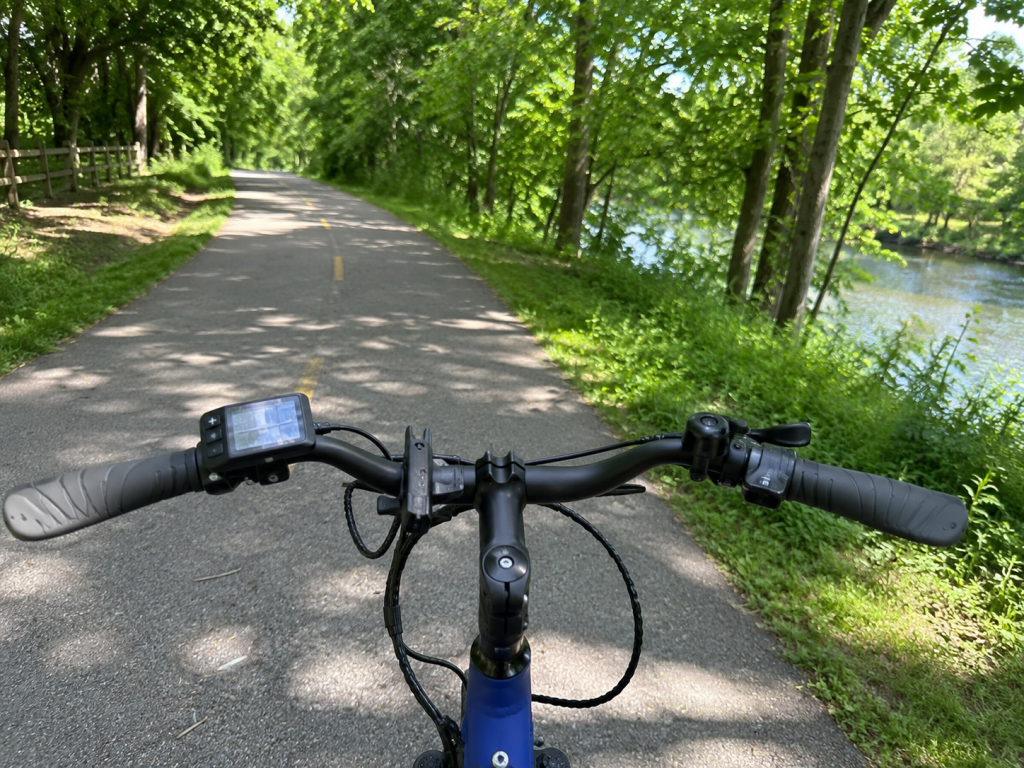
As a cyclist, I love those moments when I’ve built up enough speed — or a hill is building it for me — that I can simply coast.
I still have to pay attention, especially to where I’m going. But I notice that I pay attention differently. Whatever else I was thinking about tends to fall away, and I find myself simply enjoying my surroundings. I take them in more deeply.
In addition to the mechanics of it — no longer pedaling, only steering — it feels like a break that exists purely for enjoyment. It’s a chance to recenter myself on the recognition that I am riding my bike with nature in view. And I don’t need to do anything but this right now.
That’s a good personal lesson, too.
We can let easy things be easy. We can also create moments like these on purpose.
We were not made to be cogs in a machine. We are not more valuable because we are productive. We are not more worthy because we are efficient. (Many of us have internalized the opposite message — myself included.)
I recently encountered this quote from Pope Leo XIV’s encyclical Magnifica Humanitas:
“Among these ideologies, I consider particularly insidious the one that suggests that every person must earn or justify his or her own worth, to the point of attributing greater value to those who are more efficient and effective. From this perspective, persons end up being reduced to a means of achieving results, a resource to be used or exploited, and are no longer recognized as a proper end in themselves who should never be instrumentalized. The value of persons, however, does not depend on what they achieve or produce. There are rights that apply to everyone simply by virtue of being human, and no human power can legitimately deny or arbitrarily limit them.”
Sometimes the most meaningful thing we can do is remember that our worth is not dependant on any kind of output. That worth is intrinsic, whole, complete, and unchanging. We do not have to earn what is already ours.
—Renee Roederer

