
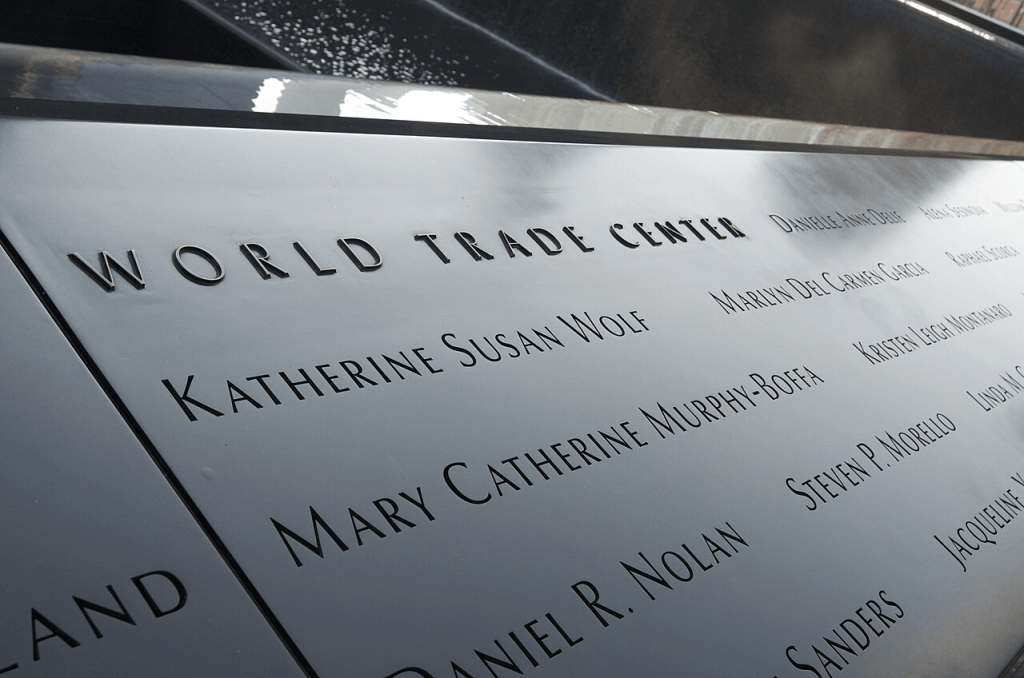
Tomorrow is the 25th anniversary of 9/11.
If I still myself and think back on that day, it’s not hard to remember the details — both insignificant and deeply significant — as well as the visceral reactions I was feeling.
I did not have any close friends or family in New York City at that time, so I didn’t live with the turmoil of longing for a phone call from someone who might be safe, at risk, or already lost. Years later, I came to know people who did wait for those phone calls in grating anxiety, made all the worse because cell service throughout the city was so disrupted.
For me, I remember that my first big exam in college was canceled and feeling guilty that I was relieved about it. I wasn’t sure I was prepared. I remember us gathering in that classroom and, instead of taking a test, watching the news in horror.
I remember walking back to my dorm room and regressing to watching old televangelists I had grown up with — not because my theology and worldview mirrored theirs precisely, but because somehow, in their fundamentalism, having a clearly demarcated line between what was wrong and what was right gave me comfort.
A few weeks later, in horror of their commentary, I stopped watching because I realized that my right and wrong no longer aligned with theirs.
Mostly, it was because of the way they were talking about Muslim people.
In the area where I grew up 25 years ago, there was less diversity and less interaction between cultures. I didn’t have any Muslim friends or family either. But I knew that the ways Muslim people were being stereotyped and collectively assumed to be dangerous were wrong.
And so, 25 years later, I’m thinking about that piece once more.
Today, I do have beloved Muslim friends, and I have met many people in Muslim communities who have talked about what the aftermath of 9/11 was like, when so many people in the United States made sweeping assumptions about Muslim people and began to enact forms of collective punishment through marginalization, exclusion, and violence.
I have seen that personally, and I have certainly encountered it in our news cycle over the course of 25 years.
And it’s not over.
Just this week, Rudy Giuliani, who was mayor of New York City on that fateful day in 2001, said that he did not believe Mayor Zohran Mamdani should attend the commemorations for those who lost their lives on 9/11. Mamdani is now the mayor of New York City. He is also the city’s first Muslim mayor. Giuliani went so far as to compare him with the 9/11 attackers.
These beliefs, attitudes, and forms of violence persist.
And so, when we cross the threshold into tomorrow’s anniversary, as we rightly remember nearly 3,000 lives lost, I also want to remember Muslim communities in the United States and around the world who were collectively blamed for the horrific actions of a few 25 years ago.
Remembrance should make us more careful about whom we blame, whom we fear, and whom we exclude.
—Renee Roederer

