I was sitting in a coffee shop, doing some writing, when I looked down at my phone and saw a message from a friend in a group chat. We have had our own Slack for years, and she shared how much she misses when we all lived in the same place. Me too. Many years ago, not just one move ago but several, we gathered as a whole group each week, and smaller groups of us would meet throughout the week as well. We had a rhythm of community.
Last week, I was reading an essay where the writer reflected on this moment in the United States. She suggested that people are not only longing for community, but are increasingly willing to make meaningful changes in their lives to move toward it. She was careful not to call this a silver lining, but instead named it as something more substantial, a kind of counterweight emerging in response to our current context.
So many systemic and political forces have contributed to experiences of isolation. At times, our own life rhythms and connections have shaped that reality as well. And yet, I see people responding. I know several who are looking to buy land together so they can build community. One of my deepest places of relational investment is out of state, and I travel there often, continuing to nurture those connections.
What about you? Where does that longing for community live in your life? And what steps might you take toward it?
Earlier this week, I mentioned that I attended a storytelling event with a very welcoming community. Anyone could tell a five-minute, true story on the theme of “Traditions.”
It turns out, I have a 17-year tradition. Not something I’ve done for17 years, but something overly-specific that happens once every 17 years.
Two people I know are experiencing newfound love with one another in their later decades of life. They did not expect this at all, and they are finding deep joy in this chapter.
One of my closest friends has started making quilts. She had never tried it before, but as soon as she began, she discovered both a gift for it and a genuine delight in the work.
I received an unexpected gift in the mail, and it made me believe that exciting new opportunities are possible.
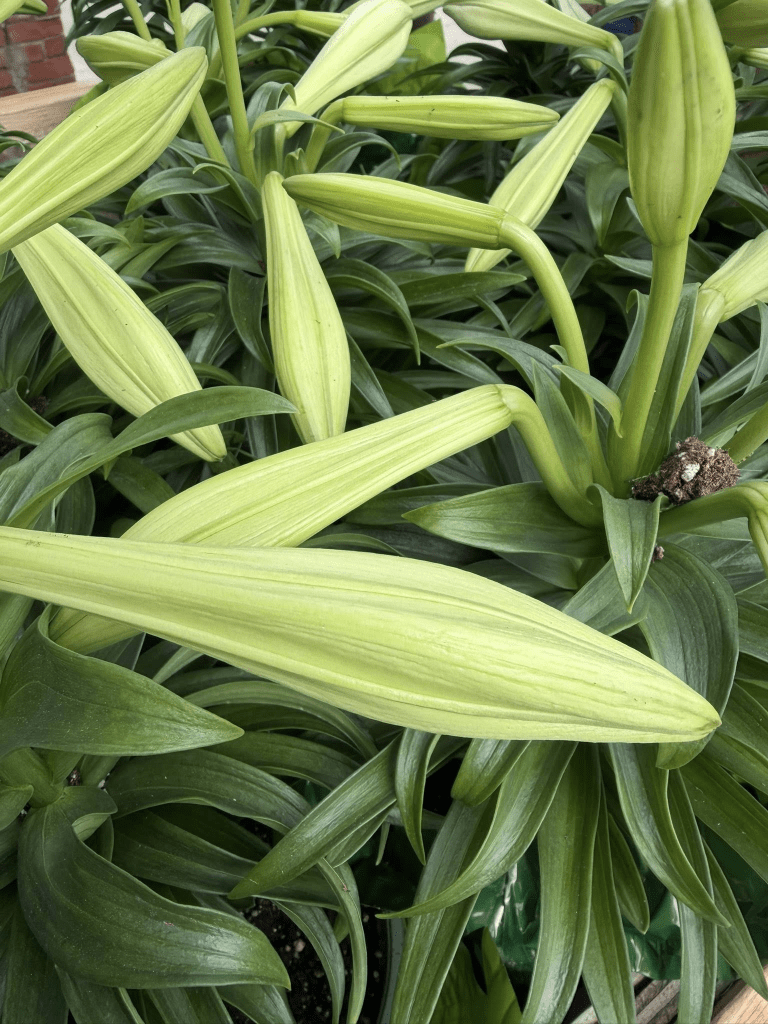
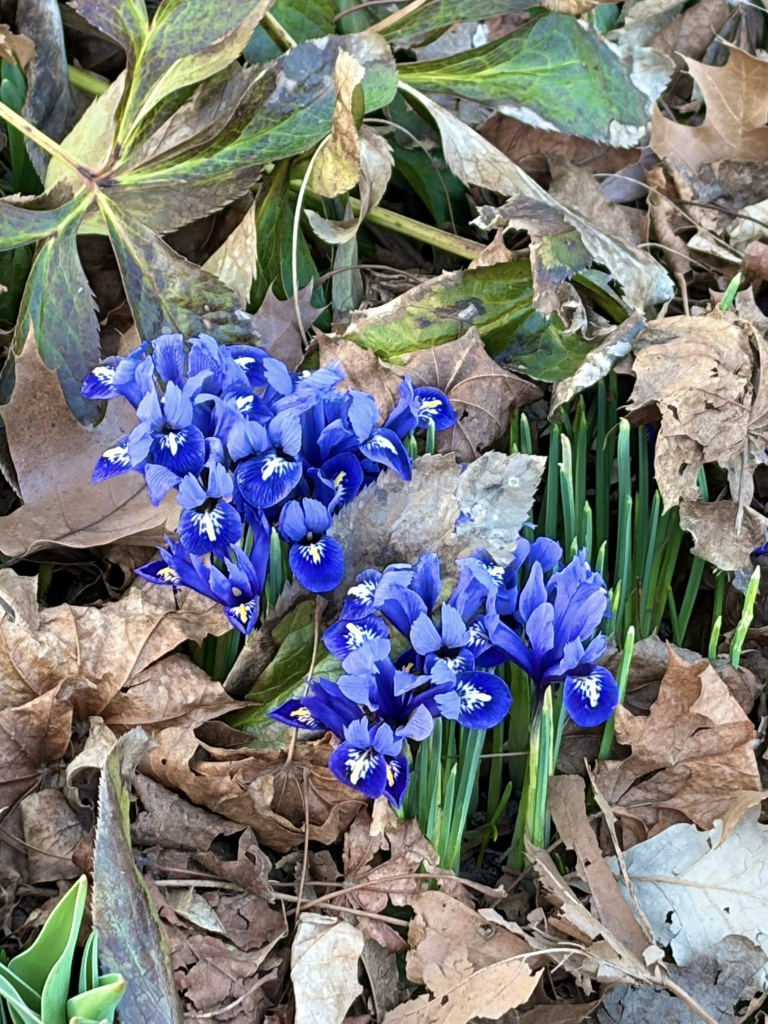
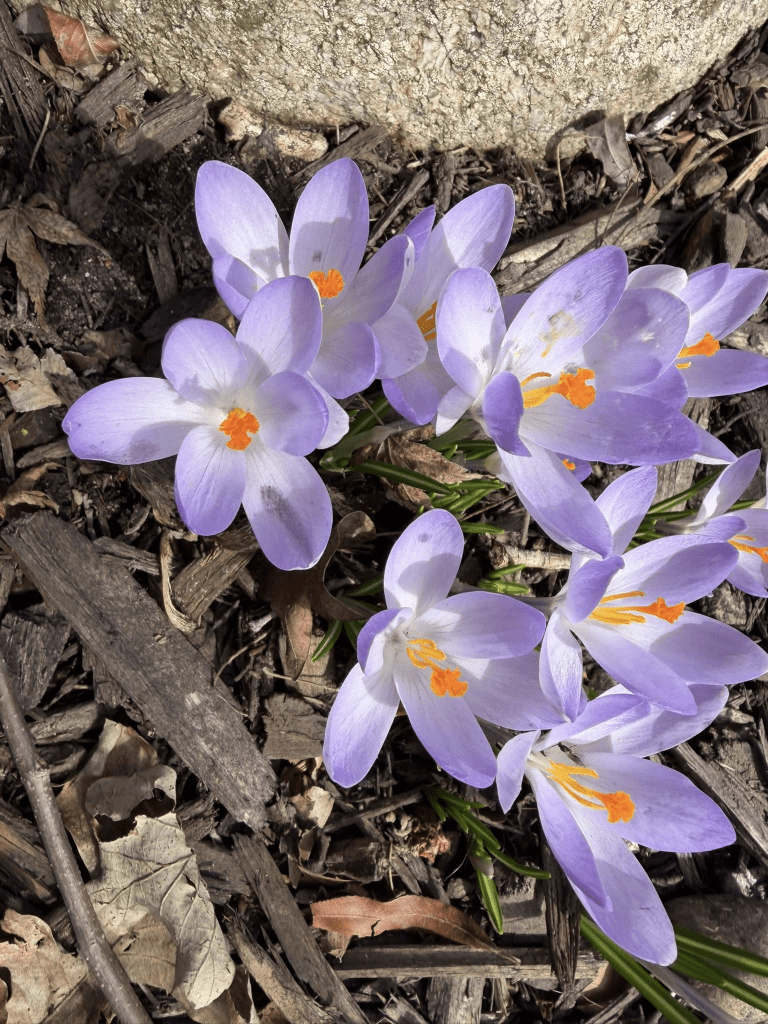
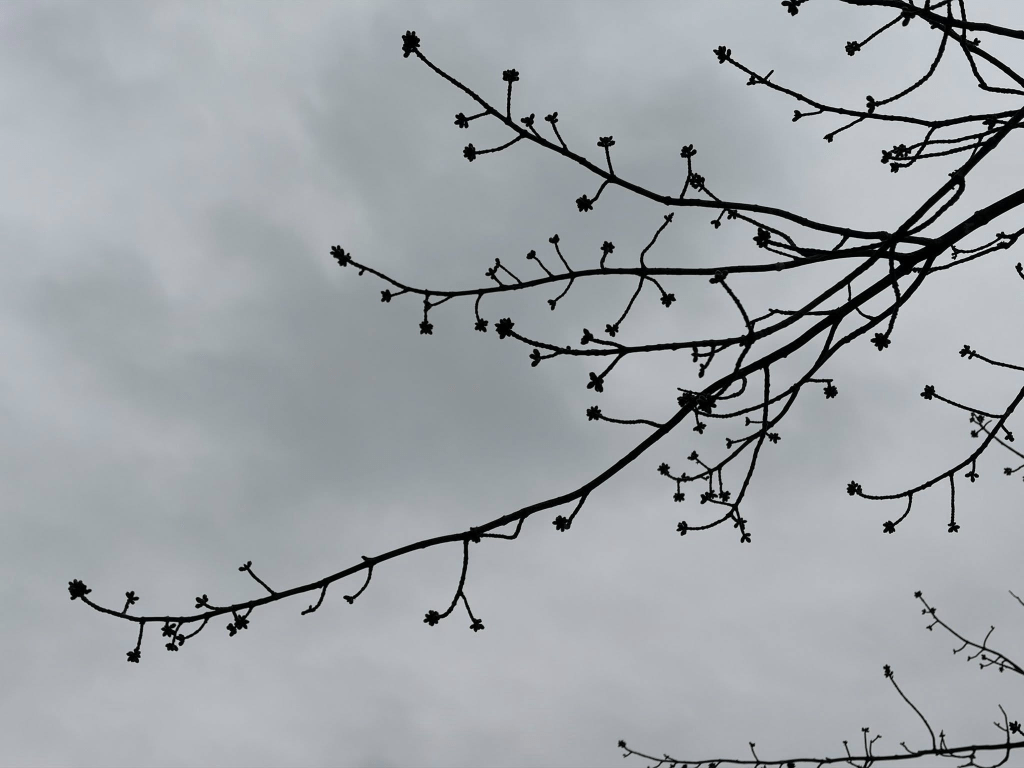
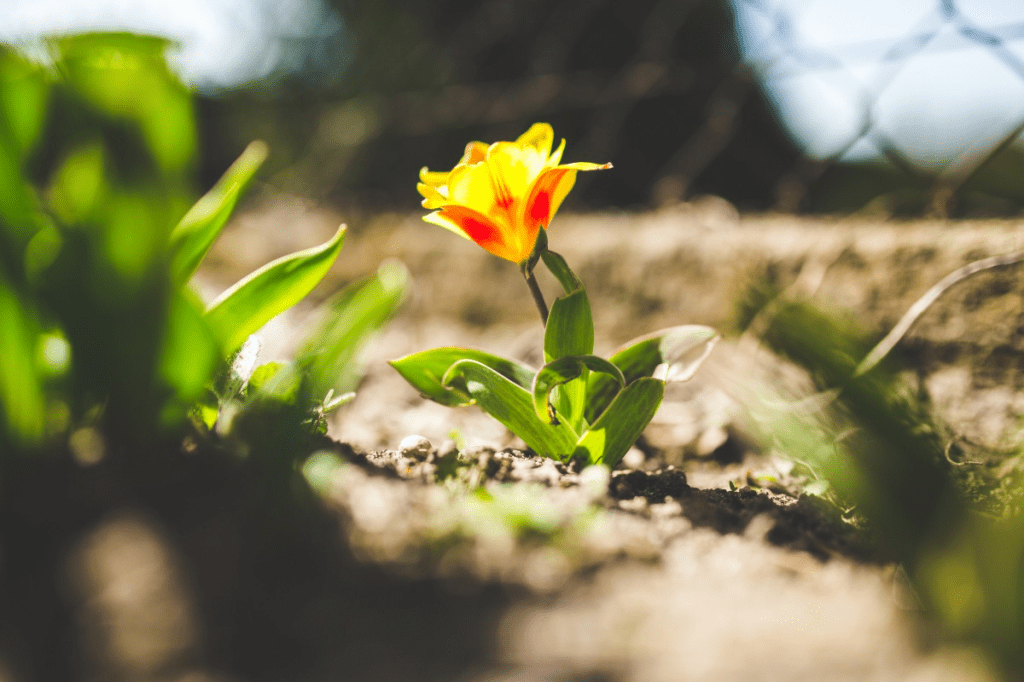
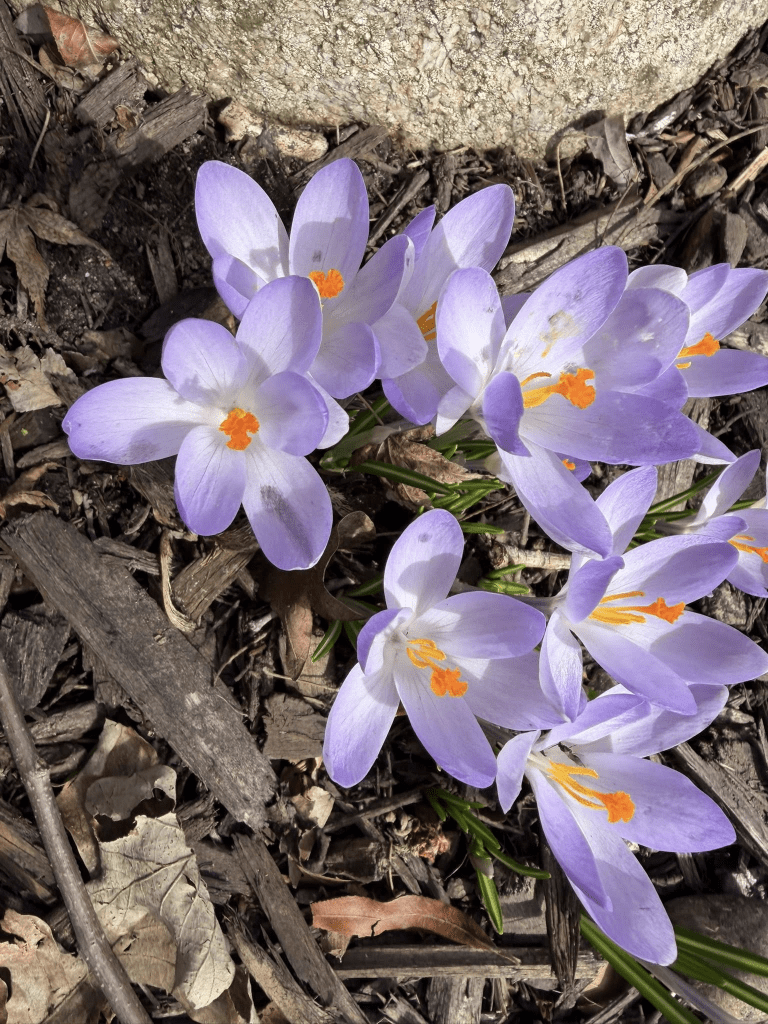
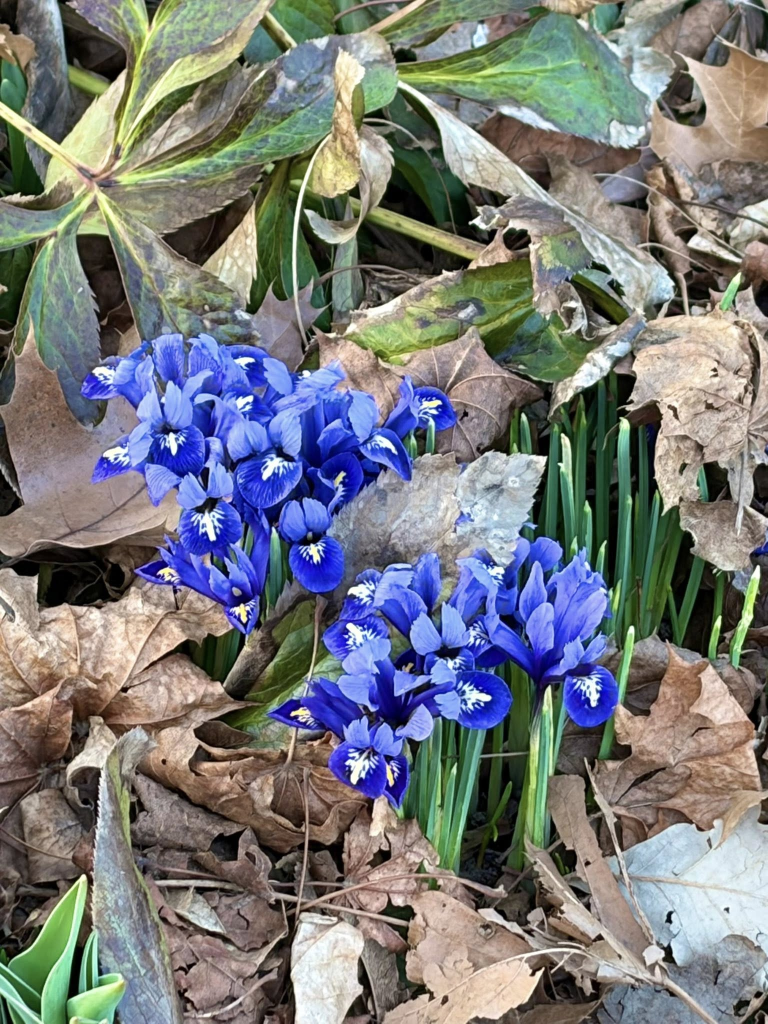
Spring has come. We are entering the Easter season. Everywhere, there are signs and stories of new life. You do not need me to tell you that our lives hold chaos, unexpected turns, joy, and surprising new chapters alike. But when we are feeling low, or when it seems like nothing meaningful lies ahead, it can help to remember: When has joy found us unexpectedly before? Where do we see it unfolding in the lives of others even now?
And when we think about our collective lives, I know that many things are feel grim. But once, the Berlin Wall fell — also quite unexpectedly. The Civil Rights Act of 1964 was once passed. Disabled Activists once occupied a federal building in the late 1970s, demanding protections in education and employment, and reshaping what was possible.
Resurrection is rarely predictable.
And still, new life comes. Even when we cannot name its form ahead of time, we can trust that goodness can be found, and perhaps even more importantly, created.
In Michigan, there is one prison for women – the Women’s Huron Valley Correctional Facility – and it is near my house. I don’t drive in that direction very often, but lately I’ve been passing it more frequently.
About six months ago, I decided to create a Google alert for this prison so I would receive updates about it. Too often, people near us are experiencing horrific situations that remain out of view.
It turns out that the Women’s Huron Valley Correctional Facility has been in the news quite a bit recently. My Google alerts have been pinging.
People have been testifying before the state legislature about mold that has run rampant for years, creating serious health problems for the women who live there. And recently, Disability Rights Michigan, an organization I admire so much, issued a report finding that, for years, women in this prison who need attendants to push their wheelchairs have been missing, on average, about half of their meals, along with a majority of doses of prescription medications for seizures, diabetes, and high blood pressure.
The report also shares:
“‘We have diabetics that at times go too low [on their blood sugar], those who have seizures,’ one wheelchair user told Disability Rights Michigan. ‘If someone feels they are not able to walk that far [to the cafeteria], they go without eating.’”
If we don’t look intentionally – individually, yes, but more importantly, collectively – we will miss what systems are determined to hide.
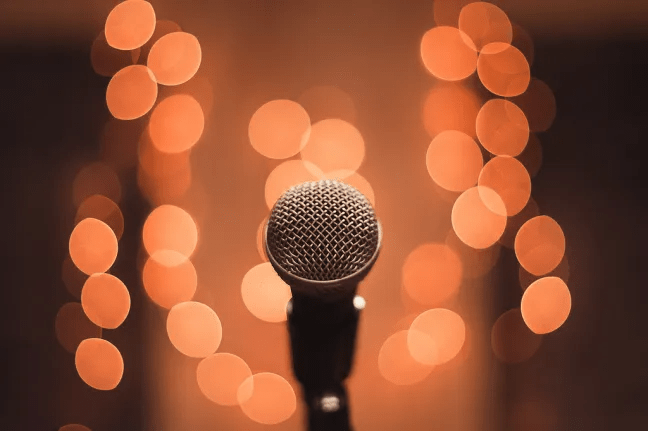
A microphone on a stand with shimmering lights in the background. Public domain image.
I stepped out of the car after about an hour of driving. I had parallel parked, and not particularly well, I might add. But it was good enough. I had made it to my destination.
I opened the door of a place that serves as both a coffee shop and a wine bar. Both of those are lovely, of course, but that’s not why I was there.
I walked across the wooden floor and made my way toward a room that had been reserved for about forty people. It was a storytelling event called Passages. I had only been there once before, just a month earlier, when I came with a close friend. His Dad hosts the event, and he and I have followed each other on social media for years. But we’re only just beginning to know each other in person.
As I reached the second door and was about to step into the reserved room, he was coming out at the same time. We nearly crossed paths mid-threshold. He looked up, saw me, and his face lit up.
“No way!” he said, pulling me into a bear hug.
He was genuinely delighted to see me again. And that felt wonderful, because I have long admired him.
Throughout the night, we heard stories that were heartfelt and hilarious. All of them true. There is a kind of energy in that space, a real sense of connection. People listen closely. They laugh together. They recognize something of themselves in one another. There are breaks built into the evening, moments to pause, talk with the people around you, meet someone new, and continue the conversation
I told a story that night, too — one of my funniest ones — and it seemed to land. But more than anything, I found myself thinking about how welcomed I felt.
“No way!”
I spend a lot of my time curating spaces for others. And I receive from people in that role all the time. But it’s a different kind of experience. There is something uniquely meaningful about stepping into a space like this and simply being welcomed, fully and freely among others who are also deeply welcomed and wanted.
There is a rhythm of giving and receiving in a space like that. There are many chances to welcome and to be welcomed. And I was reminded how important that is. It felt good to receive from this community, and then to add myself to it.
I’m thinking that we could all do this more often.
With sensitivity and care, I want to talk about a painful topic today. Then I want to apply it to political realities we are facing. If this rings too close to home, it’s okay to close this and not read it.
It’s this: When children are harmed by adults early in their lives, they can grow into adulthood accepting, tolerating, and even justifying harm that continues to come their way.
In these situations, harm can become normalized. It can sink into narratives that a person has carried for a very long time. Or it can take the form of repetition compulsion, a pattern that trauma and post-trauma can create. A therapist I follow online says, “We repeat what we have not resolved.” If we haven’t had the opportunity or the tools to work through these experiences of harm, we may be at a disadvantage in seeing them clearly and avoiding them.
This is not the only way this can unfold, of course, and it should never be assumed across all people or situations. And even when harm toward the self has become normalized in someone’s thinking, no one enduring that harm should be blamed for experiencing it. Ever. That is important to name clearly.
But here’s where I’m going with this: I want to explore the connection between dynamics that can form in childhood and the ways those dynamics might shape how some people relate to authority later in life. More specifically, I want to consider how this might be playing out, for some people, in their support of our current administration. This is not a universal explanation, but one possible way that such support can emerge and remain intact.
When children are harmed by adults they should be able to trust — through mistreatment, bullying, neglect, or abuse — they often blame themselves rather than those adults. Even though self-blame in childhood leaves deep scars, we can understand why it happens. It is harmful, yes, but it can feel more survivable than believing that the adults they depend on are unsafe.
It is psychologically intolerable for a child to believe that the people they rely on for care are dangerous. So instead, the narrative becomes: “I shouldn’t have done that, so I deserved it,” or “I must be bad.”
In other words, this logic takes root: “I can’t handle them being bad, so they must be good.”
A young child’s brain is not built to evaluate whether a parent or caregiver is fair, cruel, or abusive. A child’s brain is built to protect the attachment relationship at all costs.
From a developmental perspective, the parent or caregiver is the child’s food source, shelter, safety system, and emotional regulation system. If that relationship breaks, the child’s survival is threatened.
Because of that, the developing brain performs a very specific psychological maneuver when harm comes from that adult. Instead of concluding “the adult is wrong,” the child’s brain concludes “I must be wrong.” This is a neurological survival strategy.
Developmental psychologists call this “defensive attribution.” The brain assigns blame to the self because blaming the caregiver would create unbearable terror. If the adult who feeds you, houses you, and keeps you alive is dangerous and unpredictable, the world becomes psychologically unlivable for a child.
She goes on to say:
Once the brain builds a narrative that links love with pain and authority with violence, it can shape how someone understands discipline, relationships, and even justice. What began as a survival explanation can become a whole worldview: that people in power have the right to hurt those beneath them.
Again, whether children or adults, no one being harmed or abused deserves it. Not if they have internalized this logic. Not if they stay. Not if they blame themselves. Not if they try to justify what is happening to them.
And yet, we can see how this pattern forms. It often takes deep awareness and meaningful support to move in different directions. This worldview can persist, extending into workplaces, spiritual communities, romantic relationships, and friendships.
And increasingly, I find myself wondering… could this also shape how some people relate to our current administration?
I’ve had conversations with people I know personally, and in those discussions, I’ve discovered we share common ground. They’ve said Medicaid should not be defunded. Racism is evil. Lying about elections is wrong.
And yet some of these very same people, people I care about, still believe that leaders in our administration are patriotic and genuinely care for the American people. They say things like, “He never sleeps. He’s always working for us,” and they believe this administration can be trusted.
I find myself wondering: could this reflect that same internal logic? “I can’t tolerate the idea that those in authority might be harmful, so they must be good.”
Or perhaps: “I can’t tolerate the idea that I voted for this three times, so it must not be harmful.”
I don’t know.
And of course, there are plenty of people who genuinely do believe Medicaid should be defunded, that white people are superior, and that the 2020 election was stolen.
But I wonder if, for some people, there may be something deeper at play. It is still totally complicit. This harm does not only wound the self. It is actively harming and traumatizing many people, especially those who are most vulnerable.
But when it comes to the underlying logic, for some people, perhaps this is connected to something formed long ago. It is a way of making sense of harm that once helped them survive.
Is this showing up now, like this?
Increasingly, I wonder. And I hope that what has been learned can also be unlearned.



 Smuggling Grace