There is a vested interest among some to keep large amounts of people in a perpetual state of indebtedness and poverty. After all, there is money to be made from that state of being, and there is power to be extracted from that state of being.
Earlier this week at a reading group, I sat around a table and considered an essay from David Bentley Hart, entitled, “A Prayer for the Poor.” He writes,
“… in many ways, the difference between the poor and the rich is simply the difference between debtors and creditors, and that systems of credit are, for the most part, designed to exploit this difference… one man’s poverty is another’s source of wealth…”
and
“… all at once, the poverty of the unfortunate becomes a wellspring of revenues for the wealthy. Especially profitable for such creditors are the catastrophic medical emergencies that so frequently reduce the poor to virtual slavery, and that the American system especially — with a Darwinian prudence almost majestic in its stern, barbaric indifference to the appeals of pity or morality alike — refuses to alleviate… the poor too — like everything else — can become a commodity.”
“Suddenly, all my ancestors are behind me. ‘Be still,’ they say. ‘Watch and listen. You are the result of the love of thousands.’” -Linda Hogan, Author
You can see the spire from anywhere in the city, but when you approach the central square, the Cathedrale Notre-Dame-de-Strasbourg takes up your whole vision. The Cathedral is a massive, gorgeous masterpiece of Gothic architecture. It is at once, ancient and fully present, and its facade is carved in incredible detail. Every square inch seems to include a design choice — a statue, a figurine, a story being told.
Construction began in 1015 CE, and at least 10 generations of people helped build the Cathedral, concluding its construction 1439 CE. I wonder what it would have been like to see it completed after 424 years of labor, detail, and creative artwork… I wonder how that generation of people must have felt deeply connected to those who came before them.
At the same time, I also wonder what it would have been like to initiate such a grand vision, knowing you would never see it to completion and that you would have to trust the generations behind you to finish it. This takes a great deal of trust… I wonder how that first generation of people must have felt deeply connected to those who came after them.
When people build a structure collectively, there is an obvious, shared focus of the work. Our collective work and vision may feel more intangible. Nevertheless, there is a through-line there as well. We are receiving the work of others, and we building upon the work of others. This is highly connectional and trust-filled.
I recently returned from a Rhine Cruise, beginning in Amsterdam, traveling through Germany, and dipping into France in Strasbourg. I saw many beautiful sights, and I thought I would pass some along.
Amsterdam
The front door to the Anne Frank House. It felt important to stand here and remember her.
Amsterdam
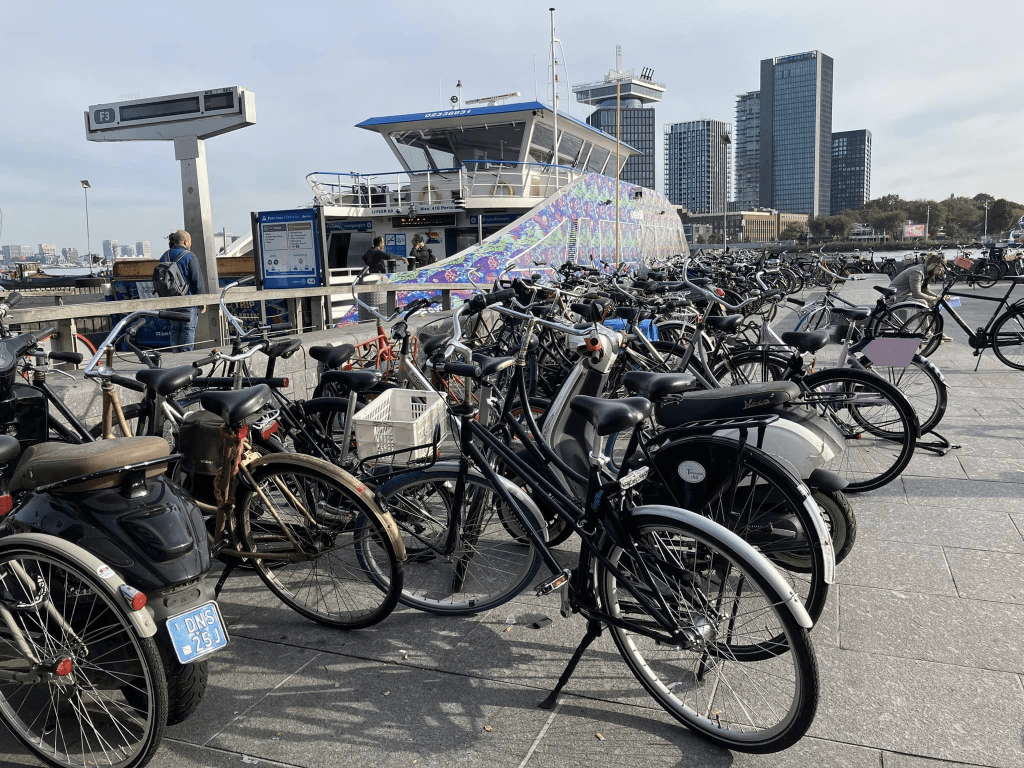
Amsterdam — the city of bicycles. Our tour guide told us there are three bicycles for every person. Literally!
One of the most beautiful parts of the trip was simply traveling down the Rhine River.
From the Rhine, we saw some beautiful sunsets as well.
Sunset from the Rhine.
Heidelberg, one of my very favorite cities.
I was very pleased with an interaction in Heidelberg where I had conversation fully in German while ordering coffee, without staff once shifting to English. Hurrah!
The Strasbourg Cathedral — a masterpiece of Gothic architecture. Construction began in 1015 and was completed in 1439!
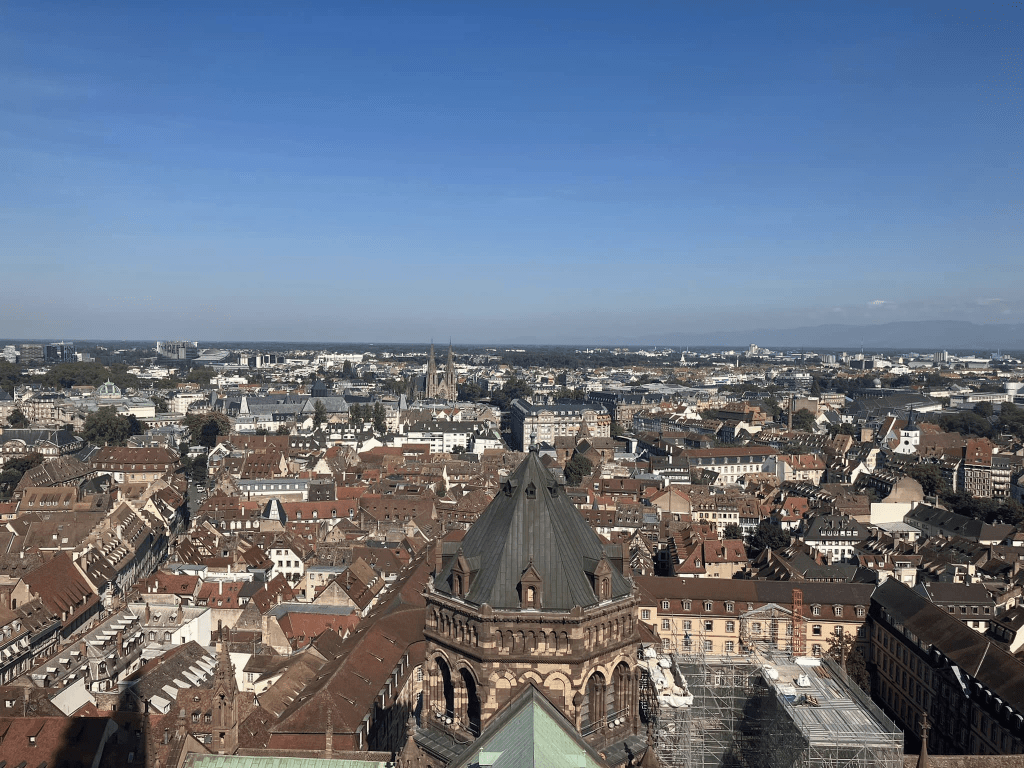
I climbed to the top of the cathedral and saw a view of Strasbourg from there.
Strasbourg.
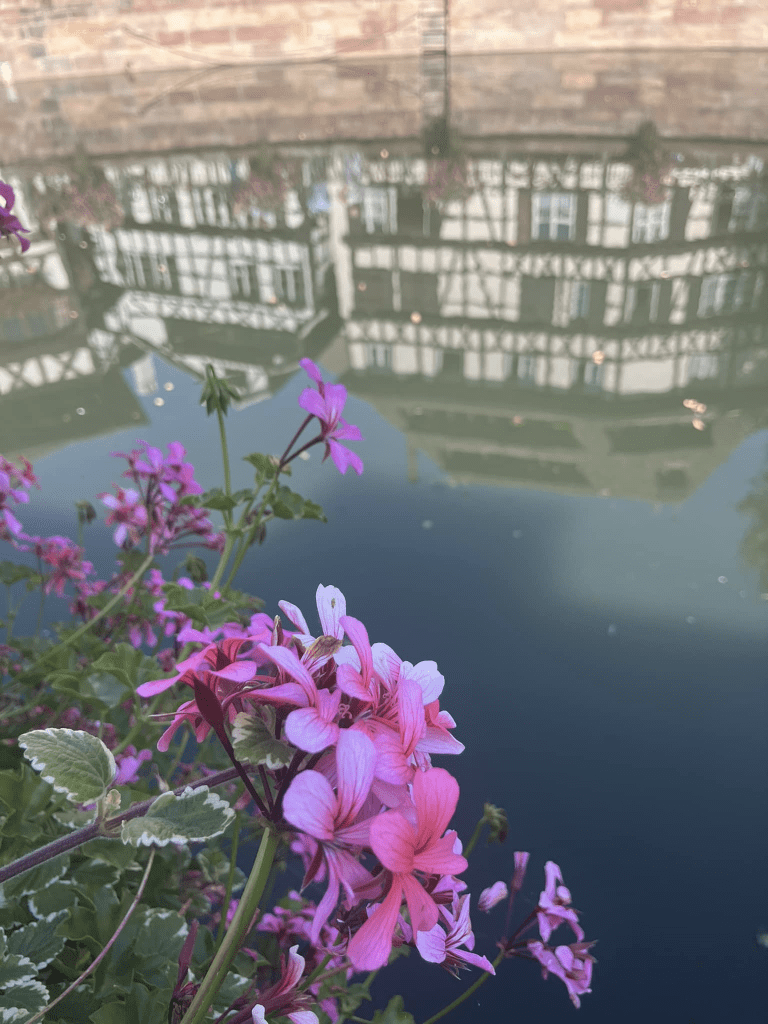
These buildings are from 1572! Through conquests and occupations, many times, Strasbourg has gone back and forth between being a part of Germany and being a part of France. Both styles of architecture are present.
The same buildings reflected in the water.
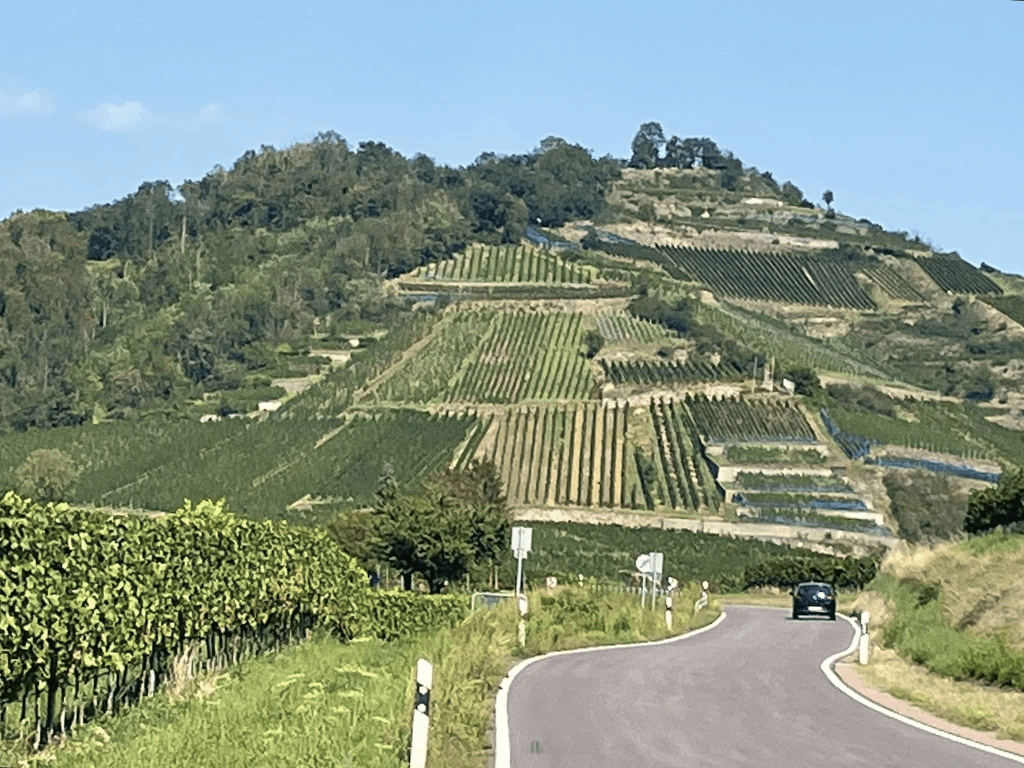
On the last day of my trip, I rented an e-bike and rode around solo through the German countryside around Breisach. I also stopped in another little town with my bike and ordered a German beer — once more, all interactions in German. Felt great!
I loved this experience so much that… since returning, I bought an e-bike on clearance. More adventures to come at home!
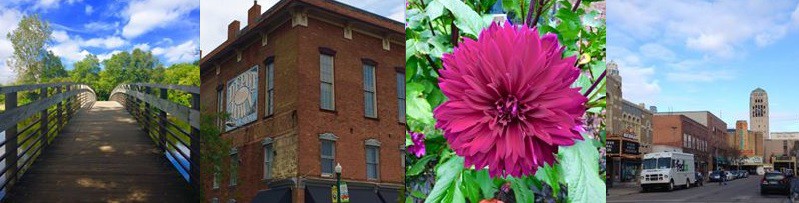
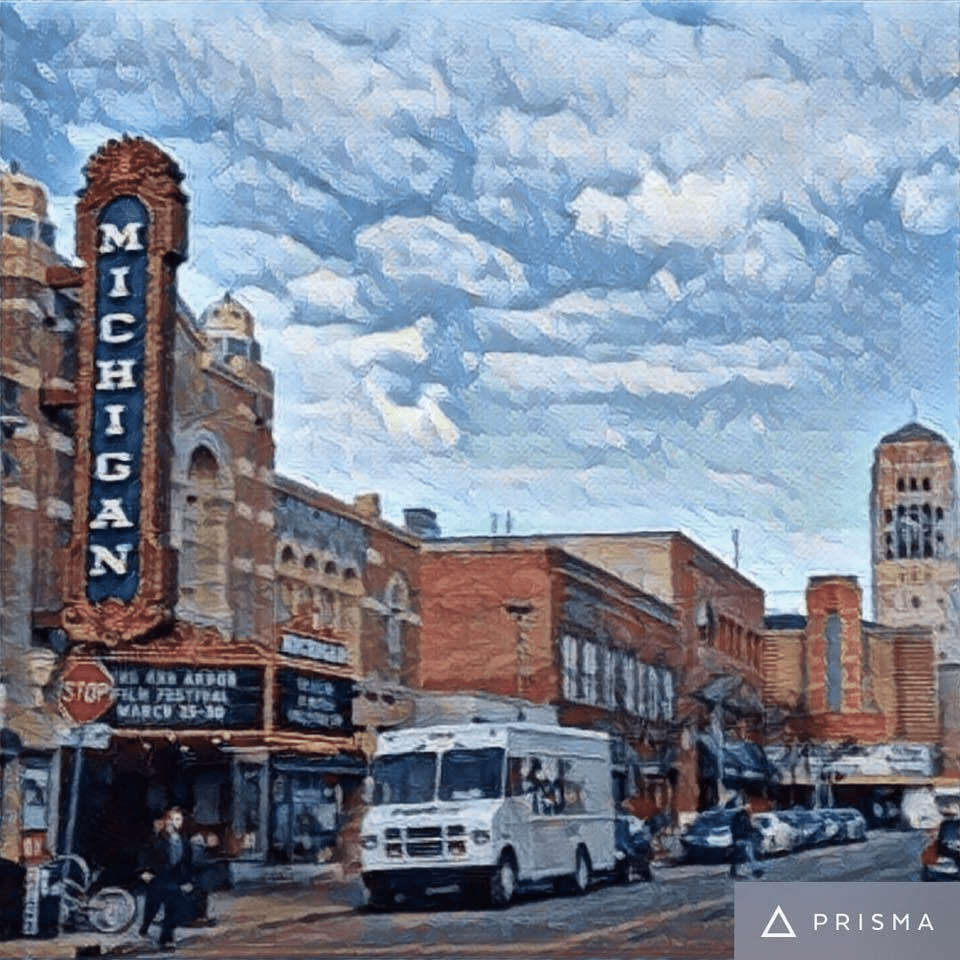
This is an artistic rendition of the Michigan Theatre, a street downtown, and the University of Michigan Tower, created from I photo I took through an app called Prisma.
Tomorrow is my Ann Arboriversary, the annual marker of the date I moved to town. I think of this each year, but this time, if feels like an especially important occasion. I begin a new year tomorrow, meaning that I close another one out today. And this time, I hit ten years. As of today, I’ve lived here for an entire decade.
That is a lovely gift. These days, I think a lot about place — what it means to witness land and nature, what it means to have a place to explore, and most of all, what it means to be embedded in relationships with friends, neighbors, and coworkers. I’m grateful to have lived here ten years.
Additionally, I have beloved people who live all over the country, and more than ever, I find myself wanting to be with them as often as I can — still rooted here, but adventuring in a number of “theres” every time I can make it happen. I want the roots; I want to prioritize the connections.
I want an expansive vision of home.
This theme has been on my mind and heart all year. Home is place. Home is land. Home is rhythms. Home is a spiritual state of mind. Home is, above all, in my experience, people.
So Ann Arbor, thanks for being a part of that vision. I’m grateful to be rooted in a place and to continue to reflect on what home means.
Dear Subscribing Readers, after submitting this post, I am going to take a two-week break from writing on Smuggling Grace, but I will be back mid-September. As always, thanks for reading along!
Image Description: This image shares the four primary nervous system responses to trauma — fight, flight, freeze, and fawn — as well as symptoms for each and ways they are commonly mislabeled. I am sharing the image text throughout the blog post below. I found this image on @SELSpace on Facebook.
Over the last few years in this era of a pandemic, we’ve moved through a number of experiences that have been traumatic collectively. This may be important time to learn about trauma and the responses that our nervous systems often take in response. When we’re feeling overwhelmed, we can move into states of fight, flight, freeze, or fawn. We might also vacillate between a couple of these.
In addition to these becoming activated due to present circumstances,
— some people have endured past traumas as well, and these can become reactivated in our nervous systems in these ways,
and/or
— some people have lived with dysregulated nervous systems throughout much their lives, not necessarily remembering large, traumatic events in childhood, but rather, growing up in households that felt stressful and overwhelming in a generalized way. In these households, it was difficult to have needs cared for and nurtured, or caregivers may have also had dysregulated nervous systems, making it difficult to co-regulate alongside them.
In both of these instances, people may live with symptoms of PTSD or CPTSD (the C stands for complex and means that the traumatic events or environment was long-lasting).
In a moment, I’m going to list symptoms of the 4F pathways of trauma. You may recognize some of these in yourself or your loved ones. Please know that these don’t have to remain stuck or static in the body, and we don’t have to stay stuck or static in these patterns. There is help. Therapy certainly helps, and it’s okay to seek that help. In fact, it can be transformative. There are a variety of somatic therapies that help to heal our bodies and these patterns. (As just one example, I’m a big cheerleader for EMDR. Check it out.)
These are the 4Fs of trauma and PTSD. Which pathways tend to be primary for you? I am typing out the text of the image above.
Fight
Self-preservation at all costs
Explosive temper and outbursts
Aggressive, angry behavior
Controls others
Bully
Can’t ‘hear’ other points of view
A pronounced sense of entitlement
Demands perfection from others
Dictatorial tendencies
Typically mis-labelled as – Narcissist – Sociopath – Conduct disorder
Flight
Obsessive and/or compulsive behavior
Feelings of panic and anxiety
Rushing around
Over-worrying
Workaholic
Can’t sit still, can’t relax
Tries to micromanage situations and other people
Always ‘on the go;’ busy doing things
Wants things to be perfect
Over-achiever
Typically mis-labelled as – OCD – Bipolar – ADHD – Panic disorder – Mood Disorder
Freeze
Spacing out
Feeling unreal
Hibernating
Isolating self from the outside world
Couch potato
Dissociates
Brain Fog
Difficulties making decisions, acting on decisions
Achievement-phobic
Wants to hide from the world
Feels ‘dead,’ lifeless
Typically mis-labelled as – Clinical depression – Schizophrenia – ADD – OCD
Fawn
People pleasing
Scared to say what they really think
Talks about ‘the other’ instead of themselves
Flatters others (to avoid conflict)
‘Angel of mercy’
Over-caring
Sucker
Can’t stand up for the self, say ‘no’
Easily exploited by others
Hugely concerned with social standing and acceptance, ‘fitting in’
‘Yes’ man (or woman…)
Typically mis-labelled as – Codependent – ‘Victim’
Do you recognize these patterns in yourself or your loved ones? They are natural and do truly discharge traumatic energy. Our bodies have them because we need them at times. But we don’t want to become stuck in them. That causes larger problems for us. These patterns may spin out, causing us pain, and impacting our relationships.
But we can heal these patterns, and we can do the work of healing the systems that cause so much trauma in the first place. I love how the word ‘heal’ is both passive and active at once. We receive healing and cultivate it over time, and we can act as healers for a world with less trauma.
Image Description: Black background and the word ‘family’ in white letters; the l has a tree growing out of it. Public domain image.
What if you could be gathered together in one place with a version of yourself from every year of your life? Like, from baby to current age of adulthood?
What if every age of yourself was present toward all the others, gathered together like a family reunion of sorts? What would that be like?
-Would certain ages pair together for care?
-Would certain ages avoid each other?
-Would certain ages wander off somewhere and find some space to voice their stories, or maybe do some reconciliation work?
-Would certain ages impart wisdom to the other ages?
What might the current you want to say to your younger selves? What might your younger selves want to say to the current you? Truth be told, our younger selves are always present in some way, embedded into the rest of our lives. We can access the various parts of ourselves, and in a sense, even be in relationship with ourselves.
I wonder what would happen in this family reunion?