Rest is good for the body, and it’s been great to receive/practice/prioritize that during this long weekend.
Hope you were able to do that too. (It’s not too late).
–Renee Roederer
My Poor Backyard Has Gone to Hell (Temporarily)

My poor backyard…
Actually, it’s just doing what nature does during this season, which is also a way of saying that this is temporary and it can handle itself. But… during the summer, my backyard is gorgeous with tall, native plants and wildflowers. These surround the perimeter of the yard, and as they blossom, they are beautiful for the eyes and full of nectar for bees. I absolutely love my backyard in the summer.
Then in October and November, everything dies. The tall plants begin to wilt and turn brown with decay. On top of that, all these leaves fall from the trees behind the other side of the fence. It just looks like death out there. I never have time to address this right away, otherwise I would rake quickly and cut down the dying plants. But, I work a lot. Last year, I raked the leaves onto the perimeter of the fence, hoping that that year’s leaves would serve as mulch for next year’s plants. Some of that probably happened, but by the time the spring emerged with all the dead plants still there, I invited a crew to cut and tow everything away.
I haven’t decided what I’m going to do out there this year, but as I said, it looks like death at the moment.
In the midst of this, however, I do love this: I expect all these annual plants and wildflowers to emerge again with all their beauty. I know that I’m in a season along with them, and these wilting, brown, sad plants have already given the seeds for next year’s blossoms.
I will get out there soon — maybe this weekend — to do some tending to this mess out there. And when I do, I’m also going to remember that this is true to life.
Even amidst loss, decay, and dis-order, there is always the possibility that goodness remains, transformed and transforming, alongside a possibility of renewal. Even from there, new life can emerge.
–Renee Roederer
Gratitude
During this season, I’ve been thinking a great deal about gratitude and living more fully in the present moment.
I have found this to be true:
Gratitude helps us
hold lightly, and
hold deeply.
These two things at once.
The practice of gratitude helps us hold experiences lightly, because we recognize that all things are constantly changing. Gratitude doesn’t seek to control people, situations, or outcomes. Instead, we can receive from all of these as they change.
The practice of gratitude helps us hold experiences deeply, because we recognize their value and are fully present. Gratitude connects us deeply with our daily lives and most especially, people. Gratitude strengthens connections and bonds.
–Renee Roederer
Deep Care For These Reactions
Trauma responses — Good care, understanding, and compassion for these 


What Can You Count On?

On Sunday, I was walking into the church building where I was about to lead a worship service, and I saw a blue jay emerge right in front of me. A huge smile emerged on my face, and I had to say this phrase. In fact, I felt like I was receiving it:
Remember well, and bear in mind that a jaybird’s tail sticks out behind.
It’s goofy. But the context of the quote has stayed with me the most. My Chosen Dad David used to say this to me, especially when I was anxious about something. He would often follow it by saying,
“There are some things you can always count on.”
And sometimes, he would follow it more.
“There are people in your hometown who love you very much.”
Remember well, and bear in mind that a jaybird’s tail sticks out behind.
There’s only one way a jay bird’s tail is ever going to point, and we can count on it. And there are people we can count on too in steadfast ways.
From time to time, I still think this phrase to myself. Sometimes, I share it with others.
I’m glad I received it again.
Figs Aren’t Vegan
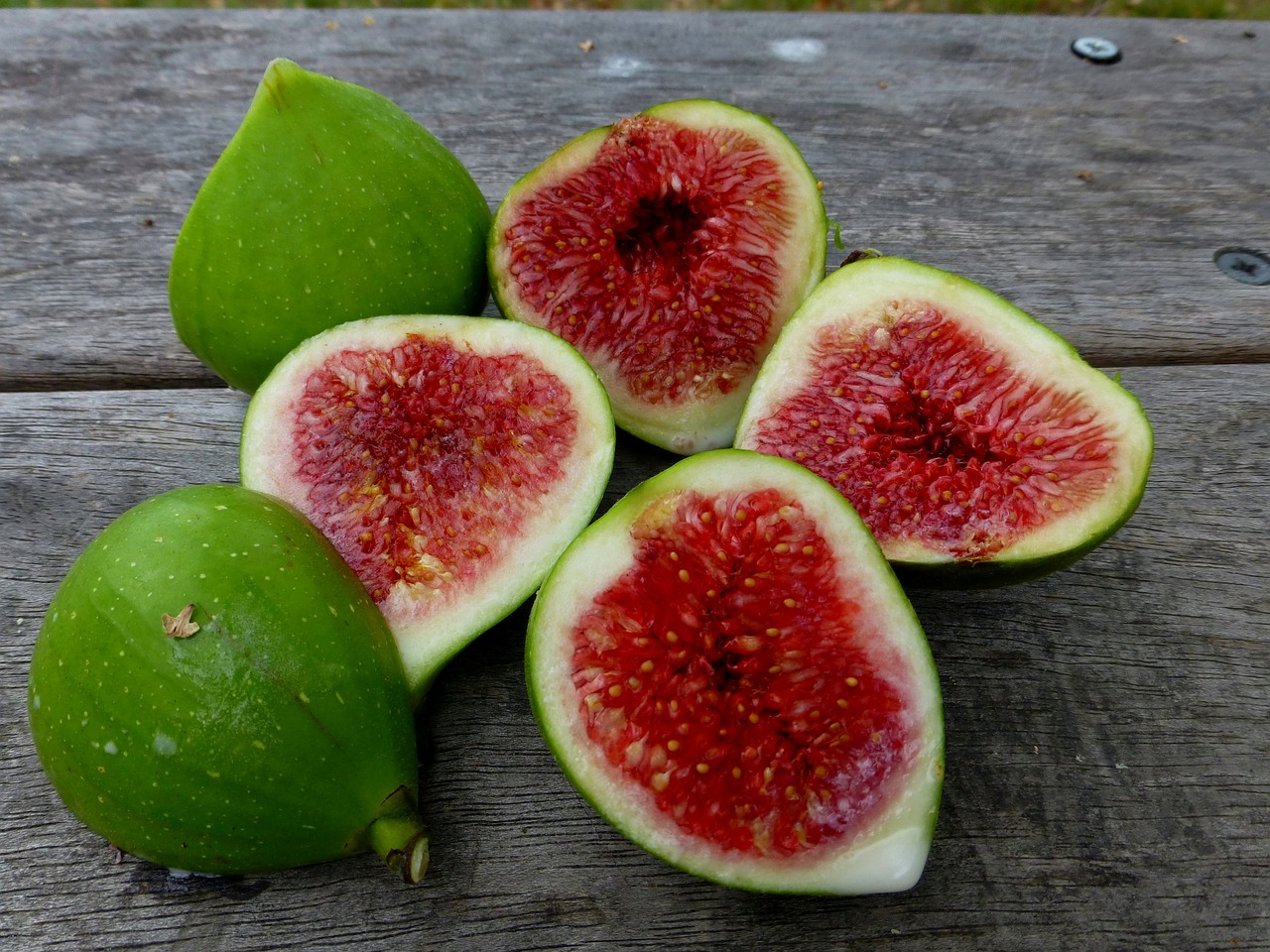
This is an addendum to yesterday’s post, entitled, “Absurd But True.” In that post, I shared a list of absurd-but-true fun facts. One of them was this:
“Figs aren’t considered vegan because they have dead wasps inside.”
I said nothing less, and I said nothing more.
I posted these absurd-but-true fun facts on social media, and people kind of freaked out about this one in a humorous way. They were just utterly bewildered by this new-to-them news. “I’m never eating figs again!” people seemed to say, as they imagined wasp parts in them. “How do they get out?” someone exclaimed. That’s when someone chimed in and said,
“They don’t. The figs dissolve them. “
It’s true.
You can read about that here. Figs use trapped wasps for pollination.
So here’s where I’m going with this… and this thought is most definitely new to me… When we hear, “Figs aren’t vegan,” this means much more than “vegans don’t eat figs.”
It also means FIGS AREN’T VEGANS.
–Renee Roederer
Absurd But True

Some aspects of life are so weird and wonderful.
I recently learned some of these absurd-but-true, fun facts. These come from here, here, and here. Did you know these are true?
1) We breathe primarily through one nostril at a time, and our nostrils take turns every few hours in being the primary nostril.
2) Dolphins call each other by names. How cute is it that dolphins name each other?
3) A lemon is 70% sugar, while a strawberry is only 40% sugar.
4) Figs aren’t considered vegan because they have dead wasps inside.
5) We are born with only two innate fears — the fear of falling and the fear of loud noises. All the other fears are learned.
6) You can tell the temperature by counting the crickets’ chirps.
7) Children of identical twins are genetically half siblings, rather than cousins (which they are legally).
8) The official bird of Redondo, California is the Good Year Blimp.
9) There’s an entire holiday dedicated to what the world would be like if dogs and cats had opposable thumbs.
10) Bamboo grows so fast it’s measured in miles per hour.
11) Da Vinci’s The Last Supper originally included Jesus’ feet, but they were cut off to build a doorway.
12) The inventor of the Pringle’s can is buried in one.
13) Bubble wrap was originally intended to be wallpaper.
14) Humans are the only animals with chins.
15) Charlie Chaplain once lost a Charlie Chaplain look-alike contest. He came in 3rd.
16) Manhattants are a species of ant that are found within a 14 block area of New York City and nowhere else on earth.
17) It rains diamonds on Jupiter.
18) Can openers were invented 48 years after cans were invented.
19) From the time it was discovered and then recategorized as not being a planet, Pluto did not complete a single trip around the sun.
20) If the entire timeline of Earth’s existence was compressed into one year, humans would be born around 11:58pm on 31st December.
21) Lobsters don’t die naturally, nor do they age.
22) There was an Emu war in 1932 between Emu and the Australian army. The Emus won.
23) If you could fold a piece of paper 42 times, it would reach the moon.
24) A cloud typically weighs 1.1 million pounds.
25) Costco sells enough toilet paper each year to wrap around the earth 1200 times.
What a weird and wonderful world!
Injustice
Violence harms bodies, and so does injustice. When people cannot expect protection or accountability, it leaves an impact of trauma upon bodies — especially those made most vulnerable to the violence.
Injustice hurts and harms. Injustice is a public health inequity.
–Renee Roederer
Joyful Perseverance
On Sunday, November 21 at 7pm, the Interfaith Round Table of Washtenaw County will be holding a very meaningful event over Zoom, entitled, “IRT’s Celebration of Thanks: Joyful Perseverance.” With COVID numbers and flu numbers up on our county, we’ve had to pivot our event to be virtual. But we expect that it will be a meaningful experience with music, interfaith reflections, and conversation around a very meaningful theme. What does it mean to uplift joy and perseverance at once?
I was interviewed by journalist Lisa Barry this week, and I’d love to share the radio segment. And since we’re virtual, we don’t have to be local. Want to join us?
Here it is:
Art&Soul: The Art of Wellbeing — A local celebration of gratitude and joy for Thanksgiving
–Renee Roederer
Goodness and Mercy

Surely goodness and mercy shall follow me all the days of my life.
Many years ago, while speaking on Psalm 23, one of my most formational people shared that this phrase can evoke imagery of sheep dogs — as if goodness and mercy continually guide us and lead us, not always in front of us, but often from behind us. We are followed by goodness and mercy in ways that shape our path.
They are behind us, following us.
I find this interesting because we don’t always choose to follow goodness and mercy.
Sometimes, we follow other instincts.
Perhaps we need them working behind the scenes.
Goodness and mercy can reveal
what is most true,
what is most needed,
what is necessary for change,
what is expansive for growth,
what is invited for healing, and
what is possible, even when it feels as if no pathway is possible.
Guilt and shame are never good guides.
We don’t need these to hem us in.
We need goodness and mercy.
These form us best and cultivate the best pathways.
Behind us,
Shaping what is before us.

