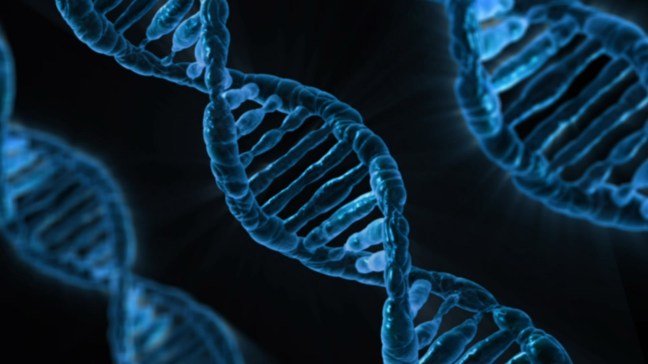
Of course, our DNA articulates the building blocks of how our bodies grow — a type of narrative, so to speak — but beyond that, our DNA carries stories of our ancestors too. Researchers have discovered that our DNA carries imprints of our grandparents’ life experiences, and perhaps, further back as well.
Sadly, this was initially discovered by looking at the impacts of trauma. When ancestors have endured trying experiences, descendants carry some imprints of those experiences. See this:
But we are not stuck in these stories. The same discovery tells us that we are writing our DNA even as our DNA writes some aspects of our lives.
So. . .
All the work we do to heal, to grow, to connect, to create space, to write new stories in our lives, and in the lives of our communities, shapes the physical building blocks of ourselves and generations that follow us.
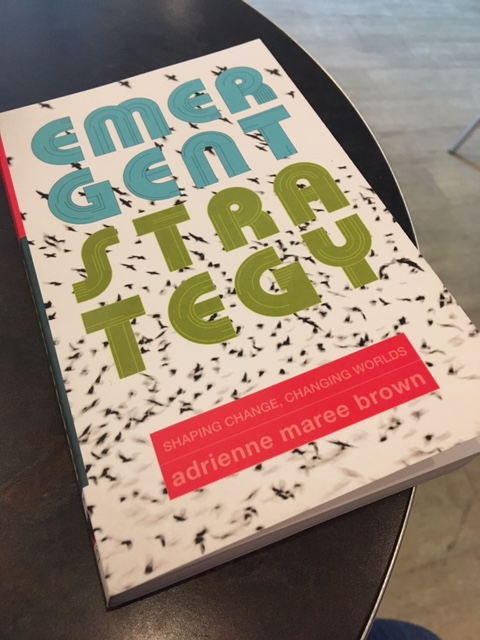
Image Description:A book is on top of a brown, curved table at an angle. Its title is “Emergent Strategy: Shaping Change, Changing Worlds” by adrienne maree brown.
I really appreciate the book, Emergent Strategy: Shaping Change, Changing Worlds by adrienne maree brown. I find it to be a remarkably refreshing, empowering paradigm shift in how we understand our relationships, our connection to the earth, our activism, our organizing, and our processes for affecting change.
There is so much I could share, as this has opened up reflections for me in many directions. But today, I want to share a piece of the book that has been sitting personally for a long time.
adrienne marie brown says,
“We need each other. I love the idea of shifting from ‘mile wide inch deep’ movements to ‘inch wide mile deep’ movements that schism the existing paradigm.” (page 20)
Inch wide, mile deep… I absolutely love that.
She is encouraging us to move away from a paradigm we might recognize very well (do you?) — that is, plunging into task-oriented work in a huge array of areas based on the urgency of the many needs around us. Those needs are very real, and when we experience burnout, we might find ourselves driven more by ‘shoulds’ than feelings of relational care. In the midst of this, she encourages to move toward a paradigm that is based on relationships — going deep with them, going deep with the care of them — because that is how transformation really happens.
It’s also much more sustainable. Whether it’s in our employment, our vocation, our neighborhood vision, or in larger scale movement work, mile wide, inch deep rhythms often lead to high burnout and low impact.
But inch wide, mile deep… That’s refreshing, transformative work.
And lately, I’ve found myself desiring this. To plant myself/ourselves particularly — not widely, but deeply — to be all-in on a few things, very specific inches,
trusting that those roots go deep, trusting that those roots find nourishing soil, trusting that those roots intertwine with other roots,
finding connection to the people planted in other inches. (and intersecting) (and providing collective nourishment).
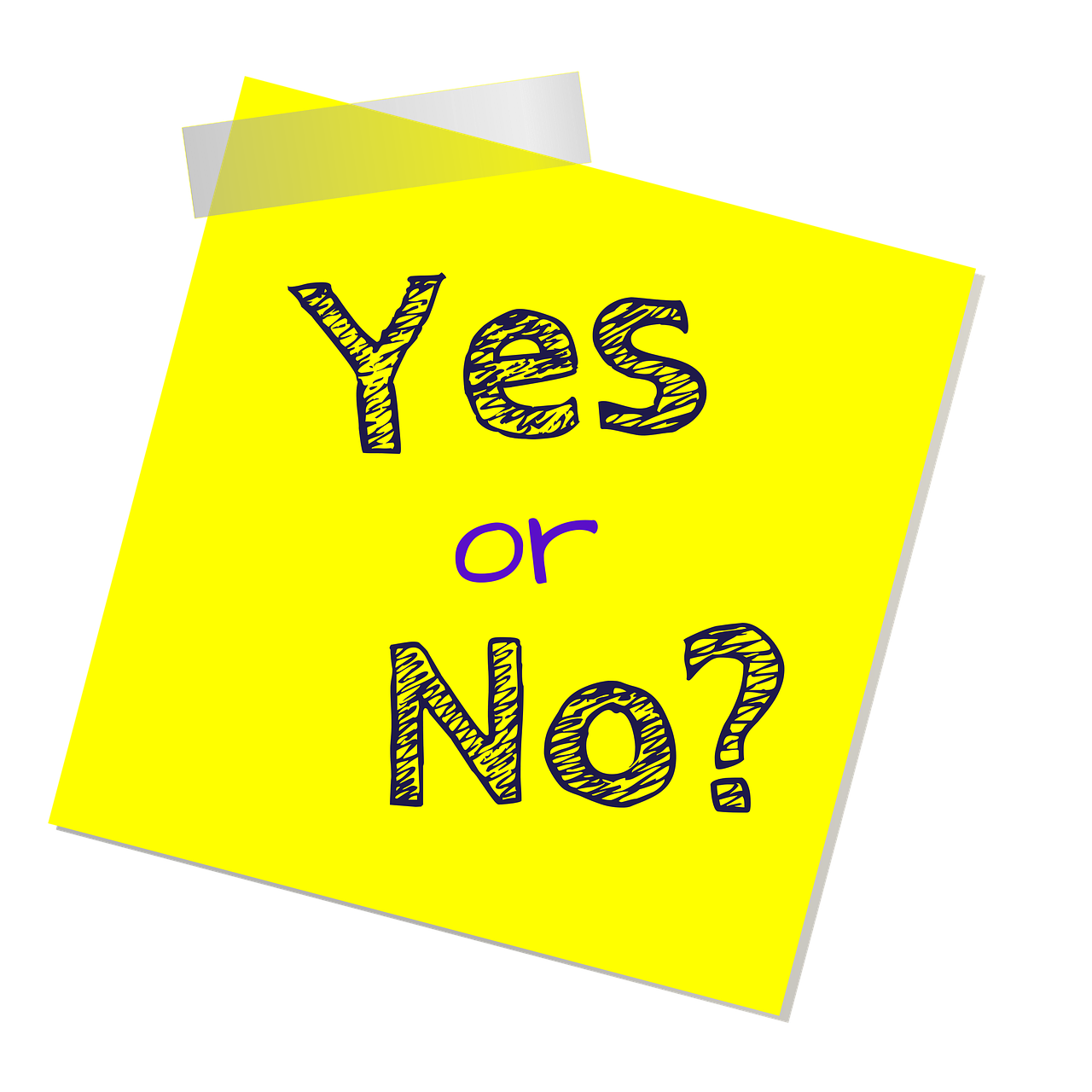
Image Description: A yellow, taped post-it note reads, “Yes or No?”
There are times when we have to say no to what is being asked of us, even if it’s good and important, in order to say yes to the most central value we have.
We have to protect it, not only because it’s important to us, but because it might be the most important role we play in community.
We can’t say yes to everything. We are limited people.
Sometimes, we have to say no so we can keep saying yes.
Image Description: The word ‘STRESS’ is written in all-caps over and over again. Each word is placed on top of another and is part of a pile.
Okay, that’s a dramatic title.
But doesn’t that seem true? Doesn’t that feel true?
Perhaps like me, you’re witnessing a lot of stress rising to the surface. We may feel this inside ourselves or see it in those around us. We need empathy to care for the stress inside ourselves and those we love. This is important. At the very same time, there are many occasions for burnout or frustration.
Some people are carrying particularly painful experiences at the moment — difficult emotions of grief, financial downfall, illness, challenges in making decisions about schooling and public events, and much more.
And at the very same time…
Collective, near-universal stress seems to be rising too.
This is what I suspect is happening: We all got a bit more normality in our lives, and that made us feel safer and more supported to feel our fuller range of emotions from 2020.
“It’s a COVID hangover,” someone said to me yesterday.
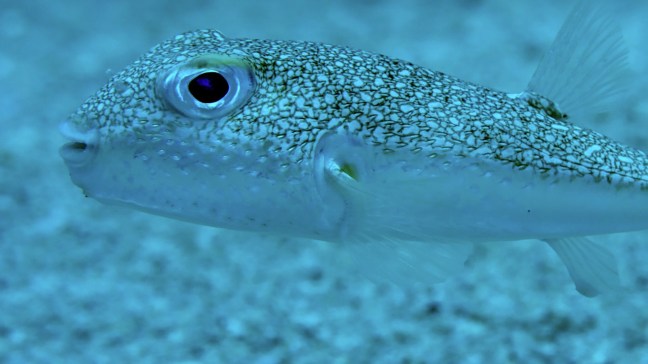
This tiny, seemingly insignificant pufferfish astounded me the other day. I have never heard of such a little artist until I watched a BBC Earth video a few days ago.
This little fish creates an artistic structure in the sand – one that’s complex in its detail and mathematical precision. It’s astonishing. We’re left curious, how does this little being have such an ability?
And we feel a sense of wonder.
I think we need a sense of wonder, particularly in times of great stress. We need to be reminded that there is a world worth feeling awe about – a world worth living in, a world worth protecting.
Perhaps there are times when we struggle to access a feeling of wonder. And if so, that’s completely understandable and okay. But thankfully, curiosity and wonder are things we can practice. They aren’t goals or benchmarks. They’re play. We can always engage them.
So what initiates your sense of wonder these days?
Image Description: Handwritten letters piled on top of one another.
Do you know what’s great? Handwritten letters.
I didn’t really know I was missing this. In fact, I viewed letter writing purely as a genre from the past. But during this pandemic, I’ve received a number of them, and they give me joy. One of my very best friends sends many people handwritten cards, and they are such a gift. She’s made this a personal practice. I love it.
This has helped me think about something within the letters too. It has me thinking about the beauty of slow connections. We need these.
When I say slow connections, I’m talking about more than the amount of time between sending and receiving mail, though that’s certainly a slow connection. (And getting slower all the time? Eeek?) I’m also talking about the types of life snapshots we might capture in handwritten letters – how letter writing depicts them in a slow and unique way, then uplifts their value as we share them with others.
As I mentioned, this person is one of my very closest friends. We talk over the phone about significant things that are happening in our lives. I send her photos and videos over texts. We connect about large things and immediate things. But when she writes me a handwritten card, I have the opportunity to learn what’s going on that particular day and that particular moment through written words.
For instance, the cats just jumped across the room in a funny way, though they were cuddly a few minutes before. The tea is really good this morning. Her husband just said a funny one-liner.
Slowness takes time to capture these, prioritizing the small things as meaningful. Slowness takes time to share these with a friend.
To enjoy them. To choose them. To write them down. To put them in the mail in the anticipation of a friend seeing them too.
I vividly remember that before my brain surgery in 2012, I signed consent forms. On these forms, my surgery was called “elective craniotomy.” I asked the nurse what that meant; after all, I never got the sense in the months leading up to surgery day that this procedure was optional. They explained that “elective” meant this was not an emergency surgery; I was conscious and able to consent. We scheduled the surgery in advance. It didn’t have to happen that exact day. I had waited three months for this surgery, so that I could finish college first. That’s what elective means in this context.
Having to cancel elective surgeries because of COVID — again — is causing people to have some very important treatments delayed. It’s not a mere inconvenience. These are often necessary and lifesaving surgeries. Hospitals are running out of room and patients are having to be transported great distances and at great cost to other hospitals with capacity. Nearly all (>95% generally, often 99%+) of the patients hospitalized now for COVID are unvaccinated. Everyone, except for those under 12 years old or those with severe allergies to the ingredients in these specific vaccines, has had the opportunity to get vaccinated by now. We could have prevented the hospitals from filling up again. But too many people have refused these very safe and effective vaccines, in the name of “freedom” or whatever. In the richest country in the world, which spends the most per capita on healthcare even before the pandemic, having to postpone one’s very necessary surgery because of a surge in preventable infections doesn’t feel like freedom to me. (Neither did having a house with indoor temperatures in the 40s during the freeze in February.)
These vaccines were developed and purchased mostly with our tax dollars. Every day they’re getting wasted when people don’t show up to get a shot. To waste a vaccine that’s already bought and paid for by all of us, and then rack up the healthcare costs associated with a preventable disease, which can add up to hundreds of thousands of dollars, is such a travesty. To lose one’s life to COVID because they believed in misinformation rather than getting a vaccine is also a terrible waste. So-called fiscal conservatives should be outraged by this tremendous waste caused by vaccine refusal. But instead we are hearing about freedom and personal responsibility, and we have neither.
No one has a civil right to spread a deadly contagion. Failure to participate in public health should bar someone from certain aspects of public life. I’m all for employers requiring their employees to be vaccinated, and onerous consequences for those who do not, such as rigid testing requirements. I strongly support any evidence based strategies for getting people to choose to be vaccinated. I just wish we didn’t need any of this. I volunteered over 20 hours in February to qualify for a vaccine. Now it’s easier than ever to get one, and so many still refuse, and the hospitalization rates are climbing. We see so many stories of people hospitalized now saying they wish they had gotten vaccinated. I see GoFundMe campaigns raising tens of thousands of dollars to cover hospital and funeral costs of people who refused a free vaccine. It’s just such a waste.
I feel so much dismay just sitting here on my couch, largely removed from the crisis unfolding behind the closed doors of hospitals. I can’t imagine the frustration and desperation of the healthcare workers handling another wave of COVID, having to hear the patients who can still talk expressing their regret about not getting the vaccine. Or those treating children who of no fault of their own were not adequately protected by the adults around them.
It did not have to be this way.
— Lauron Fischer
Lauron Fischer is a Special Projects Manager for the city of San Antonio. She is a brain tumor survivor, a public health advocate, and a friend to many. She lives with her partner Colin Meyer and their daughter Sloan in Olmos Park, TX.