“Who Brings the Casserole?”

potluck

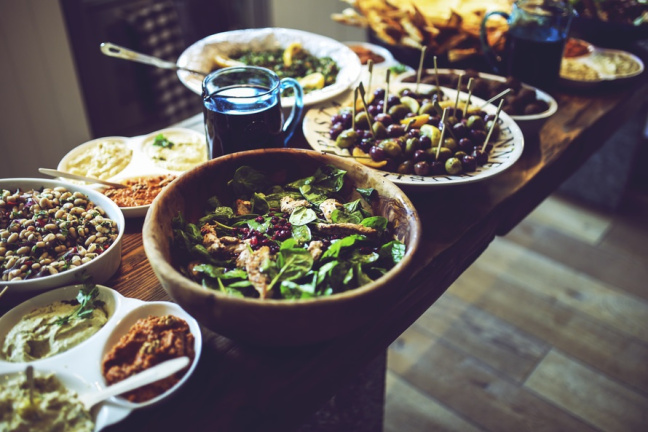
Image Description: Various dishes on a table for a potluck. Public domain image.

Over coffee, I had a meaningful conversation with a person who works with our local chapter of NAMI — the National Alliance on Mental Illness.

“Churches and extended community groups know how to provide care for people with cancer. We should be able to do the same thing for people experiencing mental health challenges,” she shared.

When someone is depressed, who brings over the casserole?

When someone is traumatized, who makes phone calls to check on them?

When someone is easily overstimulated or triggered, who accompanies them to the grocery, aiding them in the slew options, colors, and florescent lights?

Good questions. I am grateful that she is bringing these questions to congregations and our wider county.

Later that same evening, I had a phone call with Project UPLIFT. In my staff role with the Epilepsy Foundation of Michigan, we host an eight week program over the phone for people with epilepsy and depression. I do this with alongside an incredible psychologist who teaches, facilitates, and provides people with tools to manage depression.

I find myself curious about our unquestioned, cultural beliefs… Why is it that we treat certain health conditions with community care but treat people with a mental illness as though their condition is some kind of character flaw? (It’s not). I also find myself curious…Why do we tend to make this big internal dichotomy between physical illness and mental illness, as if mental illness is not also physical? (Of course it is).

These questions keep swirling…

—Renee Roederer

The Spiritual Practice of Asking for Things

threads

Image description: Spools of thread in many colors.

Last week, a student said to me, “You know, it’s like my Mom always used to say: ‘Ask and you shall receive’!”

I smiled. “You mean… Jesus?”

“Wait! Jesus said that?!?”

We both laughed hard. It was a very dear moment.

Whether we heard this phrase from Jesus or our various Mamas, I think it’s true. In fact, I’ve started engaging this as a spiritual discipline of sorts. I am practicing asking people for things.

This is because I truly want to live in the directions of abundance and interdependence. We need these.

Last week, with this in mind, I sent an email to people in a local congregation I love. I had a tear around the pocket of my clergy robe which was getting bigger all the time. Last month, it was big enough that I stopped wearing it. I asked if anyone has skills in sewing, naming honestly that that’s not my gift.

I immediately had four people offer to fix it.

When I gave my robe to one of those people on Sunday, she had it finished one day later.

Amazing!

I have a lot of gratitude for this and for the ways other people provide in my life too.

Everyone has skills, time, interests, and resources to share with others. As I’ve begun asking people for their skills, time, interests, and resources, I have begun to consider just as intentionally how I can share my own.

Might I offer to make this person a meal?

Where should I send this extra money?

How do I do the things I do best… toward others?

This is a good discipline.

It’s good to ask.
It’s good to receive.
It’s good to give.
It’s good to provide.

Thanks, Jesus. Thanks, Mom.

—Renee Roederer


Simple Truth, Big Invitation

IMG_6955

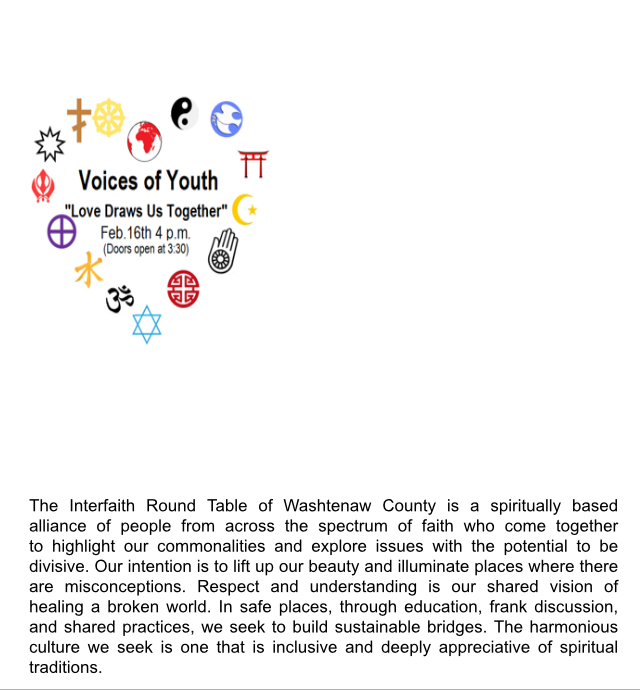
Image Description: The front of a program, entitled “Voices of Youth: Love Draws Us Together.” It also gives the date and time: “February 16th 4pm (Doors open at 3:30pm).”Symbols from various faith traditions surround these words in the shape of a heart. Below is a paragraph that reads, “The Interfaith Round Table of Washtenaw County is a spiritually based alliance of people from across the spectrum of faith who come together to highlight our commonalities and explore issues with the potential to be divisive. Our intention is to lift up our beauty and illuminate places where there are misconceptions. Respect and understanding are our shared vision of healing a broken world. In safe places, through education, frank discussion, and shared practices, we seek to build sustainable bridges. The harmonious culture we seek is one that is inclusive and deeply appreciative of spiritual traditions.”

Simple truth, big invitation.

I find myself reflecting on this one day later.

Yesterday afternoon, the Interfaith Round Table of Washtenaw County hosted a choir concert featuring performances from four children and youth choirs representing a variety of faith traditions. Children and youth from the Baha’is of Washtenaw County, the Chinmaya Mission of Ann Arbor, St. Paul United Church of Christ, and The Church of Jesus Christ of Latter-Day Saints all performed songs based on the concert theme of “Love Draws Us Together.”

The kids were incredible, and they led the way. They brought home that theme of love and made it come alive. There were feelings of love in the room, along with support, encouragement, and delight. The audience ended up singing along a lot too. So there was an invitation to join the music and participate fully.

Love draws us together.

This is a simple truth, but a big invitation.

Love isn’t only a feeling.

Love invites action.
Love invites tangible care.
Love invites mutual understanding.
Love invites dignified appreciation.
Love invites respect.

Love takes risks.
Love works through conflict.
Love stretches us toward empathy.

Love invites questions:

Who am I called to be, and how? Who are we called to be, and how?

—Renee Roederer

The Unknown Sarah Smith

IMG_6747

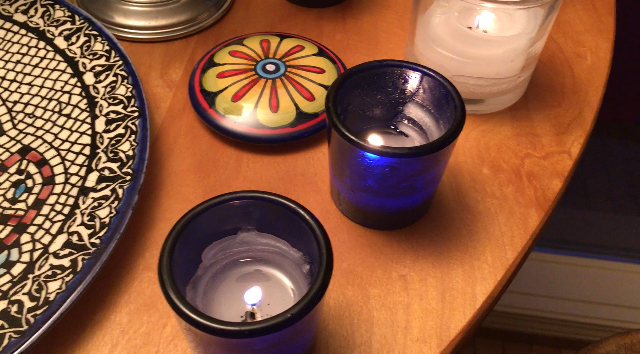
Image Description: Candles from Compline. Three lit candles are on top of a table. Two of the candles are blue, and the other is white. There is also a blue and white plate and small, flat, ceramic piece with a painting of a yellow and orange flower.

“Who brings out the best you?”

My friend and colleague asked that question last night when we were gathered with students at Compline. “Who has shaped you deeply — not necessarily in ways that made you like them — but in ways that made you more like you?”

We each had the occasion to reflect on that and share if we wish. I have some people in my life for whom my answer is immediate and obvious. They have given me this kind of gift in abundance, and I was grateful for the occasion to share about them.

So I bring those questions to you today also:

Who brings out the best in you? Who has shaped you deeply — not necessarily in ways that made you more like them — but in ways that made you more like you?

In the midst of our conversation, my friend and colleague also lifted up a passage from C.S. Lewis The Great Divorce. I’ve never read that book before, so this was unknown to me. While receiving a glimpse of heaven with a guide, a man sees a person he’s never encountered before.

“Is it? … is it?” I whispered to my guide.

“Not at all,” said he. “It’s someone ye’ll never have heard of. Her name on earth was Sarah Smith and she lived at Golden Green.”

“She seems to be… well, a person of particular importance?”

“Aye. She is one of the great ones. Ye have heard that fame in this country and fame on Earth are two quite different things.”

“And who are these gigantic people… look! They’re like emeralds… who are dancing and throwing flowers before her?”

“Haven’t ye read your Milton? A thousand liveried angels lackey her.”

“And who are all these young men and women on each side?”

“They are her sons and daughters.”

“She must have had a very large family, Sir.”

“Every young man or boy that met her became her son — even if it was only the boy that brought the meat to the back door. Every girl that met her was her daughter.”

“Isn’t that a bit hard on their own parents?”

“No. There are those that steal other people’s children. But her motherhood was of a different kind. Those on whom it fell went back to their natural parents loving them more. Few men looked on her without becoming, in a certain fashion, her lovers. But it was the kind of love that made them not less true, but truer, to their own wives.”

“And how… but hullo! What are all these animals? A cat — two cats — dozens of cats. And all those dogs… why I can’t count them. And the birds. And the horses.”

“They are her beasts.”

“Did she keep a sort of zoo? I mean, this is a bit too much.”

“Every beast and bird that came near her had its place in her love. In her they became themselves. And now the abundance of life she has in Christ from the Father flows over into them.”

I looked at my Teacher in amazement.

“Yes,” he said. “It is like when you throw a stone into a pool, and the concentric waves spread out further and further. Who knows where it will end? Redeemed humanity is still young, and it has hardly come to its full strength. But already there is joy enough in the little finger of a great saint such as yonder lady to waken all of the dead things of the universe into life.” (C.S. Lewis, The Great Divorce)

The Unknown Sarah Smith.

Who brings out the best in you? Who has shaped you deeply — not necessarily in ways that made you more like them — but in ways that made you more like you?

—Renee Roederer


Michigan Nones and Dones is a Platform for Conversation

speech bubbles

Image Description: Six speech bubbles on a blue background. Public domain image.

Michigan Nones and Dones is a community that has been meeting in Southeast Michigan for the last four years in coffee shops, restaurants, parks, and homes to talk about spirituality and make meaning together as friends. This community includes people who are religiously unaffiliated (Nones), people who identify with a faith tradition but have departed from traditional, institutional religious communities (Dones), and people who remain connected to faith communities to some degree but find themselves curious about new ways to form and structure community.

We often say that Michigan Nones and Dones is a community for people who are “spiritually curious but institutionally suspicious.” It’s amazing how people with many various backgrounds and perspectives can gather together under the umbrella of that description. The community includes,

-people who are agnostic and interested in spirituality and forming friendships of meaning (i.e. by this, I mean talking about life — gifts, challenges, what’s going on in the world, things that matter)

-de-affiliated Christians — folks who identify as Christian, but feel disappointed in and/or ostracized by traditional churches, or who have perhaps been excluded by churches,

-people who are atheists who want to uplift the morality of humanism,

-people who might call themselves inter-spiritual, as they grew up with more than one faith tradition,

-people who say, “I’m secular,” or “spiritual but not religious,”

-people who are religiously unaffiliated and unsure about particular, theological beliefs, but who say, “I believe in a Higher Power of some kind,”

-people who say, “I don’t like labels. I just want to have good conversation,”

-people who are connected with traditional faith communities but frustrated with unethical behavior they see happening there, longing for a better vision,

-people who practice spiritual traditions that might fall under the umbrella of mysticism.

Michigan Nones and Dones is first and foremost a community, but I realize it is also an incredible platform for conversation. How rare is it to sit around a table with all of these backgrounds, find some commonality of experience, and uplift different perspectives in ways that enrich all those who are gathered together? We all learn from one another.

It is a wonderful gift to share conversation together. These relationships matter as people are welcomed and heard, invited to share insights, and brought into friendships they might not have made otherwise.

I am grateful, grateful.

Here is a story about us in the Toledo Blade newspaper: ‘Nones and Dones’ help conflicted reconnect to their spiritual side

You can follow Michigan Nones and Dones here on Facebook.

–Renee Roederer

Can Our World Experience Post-Traumatic Growth?

Planet Earth

Image Description: The earth and the moon. Public domain image.

These days, it’s so important to give and receive gentleness from one another.

Gentleness is a consistent human need, but right now, we may need it in a particularly deep and present way. Our world seems to be reeling from waves of trauma. When we hold awareness of traumatic pain, whether we’ve experienced it directly or felt it via the news cycle, our bodies, minds, and spirits can be deeply affected.

Waves of trauma in our world are not new, of course, but right now, we are especially aware of injustices and forms of insecurity – white supremacy, economic inequality, numerous natural disasters, deportations and family separations, and violence on a massive scale. To be aware of these things is not merely to know about them but to be affected by them.

We need action – decisive, creative, and disruptive action to adequately address and rectify all of these.

And alongside that action, we also need gentleness.

Our bodies need it, our minds need it, our emotions need it, our sense of spiritual longing needs it.

And perhaps, our sense of time needs it too. Here is a paradoxical thing I have learned over the years about trauma:

Trauma often distorts time. This is especially true in a post-traumatic experience. A small detail in the present moment can suddenly pull us back into the past, making it feel as though a past upheaval is happening right now. Likewise, a small detail in the present moment can suddenly ignite anxiety, causing a tailspin of fear in which we imagine a future where the upheaval might repeat itself. In these ways, trauma can bookend the present moment with a past and future that feel quite painful and insecure.

But with gentleness,

Trauma also opens up time. This is a pretty miraculous thing. There is also concept called post-traumatic growth. (Watch this video). Some people who experience the upheaval of trauma are able to remake their lives and live them more deeply, often with a greater sense of love and spiritual meaning than they might have had before. This is in no way to suggest that the trauma is somehow a good thing or a blessing in disguise. Certainly not. But post-traumatic growth can happen alongside the traumatic distortion. When it comes to a sense of time, there can actually be a bit of reversal of what I’ve articulated above. Good memories and meaningful relationships can be internalized in such a way that they are felt as deeply present. Beloved people and life-giving moments from the past and hopes for the future can feel more accessible in the present moment among people who have experienced post-traumatic growth.

So what helps people experience this kind of growth? Two things are very important:

1) being surrounded by a community of care with relationships that add gentleness and sustaining presence

and

2) becoming enabled to make meaning of the traumatic experience, while learning to create a new narrative with that meaning.

So these days, in this time we’re living, I wonder,

Can our world collectively experience post-traumatic growth? Can this be a collective awakening toward deeper love and greater meaning?

Those questions are not easily answered, so they linger.

But I know this: Gentleness will be important.

—Renee Roederer

God Has Arms

heart

Image Description: Two people, standing side by side, are intertwining their hands to make them into a shape of a heart.

This is a repost from a piece published here on September 12, 2018.

“But why doesn’t God have arms? I just… I wish God had arms.”

That’s what I lamented as we drove through the Texas Hill Country. The scenery was lush with long, green grasses, wildflowers, a creek, and pastures with longhorn steers. But I wasn’t noticing any of that beauty.

At age 26, I sat in the back of a Volvo and felt devastated about David’s cancer. Like a slow moving storm, I was experiencing the kind of lament that hovered over anger and despair in the five stages of grief, not moving much lately, just churning and pouring it all down.

It was all anticipatory grief. David was still with us and was his typical self too — funny, endearingly irreverent, curious, committed; still voraciously reading, still reassuring and loving of me. He was, in fact, concerned lately about how much pain I was feeling in all of this. The anticipatory grief of this particular, impending loss was enormous on its own, but along with it, this seemed to pull up previous losses I had not fully grappled with before. The cumulative grief demanded to be felt.

So feeling invited to do so, I sat in the back of Ben’s Volvo and lamented. I wanted to be comforted in all of this, and God was supposed to be this cosmic force of ultimate love in the world, right? But… was God just… a neglectful parent? Another example of this gnawing absence I was feeling? I mean, what good is a God that has no arms?

Maybe in some ways, that was a silly detail to fixate upon, but fixate I did. Yet in its own way, it was an apt fixation. When grieving like that, who doesn’t want to be held? Not metaphorically — which was my point — but actually held?

The Volvo arrived at Mo Ranch, a Presbyterian Camp and Conference Center in Hunt, Texas. We were there for College Connection, a week long event that in involved play, worship, shared meals, and reflection among college students. I was there to be a volunteer leader, assisting in worship and facilitating a small group.

Though I had not met him before, the keynoter for the week was a very beloved speaker in Presbyterian circles, well known for his work in youth ministry as a pastor and now, as a seminary professor. I heard him speak throughout the week and experienced him to be engaging, deep, funny, joyful, and inviting.

For most of the conference, I put on a face in public and pushed through my own leadership commitments. But privately, I felt miserable. Why doesn’t God have arms?

I just kept lamenting that, which was of course, a symbol for everything I was feeling. Then before the last worship service, I let myself voice that aloud once more.

The keynoter had become a friend during the week, and before that last service, we sat outside the hall, waiting for it to be unlocked so we could set up the space. With time then to spare, he asked me how the week had been for me. So I told him the truth. I talked about David, how much he meant to me, and what a gift he was in my life. I talked about cancer and the devastation of impending loss. I voiced the whirlwind of my feelings, and then, I eventually said it again:

“But why doesn’t God have arms? I just… I wish God had arms.”

The keynoter heard me meaningfully. And somehow, that conversation allowed me to enter that worship space with more vulnerability. This was a healing and wholeness service after all, and I let my public, putting-on-of-a-face fade.

I had a small role in that service. We had a time of anointing one another, placing a bit of oil on the foreheads of those who requested it with prayer. I participated in that. But when I was finished, I walked to the back of the hall and just sat in a chair totally dejected.

My eyes were closed with tears falling down my cheeks, so I didn’t really see this coming. But when he was finished with his part, seeing my sadness, the keynoter came to the back with me. I didn’t see him walk there. I only… felt his arms.

He absolutely bear hugged me. And I just melted into him.

I let the sadness be there, really and truly. But then I smiled. I already knew what he was doing before he said anything aloud.

But soon after he started to embrace me, he voiced it it. With great presence, he said,

“God does have arms.”

–Renee Roederer
A Prayer by Rev. Nadia Bolz-Weber

candle-in-glass-holder

Image Description: A candle is burning in a glass holder.

Yes!!! to this prayer, crafted by the Rev. Nadia Bolz-Weber, based on the story of the raising of the widow’s son in Nain (Luke 7:11-17). She published this in her post, I’m Dabbling in Compassion, which I highly recommend.

God of compassion,

As you did in Nain, enter our city gates. Enter into the somber roads down which our hearses drive and the glad streets down which our children run. Enter the parks where the junkies shoot up and the yuppies listen to jazz. Walk uninvited into starter mansions and public housing and dorms and cheap motel rooms that charge by the hour. Stroll into the cool-air freezer section where the pregnant women escape the heat and the bus stop benches where the weary wait. Enter every law office and adult books store. Step into the spaces we say we feel your awesomeness and the places where we claim your forsakenness. Enter our city gates, God of Compassion as you did the city of Nain. And bless.

Bless the things we mistakenly think are already dead. Bless that which we have already begun to carry out of town to bury. Bless our rocky marriages and our college age kids who smoke too much pot. Bless the person at work who we love to hate. Bless the young adult who wonders if they are too young to really be an alcoholic, and bless the 6o year old woman who’s had too much work done. Bless the public school lunch ladies and the guy who stole my kid’s bike. Bless the chronically sick. Bless the one who has no one. Bless what we call insignificant and which you call magnificent. Bless it all and love what only you can love: the ugly, and abandoned and unsanitary in the wash of humanity upon which you have nothing but a gleaming compassion when we have none.

God of Compassion who saw the Widow of Nain, we thank you for seeing us. Seeing our loneliness and our bravery. Seeing the times we can’t say what we need to. Seeing the ones who have never felt like they are enough but who you know already are and always have been. Seeing the moments when we are more than we thought we could be. Seeing what no one else can or will. Thank you for seeing as beautiful what we call ugly and that in your compassion you wipe away all tears. Teach us to see each other.

Reach out and raise us God of compassion. Touch us as you did the wood on which the widow’s son lay and speak those same words to us: Young man arise. Little girl, get up. To we who think we are not worthy to be loved and medicate ourselves with food and booze and shopping, say “rise up”. To us who have been hurt by those who say they follow you say “rise up”. To those who feel unworthy of forgiveness say “rise up”. To the ones who care for the least of these and who feel too burnt out to keep going, say “rise up”. To we who are holding onto resentments like a security blanket say “rise up”. To those who hide their failings behind their good works say “rise up”. To the unloved child who has no idea that one day they will change the world say “rise up”.

And when again God of Compassion, you have raised the dead…when again you have made whole that which is broken, when again you have ripped out my heart of stone and replaced it with a heart of flesh, when again you have reached into the graves we dig ourselves and loved us back to life…don’t stop there. Help us, Lord. Like the young man of Nain help us to sit up and speak. Give us words that are not empty affirmation, but give us strong words, as real as the very soil from which you raised us.

Give us the words lord, but also (especially in my case) give us the pause before the words. Please.

And then, as you did the son to his mother, give us one to another. Make us one in this fractured world. Our country is divided, neighbor against neighbor, world-view against world-view and we are so sure we are right and they are wrong. It’s a mess down here, Lord, and we’ve prayed that whole “Thy kingdom come” line a LOT already so we might stop asking nicely. We need your Kingdom of love and grace and mercy to speed the hell up. And if that’s not possible then open our eyes to where your kingdom already is taking root and growing among us, turn our eyes from our despair to any amount of light which is spreading, however small.

And help us to know when we do not have enough compassion for the road ahead, that you do, and that that is enough.

AMEN.

-Rev. Nadia Bolz-Weber

“Isolation Be Damned”

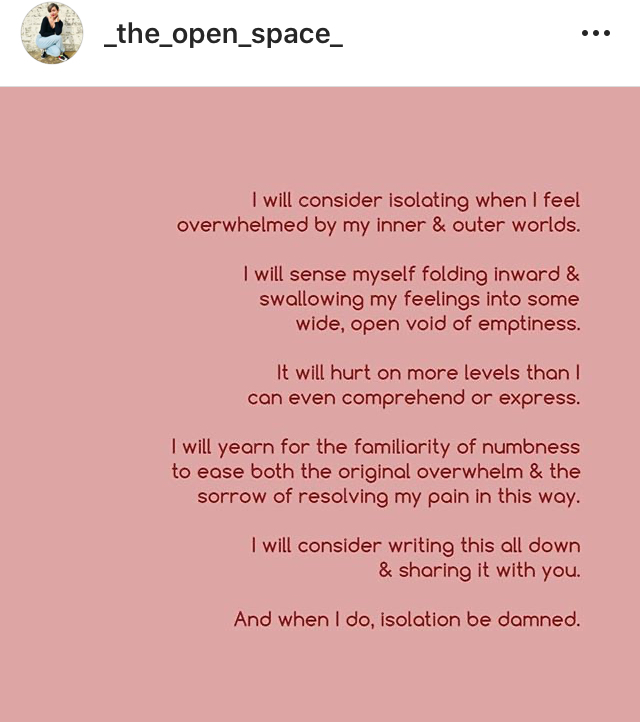
Earlier this week, while scrolling through Instagram, I saw a post by @_the_open_space, that I found to be real, raw, beautiful, and inviting all at once. May connection be fullness for us, even if it’s just one, initial, small, honest step in a direction. That step and that direction could open up a larger process toward healing.

Here’s the post:

IMG_6833

The text reads:

I will consider isolating when I feel overwhelmed by my inner & outer worlds.

I will sense myself folding inward & swallowing my feelings into some wide, open void of emptiness.

It will hurt on more levels that I can even comprehend or express.

I will yearn for the familiarity of numbness to ease both the original overwhelm & the sorrow of resolving my pain in this way.

I will consider writing this all down & sharing it with you.

And when I do, isolation be damned.

This week, I’ve started a Patreon campaign. If you’d like to participate in supporting my writing and my community work, you can check that out at my Patreon Page.