The Bible Was Written by the Oppressed

I am reminded that the largest portion of the Bible was compiled by people who were deported.

Most religious scholars believe that the Hebrew Bible was written down and organized in its final form around the time of the Babylonian Exile. The ancient Babylonian Empire decimated Jerusalem and the Kingdom of Judah in 586 BCE. The Babylonians burned the temple to the ground and took the majority of people captive, removing them from the land of familiarity to the foreign land of Babylon. It was a large-scale trauma.

While some of the texts were written beforehand, scholars believe that until that point, many stories from the Hebrew Bible were largely oral traditions told across generations.

Think about that. . .  A displaced generation compiled these written texts and oral stories into the form we know today. I thank my friend and pastoral colleague Kathleen Henrion for using the word deported in connection to these texts recently. While deportation is a modern category with its own unique challenges, it resonates with this ancient trauma. I had not quite thought about that before.

-And-

I am reminded that the New Testament was written by people who were terrorized by the occupation of the Roman Empire. The 1st century Jews of the Jesus Movement lived under fear and economic exploitation without personal freedom or collective autonomy. Jesus himself was tortured and killed by the state.

Then later in 70 CE, the Roman Empire destroyed the temple in Jerusalem again, changing the expressions of Judaism and the formation of Christianity.

Think about that. . . Jesus and his followers daring to empower the most marginalized, right in the presence of the most powerful, threatening Roman leaders.

In our modern context, powerful people often utilize the texts of the Bible to oppress others, but first and foremost, these texts were written by the oppressed.

Renee Roederer

The God Between Us

These days, I pray to the God between us.

Not to a distant God far away off in the sky somewhere. Not to a mechanistic God, constantly making things happen with the push of a “save” or “smite” button, reminiscent of some old Far Side cartoon.

I pray to the God between us.

Beyond us, yes, but only in the sense of being greater than any one of us. That, and calling us to transformative realities beyond our wildest dreams. Never far away.

Between us.
With us.
Among us.

A couple days ago, I found myself reflecting upon one of the most powerful experiences I ever had in a worship service. It was 10 years ago at Mo Ranch, a camp and conference center in Hunt, TX. I was there with a couple hundred college students at a conference aptly called College Connection.

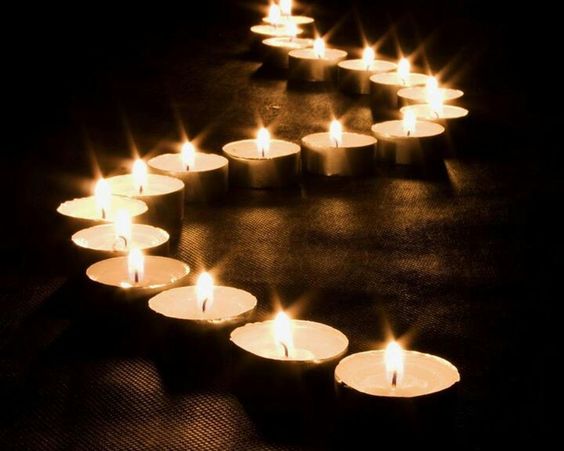
That night, we were together around 9 PM. The beginnings of a warm summer were just beyond the door of the building, and the space was filled with hundreds of candles. Students sat on the floor in close proximity. Together, we sang a lot of beautiful choruses, music with rich meaning.

Midway through that time together, we began to sing a powerful song called “Prayers of the People.” Already, we could hear the tinkling of rain on the metal roof.

The song is by Ben Johnston-Krase. He was there with us, leading us on the piano as we sang it together. We sang these words, not necessarily about ourselves, but about humanity at large. . .

We are hungry, whoa, we are hungry,
We are man, woman, we are children, whoa, we are hungry. . .

And that’s when it happened. We moved onto the main part of the chorus:

So let the rains go, let the healing river flow. Let justice roll like waters. Let the days begin when new life enters in, and let your kingdom come.

Right then, a deluge of water poured from the sky onto that tinny sounding roof. And not only that. It began to flood the space where we were sitting!

Thankfully, this was not from the roof above us, but it did come through the door onto the floor. Some of us got up quickly to move and cover electric cables, but other that, we just let it happen. As we continue to sing those words, we let that water flow right to the tables that held our candles.

The imagery and the synchronicity was not lost on us. We wanted justice to roll like waters, and in that moment, we even believed it possible.

So what happened that night? Did a far away God, off somewhere in the sky, push a “rain” button and mechanistically make that happen? Certainly, if there’s a God, God made the glories of rain. But if there’s a mechanistic process to everything that happens, I have to start worrying that there’s a cancer button, and a tomahawk missile button, and a school shooting button. I don’t believe that everything that happens is destined to happen.

But I pray to the God between us. Because when that glorious rain happened, I think God was between us, waking us up to the sacred moment as we recognized beauty and sensed a real calling to justice.

I think God is always between us, constantly inspiring us to act in transformative ways, sometimes beyond what we can easily imagine if we will notice what is around us and who is around us.

And without question, the God between us turns us toward one another, so we can marvel at shared humanity and the world.

So we can participate fully in their transformation.

Renee Roederer

Table Flipping Monday

A blessed Table Flipping Monday, y’all.

A couple of years ago, my friend and pastoral colleague Sarah Ross made a suggestion that the Monday of Holy Week ought to be considered Table Flipping Monday.  Of course, that’s a pretty humorous title, but Sarah also helped me think about this . . .

During the last week of his life, when Jesus arrived in Jerusalem to celebrate the Passover, the very first thing he did was walk into the center of communal, religious life and hold it accountable. He went into the Temple, the most holy place, and was horrified to discover that some were making unjust money as they oppressed the Jewish people in their religious devotion. He turned over the tables and chased out the money changers, quoting Jewish scripture, saying, “It is written, ‘My house shall be called a house of prayer, but you have made a den of robbers.'”

I want to be careful about how I talk about this story, in large part because throughout history, Holy Week has been an occasion when Christians have oppressed Jews and even caused violence. When I think about this day, I don’t aim to criticize the Temple or the religious heritage of which Jesus was fully a part.

Instead, I want to consider the ways in which my own religious tradition ought to be held accountable. That includes this painful history we have caused our Jewish siblings. And it includes a host of other abuses fully expressed in the present.

Religion can give life and meaning, and it can be twisted as a tool for oppression.

There are a multitude of ways in which tables ought to be flipped over. In fact, accountability and truth telling can be acts of spiritual devotion in and of themselves.

Jesus rages against the oppression and manipulation of others. Today, we need prophets and holy agitators to follow into this calling. I offer my gratitude today for people who hold my tradition and our actions to account.

One of Christianity’s foundational teachings involves a holy leveling – an inverted shift where the marginalized become the most empowered and the most powerful are brought into humility.

But too often, we fall far short of this vision. Today can serve as a day of confession.

May Jesus and a host of others flip the tables.

Renee Roederer

Syria: Few Words, But Many Emotions

We have been at war continuously since 2001.

In the last few years, U.S. bombs and drone strikes have become so prevalent that they have fallen out of our news cycle. Normalized and out of view, they fall from the sky and fall from our consciousness. But for others, they upend human lives, destabilize entire neighborhoods, and create lasting trauma. 

My heart is with Syria today. 

I have very few words but many emotions. . . These words do very little justice to the gravity of the situation, but my heart expresses concern for people trapped on the ground, refugees displaced and rejected, and children who will bear the scars of these days throughout their lives.

My heart expresses concern for people enlisted in the U.S. military who are wondering what this means for their lives. I am concerned for their families.

And above all, I pray for the day when violence ceases in all directions, and we begin to beat swords into plowshares.

That feels so far away.

The Fully Alive Alternative

I know in many ways this is so obvious, but it’s on my mind and heart quite a bit this week. . .

If we want to create alternatives to much of what we stand against –

Alternatives to consistent disregard for the environment,

Alternatives to endless greed and predatory capitalism,

Alternatives to structures solidified by racism and white supremacy,

Alternatives to empire upheld through continual war,

Alternatives to a host of societal wrongs. . .

If we want these alternatives, we have to start living them in community right now. We can live these commitments in relationship right now.

Without question, to bring about these alternatives fully, we have to deconstruct and dismantle the destructive realities that are harming human lives and our planet. That is large, sweeping work on all levels.

But we also have to build something different. Even on a small scale, we can model something different, allowing and encouraging these alternatives to take hold and grow.

Like I said, this is extremely obvious, not a novel idea. And people are already working to live this way. People I know, in fact.

But this week, it really hit me that we need communities around these alternatives now, not only so they can take root for the future, which is of course true, but because we need hope and a fuller sense of aliveness right now. People are losing heart. Some have been losing heart and hope for a long time.

Our alternatives cannot exist solely in a far off, distant future we’ll never see, though I certainly hope that timescale does matter to us. We are definitely working for the future. But in addition to that, we can work for the present. We can start living these values right now. How else are we going to get to where we want to go?

We can live more fully with one another right now.

Renee Roederer

Missing Voices

Confession is important. There are times when we need to take stock of our vision and recognize the ways we have fallen short of the values we want to embody.

Right now, there are 980 blue and maize chairs set up on the Diag at the University of Michigan. This is the projected number of missing students of color from 2007-2017. Minority enrollment has decreased quite a bit during that time after the passage of Prop 2, a ballot measure which eliminated the consideration of race in admissions throughout the state of Michigan.

The University of Michigan is currently is celebrating its bicentennial anniversary. These chairs are are part of an art project called Stumbling Blocks. Right now, multiple installations are on campus, seeking to acknowledge of the ways that the university has fallen short of its vision.

The University of Michigan does not have enough students of color in its student body. These are some of the missing voices among us. This is a systemic problem that affects the quality of education across the board.

I recognize that affirmative action remains controversial in the thinking of many, but it was effective in rectifying some of the stumbling blocks students of color were already experiencing in high school education. There are great educational disparities in Michigan.

These missing voices are smart and deserving. And they could have added vital perspectives that would have shaped all of us.

After all, how do you have effective conversations about race in the classroom when the class may have 0-2 students of color enrolled in that class?

Renee Roederer

Go Local

Go local, my friends.

It’s so important. If we want to see substantive change that leads to greater justice, peace, and equity for our neighbors and ourselves, we have to cast better visions and enact them at all levels. 

Last night, the Ann Arbor City Council held a public hearing and voted upon an ordinance to reaffirm and rearticulate its commitment that city government does not inquire of the immigration status of our neighbors. The ordinance lays out a couple of rare exceptions, but overall, this is the policy that the city promises to follow. 

The decision was made for a couple of reasons. Council Members are concerned for the 41,000 immigrants living in our county, and the ways their lives have been disrupted by recent shifts in rhetoric and policy. They also know that when police officers begin to partner formally with ICE, immigrants stop reporting crimes and testifying in court. This can lead to greater violence, abuse, and wage theft against immigrants, who are less likely to come forward. It also means their testimony is missing in areas of needed safety.

No ordinance is perfect, and change is not always enacted best through government. But we have to go local in our vision. If we want to care for our neighbors and our environment, that’s one of the crucial places to make it happen.

We can go local on social media too. When we share what is happening locally, we humanize national debates. We inform one another in ways that lead to better partnerships and alliances. We can be local storytellers. We can be local vision cultivators.

Last night, during the City Council meeting, I was really moved by a number of statements from Council Members who thanked residents for their voices and their work to shape local vision. I wrote them down:

“Keep telling us what we can do as next steps. We are responding.”

“We’re so glad that you’re here to help us consider these decisions.”

“We want to thank you for helping us protect some of our most vulnerable citizens.”

“There is a lot of despair when we see the national headlines, but it gives me much hope to see so many of you here tonight.”

Go local, my friends.

Renee Roederer

S-Town: Me Too

Like so many others, I spent the weekend listen-binging to the newly released podcast S-Town. And I really needed it.

In case you’re wondering, the title is a polite, public radio way of saying S***town. A mystery begins when an eccentric character of a person sends an email to Brian Reed of This American Life. His name is John B. McLemore. The subject line has the same name as the podcast. In that email, John B. McLemore encourages Reed to investigate a murder in Woodstock, Alabama, the s***hole of a town where he’s lived his whole life.

But the podcast doesn’t end up being about that murder. It’s about John himself.

No spoilers. Instead, I recommend that you give this podcast a listen and learn about John. Without giving anything away, I can say that this: This podcast is an attempt to find beauty under layers and layers of pain. And I think it succeeds.

Perhaps like me, you listened and really needed this podcast this week.

I’ve been weighing a lot lately. . . I think we probably all have. Last week, a couple of different situations absolutely knocked the wind out of me. I spent the last week feeling deeply sad, and at times, angry. On top of this, I know that many of us have spent the last ten weeks collectively concerned – maybe overwhelmed is a better word – for our nation and world, wondering, where are we going? Will people have what they need?

These large, collective pains and the specific ones known in our more immediate circles can weigh heavy. In moments like these, we certainly don’t need a silver lining, but it does help to find beauty in the midst of the pain.

And that’s where we need each other. Sometimes that beauty is easily found, but other times, we have to do some serious digging. And the digging process often starts in a helpful way when we look each other in the eye and say, “Me too. That’s how I’m feeling too.”

Then we dig and see what we can discover.

Renee Roederer

W.W. Moments

We call them W. W. Moments.

Ian and I use this phrase to describe moments when truth emerges quite suddenly, often in unexpected and unavoidable ways. It’s a reference to a particular scene in the series Breaking Bad.

What follows is a major spoiler, so if you haven’t seen that series and you expect to do so, read no further.

Throughout the series, Walter White is cooking high-grade methamphetamine and making an absolute fortune. This started out as an attempt to supplement his income as a high school chemistry teacher and pay for his cancer treatments. But it doesn’t take long for it to spiral into a life of crime, violence, and grand secrets. All of this, of course, is kept from his family. And that is especially important because Hank, his brother in law, is a DEA agent.

Throughout the series, Hank seeks answers obsessively. He wants to capture an individual known on the streets as Heisenberg, an elusive, prolific meth cook who has crafted a blue form of the drug, the purest he has ever seen. Hank goes to great lengths to investigate and capture Heisenberg, including getting severely injured. He’s taken off the case, but he just can’t let it go… Little does he know that Heisenberg is his own brother in law.

Breaking Bad has five seasons. Well through the final season, Hank has been continuously on the trail but unable to figure it out.

Until one particular moment. The W.W. moment.

Skyler, Walter’s wife, has recently figured it out herself. She has become complicit, laundering the drug money through the recent purchase of a car wash business. That night, Skyler and Walter decide to share a narrative to help all of this make sense. Walter has a gambling problem. . . but he’s really good at it. He won a lot of money, and they have invested it in the purchase of this new business.

This is the lie they decide to tell Hank and Skyler sister, Maria, over dinner.

And at first, it works. At first.

Then Hank goes to the bathroom, where the weight of the full truth emerges unexpectedly and unavoidably. In a mundane moment of calm, Hank reaches behind him to find some bathroom reading material. He finds a book of poetry by Walt Whitman, and inside the the cover, is a written dedication by Gale Boetticher, an individual that Hank has already encountered in his investigation: “To my other favorite W.W. It’s an honour working with you. Fondly, G.B.”

Memories from the investigation suddenly come rushing back, and in a moment of absolute horror, Hank realizes the unexpected but unavoidable truth: Walter White, his own brother in law, is Heisenberg.

W.W. Moments. . . Despite the great amount of wrongdoing and secrecy that happens in this world, I think that truth often takes on a life of its own. It refuses to stay silent.

If you’ve ever discovered a W.W. Moment, you know that it can be equal parts exhilarating and terrifying. It can serve as the ticket to long awaited accountability, but the knowledge carrier is also put at risk just for knowing the truth. Above all, it is disorienting. Truth is not necessarily what we thought it was.

Yet truth does emerge, and this is a good thing. Even a holy thing.

W.W. Moments are truth’s revolt, pathways of revelation that cannot be controlled – not by an alliance, an authoritarian, or an autocrat. Not by a family, a business, a conartist, a religious institution, a university administration, a crime ring, or even the highest office of the land.

Truth revolts and reveals.

Renee Roederer

#BlackWomenAtWork

I want to encourage us to take a few minutes today to look at the stories emerging under the hashtag #BlackWomenAtWork. You can find them on Facebook and on Twitter.

On live television a couple of days ago, Bill O’Reilly was watching a clip of Representative Maxine Waters discussing Russia. When the clip was over, he said, “I didn’t hear a word she said. I was looking at the James Brown wig. If we have a picture of James, it’s the same wig.”

In response to these remarks, black women are sharing stories of their encounters with racism and sexism at work. They are naming the everyday racism and sexism they’ve encountered simply when they are trying to do their jobs.

It’s important to take this in and name it for the sinister reality it is.

Renee Roederer