I know I’m really late to this party, (especially since we’re an astronomy family) but Neil deGrasse Tyson’s Cosmos: A Spacetime Odyssey is literally one of the best things I’ve ever seen. I started watching it on Netflix last week, and it is stunning.
I expected to feel a certain level of awe and wonder while watching it. After all, it’s an exploration of the UNIVERSE with Neil deGrasse Tyson. The universe has not disappointed in that regard.
But in addition to feeling general wonderment at its size, scope, and mystery, Cosmos has really evoked emotions in me. The visuals and simulations are truly gorgeous, and Neil deGrasse Tyson is a skilled storyteller. He weaves together some of history’s most wonderful stories of scientific discovery with an exploration of the cosmos – demonstrating the incredible immensity of its largest astronomical bodies and the utter complexity of its smallest particles and organisms.
In the first episode, after already being so impressed and moved by all of these things, Neil deGrasse Tyson brought me to tears. He concluded the episode by pulling out an old planner and showing it to the audience. It was Carl Sagan’s calendar and planner from 1975.
On December 20th, it reads, “Neil Tyson.” That is the date that Carl Sagan invited the 17 year old Neil deGrasse Tyson to Cornell, where he spent time with him, talked about science, and welcomed him in a way that changed the trajectory of deGrasse Tyson’s life. During that visit, Carl Sagan pulled one of his own books off the shelf, and autographed it, saying, “To Neil, a future astronomer.”
This story really moved me. Carl Sagan had not even started his own Cosmos series yet, but it would come, then someday down the road, this young teenager would continue in that tradition — not only continuing such a series, but becoming another well-known astrophysicist and science communicator to the general public.
As I mentioned above, this series highlights the incredible existence of the largest astronomical bodies and the tiniest particles and organisms of the cosmos. After experiencing that in the first episode, I also began to ponder how tiny moments in our lives can lead to huge impacts.
It was just one day in time – December 20, 1975 – but Carl Sagan welcomed Neil deGrasse Tyson with such warmness and intention, that it changed the direction of his life. Neil deGrasse Tyson says he thinks of this moment quite intentionally when he welcomes youth, young adults, and prospective students. Carl Sagan’s actions cascaded into many small moments of intentional welcome.
This is a reminder that small connections matter, especially when we welcome people purposefully and with intention.
In our nation right now, many of are pondering how to initiate and grow large-scale movements for safety, equity, and justice. When we see their opposites – violence, inequity, and injustice – it is easy to lose heart. One of my concerns is that people will become demoralized and inactive.
These large scale movements and visions are utterly crucial and necessary, but the tiny encounters we cultivate also matter. So if you’re feeling demoralized, I want to say this: Look for the tiny moments and relational connections too. We might just experience or cultivate a sense of welcome that changes lives.
This is my word for 2017. It’s not an actual word, of course, but it’s my best attempt to describe a reality that is difficult to name. It’s a wordless feeling for the reality of human connection we experience when we know each other deeply and are deeply known in relationship.
Heartspace.
It’s a feeling of wonderment when we see people living fully as themselves.
It’s a feeling of gratitude when we get to witness people being fully alive.
Heartspace.
When we were crossing into this new year, I had this feeling one day and realized that try as I might, I could not come up with a name for it. Have you ever had a moment when someone you care about says something or does something that brings you to absolute wonderment in who they are?
For instance, we might imagine an adult who just happens to catch the precise moment when a child discovers something new. “Oh, look at her. ..” that adult might feel deeply within herself, along with a sense of gratitude and wonderment at the chance to see it happen.
Heartspace is that “Oh, wow. . . isn’t he wonderful?. . . look at them go!” feeling.
We might describe it as a swelling sense of pride, except that would fall short, because it’s not about us. It’s about the other person. But it’s filled with connection.
We feel this for people we mentor.
We feel this for our friends.
We feel this for our children, grandchildren, nieces, and nephews.
We feel this for our partners.
We feel this for strangers we chance meeting – people who demonstrate a sense of aliveness in the ways they’re living, calling us into greater aliveness too.
There are so many moments, so many memories, when I can remember this swelling feeling of wonderment-connection. I know I have felt it for others. I know others have felt it for me.
I decided to name this Heartspace. When we feel this for one another, we enter that reality.
I want to prioritize it in 2017. This kind of love and connection keeps us grounded. It keeps us going. Most importantly, it gives us sacred opportunities to see people thrive, not on our own terms but theirs. It is a beyond-ourselves kind of love, but in it, we find ourselves too.
My good friend and colleague Mihee Kim-Kort asked a tremendous question a few days ago. I want to pass that question onto all of us. She asked,
“What will you inaugurate this year?”
We would do well to ponder that question and lean into it, allowing ourselves to dream and committing ourselves to act.
Today, I inaugurate a day of calling loved ones, reminding them that they are beloved — absolutely treasured for who they are and a great gift of presence and meaning in my life.
Today, I inaugurate a stronger commitment to what has already been inaugurated in our world. Even if these are not at their fullness, they are fully alive, capturing our imagination and working their way into tangible transformation — justice, equity, love, neighborliness, peace, and resurrection.
Today, I inaugurate a stronger commitment to truth, aware that I do not contain it or grasp it alone, but that it is a necessary, collective calling.
Today, I inaugurate a stronger commitment to moral imagination, trusting that when we are empowered with a Love beyond ourselves, we become partners in the creation of the Kindom of God, the Beloved Community, and the collective dreams that do not yet have names.
Today, I inaugurate a stronger commitment to sanctuary in all its forms, preparing to protect and shelter people who are marginalized and threatened. And in my own calling, alongside others, I commit to create sacred, sanctuary relationships that provide presence in the midst of spiritual trauma when religion is used to justify marginalization and threats.
Today, I inaugurate a stronger commitment to recognize my failings and shortcomings, examining the impact of my actions and confessing honestly when I fall short of these commitments.
Today, I inaugurate a stronger commitment to be on the journey with others — aware that righteousness calls us to resist what is wrong, vision calls us to voice truth to power, and peace calls us to live prophetically.
I have always loved that huge, prolonged, build-up crescendo in the Mumford & Sons song, “Lover of the Light.”
It starts at 3:44 and builds for a whole minute until 4:43.
I hear a bit of a metaphor in this music — a musical parable, if you will. Almost every time I listen, I end up thinking about change. This is what the best kind of change can sound like.
Intriguingly, the crescendo starts after these words:
“You may not trust the promises of the change I’ll show.
But I’ll be yours if you’ll be mine.”
Then we’re off.
We hear a motive.
And it repeats.
And it repeats.
And it repeats.
And it repeats
It keeps repeating the entire time. It keeps on sounding.
And soon, other themes and chords emerge. They begin to accompany it. Then they grow and become progressively stronger. The initial theme remains, but it is no longer the sole focus. Our attention is now drawn to the collective whole.
Change.
Over the years, I’ve shared a Howard Thurman quote with many people: “Don’t ask what the world needs. Ask what makes you come alive, and go do that, because what the world needs is people who have come alive.”
Of course, I do believe we should ask what the world needs. But I also think that our aliveness — our dreams, our connections, and the callings which fuel us — can be some of the best gifts we offer our neighbors. They are ripe for collective change.
So whatever it is. . .
that dream,
that hope,
that longing,
that resource,
that gift,
that ability which comes so easily that you forget it’s special,
Keep doing it.
Put it out into the world and double down on it. Because it may come along and accompany someone else’s gift. And other people may come along and begin to accompany yours.
There may be obstacles (there probably will be) but that is how the best, life-giving change is made.
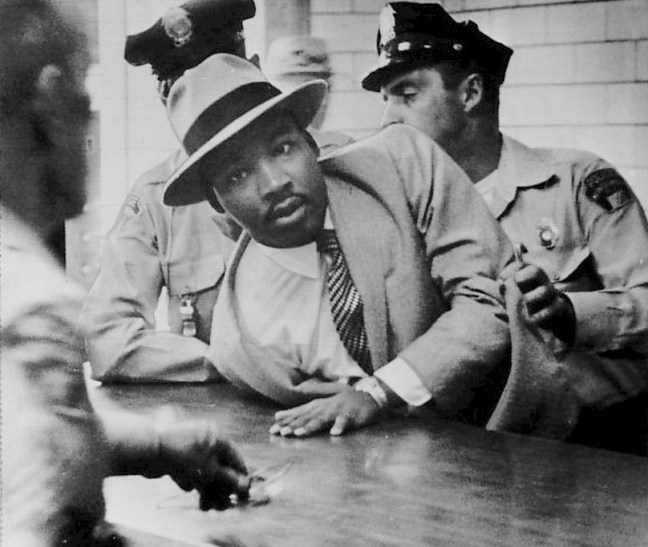
Through and through, he made us furious with his revolutionary visions and resolute demands. His words were inspiring, and his actions revealed unwavering commitment, no doubt. But those very words and actions enraged us to the core.
We should remember it.
We should hold it up as truth on a day like today —
a mirror of memory to reveal this present moment
and its proclivity for malice.
After all,
we tend to revile the truth-tellers,
we tend to reprimand the troublemakers.
THIS Truth-teller
THIS Troublemaker
had the audacity to weave words into expansive dreams.
THIS Truth-teller
THIS Troublemaker
had the courage to cultivate change through collective action.
He exclaimed truth aloud — shouted it to the rooftops — and called our caste systems into question.
He made us question ourselves —
our prejudice,
our privilege,
our power structures.
He enraged us.
We still ask his questions, and we have just scratched the surface of his dreams. Maybe one day, we will realize their depths.
But until we do, we’ll need people to enrage us. And we’ll need to join them.
This sermon was preached at Northside Presbyterian Church in Ann Arbor, Michigan and was focused upon John 1:29-46. An audio recording is above and a written manuscript is below.
Our story begins with declarations. Proclamations. We might even say, exclamations.
For some time now, John the Baptist has been out in the wilderness. People were coming from Jerusalem and all of Judea – droves of people — to be baptized by him in Jordan River. John had started quite a movement.
I admire that movement and appreciate so much of what John has to say in our sacred texts, but when it comes to his demeanor, I admit, he is precisely the kind of religious person I might avoid altogether. John was intense, fiery, and eccentric. He definitely looked different than most, and he had some intriguing habits too: John dressed himself daily in camel’s hair and ate delicious dinners of locusts and wild honey.
He may have been quirky and strange, but John was on to something. More importantly, he was called. He was called into the wilderness, outside of the center of power where he spoke truth to power. He was called to life-changing work, and he issued life-changing invitations.
And in the end, that work changed him. That work invited him. In the midst of it all, John encountered Jesus in those waters of baptism, and he recognized Jesus for who he was.
John, as strange as he was — intense, fiery, eccentric, and quirky – pointed to Jesus and identified him. While he was with two of his disciples, John made declarations. Proclamations. We might even say, exclamations. “Look, here is the Lamb of God!” he said.
And that initiated a swirl of questions.
Those disciples began to follow Jesus quite suddenly on foot. I imagine there were a lot of silent questions, swirling about in their minds, like, “Who is this? What does it mean to say he is the Lamb of God? Where is he going? What is he doing? What is this all about?”
Those swirling questions may have remained silent in their own minds, but even with their feet, these disciples asked questions because they were curious. The word ‘disciple’ literally means ‘learner.’ Somehow, perhaps even beyond what they could understand, they were drawn to learn about this Jesus. There must have been so many questions.
But before they could begin to formulate any of their questions into words, Jesus asked a question of his own. Jesus turned and saw them following, and he asked, “What are you looking for?”
What are you looking for?
That’s an intriguing question. If fact, these are the very first words Jesus speaks in the Gospel of John. What are you looking for?
In some ways, it’s a bit funny to imagine these disciples following behind Jesus, curious, yet attempting to be stealthy, never announcing their presence or saying anything. Jesus is the first to speak to them. Quite suddenly, he asks such an important question. Maybe they were surprised or startled by his words. I wonder if they stammered a bit in response. Whatever they felt in that moment, these disciples answered with an intriguing question of their own: “Rabbi, where are you staying?”
On one hand, that seems like a simple, surface question. “Where are you staying?” Where are you living right now? But in the original language of this text, that question asks, “Teacher, where are you dwelling?” Where are you abiding? Their curiosity is getting at something deeper.
So Jesus responds with a simple yet life-changing invitation:
“Come and see.”
Come and see.
Come and see where I am dwelling. . . where I am abiding. Come and be a part of this life-changing work. Come and respond to this life-changing invitation. Come and see.
The Gospel of John is of known for its opening text – its beautiful prologue. Maybe you remember it. It says, “In the beginning was the Word, and the Word was with God, and the Word was God.” These words describe Jesus in mysterious and mystical ways. Then, that same prologue says this: “And the Word became flesh and dwelt among us.”
I love how Eugene Peterson translates those words in The Message: “The Word became flesh and blood and moved into the neighborhood.”
Rabbi, where are you staying?” those disciples asked. Where are you dwelling? Where are you abiding?
The answer is, with us.
With us in the human neighborhood.
Jesus says, “Come and see.”
Come and see how I am with you.
Come and see how I call you to a purpose larger than you can begin to imagine.
Come and see how I will initiate the Kingdom of God and invite your participation in it.
Come and see how I will speak truth to power and greed – how I will flip tables and express anger when religious institutions use power and greed to exploit the people.
Come and see how I will include all of the outsiders – those who are oppressed and marginalized.
Come and see, not only how I will include them, but how I will lift them up – how I will empower them and send them forward to live a life of resurrection.
Come and see.
These words are a prologue too – a beginning point and a life-changing invitation. They are God’s declaration to us. God’s proclamation. We might even say, God’s exclamation.
I love what happens next. . .
After saying these words to these disciples – “Come and see” – many more are invited in. They ask questions of their own and begin to answer that invitation. Andrew talks to Simon Peter, his brother. Jesus talks to Phillip. Phillip goes and finds Nathaniel with a declaration of his own: “We have found him about whom Moses in the law and also the prophets wrote, Jesus son of Joseph from Nazareth.”
To that, Nathaniel asks a pointed question: “Can anything good come out of Nazareth?” I love the honesty of that question. Like Nathaniel, there are times when we wonder if anything good is coming. . . and if any of this makes much of a difference.
Phillip doesn’t chastise Nathaniel for asking that question or even raising a bit of cynicism. He just answers with the very same invitation, “Come and see.”
So, I wonder, where does this find us this morning?
Maybe we have entered this sanctuary and time of community with declarations of our own – deep convictions about who God is and how God loves. Those deep convictions remind us that we are called to live our lives in response to that love.
Maybe some of us have entered this sanctuary and this time of community with questions: Who is God? This Jesus? This way of the Spirit? What’s it all for?
Or maybe today, we’re in a place of asking a set of pointed questions: Does any of this matter? Can anything good come out of Nazareth? Can anything good come out of the Church? We might ask our questions from a place of skepticism or cynicism. Or perhaps we ask out of pain.
Well, wherever we are, the invitation continues voice itself. Come and see.
Come and see how God loves.
Come and see how Jesus lives.
Come and see how our lives can be transformed and empowered to follow in that very direction.
We’ve come to a place of beginnings and transitions.
We are in a new year. Today is only the 15th day of 2017. This new year may bring a sense of new hopes or new challenges.
We are a few days away from the inauguration of our 45th President. Some are rejoicing in that shift, but we also know many people in our nation are afraid — afraid of what this means and afraid of what will happen.
We live in a moment where wealth inequality is stark and greed is running rampant without much accountability. We are concerned how this reality is leaving some behind.
Maybe we feel all of these things.
Maybe we bring them into the sanctuary and this time of community.
Yet the midst of them, we hear the same invitation. Come and see.
And there is nothing passive about that invitation. It’s not — Wait and See.
It is active in every way. Come and see.
We are invited to come and participate where Jesus is dwelling – with humanity —
sharing our meals,
sharing from what we have,
sharing from who we are.
binding wounds,
empowering hearts,
marching for justice.
Together, in this active invitation, we begin to walk toward this great vision, and with God’s empowerment, we participate in it coming into being.
So, let’s go to the place where Jesus dwells — God with us; with humanity —
Come and see.
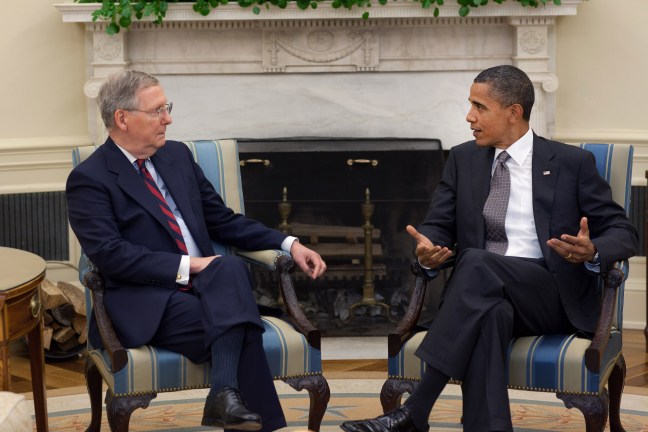
I have sent this letter to Senator Mitch McConnell. What are your thoughts or concerns about health care in the United States?
[Wikicommons]
Dear Senator McConnell,
My name is Rev. Renee Roederer. I am a Presbyterian minister living in Ann Arbor, Michigan. I would like to speak to you today about the current deliberations you are leading to repeal the Affordable Care Act.
I realize that I am not one of your direct constituents, but I do have long standing connections to Kentucky and your work as a Senator. I grew up in the Louisville area. I am also a minister of the Presbyterian Church (U.S.A.) which has its denominational headquarters in Louisville.
More personally, however, I attended the University of Louisville as a young adult, and I had the privilege to sing in the Collegiate Chorale — the very choir you personally invited to sing at the inauguration of President George W. Bush in 2000. I appreciated that invitation and experience, and I am invested in the area you are elected to serve.
As the Senate Majority leader, of course, I have a stake in the larger scope of your work as well. This includes the decision to repeal the Affordable Care Act, colloquially referred to as Obamacare.
As our nation moves toward another inauguration, many people are rightly concerned and anxious about the implications of the current effort to repeal the ACA — 1) that it is happening and 2) how it is happening. As you know, the Affordable Care Act has been successful in providing health coverage to 20 million people who were previously uninsured. This includes people in my state of Michigan, people in congregations I have served, and members of my own family.
I believe that access to health care is a fundamental human right. In a moral society, the right to health and wellbeing should be fully accessible to all, not only the privileged, wealthy few. I am convicted in this way as a citizen, a person of a faith, and neighbor, for I know people who depend upon life-saving medications, procedures, treatment, and forms of therapy.
Congressional leaders must take great care and deliberation in all decisions concerning the ACA because human lives are quite literally on the line.
None of us can fully anticipate the future. Each one of us is vulnerable to a potential health crisis, a catastrophic accident, or a job loss. Since health care is primarily financed through an employment-based system in the United States, we must have affordable, alternative pathways to coverage.
For this reason, it makes sense to improve upon the Affordable Care Act rather than repeal its core benefits:
— Access for the uninsured
— Protections for pre-existing conditions
— Protections against lifetime insurance caps
— Coverage for young adults under age 26 on parents’ plans
People of both parties agree that the Affordable Care Act must be improved in order insure affordable premiums. Republicans have raised concerns about rising premiums, and Democratic Presidential candidates each called for improvements as well. I think you will find bipartisan support for improvements, both among the Congressional leadership and the wider public.
But I want to say this clearly: It is irresponsible and incomprehensible to repeal the Affordable Care Act/Obamacare without a viable, safe replacement. Health, wellbeing, and life itself are as risk. Republican Senator Rand Paul is the only leader of your party who voted against last night’s plan, refusing to vote for a repeal until a replacement has been determined. I have already called his office to thank him for this principled stand.
To close, I have heard your convictions that the ACA must be repealed as quickly as possible, citing service and allegiance to American voters, that you must “act quickly to bring relief to the American people.” I admit that I question that conviction, as I am aware that big pharma and insurance lobbyists have contributed to the campaigns of Congressional Leaders. Who is being served well in a rapid repeal without a replacement?
It is true that voters have concerns about the ACA. But apart from party affiliations, I can assure you that the majority of American people do not want a speedy repeal at the risk of losing coverage altogether. I can assure that you if people cannot afford rising premiums, they cannot afford coverage primarily or exclusively through Health Savings Accounts. I implore you not to repeal this legislation until there is a safe, viable replacement.
I am asking you to put people before party, wellbeing before wealth, and life before lobbying.
I thank you for your attention in this matter,
Rev. Renee Roederer
Last year, I had the incredible privilege to hear Dr. Walter Brueggemann speak.
If you know anything about Walter Brueggmann, you know it is quite the understatement to say his work is prolific. Dr Brueggemann has authored and edited no less than 122 books. In addition, he has written more articles than I can easily count.
Even if you’ve never heard his name before, Walter Brueggmann has had an impact on our larger context. As a theologian and scholar of the Hebrew Bible, he has had a large influence upon the religious imagination of the United States.
Dr. Brueggemann came to Ann Arbor last year to talk about one of his recent books. It’s entitled, Money and Possessions. I came with an expectation that his address would be important. But I had no idea that his words would bring me to inspired and empowered tears.
In his address, Dr. Brueggmann went through an outline of the entire Bible and made an argument that the large narrative frameworks within it — the Exodus, the Exile, the Post-Exilic Return, and the Jesus Movement — are expressions of liberation, calling us to push against destructive “economies of extraction” — i.e. hierarchical economies which systemically remove wealth and wellbeing from the larger community toward the direction of a privileged, powerful few.
With his head and his heart alive, Walter Brueggemann made the argument that the Bible is primarily a text of liberation — a text which calls us love our neighbors and work toward a just economy of human flourishing.
And you know what? I cried.
I cried because I believed him.
I cried because I want this liberation.
I cried because many people have had the complete opposite experience of the Bible.
I cried because Bible has been used to manipulate, abuse, and oppress others. I cried because these sacred, liberative texts have been used to harm some and create those very economies of extraction.
It really moved me.
As I think about that moment, and more importantly, the collective moment we are living right now — a period in which wealth is indeed systemically being removed from the collective whole toward the privileged, powerful few — I have decided to commit to this in 2017:
Every single sermon I preach in 2017 will name the reality of greed.
Each text is different, and I will let the texts lead the way, but it is not a stretch to name the reality of greed within these stories. It is one of the most deeply entrenched forms of sin in our day. We need to be liberated from it.
Second only to the Kingdom of God itself, Jesus talked most about money. It permeates our texts. And the need for liberation permeates our collective life together.
So Church, let’s talk about greed and name it for what it is. It might radically change our lives.
On Monday morning, Meryl Streep was present all over Facebook, and her name trended in the highest position for much of the day. This, of course, was in response to her Golden Globes speech the night before. Many people were moved by her words as she expressed the importance of empathy, honored immigrants, and advocated for journalists and a free press.
At the heart of her speech, she called our attention back to one of the most disturbing moments of the 2016 Presidential Campaign. Without mentioning the name of our President Elect, she referenced the terrible moment when Donald Trump mocked a disabled reporter during one of his campaign speeches. That shocking action, caught on video, was deeply concerning to many. People across the nation shared it a multitude of times and highlighted it as a particularly low moment of the campaign season.
I was very touched by Meryl Streep’s speech. Without ever mentioning Donald Trump’s name, she called him to account. But as I considered this speech, a question emerged within me as well: Whenever this moment is referenced, why is it so rare to hear the name of reporter?
The man’s name is Serge F. Kovaleski, and he is an accomplished investigative reporter at the New York Times. In 2009, he contributed to investigative reporting which won a Pulitzer Prize. His work is phenomenal. He was born in Cape Town, South Africa and spent his early childhood in Sydney, Australia. His family moved to New York City in the 1970s.
Serge Kovaleski has a condition called arthrogryposis multiplex congenita which limits flexibility in his arms. Though Donald Trump denies mocking him, the video from his campaign clearly indicates otherwise. When this took place, people across the nation were shocked and appalled that he would publicly mock a disabled reporter in this way. People still raise concerns about this very moment.
And it makes sense to do just that. It is truly shocking and appalling. Meryl Streep was right to say, “There was nothing good about it.”
But it’s also important for us to remember that this disabled reporter has a name. He is Serge F. Kovaleski. We should never erase his disability, but we shouldn’t reduce him to it either. “Donald Trump mocked a disabled reporter,” we tend to say, and most often, we just leave it at that. We need to say his name more often.
Donald Trump publicly mocked the disability of an accomplished journalist named Serge F. Kovaleski.
On December 14th, fifty women bundled up, stepped into the bitter cold, and began marching. With tears in some of their eyes and passion in all of their voices, they marched down Liberty Street to remember the 26 lives that were taken by gun violence at Sandy Hook Elementary School.
On the fourth anniversary of that dreadful December day, they remembered the teachers, administrators, and first grade children who were killed so senselessly. Today, I want to honor those women as they honored the lives lost too soon.
These women are a part of Moms Demand Action for Gun Sense in America. Last month, fifty of them (not all participants are mothers, and some are men) marched through Ann Arbor, Michigan in frigid weather. They almost canceled the march because of the wind and temperature, but in the end, they decided to move forward. Their cause is important to them. Human lives are important to them.
I suppose the event might have seemed like a parable. So often, when these women push for protections and reasonable shifts in gun legislation, they receive the cold shoulder. At times, they are even vilified. They are facing the powerful influence of the NRA. That influence is deeply entrenched throughout all levels of our political system. But do you know what these women do?
They keep marching.
They keep going, pushing, and advocating because they believe in the value of human lives. They believe in safe communities. They believe in common sense gun laws.
They keep marching.
On December 14th, they marched into the bitter cold. I’m sure that sometimes, they must wonder if any of this makes a difference.
It does. One of the mothers who lost her seven year old child at Sandy Hook found the single news story that covered this event. She was deeply touched that these advocates would march in such weather to honor her child and the lives of all children. It heartened her even in the midst of her painful grief. She contacted the Moms Demand Action chapter to share her thoughts with them. It matters.
We must keep marching.
The truth is. . . we never know what kind of impact and connections we can make when we continue to move forward.
When we lend our lives toward the causes that call us, we will face resistance. It is nearly inevitable. But we are also resistance. Over time, we create pathways for change, often through relational connections and levels of impact we did not even begin to anticipate.
So we keep marching.
Today, I also think of the millions of women who will soon march in Washington D.C., as well as the thousands who will march elsewhere across the country. We are resistance. It matters.