Messages for Us
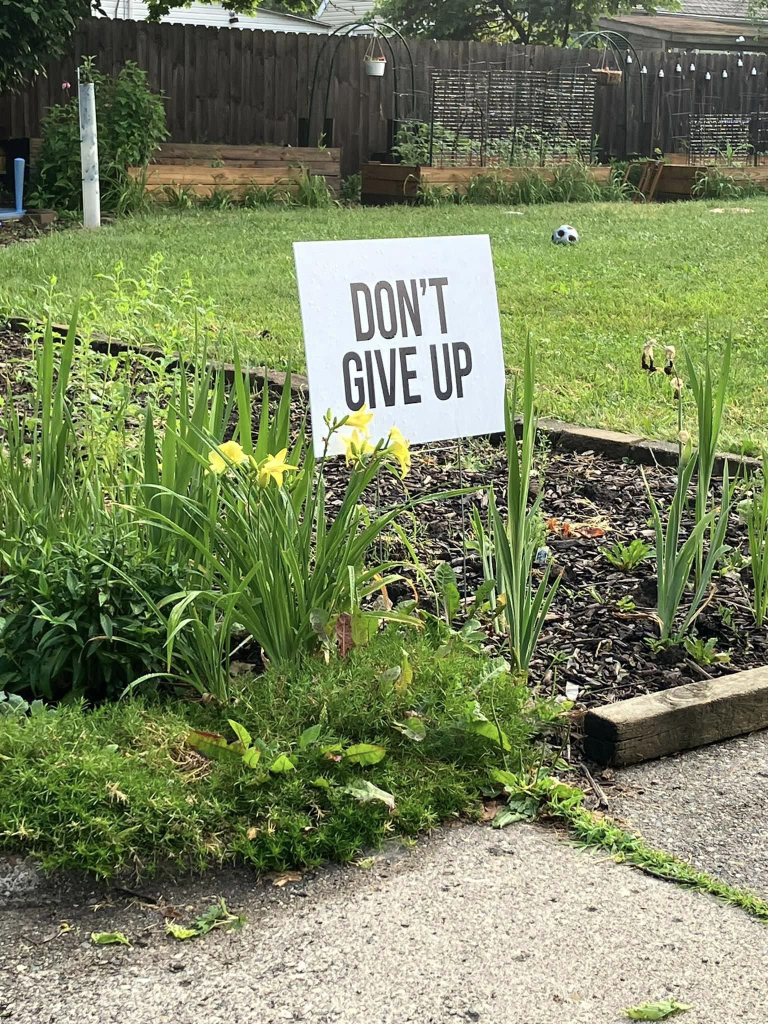
I saw these messages in a yard while biking yesterday. Putting them here if we need them. 

A Certain Kind of Eden by Kay Ryan

A Certain Kind of Eden by Kay Ryan
It seems like you could, but you can’t go back and pull
the roots and runners and replant.
It’s all too deep for that.
You’ve overprized intention,
have mistaken any bent you’re given
for control. You thought you chose
the bean and chose the soil.
You even thought you abandoned
one or two gardens. But those things
keep growing where we put them—
if we put them at all.
A certain kind of Eden holds us thrall.
Even the one vine that tendrils out alone
in time turns on its own impulse,
twisting back down its upward course
a strong and then a stronger rope,
the greenest saddest strongest
kind of hope.
Doggy
The Longest Hug
In my work, I get to participate in building a deep sense of community across distance. People can forge very strong bonds even when they don’t see each other in person.
This takes place over the landscape of the epilepsy community we serve. At the Epilepsy Foundation of Michigan, we serve our whole state geographically, and many members of our community do not drive. For this reason, we create circles of support across distance, and you may be surprised how deep a phone call or Zoom meeting can go. In fact, I’ve watched these be transformative.
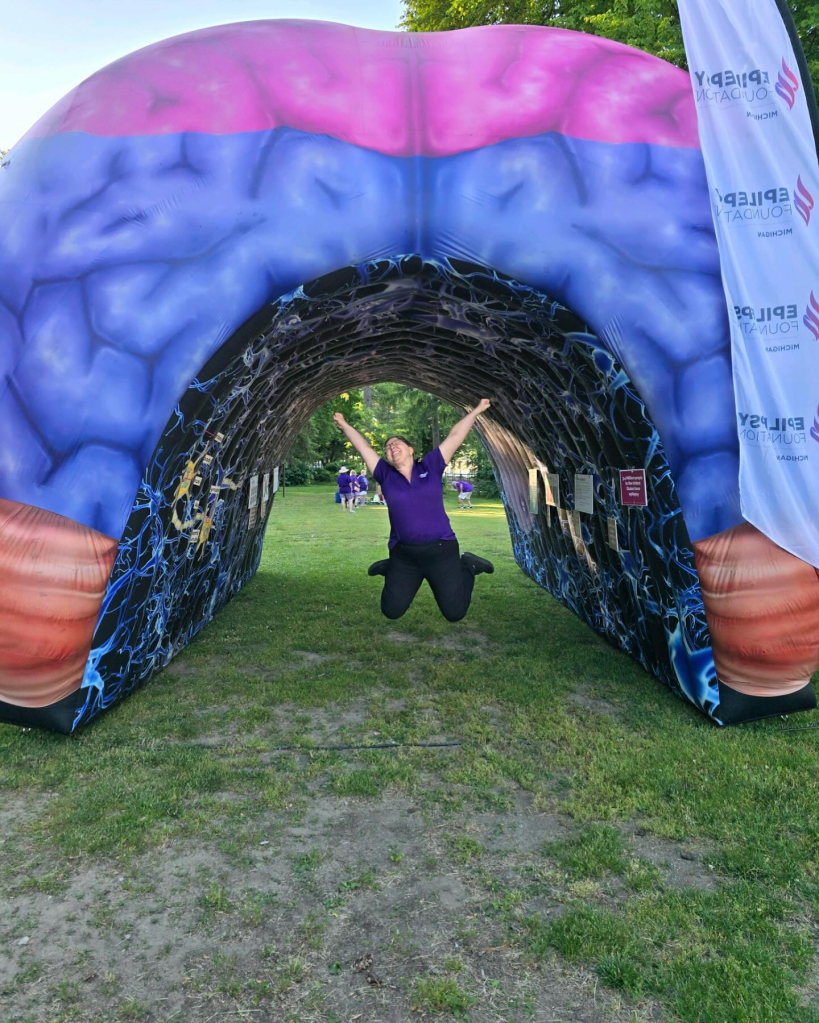
This is always on display in moments when our community members do get meet one another, and I was touched by one of these moments last weekend when we held our annual Metro Detroit Stroll for Epilepsy. This is our largest event each year, and it always feels like a family reunion.
For some, it’s a sacred introduction for the first time: Case in point, at one moment, I realized that two members of our phone-based support group were nearby each other. “T, this is C!” I said (not their name letters), and I am telling you, T ran over, scooped C, and they hugged each other in the sweetest embrace that must have lasted 40 seconds.
They have never met in person. But they know each other, and they know each other well. In fact, they love each other well, and you could see this in what must have been the longest hug that happened at the Stroll.
These bonds matter. Community matters. And we can forge these relationships far and wide.
— Renee Roederer
Mental Health Monday: What Is Structural Dissociation?
Dissociation is a mental process that causes a person to disconnect from their thoughts, feelings, memories, sense of identity, or surroundings. It can be a method for the mind to cope with stress, such as during a traumatic event, or it can be a symptom of a dissociative disorder.
Dissociation also falls on a spectrum. We all encounter typical, daily instances of dissociation. For example, when we’re deeply engrossed in a book or movie, we might lose track of our surroundings. Or if we’re driving on a familiar path, we may reach our destination without recalling the journey.
But dissociation can become more pronounced, often involuntarily as a response to high stress or trauma, and it can disrupt daily life and a person’s sense of self. Structural dissociation refers to a theory in psychology that explains how trauma can cause a person to feel as though they exist in distinct parts, often as an attempt to manage their internal world and their emotions and relationships to that trauma or history of emotional neglect. There are a number of evidence-based, therapeutic approaches to help with this, including Internal Family Systems (IFS), which cares for dissociation and provides assistance in addressing the various parts of the self, particularly when these parts feel in conflict with one another.
Here is more information:
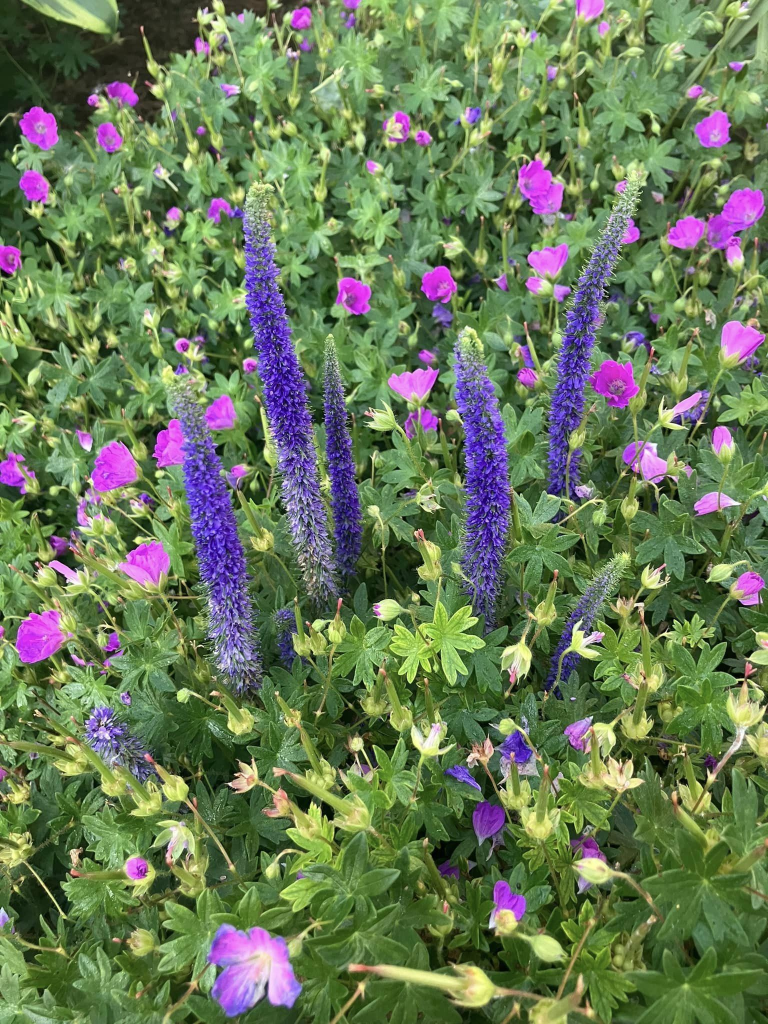
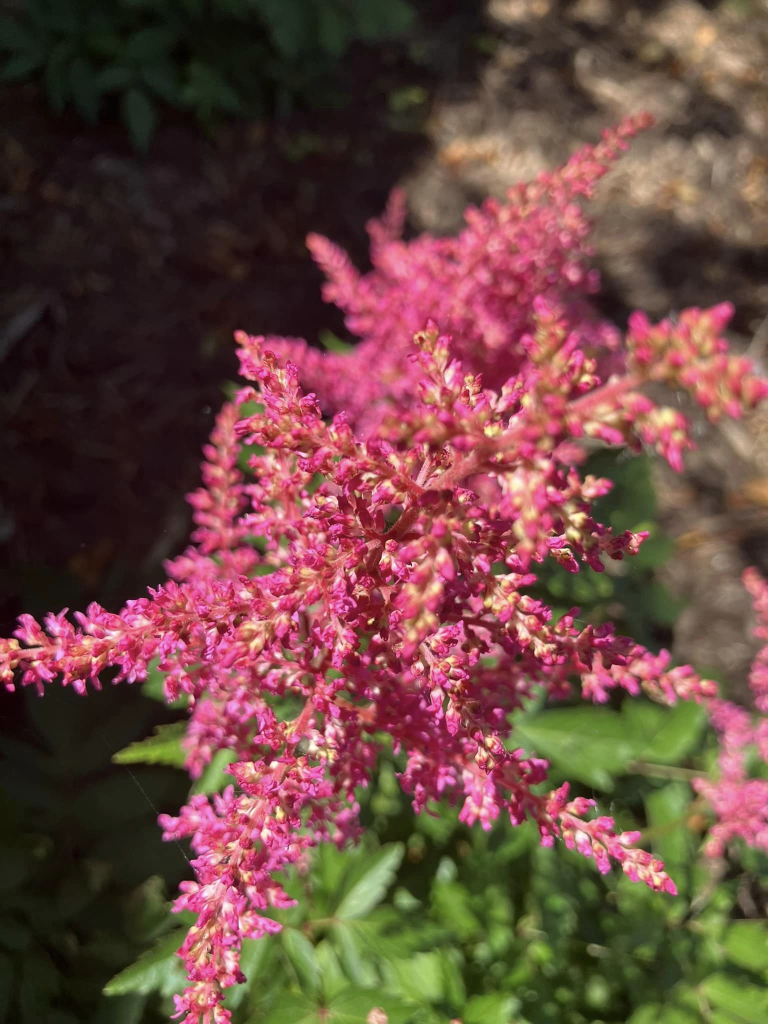
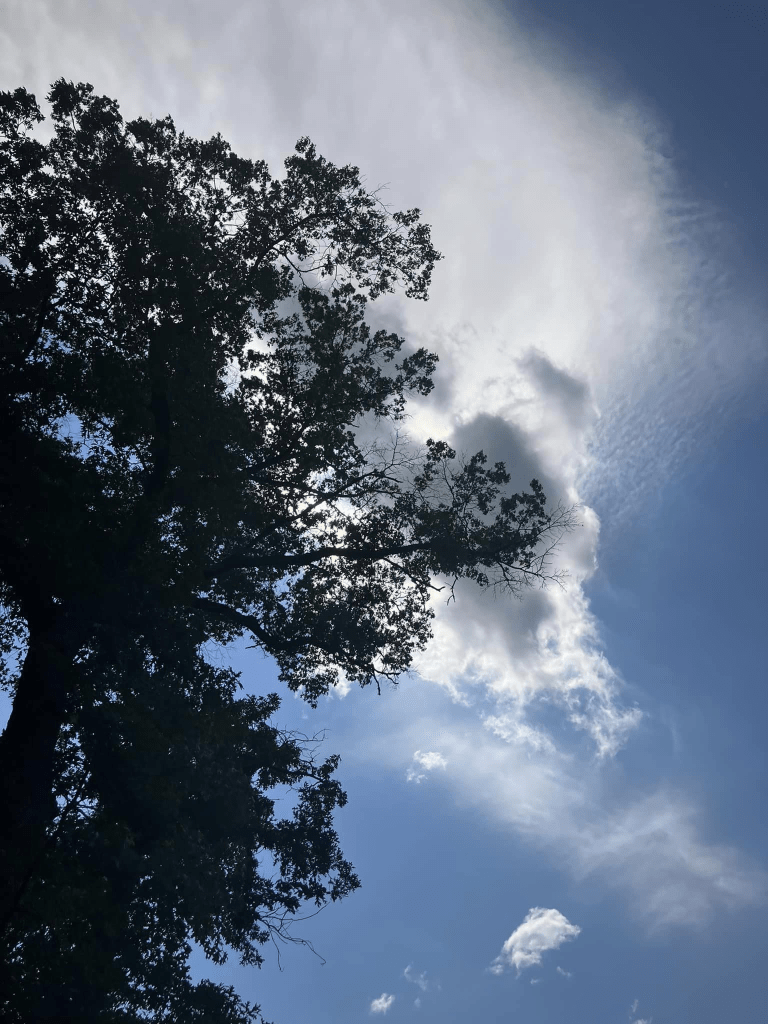
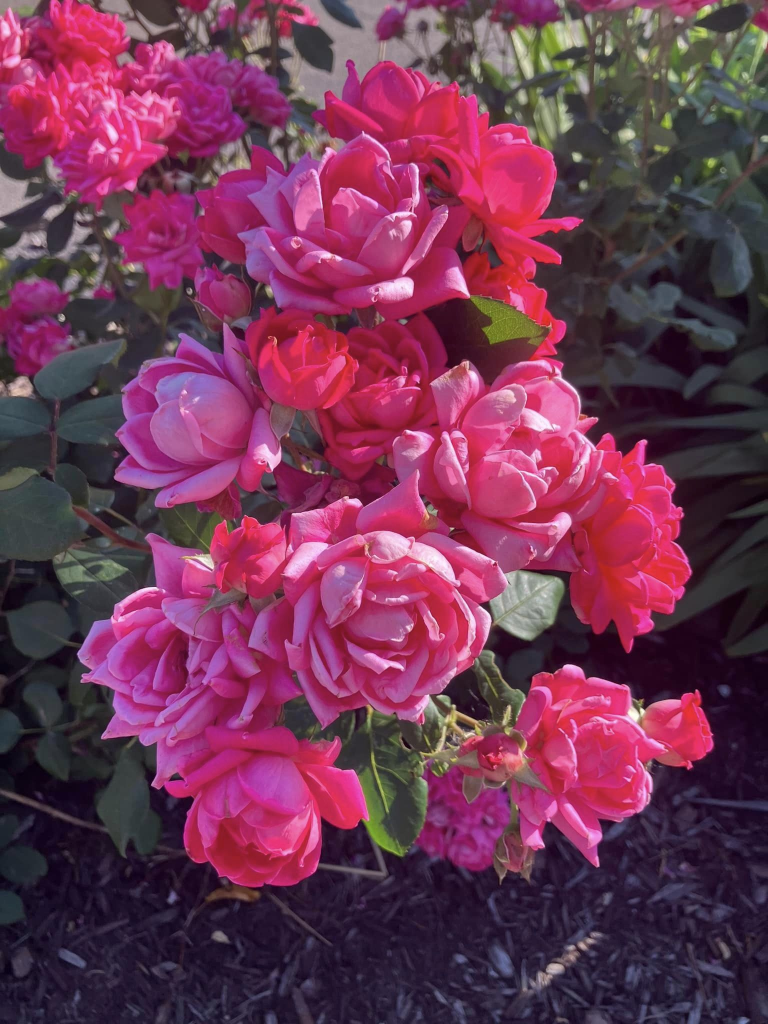
This Week in Nature



Neato Curiosities: Unraveling the Great Migration Mystery
The Joy of Buy Nothing Groups
Oh, these corroded pipes!
That’s not a phrase of some kind. That’s literally what’s taken place at my house over the last few weeks. I had some water come up from my basement drain, and the cause is… not good. A plumber has come over to my house twice, and sadly, we’ve discovered that there was a break somewhere, and a lot of dirt got in, which led to a major clog, which then corroded the pipes in my basement. It’s going to be a massive fix and of course, expensive. My plumber and his cadre of nephews are going to fix this this next weekend.
When it rains, it pours. That actually, is a phrase. I’ve figured out how to make this work, but I’m going to be a frugal gal this summer.
And that part, at least, leads to a joy I want to share with you.
Are you aware of Buy Nothing groups?
I’d love to not have to buy PVC pipes. But there are a lot of other things I haven’t bought lately. There are Facebook groups where people share things they are giving for free and things they’d like to receive for free. People match up and pick up things at each others’ houses. I’ve been giving away a number of items in my house lately because I’m downsizing a bit. And I’ve received, too. For instance,
In the wake of this situation, I shared that I now owned precisely one bath towel because I used all my towels to sop up the basement. As a result, today, I get to pick up bath towels, paper towels (because someone is offering those too) and an air popcorn popper, because someone is nice, and mine also died this week. Meanwhile, this week, I’ve given a speaker, frozen food, and a bunch of coffee mugs.
I love neighbors helping neighbors. This is the kind of world I want to live in. And though I’d also want to live in a parallel universe where I don’t have corroded pipes, this part of this story is pretty good.
— Renee Roederer
Little Indulgences
A couple times per week, I don’t set an alarm and just let myself wake up when my body wants to do that. And sure, that still means I often still wake up at 6:30 or 7:00am. But at least I didn’t interrupt my REM sleep.
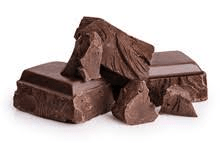
Sometimes, I start my day by eating a small piece of chocolate, just to start the day with something sweet.
Sometimes — well, often — I sing out loud while I’m riding my bike.
How about you? What are some of your little indulgences?
— Renee Roederer

