–Photos by Renee Roederer
A video from the California Academy of Sciences.

I was on my way home from work, and before heading back to the house, I stopped somewhere else in town. That detour took me home along a different route through the city.
At a stoplight, I looked up and noticed two university logos on the back of a large hatchback. I immediately knew who the driver was, even though I never saw his face. I never would have recognized the car either, except for those symbols. They’re both from college towns where I have lived.
In May, this driver — a graduate student I had never met before — gave me a ride home when I had a flat tire on my bike. He was such a kind, steady person.
When I spotted the car, I smiled again with gratitude. He really helped me that day.
It made me think about how often we pass people without knowing it — people who have been significant, and people who will be significant.
—Renee Roederer

I recently connected with someone who had received some painful news. A few days later, she called a former coworker to confide in her and receive support. They had worked together at Borders.
Borders closed fifteen years ago.
And yet, her local store had once been a tremendous atmosphere of friendship, care, connection, and shared passion for their work. The relationships forged fifteen and even twenty years ago were still present for her in an important moment of need.
When people want to get involved in community care or activism, they often feel the need to show up at events or protests. These are important, of course, and I’ve participated in some myself. But we should never underestimate the power of the everyday connections we forge with people.
Likewise we should never underestimate what can happen when we introduce people to one another, when we build trust, when we share work, when we show up consistently. Not only for this moment, but sometimes for decades down the road.
These connections matter now.
These connections matter later.
Sometimes, they matter far more than we anticipate.
—Renee Roederer
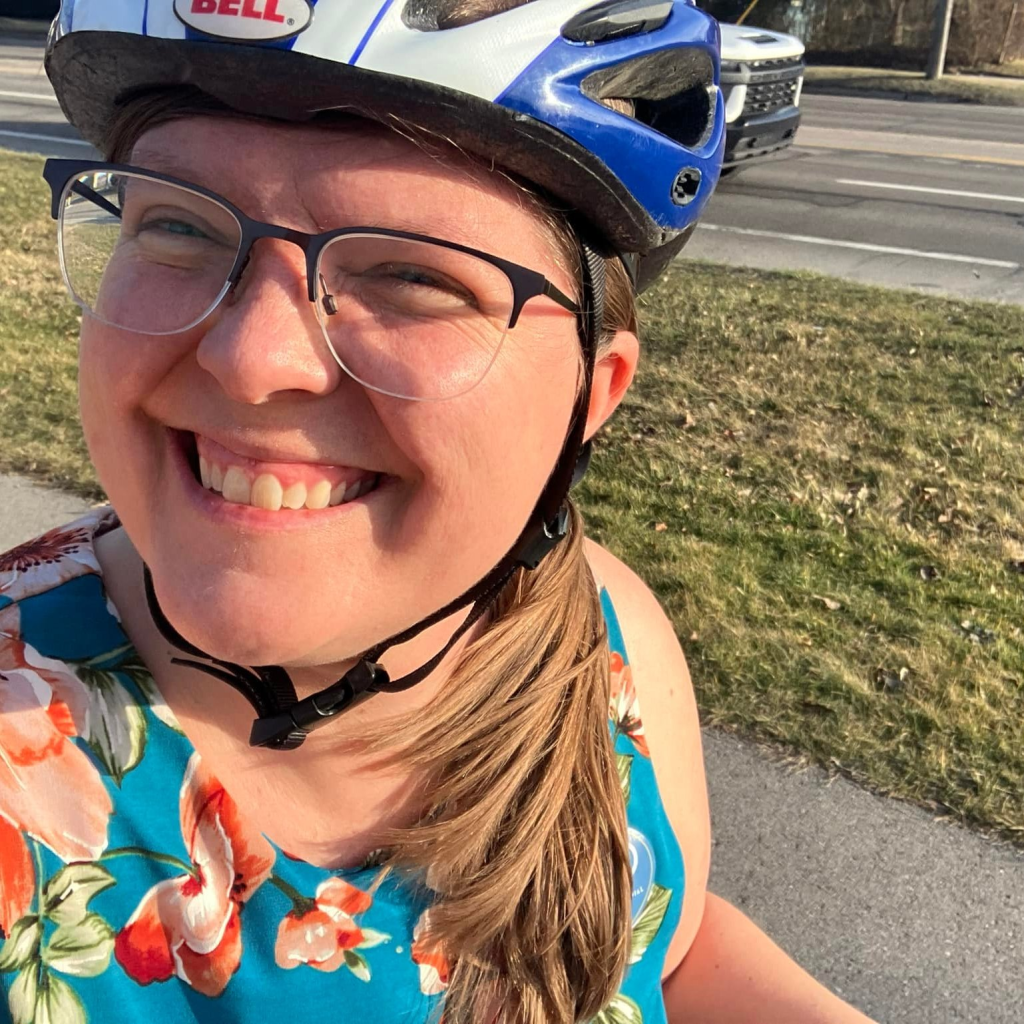
When I think about the possibility of Spring — like actual Spring, and not the False Spring I wrote about yesterday — one of the things I’m most excited about is getting back on my e-bike. I’ve become an avid cyclist, but I have to put it away for nearly half the year.
The weather makes me do this, but for the record, I am also remarkably good at delayed gratification. I can wait. Even more than that, I can set a goal and work at it consistently over a long period of time. I would crush that marshmallow test.
I’m not sure how I became like this, but when I want to try something, I will do it for a very long stretch of time. And if a goal falls apart, I’m flexible enough to pivot — but I will try again repeatedly over time. I’ll adapt where I need to, but I know how to play the long game. I know how to delay gratification.
I was thinking about this on my way home from work. I saw a bike leaning up against a tree, and I found myself thinking about my very first bike. I really only started biking seriously in my forties, but when I was seven years old, I bought a bike that cost over $100 with my allowance money.
For a long while, I received $1 a week, and I think when I set that goal for a bike, I started getting $2 per week. That means I waited for more than a year to buy that bike.
It was hot pink. I loved it.
I remember riding around the block oodles of times in a row and imagining that one day I’d end up in the Olympics doing distance riding. Well, that’s not true.
See, I can pivot!
But I have biked more than 3,000 miles in my own town. And that’s a long-term goal, too. In fact, I set what might be the most absurd goal of all — riding to every street in my town in alphabetical order.
I’m on the Fs. I average about 2.5 alphabetical letters per year, so I doubt I’ll even live here long enough to finish. But I’m going to go as far as I can.
Maybe my seven-year-old self would be impressed.
—Renee Roederer
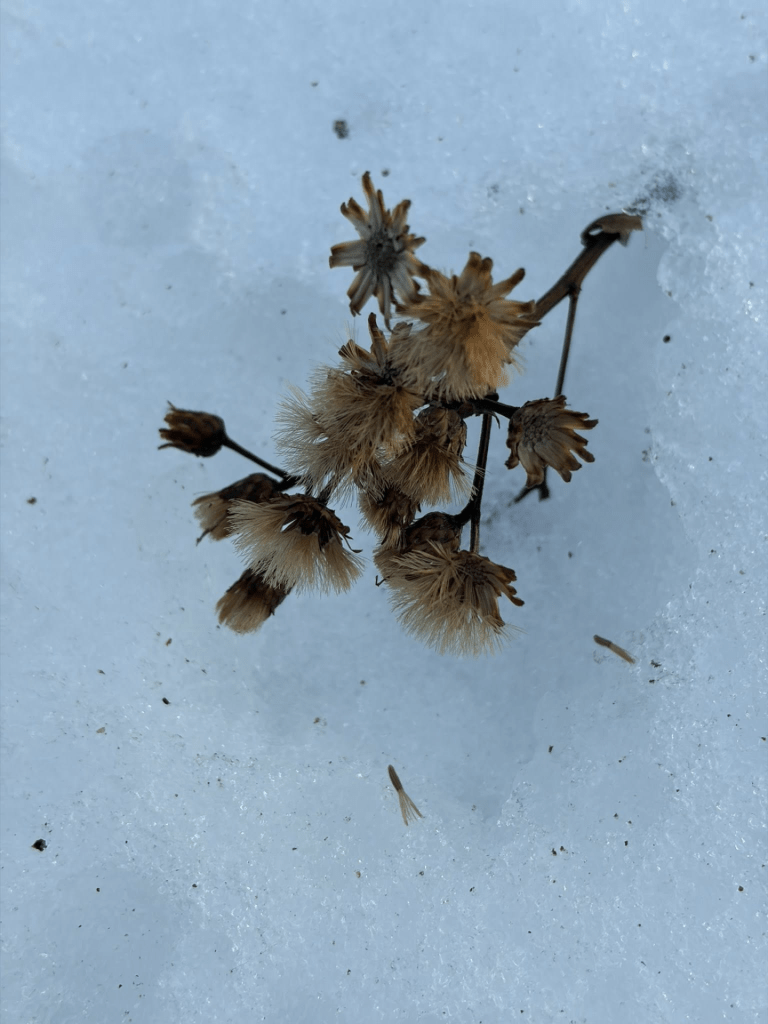
I’ve lived in Michigan for thirteen years — a whole teenager of time. And yet, every year, I am fooled by False Spring. You would think I would have figured this out by now.
You may or may not experience False Spring where you live, but here in the Upper Midwest, sometime in March, maybe mid or late month, it suddenly gets warm. The sun is stretching a little longer into the evening. The air softens. And you start to believe that the weather will finally align with astronomical spring on the Spring Equinox.
But no. It inevitably turns cold again. Snow is still entirely possible. April can feel like a betrayal. Wishful thinking, I know.
It’s February, so I’m not falling for it just yet. But somehow I still wasn’t expecting snow last weekend. I should know better.
And I’m thinking of everyone in the Northeast and Mid-Atlantic today.
February makes sense, technically. But at this stage, we’re just… over it.
Patience, Grasshopper.
—Renee Roederer
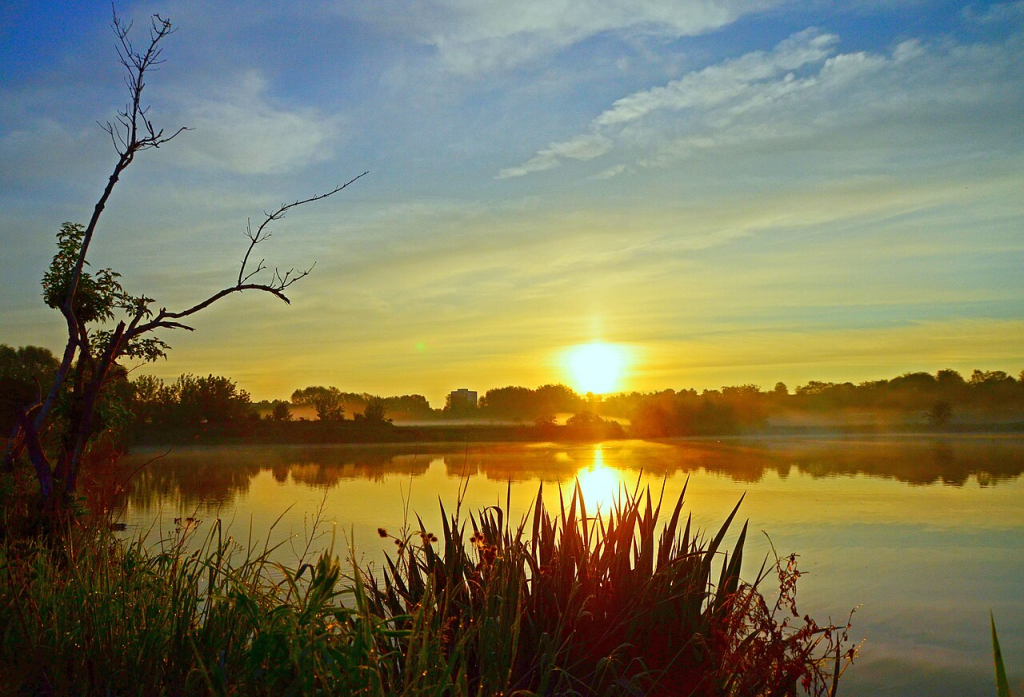
I am publishing this post in the early morning hours, so it seems like a strange time to send a benediction. But whenever you hear it, I hope you know it’s true and that you can lean into it.
Here’s how I finished a worship service yesterday:
“This is the most matter-of-fact way to end a service, but it’s also profound: You are loved with a love you cannot lose. And since that is true, it’s yours to share.”
I say the same to you as well:
You are loved with a love you cannot lose.
And since that is true, it is really yours to share.
—Renee Roederer
This week, news landed hat astronomers have discovered an “inside out” solar system with planets orbiting the star LHS 1903. In this system, gaseous planets are closer to the star, with rocky planets orbiting at a greater distance. This kind of system has never been observed before, and it’s raising big questions about planet formation.
You can learn more here or below.
I’m connected to many congregations and spiritual communities, but Farm Church is the one I most consider to be my church.
Farm Church is a spiritual community in Durham, North Carolina. We grow food on a plot of land inside the city and give it away to address food insecurity. We put our hands in soil. We tend and harvest. We practice care in embodied ways. Though I live in Michigan, I lead Farm Church’s weekly newsletter, which keeps me tethered to its rhythms and questions, even from afar.
Last Sunday, the community gathered and explored a simple but searching question: What do we believe?
That question can take on many postures depending on who is asking it and why. It can feel defensive. It can feel academic. It can feel charged. But it can also invite something deeper. What do we hold most dear? What sits at the center of our lives? What shapes our actions without us always realizing it?
At Farm Church, we believe that loving the earth and growing food is sacred. We believe that tending soil is prayerful. We believe that caring for one another is sacramental.
As we enter the season of Lent, another question emerges: Are there any beliefs we need to give up?
Beliefs about ourselves that are too small?
Beliefs that are cynical?
Beliefs that flatten complexity?
Beliefs that limit joy?
Beliefs that distort what is actually true?
Last Sunday, members of the community wrote down beliefs they want to release and placed them in a fire. Those ashes were then used for an Ash Wednesday gathering. The things we release can still mark us and change us. Surrender becomes part of our transformation.
I find myself wondering: What beliefs are we carrying that quietly shape us more than we realize? Is there a belief we are ready to release? What might happen if we named it — and let it go?
Lent has begun. Perhaps this is a good time.
—Renee Roederer