This is a repost that I like to share at this time of year.
Handel’s Liberation “Halleluiah!”
Hallelujah.
It’s a word from a chorus many know well, especially at this time of year. I’m grateful that I’ll have the privilege to sing Hallelujah a multitude of times this week. Ann Arbor’s UMS Choral Union has the longest annual tradition of singing Handel’s Messiah in the entire world. We’ve done this every year consistently since 1879. We’ll do so again this weekend.
While I haven’t sung this 139 times in a row, I’ve sung the Hallelujah Chorus innumerable times. Yet I’ve learned something new in the opportunity to sing The Messiah in its entirety. Based on where it’s placed in the greater work, the Hallelujah Chorus isn’t a chorus joy-filled triumphalism. It’s about liberation.
It’s about human liberation from oppression — deliverance from oppression caused by other humans. This becomes clear when we hear what precedes the famous chorus:
The bass soloist sings,
Why do the nation so furiously rage together? And why do the people imagine a vainthing?
Then the chorus sings,
Let us break their bonds asunder, and cast away their yokes from us.
Then the tenor soloist sings,
He that dwelleth in heaven shall laugh them to scorn, The Lord shall have them in derision. Thou shalt break them with a rod of iron, Thou shalt dash them like a potter’s vessel.
That’s when the chorus responds with “Hallelujah!”
It might seem like an odd time to jump in and rejoice. But if we view this less as the powerful (including God) doing destruction for the sake of destruction, and instead, view this as liberation for the oppressed (God standing with them in power) the Hallelujah Chorus has a completely different purpose and tone.
Hallelujah!
For the Lord God omnipotent reigneth. . .
Not standing above and dominating as an oppressor,
but standing among the people as a powerful Liberator —
a Liberator who invites the participation of the people in their own liberation.
(“Let us break their bonds asunder”)
King of Kings and Lord of Lords. . .
Not a tyrant kind of King or Lord,
but King and Lord that is revealed as fully human —
a vulnerable child,
a poor carpenter,
a revolutionary,
a healer.
Throughout our performances, I’m going to think about all of these things when I sing that glorious Hallelujah over and over. And I’m going to pray for liberation in our world and commit to the reality that bonds will be broken.
And the audience will add their voices too.
Resurrection,
Liberation.
I grew up as an only child and always wanted a sibling. I never received one in its most traditional form, but good things also come to those who wait.
Today, I spotlight three late in life siblings who gift me so much just by being who they are. All three of these relationships carry depth and meaning; we can talk about things that matter for a long time. But I especially want to lift this up today: These late in life siblings bring me the joy of utter silliness.
So much silliness! I laugh constantly with all three of these people. This, I think, is what it must feel like to have siblings as playmates, but as adults.
— Cody is my first cousin and functionally, very much my brother. It’s wonderful to have so much shared history together. We also have many shared interests. And we have our own style of humor that seems to build upon itself endlessly with a plethora of ongoing, imaginative inside jokes. We crack each other up in a way that is particular to each other. Our spouses, who love us deeply, don’t always think we’re as funny we tend to find each other. (It’s okay. We’re amused on our own. And we love our spouses deeply too, who are also quite funny in their own ways).
— Lindsey is my sister-in-law, and she absolutely hilarious to be around. I think Lindsey laughs harder and more often than anyone I know. When you’re around her, you feel like you’re really funny. I especially love spending time with her and Ian together. Earlier this year, she came to visit, and one night, we laughed harder than I’ve laughed all year. Maybe in multiple years. I will never forget how wonderful that felt.
— Ben is my bop friend. We all need that friend we can bop around with — you know, the one we can simply call and say, “What are you doing right now? Do you want to….?” Once when Ben and I were at same dinner, multiple people looked at us at the end of the night, and said, “Oh, this whole time, I thought the two of you were related!” So now, two only children have declared themselves to be siblings by choice. We also have a growing anthology of inside jokes, often built upon stories we’ve told each other.
These three are such a joy. I’ve always wanted this.
After pausing the music, then giving the sopranos a direction, our choir director said, “I know you can do it,” with a big smile.
That’s when I saw something really sweet:
I watched the body language of the big group of sopranos who smiled back immediately with a sense that they were truly internalizing what he just said. I could see that happen. Just one comment. But a comment of confidence from a person who is trusted, funny, caring, genuine, and inviting us to create.
That opened up a larger thought for me about encouragement, connection, and mirroring.
No one is able to define us — no person, no group — nor should it ever be that way. Nobody should have that power. Nobody should be able to reduce us or tell us who we are.
— And at the same time —
I don’t think any of us comes to know ourselves, really and truly on the deeper levels, without the encouragement, connection, and mirroring of others.
We need to see ourselves seen. That is how we know we are loved. That is how we come to know and trust some of our best attributes, gifts, and particularities. That is how we know we belong and that we are believed in, even in the moments when we make mistakes or fail.
We need to give this gift to each other.
And I also wonder, even larger than the interpersonal, is it possible to do this with whole groups of people? Providing encouragement, connection, and mirroring in directions that convey…
hope is not a pipe dream…?
change is possible…?
we have the attributes, gifts, and particularities to build a better, safer, more loving world…?
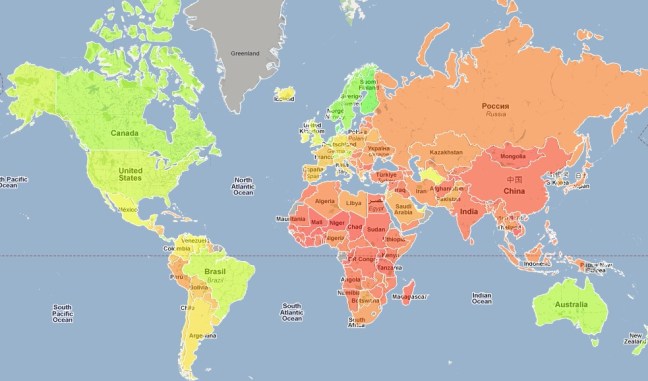
When I was six years old, I sat in a very small building with a handful of other kids, most of them much older than me, and together with a Vacation Bible School teacher, we looked at a world map.
I can’t recall what we were discussing on that day. But I do know that the very small, Southern Baptist congregation of my early childhood thought a lot about missionaries and prayed regularly for them. I also recall that there were photos of Lottie Moon, the Southern Baptist missionary who had lived in China for 40 years, in the church itself. So it’s quite possible that we were talking about missionary work (… which was often religiously-sanctioned colonialism).
At some point, while looking at this world map, I said to the teacher and the other kids, “When I grow up, I want to live in Switzerland!” I’m not sure how I had come to this conclusion or what I might have known about Switzerland at age six. But I suspect I had seen some photos or scenery on tv because I began to talk about how beautiful it is.
But I didn’t get very far because the teacher cut me off. He was also my neighbor across the street and the husband of the woman who sometimes babysat me. He felt he needed to address me and all the other kids with utmost seriousness. He even seemed a bit offended.
“Don’t ever say that,” he said. “We live in the United States, and it is the best country on earth. We are so lucky to live here,” he added, which seemed to shame me for my ungratefulness. “The United States is the best country on earth.” I think he probably said that statement more than once. Or at least, he said it strongly.
In that moment, I felt badly for not upholding the greatness of my nation. But mostly, I felt sad because I really wanted to be able to live in Switzerland. And I wanted to be able to tell people I wanted to live in Switzerland. But that was clearly the wrong thing to do. I learned quite early that the United States always had primacy.
And then, already ever the people pleaser at age six, I immediately found a way to redirect any criticism. I told the classroom some other news too: Earlier in the day at VBS, “I accepted Jesus as my Lord and Savior.”
“I want to be baptized,” I said.
That changed the mood.
But also, I meant it. I had been raised Christian since birth, yet in this tradition, you typically have a moment when you accept Jesus as your Lord and Savior for yourself. That’s the framing, and that’s the language for it. The teacher asked me a few questions, probably trying to make sure this was a genuine moment, and then, he concluded that it was. A few weeks later, I was baptized at age 6, a very young age for a Southern Baptist.
Now, I return to this scene again…
I recall this moment looking at the world map… this moment when national supremacy and faith formation were built into the same conversation … I remember hearing that the United States is the best nation on earth and internalizing that this should never be questioned… or that it might be wrong even to make space to admire the beauty of another nation.
Now, I return to this scene again…
I thought about all of this last night when I read the horrific accounts of the U.S. Customs and Border Control sending tear gas into Mexico, causing non-violent asylum seekers to run in order to protect themselves and their vulnerable children. I’ve also heard that one of those young children died.
I thought about how I grew up feeling a distanced sense of pity for people of other nations who knew war and hunger but didn’t know Jesus (even though there were fellow Christians in those nations). My distanced sense of pity was also an internalized dismissal which seemed to say, “Things are bad there, but that’s just how it is.” I accepted violence. I accepted poverty. I numbed any of the obvious feelings that would question those things. “That’s just how it is for those people.”
Somehow, I didn’t grow up feeling much of a shared humanity with people elsewhere. They just seemed really far away.
I wonder if this internalized sense of distant-pity-mixed-with-dismissal was alive and well in others last night when people responded to the news with comments like,
“That’s too bad, but they knew what they were risking when they decided to come here,” as if it ever crossed our neighbors’ minds that they might be attacked with chemical weapons at a border where there’s a legal process of entry to seek asylum.
Or, “they should have entered legally!” as if asylum is not a legal process, or as if legality is a ever benchmark determining whether people live or die.
Or, “but they were cutting through the fence,” as if chemical weapons are a proportional response, a justified response, or an inevitable response.
Chemical weapons are never a proportional, justified, or inevitable response. Not to fellow human beings. Not to asylum seekers. Not to migrant toddlers.
This primacy — this sense that the United States is the best and only nation that gets to count, or matter, or deserve empathy; this internalized belief, sometimes conscious, sometimes unquestioned and unconscious, that white people are superior to others and more worthy of resources; this warped theology built upon a belief that God loves Americans more than people of other nations — it kills.
In the English language, we have one primary word for love. Just… Love. There are certainly synonyms and words that expand upon it, but we typically use one word while other languages are a bit more expansive.
I’ve decided that it would be wonderful if these kinds of experiences and feelings of love had names:
— There’s a wonderful feeling of discovering that you are known in your specificity and loved in your limitations, and that without saying anything, people anticipate and accommodate what you need, including barriers that might be challenging for you.
I’ve experienced that in the last two weeks. That’s love. I wish it had its own name.
— There’s a wonderful feeling of discovering that people think about things and frame things in particular ways because they’ve internalized stories you have told, and when they reveal this to you, there’s a beautiful surprise of recognizing that they have internalized pieces of you, just as you have internalized pieces of them.
I’ve experienced that in the last two weeks. That’s love. I wish it had its own name.
— There’s a wonderful feeling of discovering you have commonality with a person, that simply being in their presence returns you to a part of yourself, a piece you didn’t even know was missing.
I’ve experienced that in the last two weeks. That’s love. I wish it had its own name.
–There’s a wonderful feeling of discovering that people now see you — really see you in some of your more challenging moments — not in an exposed way but in an expansive and affirming way, demonstrating a recognition that you have suffered and prevailed, and showing you a surprising amount of compassion, awe, and respect.
I’ve experienced that in the last two weeks. That’s love. I wish it had its own name.
Monday night, I stepped into Palmer Commons for our weekly choir rehearsal. But I sat in the back. I wasn’t going to sing that night, but rather, just listen.
Ian and I sing with the University Musical Society Choral Union. Among other large works we perform, often with orchestra, our choir has the longest, annual tradition of singing Handel’s Messiah. That’s what we’re working on right now. This choir has performed it every single year since 1879.
I walked in with a headache that had been present throughout the day. That headache had a way of making visual surroundings a bit overwhelming, so I decided I was going to have an auditory rehearsal only. I closed my eyes nearly the entire time and listened.
And it was a wonderful experience.
I know this piece well, but still, I heard parts from other sections that I had not really noticed before. And though I try to listen while singing also, it was helpful to hear the sound as a whole without my own voice.
This made wonder, in what other contexts might I make the decision to listen only? If I do, what might I hear differently? What have I not noticed before?
This sermon was preached at First Presbyterian Church in Howell, Michigan and was focused upon the story that is told in Mark 12:38-44. An audio recording is above and a written manuscript is below.
“And who is my neighbor?”
That was the follow-up question that someone once asked Jesus. First, that person had asked, “What is the greatest commandment?” and Jesus answered, “‘You shall love the Lord your God with all your heart, and with all your mind, and with all your soul, and with all your strength,’ and the second is like it: ‘You shall love your neighbor as yourself.’”
Jesus speaks these words in the 12th chapter of Mark, just before our passage today.
When the writer of the Gospel of Luke tells the same story, the original inquirer the asks a follow-up question. “And who is my neighbor?” He may have been seeking to clarify, but it seems more likely that he was trying to justify the ways he was already limiting to whom he was connected and related.
“And who is my neighbor?”
I find myself thinking about that when we ponder the story that is before us today.
Jesus begins by sharing a word of warning about religious leaders. He says, “Beware of the scribes who like to walk around in long robes” — I notice that I’m the one wearing a robe today — “and to be greeted with respect in the market-places, and to have the best seats in the synagogues and places of honor at banquets. They devour widows’ houses and for the sake of appearance say long prayers.”
They devour widow’s houses. . .
Jesus had noticed the patterns of behavior in these particular leaders and the harmful impact their actions were having upon the lives of vulnerable neighbors. And what’s more, Jesus saw into the hearts of these leaders and noted how tempting it is to desire the power of affirmation, recognition, and religious admiration. He also instructed his disciples to steer clear of this.
Jesus noticed so much about the people around him, about the world around him. He looked into the heart. And he looked upon his neighbors and our neighbors from his own heart, uplifting their worth, walking alongside them, loving them, and declaring them to be a part of God’s Kingdom. He invites all of us into that same Kingdom alongside vulnerable neighbors.
Jesus spent his life noticing.
Jesus spent his life uplifting.
And so, the story continues. . .
He sat down opposite the treasury, and again, he began to notice things.
The story tells us that many rich people came and put in enormous sums of money. These enormous sums didn’t go unnoticed. The sound of them clamored through the air. The treasury of the temple had long, metallic receptacles that were shaped like trumpets, and people placed their offerings inside. Sometimes, they flung their offerings inside these receptacles, and when all those metallic coins made contact, the sound went before the givers, and all took notice. So what happened when Jesus saw the rich, the powerful, and the leaders of this religious institution making spectacles of themselves only to be followed by the little tinkle of two copper coins given by a vulnerable widow?
Jesus saw her. He called attention to her and voiced his observations perhaps because the others, including his disciples, said nothing and noticed nothing. Some around them were too busy making spectacles of themselves. Why would they value the great sacrifice of this widow?
The tragedy is even actually greater than ignoring her: The people surrounding her had the resources to help and come alongside her, and yet they were spending their time “devouring widows’ houses.” This woman, this child of God, gave all she had to live on in the very same receptacle as those who were willing to destroy her. She gave to God, and Jesus uplifted her gift. But the story has tragedy in it too. I think Jesus wants us to notice this, just as he noticed it.
“And who is my neighbor?”
Mother Teresa used to say, “If we have no peace, it is because we have forgotten that we belong to one another.”
Are we aware of how deeply we belong to one another? How far will those boundaries stretch? Who be included? Who will be viewed with worth? Who will be uplifted? Who will be seen, known, noticed, cared for, valued, and empowered through the lens of neighbor? Through the lens of kinship?
Because if the most vulnerable of this world and noticed and loved by Jesus, if they are uplifted as people belonging to the Kingdom of God, and we are invited into that Kingdom, it means that we are invited into that Kin-dom. We are invited to all our barriers breaking down, for our sense of relatedness to expand, to be one family together, one humanity together, living in this creation that God has spoken into being and loved with all God’s being.
It’s that freeing. But it’s also that challenging because truly, if we have no peace, it’s because we have forgotten that we belong to one another. And let’s be honest. Quite often, we have forgotten that we belong to one another.
Our nation honors veterans today, and we rightly give care and respect to the members of our families and larger circles who have entered national service, and at times, known the pain of wars. They are deserving of our care and respect. I wonder, do we also have a sense of kinship with veterans who are currently experiencing homelessness? Do we have a sense of kinship with poor, young men and women who would prefer never to enlist, but feel that is their only way out of poverty? How far does our relatedness go? Sometimes, we have forgotten that we belong to one another. I know that I have forgotten.
Today, so beautifully, we have blessed these shoeboxes. We don’t know the names of the children who will receive them, but we know those children do have names. We hope that when they receive them, they experience a sense of love and value — love from God, love from neighbors like us. I wonder, do we also feel a sense of relatedness when these children become more visible to us? When they are enduring poverty and have tangible needs? When they are fleeing violence? When children just like them end up in the stories of our news cycles, are they still our neighbors, or are they viewed primarily as symbols, maybe even objects of debate? Sometimes, we have forgotten that we belong to one another. I know that I have forgotten.
Today, we also saw and heard the beautiful report from the Romanian Mission Team. How wonderful it is to see that this congregation is in relationship with neighbors across the world. Not simply going for one week to give things away but to be truly in relationship with one another, to delight with one another in care, mutuality, and kinship — to see those who are often forgotten, and for all of us, including the team itself, to see and experience the presence of God in the presence of one another. This is the kind of partnership and kinship that Jesus keeps calling us to again and again.
“And who is my neighbor?”
The truth is, we never arrive fully in these relationships, certainly not through our own efforts. But again and again, Jesus is calling us…
It makes me wonder, what might Jesus want to uplift in this congregation? How might Jesus want to challenge each one of us? How might Jesus be inviting us now once more to love our neighbors — to love our neighbors as ourselves — more expansively?
I am grateful that Jesus sits with us too. I am grateful that Jesus notices us in great love too. And that love beckons us into a calling that keeps emerging, a calling that keeps challenging, a call that keeps expanding.
Kiddos delight in calling for our attention because in the moment of being seen — “Lookit me do this!” — they get to witness us delighting in them.
And I’m convinced that adults never outgrow this need. Far from it. It just changes form. That being said, it can still stay playful too.
I have many people to whom I send my own versions of LOOKITs. These often emerge in photos and texts. I especially love connecting with my elders about moments that energized me.
“Can you believe this happened?”
“Lookit this wonderful photo from today.”
“Can I tell you a story? I want to tell you something I learned.”
And truly, one of my very favorite things about the rhythm of my life is that I receive a plethora of LOOKITs. I bet you receive them all the time too. They come almost every day. I love them.
Just this weekend, I rejoiced during the occasion to learn about someone’s new job offer and received a bunch of photos of folks’ joy, including a photo of beloved couple who just thought they looked cute in a particular moment together (and they did! “Put this pic on the fridge!” they said) And yesterday, I received a banjo serenade of the Michigan fight song over the phone (Well done!)
I love the daily LOOKITs. I love their variety.
I love that there are so many occasions to delight in one another; I love that there are so many occasions to see ourselves seen with delight.