My new mentor has had a life motto for many years:
“I always tell people, ‘I’ll only drop your hand if you drop mine,'” he says, meaning that unless you’d prefer not to stay in contact for some reason, he will stay connected in relationship with you for life. Every time I’ve sat down with him, he has said that statement at one point or another in our conversation.
What he says is true, by the way. He keeps in touch quite intentionally with hundreds of people, many of whom are former students from the years when he was a youth group leader, a campus minister, and the headmaster of a Quaker school. He’s been in touch with some of them for fifty years. It’s a big network.
We may not have a network that deep and wide, or a network with so much longevity, but we do have a network. We are connected.
And we should not forget what a resource this is, or rather, a resource of resources. I’ve been thinking about this quite a bit as I consider justice work and organizing. We can hear about needs nationally, internationally, and in our neighborhoods and feel the weight of them as solitary units, perhaps scrolling through social media at a loss about what to do or how to act. Or we can let things move through our connected network of relationships.
I heard a really important story on the radio while driving in my car earlier this week. A medical student at the University of Michigan has started a community effort with online and in-person components that empowers medical students, medical residents, and physicians to talk about stress and their own mental health needs. The medical community has the highest rate of suicides of all professions in the United States, and there is still a great deal of mental health stigma within this community. This student recognized how many physicians are struggling in silence and began to wonder what sort of large-scale impact could be created if physicians were reframing mental health stigma themselves.
I passed this story onto eight medical people in my network, and it led to really important discussions. They’ll probably pass it on too.
Change happens just this way, through relationships. And you never know what you’ll catalyze when you let things move through the network. We all have one.
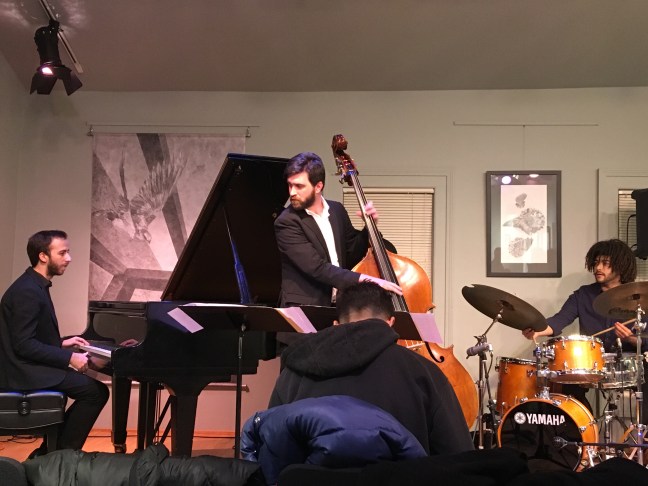
Throughout college, Sam Ross has been leading music during our times of worship at Canterbury House. I recommend having a jazz pianist lead the hymns in your community because they are soon accompanied with colors and blue notes you didn’t know were possible. The music becomes more soulful, more playful. Sam knows how to do that.
He’s also a stellar human being, a considerate leader who is so thoughtful, not only with creative, improvisational riffs, but also with a kind word.
Last night, Sam performed his Senior Recital, all with original music, and I can hardly put into words how incredible this concert was. There’s something so special, of course, in watching a culmination like this come to life. You think about all the study, rehearsal, growth, and artistry that goes into such a concert, all the tinkering of tunes that morph and expand into full performance pieces with energy. That is something to witness.
Then on top of that, the concert was a culmination (and continuation) of celebrated relationships and moments. Every single original piece was connected to a person, something they said or did, or something of who they are. That too was something to witness.
I will never forget the joy of being at this particular concert.
I also felt a lot of gratitude last night for being a campus minister, because goodness (and it really is goodness) I often get a front row seat to watching people thrive. And I get to witness this moving in so many directions. That is a privilege I don’t take for granted. That privilege is a continual joy.
While writing here yesterday, I went to an online thesaurus to look up alternatives for the word ‘connection.’ It’s not that I didn’t want to use that word; it’s that I had used it twice in the same sentence. What could I say instead?
I expected to find synonyms that would denote how items, moments, or people are more generally associated, but instead, I found all of these personal, relational terms:
These are words I think about a lot, and for some reason, I was surprised that the synonyms for ‘connection’ took on such personal forms. It was a reminder that our connections with each other, even the more general ones, matter quite a bit. We never know how deep they might run, or how we might connect people in ways that lead to their own relationships over time.
Of course, I had my own gratitudes. From beginning to end, November contained a remarkable amount of significance and meaningful connections, including memorable conversations, long hoped for reunions, and stunning surprises. By the time the first week of December rolled around, I needed some rest to recoup just to settle within the energy of it all. Such a gift.
But November was filled with gratitudes in other ways as well.
During the fall semester, I did something I’ve hoped to do for a long time: I assembled a new circle of undergraduate students and recent grads. Together, we have formed a group that meets monthly in my home to share meals, connect personally, make connections between spirituality and the rhythms of life, and engage in some shared practices. In November, this led to a month of gratitudes.
They had chosen Gratitude as a discussion topic for November, and when we were finished with our conversation, we decided we would use an app called Group-Me (group texting) to share daily gratitudes with each other throughout the rest of the month. So every day of November included five to ten photos sent by members of this new community, along with a comment or a story of how the people, places, and experiences in the photo brought them gratitude.
The notification sound for my Group-Me app is unique and isn’t used for any of my other apps. So every time I heard that sound, I had this little burst of joy, aware that I was about to see and learn about another gratitude from a member of our community. I also enjoyed sharing my own photos and stories with the group.
It was so refreshing to have this rhythm, looking for personal gratitudes to share and experiencing each day punctuated by the gratitudes of others. I recommend this rhythm of living, not only finding and recognizing moments of gratitude, but sharing them purposefully and liberally with others.
This sermon was preached at First Presbyterian Church in Howell, Michigan and was focused upon the story that is told in Luke 3:1-6. An audio recording is above and a written manuscript is below.
Luke 3:1-6
In the fifteenth year of the reign of Emperor Tiberius, when Pontius Pilate was governor of Judea, and Herod was ruler of Galilee, and his brother Philip ruler of the region of Ituraea and Trachonitis, and Lysanias ruler of Abilene, during the high priesthood of Annas and Caiaphas, the word of God came to John son of Zechariah in the wilderness. He went into all the region around the Jordan, proclaiming a baptism of repentance for the forgiveness of sins, as it is written in the book of the words of the prophet Isaiah, “The voice of one crying out in the wilderness: ‘Prepare the way of the Lord, make his paths straight. Every valley shall be filled, and every mountain and hill shall be made low, and the crooked shall be made straight, and the rough ways made smooth; and all flesh shall see the salvation of God.’”
This passage begins with words that don’t seem particularly significant to our 21st century context, so if you’re like me, as you read them, you might tend to tune them out. Luke initiates this section of his Gospel with a list of rulers from the 1st century — despots, kings, foreign occupiers, and the highest religious officials.
It takes a bit of time to move through these names, which adds to the probability that our brains might move elsewhere. But these words are absolutely significant to the message Luke intends for us to hear.
So let’s consider them again.
In the fifteenth year of the Emperor Tiberius. . .
Tiberius was the primary ruler and ultimate authority in the expansive Roman Empire.
When Pontius Pilate was governor of Judea. . .
Pilate was the Roman prefect who governed a large portion of the occupied land.
And Herod was ruler of Galilee, and his brother Philip ruler of the region of Ituraea and Trachonitis. . .
The Herod dynasty included kings who ruled harshly as a client state for Rome.
During the high priesthood of Annas and Caiaphas. . .
Annas and Caiaphas were the highest religious leaders put in place by Rome.
This is Luke’s list at the opening of this passage. But take notice of what happens after he lists all of these powerful leaders with high status. Luke says. . . During the time when all of these powerful people governed, “the Word of God came to John in the wilderness.”
The Word of God came to John and it came to him in the wilderness.
This is significant. At first, it may seem like Luke is simply setting the scene and establishing the time period as he mentions what was happening in the government, but it’s so much more than that.
Luke wants us to know that at the time these leaders ruled — some with corruption and all with wealth and influence — the Word of God came to one of society’s so-called nobodies in the wilderness, a remote spot entirely removed from society’s center.[1]
And this man named John went into many places in this wilderness. Luke says that he went into all the region around the Jordan River, and as he did that, he baptized people into the very waters of that river, proclaiming good news and a message of repentance. The word ‘repentance’ literally means to ‘turn around.’ John invited people to turn around toward a lifetime of good news, living toward God with worship, passion, and justice.
And John did this with power.
John the Baptist did not have the world’s power.
He wasn’t wealthy.
He wasn’t welcome in high society.
He didn’t have a position in the government.
He wasn’t the leader of an army.
But John was a prophet of God, a fiery prophet of power who did not mince words. Without question, John would have made us uncomfortable, and he might have made us angry too. Like so many of Luke’s characters, John preaches a radical Gospel: God is turning the world upside down. The powerful are becoming de-centered, and the people on the margins are empowered to lead the way toward new life.
With this message in the wilderness, John cries aloud the very words that the prophet Isaiah proclaimed centuries before him. “Prepare the way of the Lord, make God’s paths straight. Every valley shall be filled, and every mountain and hill shall be made low, and the crooked shall be made straight and the rough ways smooth; and all flesh shall see the salvation of God.”
God is turning the world upside down. The mountains and hills and bastions of power will be made low! And the valleys of those who are humbled, despised, marginalized, and abused shall be filled so that all people will see and know the salvation of God.
As John proclaims this message, he serves as a messenger, preparing the way for Jesus who will indeed turn this world upside down. When John cries words aloud in the wilderness, Jesus is about thirty years old and on the verge of his public ministry. John is the herald, inviting people to prepare their anticipation, because once Jesus comes into the fullness of this ministry,
He will reveal God’s presence among us,
He will speak truth to power,
He will uplift the downtrodden,
He will eat in full communion with the ‘outsiders,’
And he will empower these very people to take his message of worship, passion, and justice to the ends of the earth.
All people, All people,
will see the salvation of God.
This world-turning intention is central to the character of God. It is a vital part of Who God Is. So it makes me wonder. . .
How is God moving now? How is God proclaiming a message of salvation now? How is that happening in our own time and in our own modern forms of wilderness?
After all, isn’t that just the kind of thing this God would do? Arrive in the middle of wilderness places that some label insignificant?
This is one of the primary messages of Advent —
God is always coming,
Always arriving in this Jesus,
Always initiating movements of power and good news through the Holy Spirit, often in the least likely of places.
So it makes me wonder how God is showing up in the wilderness.
We certainly have many places of wilderness in the landscape of our lives. These places seem rough and are perhaps on the outside of anyone’s knowledge or notice.
Our losses,
Our addictions,
Our health crises,
Our disappointments,
Our broken relationships. . .
They can feel like places of wilderness.
But we can take heart,
And we can remember,
God shows up even there and can turn the world upside down.
Your life is not insignificant in God’s eyes. It is immensely significant.
Even in these places of wilderness,
God turns our lives upside down,
so we can turn toward the direction of new life.
It makes me wonder how God is showing up in the wilderness.
We also know that there are many in our neighborhoods and many around our world who experience burdens that are heavier than we can easily imagine —
People struggle through poverty,
Children fall through the cracks of failing schools,
People are despised and disenfranchised through racism,
Men, women, and children are caught in the trauma of wars,
Refugees escape those wars but seemingly have nowhere to go,
And victims die and are wounded by the senseless and seemingly continuous violence in our country. These are wilderness places, These are painful wilderness places.
And these lives are not insignificant in God’s eyes. They are immensely significant.
Even in these places of wilderness,
God turns our lives upside down,
so we can turn toward the direction of new life.
It makes me wonder how God is showing up in the wilderness.
I know this. . . God often shows up in the presence of other people, and God can arrive in these realities of wilderness through our very presence.
In the midst of heartache, God can bring comfort and good news even through our presence.
In the midst of challenges, God can turn the world upside down even through our presence.
In the midst of wilderness, God can provide a way in the desert and make all things new even through our presence.
How will we add our presence?
How will we be a part of the very prayers we make?
How will we act on that small thing or that large thing that keeps arriving in our minds and hearts?
How will we reach out to that person or community that keeps showing up in our thinking and praying?
How will we follow John into the wilderness to proclaim good news? How will we participate in God’s actions of turning the world upside down?
Happy weekend, friends. Here is a long but significant piece. Thank you for reading!
So I had quite the experience last Friday. I met Kurt Eichenwald, and we had a meaningful conversation together. I did not expect any of this to happen.
In one sense, many of the pieces that led to this meeting have been underway for a while, swirling about throughout my year. Yet at the same time, the actual opportunity to meet with Kurt Eichenwald came very quickly and in ways I never anticipated. After all, only nine days before, I had just finished reading his book.
I will talk with you about that book and our meeting, but first, let me give you a brief introduction to Kurt Eichenwald himself:
Kurt Eichenwald is an an investigative reporter. For many years, he worked for The New York Times, and he was nominated twice for the Pulitzer Prize in journalism. He’s written five books, including The Informant, which also became a movie with Matt Damon. He has a very large following on Twitter where he tweets regularly about politics. I’ve known him in this particular capacity for the last few years, and when he shared a very personal story on Twitter this summer during the testimony of Christine Blasey Ford (also in the book, see below) I sent him a friend request on Facebook in the off chance that he might accept it. (He did! More about that below too).
He recently released A Mind Unraveled, his new book. It’s a memoir, and this time, he turns his investigative reporting toward his own life, telling his story of living with intractable epilepsy.
The book is moving and so well written. Frankly, it’s hard to put down. The largest portion of A Mind Unraveled tells the story of how Kurt Eichenwald was kicked out of Swarthmore College in a horribly discriminatory way (you can read that story in a much shorter format here: I Was Kicked Out of School for Having Epilepsy) and how he fought his way back in. He is tenacious.
In A Mind Unraveled, Kurt Eichenwald also discusses abusive practices of his first neurologists, how he nearly died when his medications were prescribed at toxic levels over a very long stretch of time. And painfully, he also speaks openly for the first time about a sexual assault he endured after having a seizure in New York City, the details of which he cannot access fully because he was still incapacitated when it happened.
All of these things were horrific for him to endure. They’re also upsetting to read about. But above all, in A Mind Unraveled, Kurt Eichenwald seeks to share his journey of working through trauma and overcoming it. He shares how he moved toward his long hoped for family and career, and how he has integrated these these challenging experiences in ways that have positively formed his identity. Through the book, he is also becoming a public advocate for the epilepsy community.
In November, I bought A Mind Unraveled at Literati, a local bookstore in Ann Arbor. When the staff member rang it up and handed the book back to me, I had an instant, split-second instinct to funnel the book away into my bag quickly and hide it.
“Oh wait,” I thought, “I don’t have to do that anymore.” I smiled.
I remembered times during my teenage years when I would sneak away secretly to the public library to read whatever I might be able to find about epilepsy, the condition I also had but did not fully understand. By that point, my epilepsy had faded fully into remission. I didn’t have it anymore. But what happened…?
From diagnosis to its natural fading in adolescence (I had a type where that often happens), I kept my epilepsy hidden from everyone. I felt a great deal of shame about what I didn’t fully understand, and I never spoke about any of this until my mid-20s. Now I realize that feelings of shame and secrecy are quite frequent among people with epilepsy, though that need not be the case.
This year, I made a decision to start speaking and writing much more publicly about my own epilepsy story. As I wrote here this summer, I found myself wanting to reclaim this experience. It’s been a long time since I’ve had active epilepsy, but I did have this for one-third of my life, which is no insignificant amount of time. And I had it during my earliest, formative years.
It’s been a long while since this experience was a secret, but I’ve also never gone so public with my own story. A number of significant relationships, conversations, and experiences began to move me in this direction this year. I’m glad they did.
I decided to start speaking publicly and broadly about this for two reasons:
1) First, I recognized that most people who know me still had no idea that I grew up with epilepsy. Even those closest to me who have known something of this experience still had no idea how deeply formative it was for me.
2) Second, I realized that I want to become a public advocate. All year long, this has become increasingly important to me. Epilepsy is very common — 1 in 100 people have it actively; 1 in 26 people will have this diagnosis in their lifetimes; 1 in 10 people will have a single seizure at some point in their lives; such big numbers! — but due to a long history of stigma, epilepsy is rarely discussed publicly, and research is underfunded.
So in the midst of all of this, I have been asking myself… what do I do with my story? It’s been resonating within me. … what do I do with my story?
As you can imagine, it was quite meaningful to read what Kurt Eichenwald has done with his own story. After picking up the book, I devoured it, reading it from cover to cover quite quickly. I was deeply moved by his stories and his perseverance. I appreciated the ways he framed the book, and I’m inspired by how he is engaging community around it.
Then, in direct response to reading the book, I started writing some of my own storytelling too. In fact, I’ve written a piece that I will perform at a storytelling event in Ann Arbor in February. It felt wonderful to do this.
Then, quite unexpectedly, the two of us had an occasion to meet. . .
Just a couple days after finishing the book and writing my own piece, I saw that Kurt Eichenwald was coming to Ann Arbor to do a book signing. But… I had a final dress rehearsal for Handel’s Messiah at the very same time and was quite sad when I realized I would have to miss it.
So in the off chance that someone might be able to take my book to the book signing and pass along a note of appreciation to him, I wrote a Facebook post to see if anyone might be interested to go to the event. As I was typing his name in the post, Facebook emerged with an option to tag him, and without thinking about it, I just did it. I wasn’t sure if anyone was going to be available, but I thought it was a good idea to try.
Then, a person responded… Kurt Eichenwald!
Later that night, I received a personal Facebook message from him with a phone number, suggesting that I give him a call so we could find an alternative time to meet on Friday. This was so generous.
The next day, I admit, I was nervous to make that call. I even wrote out what I hoped to say and practiced it ahead of time. When I called, I expected to leave a voicemail, and perhaps he would call or text back. But Kurt actually answered. We were able to connect over the phone for a bit. I told him that his book meant a great deal to me and that I had done some of my own writing in response to his. Then, we decided to meet the next day at the office of the Epilepsy Foundation of Michigan in Southfield after he was finished meeting with their staff.
So the next day, I headed over. Again, I was a little nervous, but once I stepped into that office, everyone greeted me so kindly. And when I said that I was here to meet with Kurt, he exclaimed,
“Here’s Renee, the only person I’ve ever responded to on Facebook. You really are the only one!”
This was not solely because of what I had written, but mainly because Kurt never opens Facebook. He just happened to do so very briefly and my request about the book signing emerged at the top of his newsfeed. Then, because he reached out, I became the sole, lucky recipient of a personal Facebook message from Kurt Eichenwald.
We had a very meaningful conversation together with such lovely commonality between us. We talked about what it’s like to come forward with stories we had at various points kept hidden. We talked about the importance of speaking those stories now, because due to stigma and tangible forms of discrimination, too many people are still having to keep their experiences hidden.
And then, I had a chance to pass along to him what I had written personally in response to his book along with a letter of thanks for what he is doing.
In the midst of this, I just marvel… After engaging questions about how to share my own story, I found his masterful book, sharing his own. I read it quickly, told many people about it, and then… nine days later, I met him, shared commonality with him, and now he’s reading me.
If you’d like to talk more about any of this, feel free to leave a comment, send me an email at revannarbor@gmail.com, or send me a Facebook message. I respond to Facebook also! 🙂
“Truly I tell you, there is no one who has left house or brothers or sisters or mother or father or children or fields, for my sake and for the sake of the good news, who will not receive a hundredfold now in this age—houses, brothers and sisters, mothers and children, and fields, with persecutions—and in the age to come eternal life.”
I just wonder how very many memoirs could be written in response to this one sentence, giving flesh, names, connections, narratives, and meaning to these words? Over time, how many stories and connections have been created — many of them, totally unexpected gifts?
Pastor Ralls had gone to the nursing home to visit a resident who was a member of his congregation. While they were sitting together and conversing in the atrium, he heard some strange, intriguing words.
“I love you little. I love you big. I love you like a little pig.”
These words soon became a playful refrain. Pastor Ralls and his friend heard these words innumerable times throughout their conversation. They were spoken by a woman who was sitting nearby them. She was a resident too, and though she was sitting close enough to touch them, she paid no attention to their conversation. He writes, “During my visit to the nursing home that afternoon, I must have heard this sweet, odd rhyme more than a hundred times.” She continued to look out the window, and with a broad smile on her face, she let her refrain fill the room.
“I love you little. I love you big. I love you like a little pig.”
“I love you little. I love you big. I love you like a little pig.”
“I love you little. I love you big. I love you like a little pig.”
She seemed continually delighted by these words.
After inquiring of a staff member, Pastor Ralls learned that this woman had been a first grade teacher for decades. Each morning, when the children entered the classroom for their day at school, she would lean down and speak these very words into each beloved ear.
What a beautiful, playful ritual.
I love this story because it invites me to imagine what those words must have been like for the children in her classroom. . .
. . . I wonder if they would giggle before she could finish, each one anticipating the end of the phrase.
. . . I wonder if they would smile before she started, each one anticipating that they were loved and valuable.
. . . I wonder if they would ever add their voices to the chorus, each one rehearsing the truth of their worth, silly as the phrase may be.
I also love this story because it invites me to imagine how those words must have formed her as a teacher. . .
. . . I wonder if she spoke these words on days when she was feeling discouraged, and they lifted her mood just a bit.
. . . I wonder if she took pleasure in speaking these words to particular children who struggled to trust love.
. . . I wonder if the rehearsal of these words helped her love herself more fully too.
No matter how these words were spoken or received in her classroom, it is clear that they resonated deep within her psyche many years later when she was challenged by dementia. The refrain is delightful and silly. It is also so meaningful.
It makes me wonder. . .
Who has told you that you’re beloved?
Who has told you that you’re loved through and through?
Who has told you that you’re valuable and worth it all?
Do we rehearse those words and memories? Do we recall them and let them sink into our very being?
We can always begin that rehearsal again.
And if we doubt those words within us. . . guess what?
We can rehearse them again.
And again.
And again.
And again.
And if no one has told you today,
And if you’re struggling to tell yourself,
Please hear this truth:
You are Beloved,
Loved through and through,
Valued and worth it all.
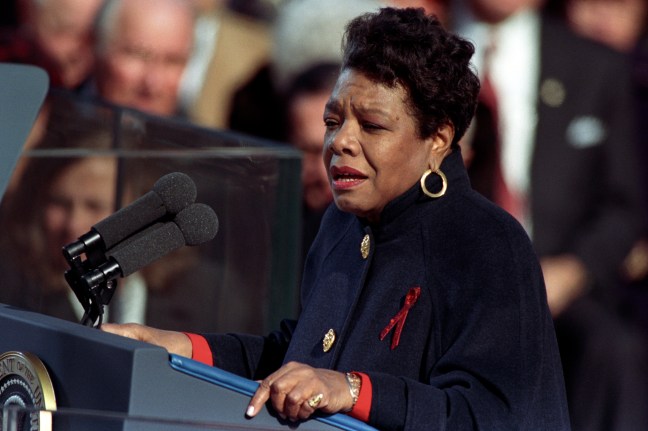
“I’ve had so many rainbows in my clouds. I had a lot of clouds. But I have had so many rainbows. And one of the things I do when I go stand up on the stage, when I stand up to translate, when I go to teach my classes, when I go to direct a movie, I bring everyone who has ever been kind to me with me — Black, White, Asian, Spanish-speaking, Native American, Gay, Straight — everybody. I say, ‘Come with me. I’m going on the stage. Come with me. I need you now.'” — Maya Angelou
I love this video from Maya Angelou.
Where do we each need support today? How can we call forth that internalized support? How can we ask for it?
This sermon was preached at First Presbyterian Church in Howell, Michigan and was focused upon the story that is told in Luke 21:25-36. An audio recording is above and a written manuscript is below.
Dear friends, as we have already said this morning, it is indeed Advent. We share this season together each year, a time when we are reminded once more to wait, to watch, to wonder… Today, we are reminded anew of our shared calling to make ourselves ready with anticipation and expectation.
We see the decorations throughout our sanctuary, hints of Christmas, and that is a reminder among us too that we are waiting, watching, and wondering for Emmanuel, which means God with us. God really with us — found in Jesus, who will soon be born in the stories of our sacred scriptures, who will soon be born in our practices of shared celebration together. Soon in these stories, Jesus will be born, instantly vulnerable with no adequate place to spend the night. Soon in these stories, Jesus will be born, quickly on the run from the dangers of Herod. Jesus will soon be born, yes, in sacred story, but not only 2,000 years ago. Also here, among us now, as we are invited to find Christ’s presence with us — you and me, God with us, God with all the vulnerable ones of this world, God with all the fleeing ones of this world, God with all the “least of these” ones in this world.
In the midst of this anticipation, we wait, we watch, and we wonder. We lean our lives into these things.
There are hints of Christmas here even in this room. But it isn’t Christmas yet. It is Advent. Advent is the beginning of our liturgical calendar in the church (today is the first day of the year) but Advent is concerned with endings. Advent is about final things, inviting us to wait, to watch, to wonder — trusting that Emmanuel, God with us, is with humanity now and all of creation until the end.
We wait, and we watch, and we wonder for this. We anticipate and expect. And we lean our lives in this direction.
During his ministry, Jesus sometimes said very challenging things. He had a way of naming the pains of the world as they really were, and yet even from there, he had a way of naming God’s presence with us. He himself was God’s presence embodied, present to people in that pain.
And so, in our Gospel text this morning, we hear challenging words. This section from the Gospel according to Luke is apocalyptic literature, literature concerned with final things, with the end. And we might think of that end chronologically — God entering time and redeeming that time among us. But we also might think about the word end as the goal — God bringing creation to its final goal. God bringing creation to love, justice, wholeness, liberation, connection with God, connection with neighbors, and fullness with God’s presence in our midst. That’s part of what apocalyptic literature does theologically, naming the pains of the world now, and naming the healing that they shall experience.
Gathered around disciples who were also vulnerable, often poor, often disenfranchised, Jesus said, “There will be signs in the sun, the moon, and the stars, and on the earth distress among nations confused by the roaring of the sea and the waves. People will faint from fear and foreboding of what is coming upon the world, for the powers of the heaven will be shaken.” This is challenging.
Yet Jesus also says that “they will see the ‘Son of Man coming in a cloud’” — the Son of Man coming again. Jesus said, “When these things begin to take place” — the pains of this world — “stand up and raise your heads, because your redemption is drawing near.”
The God we serve is a God who enters pain with us and with the world. It’s not that these things are good — no, they cause fear and foreboding — but even there, God is near, working to redeem all things.
Jesus said, “You look at the fig tree and all of these trees. As soon as they sprout leaves, you can see for yourselves and know that summer is near.” And so, even in our places of deep pain, even in creation’s deep pain, we are invited to place our faith and trust in the recognition that God is near, and even the Kingdom of God is near, full with possibility.
Jesus says, “Be alert. Be awake.” Not ultimately living in fear, but living in hope and expectation — that God is in our midst always. Because whatever time of year we celebrate together seasonally, always behind it all is a recognition that Christ has come, that Christ is coming, that Christ will come again.
And so we gather together, around these sacred texts, and in the presence of the Holy Spirit and the presence of one another, we are invited to lean more and more in that direction, to trust that this true, and to lean our lives in such a direction that we begin to participate in these things. God is with us in such a way that we, the Church, are being empowered to be in the world and also be about these final things — to work toward love, justice, wholeness, liberation, connection with God, connection with neighbors, and fullness with God’s presence in our midst. We are invited into these things. With God’s empowerment, we are invited to participate in these things.
So now, Advent is not just a nice little time in which we show up and anticipate the holidays. No, we anticipate so much more, and our lives are being called in these directions.
Greg Boyle is one of the people I most admire. He’s a Jesuit priest and the founder of Homeboy Industries in Los Angeles, California, an organization that provides job training and healing to people who want to leave gangs and people who have been incarcerated, giving them a new chance and building kinship community together. At Homeboy Industries, people who used to belong to rival gangs work side by side, heal their lives, and open possibilities for a new future.
These individuals have known great pain and have often caused great pain. In his book, Tattoos on the Heart, Greg Boyle writes that every single person he has ever met who joined a gang, did so not because this was ultimately what they wanted to do with their lives but because they were running from something — often great, personal trauma.
And together, at Homeboy Industries, they do that healing work, the work of transforming the past, making amends, and healing toward another future. Father Boyle teaches them about a God who loves them, who enters their pain, and who invites them to transform the pain they have caused, ultimately participating in God’s final things — love, justice, peace, wholeness, and connection with God and neighbor.
In our own time of waiting and watching, I invite us to think about a story that Greg Boyle tells. It’s a sweet story about a man and his father, and Greg Boyle opens that story up to speak a conviction about God and human worth.
As his health was failing, an old man moved in with his adult son, someone that Greg Boyle knows personally. In the evening before bedtime, the son would read aloud to his father. In a beautiful role reversal, the adult son put his father to bed every night.
The son would often invite his father to close his eyes while he read aloud, but over and over again, he would catch his father looking at him. He would say, “Look, here’s the idea. I read to you, you fall asleep.” The father would apologize, but at some point, one eye would eventually pop open.
This went on every single night. When it was time to sleep, the father could not take his eyes off of his own son.
Greg Boyle says that God is like this: “God would seem to be too occupied in being unable to take Her eyes off of us to spend any time raising an eyebrow in disapproval. What’s true of Jesus is true for us, and so this voice breaks through the clouds and comes straight at us. ‘You are my Beloved, in whom I am wonderfully pleased.’”
As we watch during this season, God is watching us, looking straight at us, even into our pain, even into the pain of the world and saying, “You are my Beloved. I see you through love. And I see you into new ways of loving.”
Even though the world may fear and feel foreboding, God is near. God invites our watching with this kind of watching. God sees us and our neighbors with infinite love, inviting us to see God at work. The same God empowers us to work, so that we too participate in these final things, waiting for their ultimate end as God brings them about.