
A few months ago, I wrote a piece on this blog called, “My Aquakening.” In that piece, I shared that I have become rather Quaker-curious. This all started when I made a handwritten list of my curiosities and hopes for what church could look like if it were more ‘horizontal.’
The list was not based on my own personal preferences alone, but it has been informed by being in relationship with many so-called Nones (folks who are religiously unaffiliated) and Dones (Christians who have left institutional churches), along with many young adults, both religiously affiliated and unaffiliated.
After making that list, I realized, “Oh. . . wow. . . Quakers practice all of these things, don’t they?” That’s how my Aquakening started.
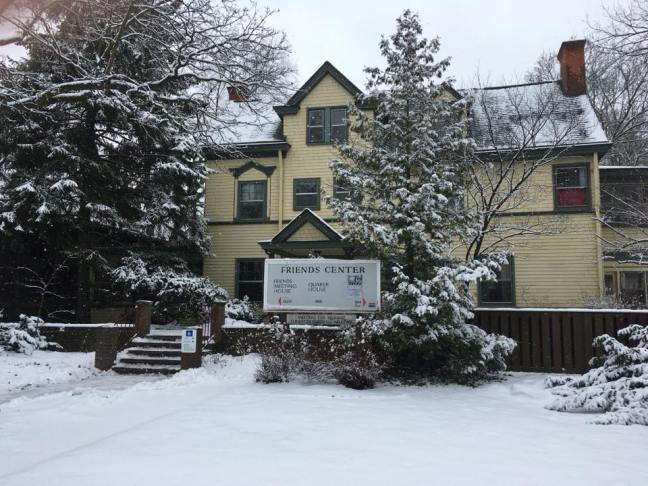
Well, last Sunday, I’m pleased to say that I attended a Quaker meeting for the very first time. And I loved it.
I feel there is a lot to learn from the Religious Society of Friends, including. . .
. . . what horizontal, non-hierarchical church can look like (I think some are doubtful that this can be possible, but a variety of communities use leadership models based on agreed-upon practices and procedures rather than classes of various roles)
. . . how worship can be experienced in participatory ways, with multiple people speaking, sharing, and teaching,
. . . how a community can be deeply committed to 1) contemplation and quiet reflection and 2) social action – so deeply committed, in fact, that there is an expectation that each will inform the other.
. . . how a Christian tradition can stay rooted in its historical and spiritual identity while also authentically making space for people who have a variety of spiritual beliefs and practices, including people who are religiously unaffiliated, with a commitment to receive from all people’s contributions and insights.
I experienced all of these things at my first Quaker meeting. And I’m still very curious to learn more. The Aquakening continues!
I plan to keep attending when I’m available, and I want to meet more people from this community. I’m curious how following this lead might shape my hopes and practices, both in my own life, and as I think about community formation.
Or to keep a mantra going this week,
If we are to love. . . we are to learn.
If we are to learn. . . we are to grow.
If we are to grow. . . we are to change.
So let’s see where this goes.







 Smuggling Grace